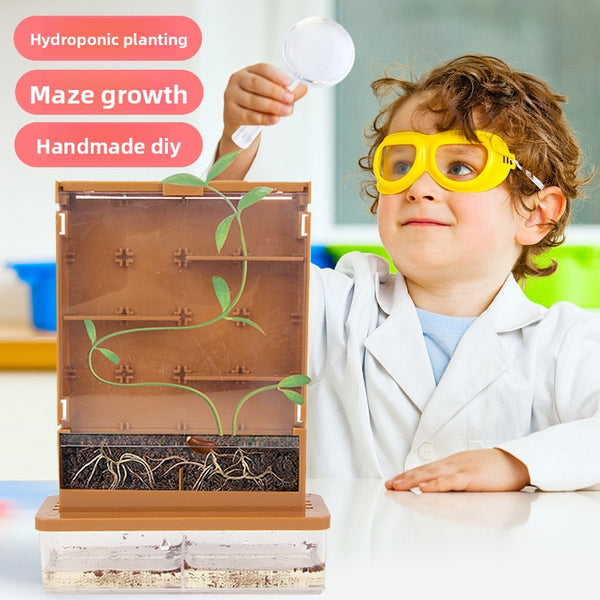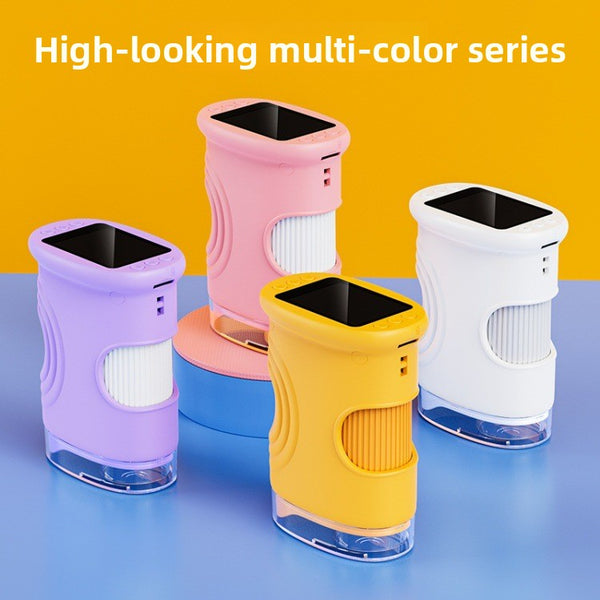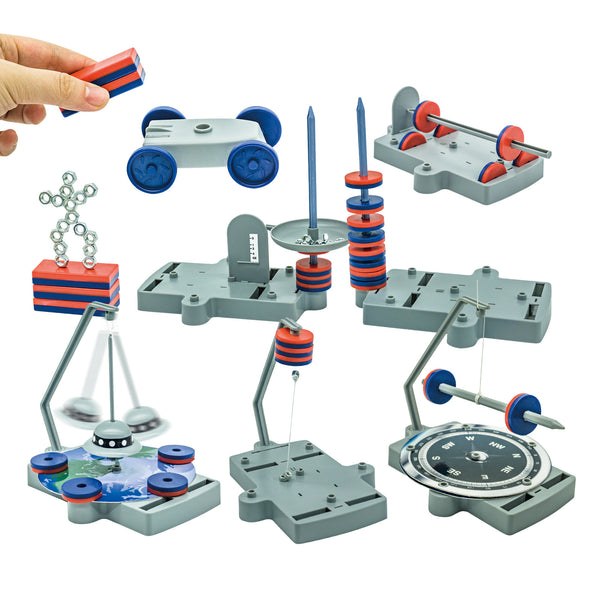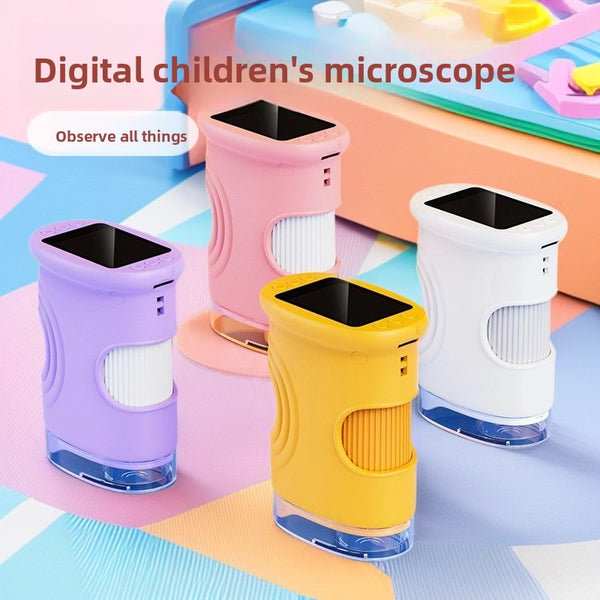
children conducting science experiments at home

Top Science Experiment Kits for Kids: Spark Curiosity and Ignite a Passion for Discovery

Parents today know that the best way to prepare a child for the future isn't through a textbook—it's through the thrill of a breakthrough. Science experiment kits for kids provide hands-on learning opportunities that transform your kitchen table into a high-tech laboratory. These kits do more than just entertain; they spark deep curiosity and turn complex theories into tangible, "aha!" moments.

Whether your child is a budding chemist, a future engineer, or a nature enthusiast, the right kit can bridge the gap between "I don't get it" and "I just built it!" These projects fit perfectly alongside other growth-focused collections like STEM toys, science kits and experiments, robotics kits for kids, and problem-solving play sets.

In this guide, we will explore the top-rated science kits that cover chemistry, physics, biology, and electronics. You’ll learn how to choose the right kit for your child's age, what skills they will develop, and why hands-on experimentation is the ultimate shortcut to building critical thinking and a lifelong love for learning.

Table of Contents

Standard Education Often Makes Science Feel Like a Chore

Many children start off with a natural curiosity about how the world works, but that spark often fades when science is reduced to memorizing formulas and reading dry paragraphs. When learning is passive, kids lose interest quickly. They begin to see science as a "hard" subject meant for someone else, not as a thrilling tool for exploration.

The result? A generation of tech-consumers who don't understand the tech they use. Without a way to interact with scientific principles, children miss the opportunity to develop the resilience and problem-solving skills that come from real experimentation.

Why Missing Out on Hands-On Science Is Risky

If a child only "watches" science on a screen, they never experience the trial-and-error process that builds a "growth mindset." They don't learn what to do when a reaction doesn't happen, or how to measure precisely to achieve a result. This lack of practical engagement can lead to a lack of confidence in STEM subjects as they get older.

Passive learning doesn't challenge the brain's executive functions—the ability to plan, focus, and troubleshoot. Without the tactile feedback of building a circuit or growing a crystal, the neural pathways for spatial reasoning and logical sequencing stay dormant.

Science Kits Turn Theory Into Action

Science kits solve the "boredom" problem by making the child the lead researcher. These kits are designed to be safe yet challenging, providing all the materials needed to create real-world reactions at home. From erupting volcanoes to coding electronic sirens, these kits move science from the chalkboard to the hands.

By engaging multiple senses—sight, touch, and sometimes even taste—these kits ensure that the lesson sticks. They empower children to say, "I am a scientist," building a foundation of confidence that carries into every other area of their education.

Ready to start your first experiment?

Explore our curated selection of science kits that make discovery an everyday event.

Shop Science Kits Now
Two children wearing safety goggles looking amazed at a colorful chemical reaction in a beaker

Hands-on experiments provide visual and tactile feedback that makes scientific concepts unforgettable.

The Battle of the Mega Labs: Smithsonian vs. National Geographic

When choosing a "Mega" kit, you're usually looking for variety. Both Smithsonian and National Geographic offer entry-level labs that cover multiple disciplines like earth science, chemistry, and physics.

Smithsonian Mega Science Lab

Best for older kids (10+), this kit focuses on high-quality, long-term projects like crystal growing and digging for dinosaur bones. It’s a great way to give them a glimpse into professional fields like paleontology and geology.

National Geographic Mega Science Lab

This kit is a volume leader, offering up to 45 experiments (15 in-box and 30 using household items). It’s perfect for the high-energy child who wants to see quick, explosive results like volcanic eruptions and geysers.

Invisible Magic: Exploring Electronics and Circuits

For kids who love to know how things turn on, electronics kits are a game-changer. Kits like Snap Circuits Jr. take the danger and frustration out of electronics. Instead of hot soldering irons and confusing wires, kids use snap-together components to build over 100 projects.

This builds an incredible foundation for coding and programming later. Once a child understands how a circuit works, understanding how code controls hardware becomes much more intuitive.

Quick Comparison: Best Science Kits for Kids

Snap Circuits Jr.

Best for: Budding Engineers

Focus: Electricity, logic, circuitry

Typical age: 8 to 12 years

Playz Edible Candy

Best for: Multi-sensory learners

Focus: Food chemistry, reactions

Typical age: 8 to 13 years

Learning Resources Lab

Best for: Early explorers

Focus: Scientific tools, observation

Typical age: 4 to 7 years

4M Crystal Growing

Best for: Patient researchers

Focus: Geology, chemical solutions

Typical age: 10+ years

Critical Skills Developed Through Experimentation

Analytical Thinking

Learning to observe a result and ask "Why?" is the foundation of all scientific progress.

Precision & Focus

Measuring liquids and connecting small parts builds the concentration required for advanced study.

Scientific Literacy

Familiarity with terms like 'base,' 'acid,' and 'circuit' gives kids a massive head start in school.

Confidence

Finishing a complex project proves to a child that they can master "hard" subjects on their own.

How to Choose the Right Kit for Your Little Scientist

Match the Kit to Their Attention Span

If your child wants instant gratification, go for kits with chemical reactions (volcanoes, geysers). If they are detail-oriented, look for multi-day projects like crystal growing or engineering construction.

Check for "Consumables"

Some kits are one-and-done, while others have reusable tools. Kits that focus on early development often include durable plastic tools that can be used for your own DIY experiments later.

A collection of science lab equipment like magnifying glasses, test tubes, and a small microscope on a table

A well-stocked lab station encourages a child to see themselves as a real investigator.

Frequently Asked Questions About Science Kits

1. What are science experiment kits for kids?

They are curated sets of tools and materials designed to guide children through scientific experiments at home.

2. Are science kits safe for home use?

Yes, most kits use non-toxic, non-hazardous household chemicals, but adult supervision is always recommended.

3. What age is best for science kits?

Kits range from preschool (age 4) to middle school (age 13+). Always check the manufacturer's age recommendation.

4. Do I need a science background to help my child?

Not at all! Most kits include step-by-step instructions that explain the "why" behind the experiment for both you and your child.

5. Can these kits be used for school projects?

Yes, they are excellent foundations for science fair projects and classroom demonstrations.

6. What subjects do science kits cover?

Common subjects include Chemistry, Physics, Biology, Geology, and Electronics.

7. Do I need to buy extra materials?

Most kits include the essentials, but some may require common household items like water, vinegar, or baking soda.

8. Are there kits for girls specifically?

While most kits are gender-neutral, some are themed around items like cosmetics chemistry to appeal to different interests.

9. How long do the experiments take?

Chemical reactions are usually instant, while growing projects (like crystals or plants) can take 5 to 10 days.

10. Are science kits reusable?

The tools (test tubes, goggles, beakers) are reusable, but the chemical ingredients (powders, dyes) usually are not.

11. What is the Learning Resources Primary Science Lab?

It's a kit specifically for younger children (ages 4-7) using oversized, durable tools to teach basic observation.

12. Why is National Geographic popular for science?

They offer high-quality kits with real specimens (like rocks and fossils) and very clear educational guides.

13. Do science kits help with screen time reduction?

Yes! They offer a tactile, high-engagement alternative that keeps children focused on the physical world.

14. What are Snap Circuits?

They are electronics kits that use snap-together parts to build alarms, radios, and sensors without soldering.

15. Can I find edible science kits?

Yes, food science kits allow kids to make things like gummies or chocolate while learning about states of matter.

16. Are crystal growing kits difficult?

They aren't difficult, but they require patience and careful following of instructions regarding water temperature.

17. What is the Be Amazing! Toys Big Bag of Science?

It's a massive collection of over 70 experiments that touch on physical, earth, and life sciences.

18. Do kits help with critical thinking?

Yes, by requiring children to predict outcomes and troubleshoot when a result is different than expected.

19. Are these kits good for home-schooling?

They are an essential resource for homeschoolers to cover lab-based science requirements.

20. How do I choose a kit for an 8-year-old?

Look for kits labeled "Mega" or "Intro" that offer variety rather than focusing on just one narrow topic.

21. Are science kits expensive?

Prices range from $15 to over $100, but most high-quality starter kits are in the $20-$40 range.

22. What are the benefits of 4M kits?

4M focuses on "Green Science" and geology, often using recycled materials to teach sustainability.

23. Can toddlers use science kits?

Preschoolers (age 3-4) can use "sensory" science kits that focus on pouring, mixing colors, and textures.

24. Do science kits come with goggles?

Most comprehensive kits include a basic pair of safety goggles.

25. What is the Smithsonian Mega Lab?

A premium kit that covers everything from paleontology to crystal growing with a focus on realism.

26. Can science kits help with ADHD?

Yes, the immediate sensory feedback and clear, achievable goals can help maintain focus.

27. Are there coding science kits?

Yes, these often combine hardware like breadboards with software lessons.

28. Is adult supervision required for all kits?

It is highly recommended to ensure safety and to share in the learning experience.

29. Can science kits be used for group play?

Many experiments can be done in pairs, building team-work and communication skills.

30. Where can I find the best science kits?

WonderKidsToy offers a high-quality selection of vetted STEM and science kits for all ages.

Final Thoughts: Investing in Your Child's Natural Curiosity

Science experiment kits are more than just a afternoon activity; they are an investment in how your child thinks. By giving them the tools to explore, fail, and eventually succeed, you are building a foundation of resilience and brilliance. Whether they are building a rocket or a robot, they are building themselves. Start their journey today and watch their curiosity change the world.


Related Posts

The Definitive Guide: Choosing the Best Educational Toys for 5-Year-Olds
At age five, your child is standing on the threshold...
Best STEM Toys for 5 Year Olds That Build Science, Engineering and Problem Solving Skills
Introduction Five-year-old children are naturally curious and eager to explore...
Screen Time vs Hands-On Learning: Why Electronics Kits Win
Most parents already know the problem: teens spend a huge...
The Power of Focus: How Every Wonder Kids Toy Anchors Development in a Distracted World
Modern parenting is an uphill battle against short-form content and...
Back to blog

Top Picks (Quick Answer)

If you want the best options quickly, these are our top recommended toys based on learning value, fun, and long-term use.

BEST OVERALL

Creative Building Kits Educational Blocks Sets

A powerful all-in-one toy that helps kids build creativity, problem-solving skills, and focus through hands-on play.

Best for: creativity, building skills, and long-term engagement

Shop Now
BEST FOR YOUNGER KIDS

Jigsaw Puzzle Large 12 Piece Rainbow Blocks

Perfect for toddlers and preschoolers to build coordination, shape recognition, and early problem-solving skills.

Best for: ages 2–5, early learning, and hands-on play

Shop Now
Exclusive Bundle

FREE: Get $99 worth Creative Digital Vault

Order now and get instant access to 130+ Digital Learning Books. While your item ships, your child can start learning immediately!

✓ Link Sent Instantly to Your Email Post-Purchase