

There's something magical about watching a child's eyes light up during their first successful science experiment. That moment when curiosity meets discovery creates lasting impressions that can spark a lifelong love of learning. High-quality kids' science experiment kits offer the perfect gateway to this world of wonder, providing structured yet exciting hands-on experiences that make complex concepts accessible and engaging.
Many parents begin their search looking for best science kits for kids or STEM educational toys. These are vital tools because they move children from being passive observers to active creators. Whether you're a parent looking to supplement school learning or an educator seeking classroom resources, the right science kit can transform ordinary afternoons into extraordinary adventures.
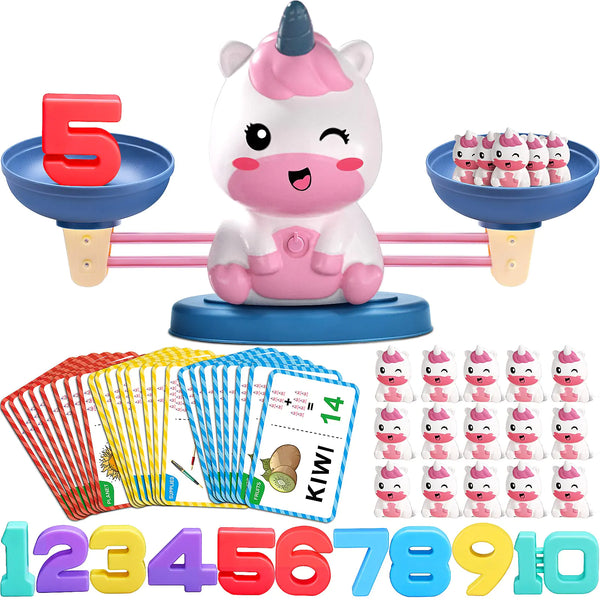
Scientific discovery works beautifully when paired with educational toys, STEM toys, and engineering toys to create a richer learning environment at home.
Table of Contents
Why Theory Without Practice Fails to Engage
In today's digital age, children are often separated from the physical mechanics of the world. They might watch a volcano erupt on a high-definition screen or read about electricity in a textbook, but they lack the sensory experience of feeling the chemical reaction or seeing a circuit they built actually light up. This "theory-only" approach makes science feel like an abstract chore rather than a living, breathing reality.
Families struggle to find science kits and experiments that are actually safe for home use while remaining high-interest enough to compete with the high-dopamine pull of video games.
Why Missing Hands-On Milestones Hurts Growth
The first decade of life is a peak "sensitive period" for logic and sequencing. If children aren't given the opportunity to test hypotheses and troubleshoot physical failures, they miss out on developing executive function and resilience. A child who never "fails" an experiment never learns the grit required to find a new solution.
As we explored in our guide on igniting young minds, the absence of tactile experimentation can lead to shorter attention spans and a lack of independence. Without the chance to be the "architect" of their own discovery, children may grow up viewing themselves as consumers rather than creators.
The Solution: All-in-One Kits for Active Discovery
The best solution is to move from passive screen time to active kids science experiments kits. These kits provide the safe materials and clear instructions needed to turn your kitchen table into a laboratory. By observing principles like supersaturation or acid-base reactions firsthand, children build deeper neural connections and a permanent understanding of scientific laws.
By selecting expert-vetted tools, you aren't just buying a toy; you are building a foundation for critical thinking and future academic success. These kits pair perfectly with problem-solving play sets to help children master the mechanics of the world around them.
Ready to launch your child's scientific adventure?
Explore our curated selection of science kits designed for curious explorers of all ages.
Shop Science Kits Now
Hands-on experimentation turns abstract "why" questions into concrete "how-to" knowledge.
Building Tomorrow's Innovators
Science kits lay the groundwork for essential life skills. When children engage with hands-on experiments, they are practicing more than just biology or physics—they are practicing the scientific method.
Logic & Ratios
Measuring liquids and mixing compounds introduces core mathematical concepts in a physical way.
Observation Skills
Tracking a crystal's growth or a plant's change builds the patience needed for long-term academic success.
Fine Motor Grip
Using pipettes and small tweezers strengthens the "pincer grasp" vital for writing and dexterity.
Top 5 Kits for Young Explorers
1. The Chemistry Lab Station
Transform your kitchen into a scientific hub. For a great example, our Ultimate Chemistry Lab Set features over 30 safe experiments. For deeper insights, see our guide on exploring science magic.

2. Space Exploration Kit
Launch your child's imagination into orbit. This astronomy-focused science kit helps young enthusiasts build solar system models and understand moon phases.

Science Kit Selection Guide
STEM Starter Kits
Best for: Preschoolers building motor skills
Features: Chunky pieces, high durability
Age: 3-5 Years
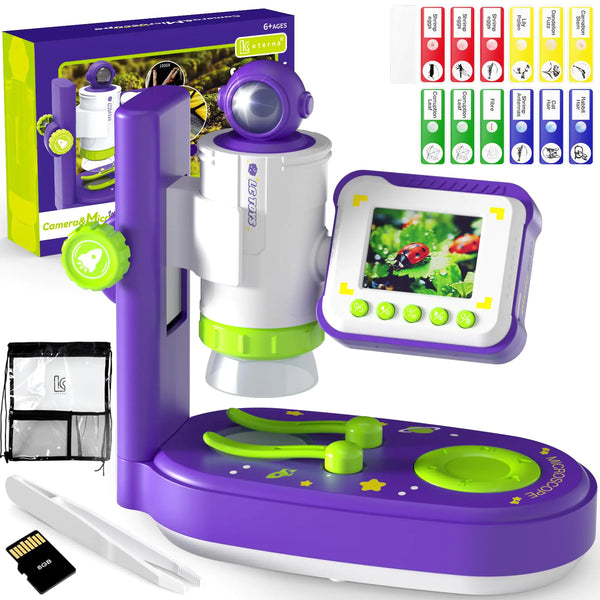
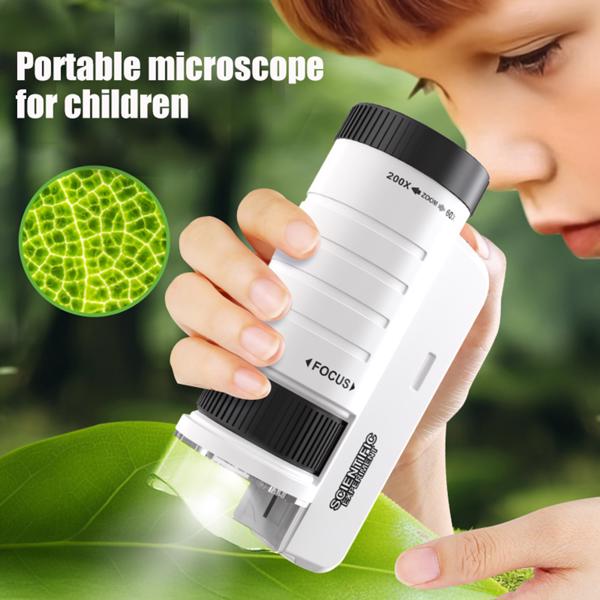
Biology Labs
Best for: Nature enthusiasts and microscopists
Features: Real specimen slides, high magnification
Age: 6-12 Years
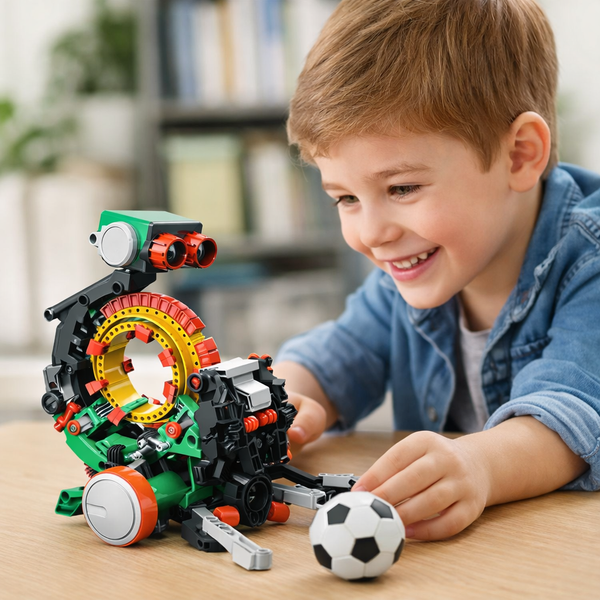
Engineering Kits
Best for: Budding inventors and builders
Features: Renewable energy, solar/wind power
Age: 9-14 Years
Expert Picks for Future Innovators
To truly maximize your child's developmental journey, consider these high-impact examples that bridge the gap between fun and logical sequencing.
The Physics of Balance: Arch Bridge Rainbow Blocks
Science is often about understanding structural integrity. Our rainbow arch bridge building blocks provide a hands-on lesson in gravity and balance, mirroring the logic used in real-world engineering experiments.
Topical Authority: Supporting Cognitive Growth
As we explored in our guide on experiment and explore, the key to success is providing a "Control of Error" so children can self-correct during their discovery.
Conclusion: A Lifetime of Wonder Starts Here
The journey of scientific discovery is one of the greatest gifts we can offer our children. Quality science experiment kits provide a foundation for critical thinking, spatial reasoning, and problem-solving that extends far beyond the classroom. By investing in these tools, you are opening doors to new possibilities and potentially igniting a lifelong passion for innovation. As we noted in our post on sparking wonder with science, every experiment is a bridge to a brighter future.
Ready to spark a reaction?
Browse our full range of science kits and educational toys to start your discovery today.
Shop Educational ToysFrequently Asked Questions About Science Kits
1. What is the best science kit for an 8-year-old?
Chemistry sets and geology excavation kits are perfect for this age group, blending excitement with foundational learning.
2. Are these science kits safe for home use?
Yes, high-quality kits use non-toxic reagents and provide safety gear and clear instructions for a safe laboratory environment.
3. How do science kits help with school performance?
Hands-on experimentation increases retention of abstract scientific laws far more effectively than reading alone.
4. Do I need scientific knowledge to help my child?
Not at all. Quality kits come with guidebooks that explain the 'how' and 'why,' allowing parents to learn alongside their kids.
5. Can science kits help with math skills?
Yes, experiments involve measuring volumes, calculating ratios, and data plotting—core mathematical applications.
6. Are there science kits for preschoolers?
Yes, 'STEM Starter' kits for ages 3-5 focus on sensory exploration, cause-and-effect, and simple observation.
7. Why choose wood over plastic for summer breaks?
Wood offers better tactile feedback and is generally more sustainable and long-lasting than cheap plastic.
8. How do I prevent meltdowns over failed experiments?
Explain that 'failure' is just data in science. Troubleshooting is the most valuable part of the scientific method.
9. What is a 'Control of Error' in a kit?
It's a feature where the child can see if they were successful without an adult telling them (e.g., a bulb lights up).
10. Can a microscope kit help with biology?
Absolutely. It reveals the invisible world of cells and organisms, fostering deep appreciation for life sciences.
11. What is the benefit of crystal growing kits?
They teach patience, observation over time, and the concepts of supersaturation and molecular structures.
12. Are these toys safe for pets?
Keep small reagents and pieces away from pets. Experiments should always be conducted in a designated, clean area.
13. Do I need an electric outlet for physics kits?
Most kits are battery-operated for safety, but some advanced ones may require a standard outlet for power.
14. Are there quiet science activities?
Yes, geology excavation and specimen classification are quiet, focused tasks that build concentration.
15. What is the 'wow' factor in a science kit?
It's the immediate, surprising result—like a volcano eruption or a slime creation—that triggers a wonder response.
16. How long should an experiment session last?
20-45 minutes is the 'sweet spot' for maintaining a child's natural focus and interest levels.
17. Can science kits help with social sharing?
Yes, working on an experiment with a sibling requires communication, collaboration, and turn-taking.
18. How do I clean laboratory gear?
Rinse thoroughly with warm water and dry completely before storing to maintain safety and organization.
19. Why is sun protection important during outdoor science?
If doing solar or nature experiments, always use waterproof SPF 30+ even while focused on the kit.
20. Do engineering kits break easily?
High-quality models from WonderKidsToy are built for repeated assembly and disassembly.
21. Are there kits for small apartments?
Yes, tabletop chemistry and microscope sets require very little space for meaningful exploration.
22. Can science kits help with school readiness?
Yes, by improving focus, sensory processing, and the ability to follow sequences and instructions.
23. What is the benefit of a microscope vs a magnifying glass?
A microscope provides the higher resolution needed to see cellular structures, offering deeper insight.
24. Why choose Wonder Kids Toys gear?
We curate only high-quality, durable, and safety-vetted kits designed for genuine childhood development.
25. Do I need special water for experiments?
Usually, tap water works, though some sensitive chemistry experiments may recommend distilled water.
26. How do I store a giant inflatable arch?
Deflate completely, fold loosely, and store in a cool, dry place to prevent the plastic from cracking over winter.
27. Is adult supervision required for all kits?
Yes, active adult involvement ensures safety and maximizes the educational value of the discovery.
28. Can science kits be used on a patio?
Yes, a patio is often the best 'messy zone' for volcano and chemistry experiments.
29. Do I need special water pressure for arches?
Most standard residential hoses work, but higher pressure results in more impressive spray heights for water toys.
30. Where can I find more STEM parenting tips?
Explore the WonderKidsToy blog for expert guides on child development and learning through play.