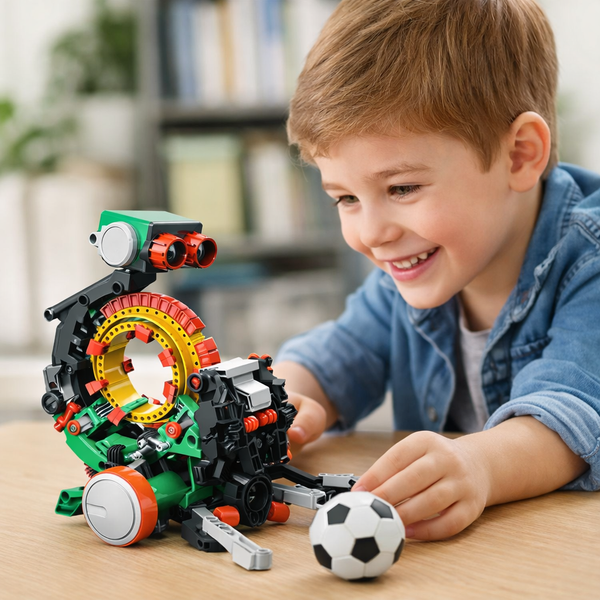

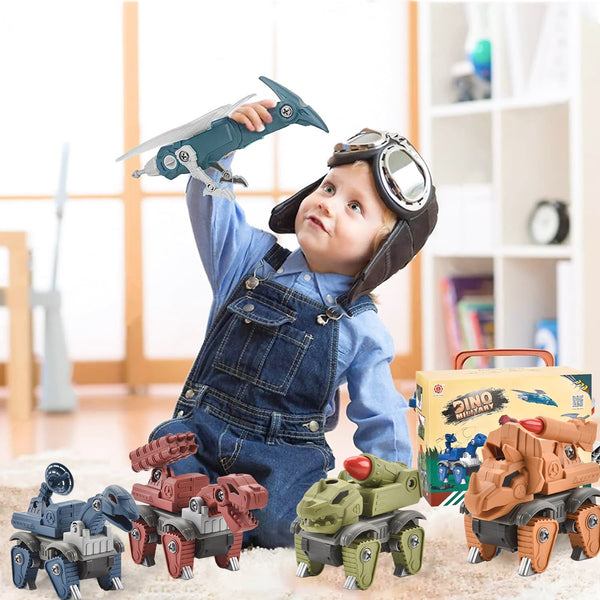
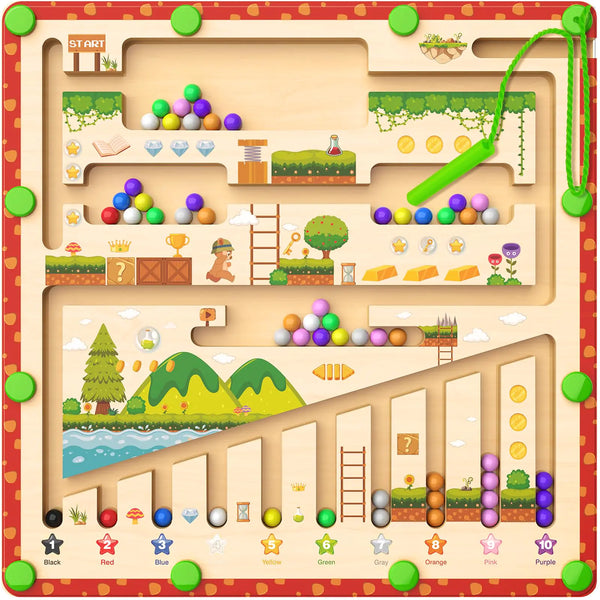
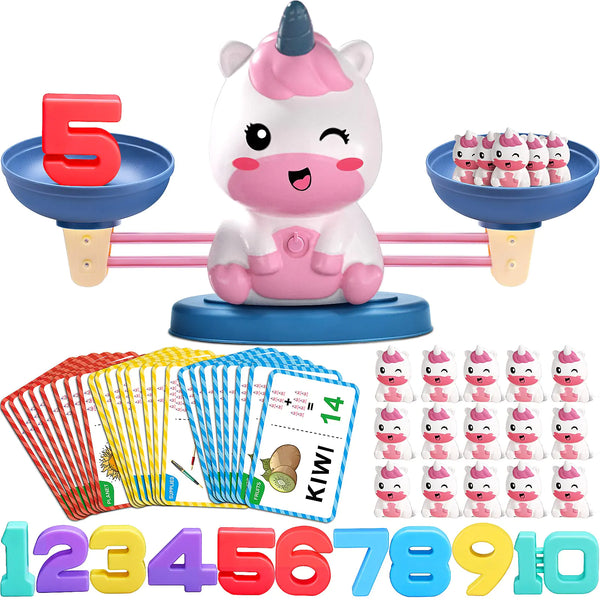

In a world increasingly driven by technology and innovation, STEM toys have emerged as high-performance tools for developing critical skills in children. These tools do more than entertain—they provide the technical and sensory foundation your child needs to master Science, Technology, Engineering, and Mathematics through Active Discovery. By moving beyond passive consumption to hands-on, purposeful play, STEM toys build the cognitive grit and school readiness your child deserves.

The Science of Play: Beyond Flashy Lights
Traditional toys often perform for the child—singing and flashing at the push of a button. While visually stimulating, this leaves the brain in a passive state. High-quality STEM materials provide "tactile resistance"—the physical troubleshooting that forces the brain to form vital neural pathways.
When a child builds a circuit or balances a block tower, they are practicing logical sequencing and spatial reasoning. This grounded-in-reality approach is a core tenet of the Montessori approach to independence.
Neuro-Architecture: Key Developmental Benefits
Critical Thinking
STEM toys challenge the sensory cortex to analyze problems and test hypotheses, building the foundation for advanced academic performance.
Manual Precision
Manipulating small parts refines the pincer grip and hand-eye coordination required for everything from handwriting to advanced robotics.
Computational Thinking
Toys that involve patterns and sequences teach the logic of instructions, preparing the brain for coding and algorithmic logic.
Discovery Tools for Future Engineers
Milestones: Matching Tool to Development Stage
The best STEM educational toys grow with your child, respecting their "Zone of Proximal Development":
- Toddlers (1-3 Years): Focus on sensory hits. Simple building blocks and water play provide "honest" data about gravity and texture.
- Preschoolers (3-5 Years): Move toward symbolic logic. Pattern blocks and basic coding toys build empathy and early problem-solving.
- Early Elementary (5-8 Years): Introduce systems logic. Circuit kits and math games anchor abstract concepts in reality.
- Advanced Learners (9+ Years): Transition to Active Innovation. Robotics and chemistry sets offer real-world applications for complex theories.
Frequently Asked Questions
What is the "Discovery Hit" in STEM play?
It is the dopamine reward a child feels when their physical troubleshooting results in a successful outcome (like a bulb lighting up), building more grit than digital achievements.
Are screen-free coding toys actually effective?
Yes. They teach the logic of instructions before the syntax of a language, anchoring "If-Then" concepts in 3D physical space.
Why is tactile play better than digital apps?
Physical interaction builds the sensory cortex and 3D spatial logic through tactile feedback, which digital pixels cannot replicate, providing a more robust foundation for school readiness.
Final Thoughts: Nurturing a Lifetime of Awareness
Selecting intentional play materials is an investment in your child’s future. By choosing tools that encourage rhythm, logic, and physical mastery, you are setting the stage for a lifetime of innovative thinking. Every pieces snapped and every circuit closed today is a building block for a bright future.
Ready to build a better discovery box? Explore our specialized early development collection today and start the journey toward purposeful play.