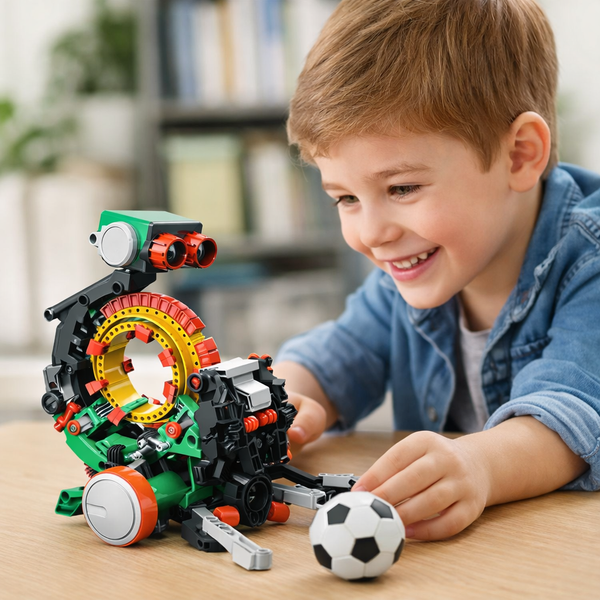

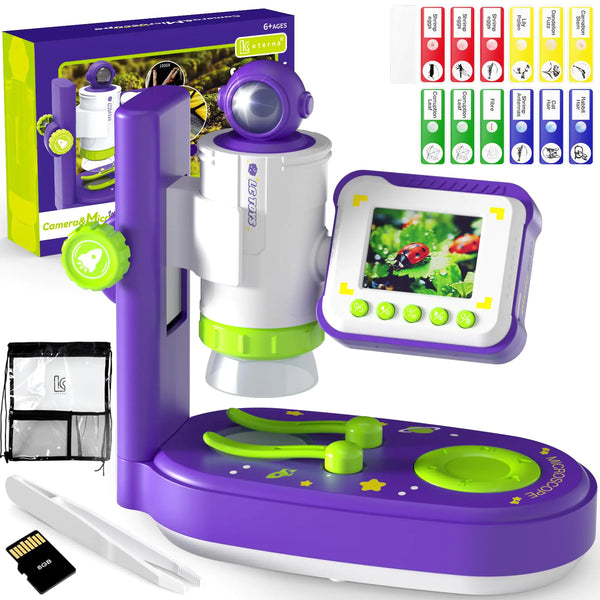
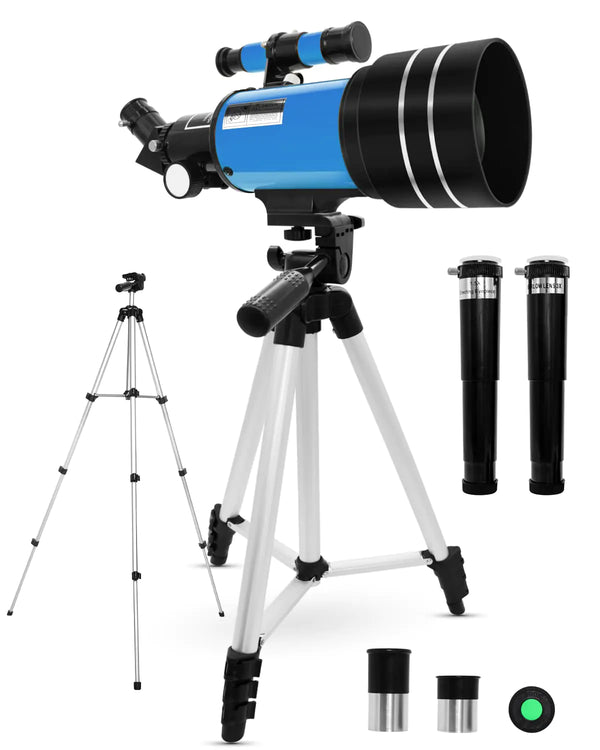
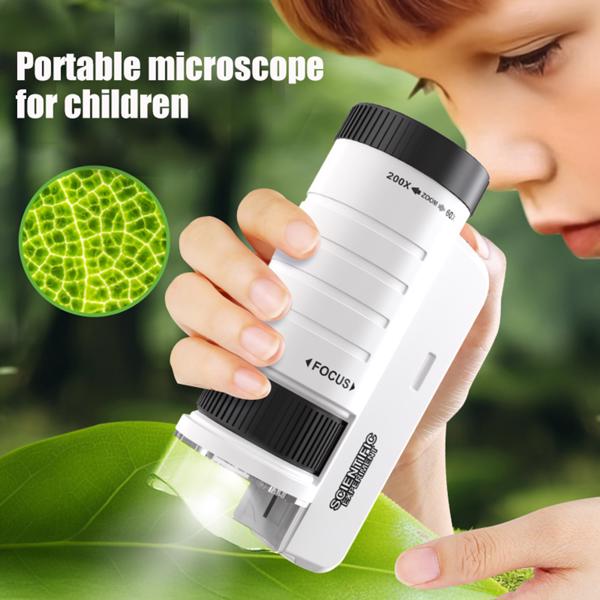
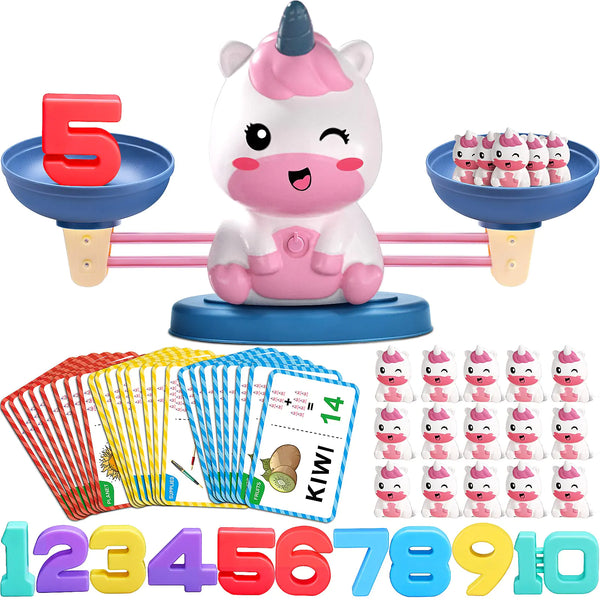
Science kits offer a fantastic way to introduce kids to the exciting world of discovery. They are curated sets that provide everything your child needs to conduct experiments at home or in the classroom. Forget textbooks for a while! A STEM science kit allows children to engage with science through hands-on learning, transforming abstract concepts into tangible, memorable experiences.
Many parents begin their journey by searching for the best science kits for kids to build independence and critical thinking. These tools work beautifully when paired with our collections of STEM toys and engineering toys, creating a home environment where "why" becomes "how."
In this guide, we explore the different types of experiment kits, age-appropriateness, and how these sets can turn your kitchen table into a world-class laboratory of joy at Wonder Kids Toy.
Table of Contents
Why Modern Learning Often Feels Like a Chore
In a world dominated by digital screens, children are becoming passive consumers of information. They might watch a science video on a tablet, but they lack the sensory experience of mixing reagents, building circuits, or observing chemical reactions firsthand. This "hands-off" approach to education often makes complex subjects feel boring or irrelevant. Many parents want to bridge this gap but feel overwhelmed by the thought of sourcing safe materials or following complex scientific procedures alone.
Why Missing Hands-On Milestones Stunts Cognitive Grit
The early years are a peak "sensitive period" for logic and spatial reasoning. If children aren't given the chance to physically manipulate tools and solve tangible problems, they miss out on developing fine motor skills and executive function. As we explored in our guide on cognitive skill development, the absence of tactile play can lead to shorter attention spans. Without the "wow factor" of a successful experiment, they may never develop the resilience required to troubleshoot complex real-world problems.
All-in-One Kits for Active Discovery
The best solution is to move the lab from the school to the playroom. High-quality science kits and experiments provide the structured yet open-ended environment needed for deep learning. When a child sees a chemical reaction or builds a motorized robot, they receive haptic feedback that reinforces the brain's understanding of science. These kits turn abstract theories into physical logic.
By choosing Wonder Kids Toy expert-vetted gear, you ensure that every experiment is a safe, high-engagement lesson in grit. These tools pair perfectly with our problem-solving play sets to help children master the laws of the physical world through joyful interaction.
Ready to spark their inner scientist?
Discover expert-vetted science kits that turn your home into a laboratory of joy and discovery.
Shop Science Kits NowClear instructions and professional-grade tools empower children to lead their own scientific discoveries.
The Versatility of Modern STEM Kits
Chemistry: Reactions and Compounds
Chemistry kits focus on observation and measurement. Children enjoy watching colors change and substances bubble. As we explored in our post on top science kits for young minds, these sensory-rich experiences are key to long-term knowledge retention.
Physics: Force, Motion, and Engineering
Physics-based kits involve building things like simple machines or circuits. This encourages spatial reasoning and mathematical logic. For more inspiration, check our guide on construction toys that inspire learning.
Quick Kit Selection Guide
Starter Kits
Best for: Preschool curiosity
Focus: Sensory exploration & simple reactions
Typical age: 3 - 6 Years
Lab Sets
Best for: Elementary logic
Focus: Measurement & scientific method
Typical age: 7 - 12 Years
Engineering Sets
Best for: Aspiring innovators
Focus: Electronics, coding, and mechanics
Typical age: 10 - 15 Years
Expert Picks for Future Innovators
To truly elevate your child's home laboratory, consider these high-impact examples that bridge the gap between fun and structural logic.
The Structural Champion: Arch Bridge Rainbow Blocks
Physics doesn't stop at the lab door. Our rainbow arch bridge blocks provide a physical lesson in structural engineering. Children must understand gravity and balance to succeed.
The Math Bridge: Stacked High Block Toys
Measurement is the heart of science. Our stacked high block toys help children understand height and volume, essential for future chemistry experiments.
Conclusion: Investing in a Lifetime of Wonder
STEM science kits are more than just playthings; they are the architectural tools for your child's logical mind. By choosing tactile engagement over passive consumption, you are building the cognitive foundation that will serve them for a lifetime. As we discussed in our guide on the transformative power of educational toys, every successful experiment is a neural connection forged.
Ready to launch their first experiment?
Browse our full range of expert-vetted science kits and prepare for a season of wonder.
Explore All Science KitsFrequently Asked Questions About STEM Kits
1. What are STEM science kits?
STEM kits are curated sets containing instructions and materials for experiments in Science, Technology, Engineering, and Math.
2. Are science kits safe for home use?
Yes, high-quality kits use non-toxic reagents and are specifically safety-tested for home environments.
3. What age can a child start with science kits?
Simple sensory observation kits can start as early as age 4, with structured chemistry labs peaking around ages 8-12.
4. Do these kits help with school performance?
Absolutely. Hands-on learning increases retention of abstract scientific laws significantly compared to textbooks.
5. Can science kits help with math skills?
Yes, many experiments require measuring volumes, counting results, and plotting data points.
6. What is a 'monthly subscription' science kit?
A service that delivers a new, themed experiment box to your door every month to keep learning consistent.
7. Why choose wood over plastic for kits?
Wood provides superior haptic feedback and weight, which is essential for understanding physical balance and force.
8. Are robotics kits safe for beginners?
Reputable kits use safe low-voltage batteries and "snap" components that require no dangerous tools or soldering.
9. Can STEM kits teach coding without screens?
Yes, many 'screen-free' robotics kits use simple coding cards or physical buttons to teach basic logic.
10. How do I maintain interest in science long-term?
Rotate the toys every 2 weeks and introduce "missions" (e.g., build a bridge that holds 10 cars) to keep discovery fresh.
11. What is haptic feedback in play?
It is the physical information the brain receives through touch, like the weight or resistance of a lab tool.
12. Do STEM kits replace school learning?
No, they complement it by making abstract classroom theories tangible and fun for the child.
13. Are there science kits for toddlers?
Yes, specifically designed 'Junior Scientist' kits focus on color mixing, water play, and basic cause-and-effect.
14. What is a 'Control of Error' in a kit?
A design feature where the project itself shows if it was done correctly (e.g., a light not shining), allowing for self-correction.
15. Why choose Wonder Kids Toy gear?
We curate only high-quality, safety-vetted tools designed for genuine childhood development and joy.
16. Do STEM toys improve fine motor skills?
Yes, using pipettes, tweezers, and small connectors strengthens the pincer grasp and hand-eye coordination.
17. What are the best STEM toys for 6-year-olds?
Hands-on building kits, simple chemistry sets, and introductory electronics are perfect for this age.
18. Are there eco-friendly science kits?
Yes, many modern kits use sustainable materials and solar-powered components to teach conservation.
19. Can STEM kits help with ADHD or focus?
Yes, the tactile, absorbing nature of experiments can help ground a child's attention more than passive videos.
20. How long should a play session last?
15-45 minutes is typical to maintain natural curiosity and focus without sensory fatigue.
21. Are these kits expensive?
No, many high-impact kits like 'Kitchen Chemistry' use simple materials and are very affordable.
22. Do kits teach technical vocabulary?
Yes, children learn words like 'reaction', 'circuit', and 'hypothesize' through active context.
23. Can water toys be science kits?
Yes! Bath pipes and outdoor sprinklers teach concepts of water pressure, volume, and gravity.
24. What is the benefit of a 3D model?
It forces the brain to translate a mental image into a physical structure, massive for spatial development.
25. Is adult supervision required for all kits?
For chemistry and small parts, yes. For building and sorting, independent play is encouraged in the Montessori style.
26. Can STEM kits help with social skills?
Yes, working on a complex build with a sibling requires communication, patience, and collaboration.
27. Do science kits expire?
Mechanical components last for years; certain chemical reagents in advanced kits should be used within 2-3 years.
28. How do I clean laboratory gear for kids?
Warm soapy water is usually sufficient for beakers and tubes; ensure everything is dry before storage to prevent mold.
29. Where can I find top-rated educational gifts?
WonderKidsToy.com offers a full range of expert-vetted STEM, science, and developmental products.
30. Where can I find more STEM parenting tips?
Explore our blog for expert guides on child development, learning through play, and seasonal gift ideas.