Quick Answer:
The best Montessori toys for 4-year-olds support reading fluency, mathematical foundations, practical independence, and deepening concentration. At this age, children are often reading simple books, exploring early math concepts, and capable of complex practical life activities. Top picks include advanced language materials, math foundations (golden beads, number exploration), sophisticated practical life activities, and science materials that support growing academic skills.
Table of Contents
The 4-Year-Old Montessori Child
At 4 years old, a child in a Montessori environment is often:
- Reading simple books (or on the verge of it)
- Doing math with concrete materials (golden beads, number exploration)
- Capable of complex practical life activities (cooking, gardening, cleaning)
- Developing social consciousness (helping others, community responsibility)
- Exploring science and nature (botany, zoology, geography)
- Concentrating for 45+ minutes on engaging activities
This is a magical time in Montessori—academic skills emerge naturally from purposeful exploration.
Reading Readiness at Age 4
In Montessori, reading often emerges around age 3.5-4. This isn't because Montessori forces early reading, but because the phonetic approach and sensorial materials create ideal conditions.
How Reading Emerges:
- Sandpaper letters (age 2-3) - Letter-sound learning
- Movable alphabet (age 3) - Word building
- Real reading begins (age 3.5-4) - Reading books
Signs Your Child is Ready:
- Knows most letter sounds
- Can build simple words with movable alphabet
- Asks to "read"
- Shows interest in books
- Can concentrate for 20+ minutes
The Joy of Reading in Montessori:
Children who learn to read through Montessori often experience a magical moment: suddenly, they realize they can read anything. It's not gradual—it's often sudden and joyful.
Math Foundations at Age 4
At 4, Montessori math transitions from concrete (manipulatives) to semi-concrete (representations). The child understands:
- Quantity and number
- Simple addition and subtraction
- Skip counting (5s, 10s)
- Introduction to teen numbers
- Beginning place value understanding
12 Best Montessori Toys for 4-Year-Olds
1. Golden Beads (Complete Set) - Math Foundation
What it is: Beads in units, bars of 10, squares of 100, cubes of 1,000
Why it's essential:
- Makes place value concrete and visible
- Child sees what 1, 10, 100, 1,000 look like
- Foundation for all future math
- Sensory and kinesthetic learning
- Beautiful, engaging materials
How to use:
- Child counts units (1, 2, 3, 4, 5...)
- Child exchanges 10 units for a bar of 10
- Child exchanges 10 bars for a square of 100
- Child understands decimal system visually
- Foundation for addition, subtraction, multiplication
Why this matters: Understanding place value at 4 creates mathematical fluency that develops throughout childhood
Recommended product: Golden bead complete set ($60-150)
Skill development: Place value, decimal system understanding, foundation for advanced math
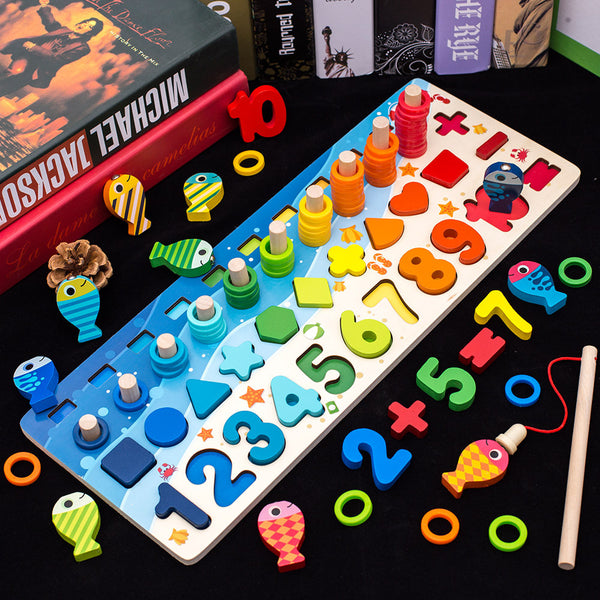
2. Number Rods & Quantity Association
What it is: Number rods (1-10 progression) paired with number cards and counters
Why it's powerful:
- Strengthens 1-10 understanding
- Associates quantity with symbol (the number)
- Self-correcting (only one way to arrange)
- Develops order and sequence understanding
- Mathematical foundation
How to use:
- Child arranges number rods 1-10
- Child matches quantity cards (1-10)
- Child counts beads to match quantity
- Repeats, deepening understanding
Recommended product: Number rods with quantity cards ($40-80)
Skill development: Quantification, number-symbol association, sequencing, mathematical thinking
3. Spindle Boxes (Number Recognition)
What it is: Box with 10 compartments labeled 0-9, with corresponding wooden spindles
Why it's ideal:
- Teaches number-quantity relationship
- Self-correcting
- Beautiful, engaging material
- Develops fine motor control
- Mathematical thinking
How to use:
- Child reads compartment label (3)
- Child places 3 spindles in that compartment
- Repeats through all compartments
- Develops number recognition and counting skills
Recommended product: Wooden spindle box ($40-70)
Skill development: Number recognition, counting, quantity-number association
4. Beaded Chain Materials (Skip Counting & Multiplication Readiness)
What it is: Chains of colored beads representing skip counting (5-chain, 10-chain, etc.)
Why it's valuable:
- Introduction to patterns and skip counting
- Foundation for multiplication understanding
- Sensory and visual learning
- Builds mathematical thinking
- Prepares for advanced math
How to use:
- Child explores 5-chain (counts by 5s)
- Child lays out 10-chain (counts by 10s)
- Sees pattern emerging
- Begins understanding multiplication concept
Recommended product: Beaded chain set ($50-100)
Skill development: Skip counting, patterns, multiplication foundation, sequencing
5. Reading Books (Phonetically Introduced)
What it is: Specially selected simple books designed for early phonetic readers
Examples:
- Bob books
- Decodable readers
- Montessori-recommended beginning books
Why they're important:
- Child can actually read (not guessing)
- Phonetically decodable (based on sounds learned)
- Short stories with meaning
- Child experiences joy of reading accomplishment
- Variety of topics to explore
How to use:
- Child reads books independently
- Adult listens and supports
- Child chooses books based on interest
- Reading becomes joyful and self-directed
Recommended product: Phonetic reader book sets ($30-60 for collection)
Skill development: Reading fluency, comprehension, confidence, love of reading
6. Practical Life: Food Preparation (Advanced)
What it is: Child-sized tools for cooking real meals (not just cutting)
Examples:
- Small pots and pans
- Real cooking utensils
- Ingredients for simple cooking
- Child-appropriate recipes
Why it's essential:
- Real, purposeful work
- Practical life skill development
- Fine and gross motor engagement
- Responsibility and contribution
- Confidence building
How to use:
- Child helps prepare family meals
- Follows recipes
- Uses real stove (with supervision)
- Prepares foods that family eats
Recommended product: Child-safe cooking set ($40-100)
Skill development: Cooking skills, following instructions, fine motor, responsibility, confidence
7. Practical Life: Gardening (Seasonal)
What it is: Child-sized gardening tools for planting and tending a garden
Why it matters:
- Real work with real results
- Connection to nature
- Understanding plant growth
- Responsibility for living things
- Sensory engagement with soil, plants, water
How to use:
- Child helps plant seeds or seedlings
- Child waters and tends plants
- Child observes growth over weeks
- Child harvests and uses produce
Recommended product: Child-sized gardening set ($30-60)
Skill development: Practical life, responsibility, nature connection, sequencing, patience
8. Cultural Materials: Geography Puzzles
What it is: Continent puzzles, country puzzles, map materials
Why it's ideal:
- Introduction to world geography
- Sensorial and visual learning
- Beautiful, engaging materials
- Builds cultural awareness
- Satisfies curiosity about the world
How to use:
- Child explores continent puzzle
- Traces continents
- Learns continent names
- Expands to country puzzles
- Develops global awareness
Recommended product: Continent puzzle, country puzzles ($40-100)
Skill development: Geography, spatial awareness, global awareness, cultural knowledge
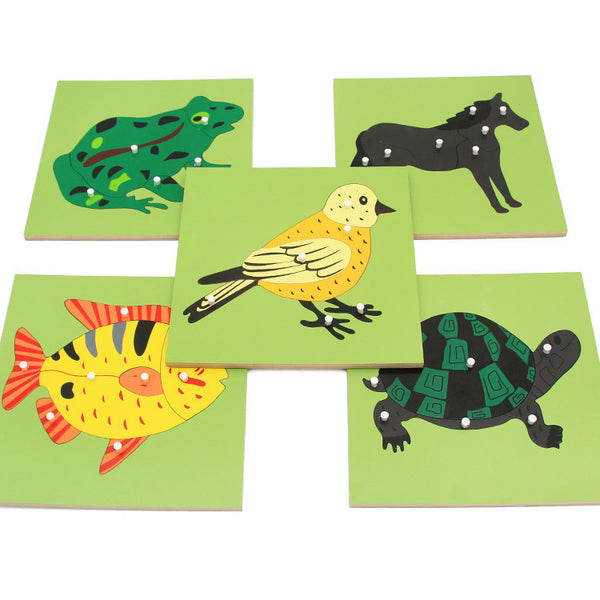
9. Cultural Materials: Timeline of Life
What it is: Visual representation of animal evolution and human evolution
Why it matters:
- Introduction to science and history
- Understanding time concepts
- Sensorial and visual learning
- Satisfies scientific curiosity
- Builds knowledge foundation
How to use:
- Child arranges animals in timeline
- Learns about evolution
- Understands time passage
- Develops scientific thinking
Recommended product: Timeline of life materials ($30-60)
Skill development: Science understanding, timeline concepts, sequencing, evolutionary awareness
10. Practical Life: Dressing Frames (Advanced)
What it is: Frames with buckles, snaps, multiple buttons, complex closures
Why it's continuing work:
- Deepens practical independence
- More complex fine motor challenges
- Self-care skill development
- Confidence in dressing abilities
- Refined coordination
How to use:
- Child practices increasingly complex fasteners
- Develops independence in dressing
- Refined motor control
- Pride in accomplishment
Recommended product: Advanced dressing frame set ($30-60)
Skill development: Fine motor, independence, self-care skills, perseverance
11. Sensorial: Geometric Solids
What it is: 3D shapes (sphere, cube, cylinder, cone, etc.) in wood
Why it's important:
- Introduction to geometry
- 3D spatial understanding
- Foundation for geometry learning
- Beautiful, engaging materials
- Sensory exploration
How to use:
- Child explores each solid
- Learns names
- Rolls, stacks, balances
- Discovers properties
- Develops spatial reasoning
Recommended product: Geometric solids set ($30-60)
Skill development: Geometry, spatial reasoning, 3D understanding, mathematical thinking
12. Writing Materials (Post-Phonetics)
What it is: Pencils, paper, writing guides for transitioning from sandpaper letters to pencil writing
Why it's essential:
- Transition from finger tracing to pencil writing
- Refined fine motor control
- Pre-writing to actual writing
- Independence in expressing ideas
- Confidence in writing ability
How to use:
- Child moves from sandpaper letters to writing
- Uses lined paper with guides
- Writes simple words, then sentences
- Gradual development of writing fluency
- Personal expression through writing
Recommended product: Writing paper, pencils, writing guides ($20-40)
Skill development: Fine motor, writing, expression, spelling, grammar preparation
Creating an Advanced Montessori Environment
At 4, your environment should support emerging academics while maintaining Montessori principles:
Shelf Organization:
- 12-15 materials available (rotating)
- Academic materials displayed prominently
- Practical life materials still accessible
- Beautiful, organized presentation
- Child can access independently
Reading Corner:
- Basket of phonetically-based books
- Comfortable seating
- Child's chosen books displayed
- Positive reading culture
Work Space:
- Table for writing, math work
- Mat for floor work
- Comfortable, child-sized
- Minimal distractions
Active Learning:
- Kitchen access for cooking activities
- Outdoor space for gardening
- Natural materials visible
- Science opportunities available
Balancing Independence with Support
At 4, children are increasingly independent but still need guidance.
When to Step Back:
- Let them attempt before helping
- Don't correct instantly
- Allow exploration and discovery
- Trust the process
- Celebrate effort
When to Step In:
- If frustration becomes overwhelming
- If safety is compromised
- If material is being misused
- If gentle guidance would unlock progress
- If child asks for help
Balance: Mostly stepping back, occasional stepping in.
FAQ for Parents with 4-Year-Olds
Q: My 4-year-old hasn't started reading yet. Is this a problem?
A: Not necessarily. Montessori range is 3-5 for reading onset. If child knows letter sounds and enjoys books, reading will come. No pressure—development varies.
Q: Should I continue Montessori if my child starts school?
A: Absolutely. Montessori at home supports traditional school. Materials continue developing skills that help academically.
Q: How do I handle writing if my child wants to but isn't ready?
A: Let them try. Use thick pencils and wide paper. Expect large, shaky writing. It's process, not perfection. Writing emerges naturally.
Q: My 4-year-old is very advanced. What should I provide?
A: Move to next age's materials. But remember—advanced academically doesn't mean advanced socially/emotionally. Balance academic materials with play and movement.
Q: What if my 4-year-old seems "behind" academically?
A: At 4, "behind" is less meaningful. Development is individual. Trust Montessori process. Many "late" readers become fluent readers by age 5-6. No long-term difference.
Q: How much should I spend on Montessori materials for a 4-year-old?
A: Ideally $200-400 total for a good collection. Build over time. One quality item (golden beads, $100) beats many cheap toys.
Prepare for School Success
A 4-year-old in a Montessori environment is typically:
- ✅ Reading or on verge of reading
- ✅ Comfortable with numbers
- ✅ Independent in self-care
- ✅ Able to focus for extended periods
- ✅ Respectful of others
- ✅ Confident in abilities
- ✅ Curious and engaged
These qualities create exceptional school readiness.
Shop Montessori Toys for 4-Year-OldsDiscover our curated collection of Montessori materials for 4-year-olds. Selected for developmental appropriateness, learning value, and beauty.
Author:
Alok Gupta | WonderKidsToy Founder & Montessori Education Expert