

Quick Answer:
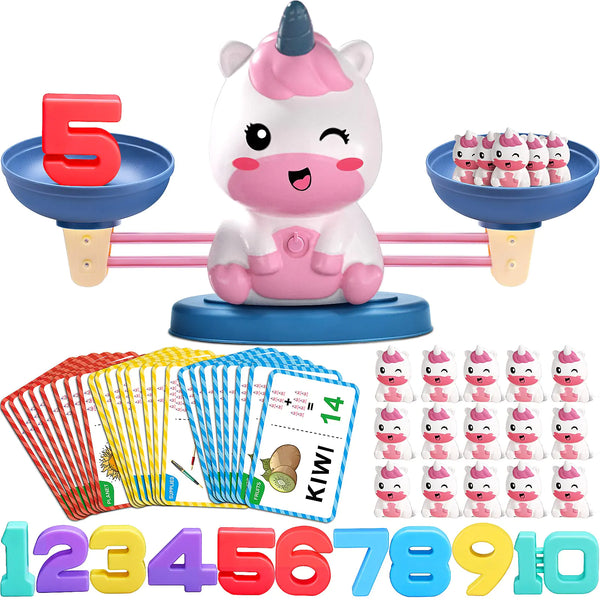
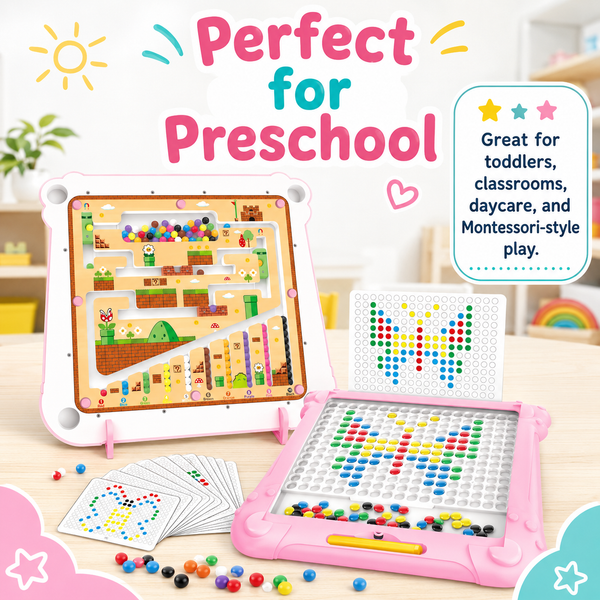
STEM toys are educational materials designed to teach Science, Technology, Engineering, and Mathematics through hands-on exploration and play. These toys help children ages 4-12 develop problem-solving skills, critical thinking, creativity, and STEM literacy—skills that are increasingly important in today's technology-driven world. STEM toys make complex concepts fun and accessible by encouraging kids to build, experiment, and discover.
Table of Contents
- What Are STEM Toys? (Detailed Definition)
- Why STEM Education Matters (And Why Now)
- The 4 Pillars of STEM Toys
- How STEM Toys Develop Critical Skills
- 7 Types of STEM Toys to Know
- STEM vs. Traditional Toys: What's the Difference?
- How to Choose the Right STEM Toy for Your Child
- Best STEM Toys for Every Age (4-12 Years)
- Where to Buy Quality STEM Toys
- Frequently Asked Questions
- Prepare Your Child for Tomorrow
What Are STEM Toys? (Detailed Definition)
STEM toys are educational tools designed to introduce and develop skills in four critical areas:
- Science - Understanding how the natural world works
- Technology - Learning to use and create digital/electronic systems
- Engineering - Building, designing, and solving problems
- Mathematics - Developing number sense and logical thinking
Unlike traditional toys that entertain, STEM toys have a dual purpose: they're fun AND educational. A child might spend 45 minutes engrossed in a robotics kit, unaware that they're actually learning about electrical circuits, cause-and-effect relationships, and problem-solving strategies.
The Core Principle:
STEM toys work because they transform abstract concepts into concrete, tangible experiences. A child doesn't just learn what gravity is—they experience it by building a ramp and experimenting with different angles. They don't just understand coding—they do coding by programming a robot to complete a maze. That's the STEM toy advantage: Active learning that sticks.
Why STEM Education Matters (And Why Now)
The Changing Job Market
By 2030, STEM jobs will grow 13% faster than non-STEM jobs. According to the U.S. Bureau of Labor Statistics, careers in technology, engineering, and mathematics are among the fastest-growing and highest-paying fields. The question isn't "Will my child need STEM skills?" but "Will they have a competitive edge?"
Children who develop STEM literacy early have more career options, better earning potential, and greater adaptability in a rapidly changing world.
21st-Century Skills
Beyond career prospects, STEM toys develop skills that matter everywhere:
- Problem-solving - Breaking down complex challenges
- Critical thinking - Analyzing and evaluating information
- Creativity - Finding innovative solutions
- Collaboration - Working with others toward goals
- Communication - Explaining ideas clearly
- Persistence - Not giving up after failure
These aren't just "tech" skills—they're life skills that lead to success in any field.
Closing the STEM Gap
Historically, girls have been underrepresented in STEM fields. Introducing STEM toys early—especially to girls—helps break stereotypes and opens doors. When children see themselves as "STEM people" from a young age, they're more likely to pursue STEM education and careers.
The Brain Development Connection
STEM toys stimulate the parts of the brain responsible for:
- Spatial reasoning (ability to visualize 3D concepts)
- Logical thinking (understanding cause and effect)
- Pattern recognition (seeing relationships)
- Memory formation (through hands-on engagement)
These cognitive skills form the foundation for academic success across all subjects, including reading and writing.
The 4 Pillars of STEM Toys
Quality STEM toys build on four essential elements:
Pillar 1: Science (Observation & Experimentation)
STEM toys introduce children to the scientific method: form a hypothesis, conduct an experiment, observe results, and draw conclusions.
How it works:
- A crystal-growing kit isn't just making pretty rocks—it's chemistry
- A weather station isn't just measuring temperature—it's meteorology
- A life cycle puzzle isn't just arranging pictures—it's biology
Skill development:
- Observation skills
- Hypothesis testing
- Data collection
- Understanding of natural laws
Pillar 2: Technology (Using & Creating Digital Systems)
Technology STEM toys teach how machines work, how code functions, and how technology solves problems.
How it works:
- A robotics kit teaches programming logic
- An electronics set demonstrates circuits and electrical flow
- A coding game introduces algorithmic thinking
- A computer build-kit demystifies how computers work
Skill development:
- Understanding digital logic
- Coding and algorithm design
- Troubleshooting technical problems
- Comfort with technology
Pillar 3: Engineering (Design & Building)
Engineering toys teach the design process: planning, building, testing, and refining.
How it works:
- A bridge-building set challenges structural thinking
- A machine-building kit applies physics principles
- A construction challenge teaches problem-solving
- An architecture set explores spatial design
Skill development:
- Design thinking
- Understanding of physics principles
- Spatial reasoning
- Project planning and execution
Pillar 4: Mathematics (Numbers, Logic, Patterns)
Math STEM toys make numbers and logic tangible and fun.
How it works:
- A coding robot teaches sequencing and algorithms
- A geometry building set explores shapes and spatial relationships
- A logic puzzle develops problem-solving
- A measurement activity kit introduces practical math
Skill development:
- Number sense
- Logical reasoning
- Pattern recognition
- Understanding relationships and proportions
How STEM Toys Develop Critical Skills
1. Problem-Solving
STEM toys present challenges that require thinking. A child building a structure that must support weight, or programming a robot to navigate a maze, is practicing problem-solving in a low-stakes environment. They learn that challenges can be broken into steps, that failure is part of learning, and that persistence leads to solutions.
Real-world impact: Problem-solving skills transfer to academic challenges, social conflicts, and future career success.
2. Critical Thinking
Unlike toys that have one "right" way to play, STEM toys often have multiple solutions. A child might build a bridge in three different ways, each with different advantages. This develops the ability to evaluate options, consider consequences, and make thoughtful decisions.
Real-world impact: Better decision-making in academic and personal contexts.
3. Creativity
STEM isn't just about rules and right answers—it's about innovation. A robotics kit can be programmed to perform countless different tasks. A building set can be assembled in infinite configurations. This encourages creative thinking within a structured framework.
Real-world impact: Ability to generate innovative solutions and think outside the box.
4. Persistence
Many STEM activities involve trial and error. A child's circuit might not work the first time, or their robot might not complete the maze. Learning to troubleshoot, adjust, and try again builds resilience and the understanding that failure is part of learning.
Real-world impact: Greater tolerance for challenges and the grit to persist through difficulty.
5. Communication
STEM often involves explaining your ideas: "Here's my design and why I built it this way." Or collaborating: "Let's work together to solve this." These experiences develop communication skills essential for teamwork and leadership.
Real-world impact: Better ability to express ideas and work effectively with others.
6. Fine Motor Development
Building, coding, assembling—STEM toys require precision hand movements. This develops the fine motor control needed for writing, sports, and skilled trades.
Real-world impact: Improved handwriting, dexterity, and physical coordination.
7 Types of STEM Toys to Know
1. Robotics & Coding Toys (Ages 4-12)
These toys teach the fundamentals of programming and robotic movement.
Examples:
- Programmable floor robots (follow code sequences)
- Screen-free coding games (learn logic without screens)
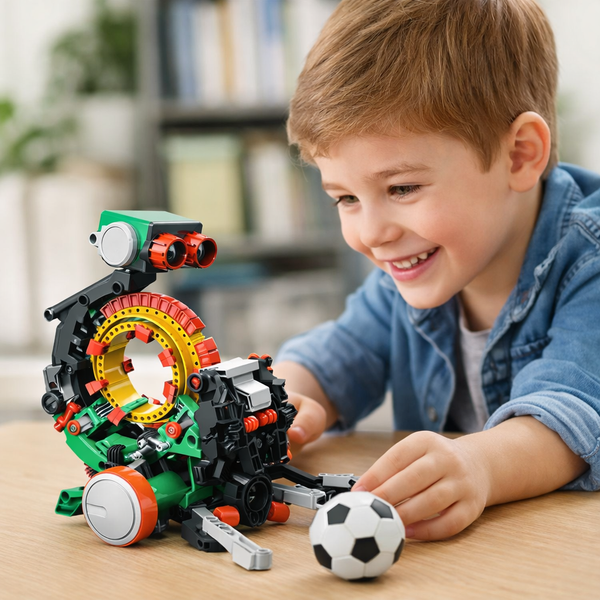
- Robot building kits (assemble and program)
- Coding board games (understand algorithms through play)
What they develop: Logical thinking, algorithm understanding, cause-and-effect reasoning
Best for: Visual learners, kids who like problem-solving, children with engineering interest
Price range: Entry level: $30-60 | Advanced: $80-200+
2. Electronics & Circuitry (Ages 6-12)
These toys teach how electricity works and how circuits power devices.
Examples:
- Snap-together circuit kits (build circuits without soldering)
- LED building sets (create lights and switches)
- Electronics experiment kits (learn about conductivity)
- Arduino and programmable electronics (advanced building)
What they develop: Understanding of electrical flow, troubleshooting skills, engineering thinking
Best for: Hands-on learners, kids interested in how things work, future engineers
Price range: Entry level: $20-40 | Advanced: $50-150
3. Building & Construction Sets (Ages 3-12)
These toys develop spatial reasoning and understanding of structures.
Examples:
- LEGO and LEGO Technic (classic building with motorized options)
- Magnetic tiles (3D spatial exploration)
- Architecture sets (design principles)
- Bridge-building challenges (structural engineering)
What they develop: Spatial reasoning, design thinking, fine motor skills, engineering fundamentals
Best for: All learners; highly versatile for different ages and interests
Price range: Entry level: $15-30 | Advanced: $60-300+
4. Science Experiment Kits (Ages 5-12)
These toys introduce scientific concepts through hands-on experimentation.
Examples:
- Crystal growing kits (chemistry)
- Fossil excavation (paleontology)
- Weather station kits (meteorology)
- Slime and chemistry sets (practical chemistry)
- Volcano kits (geology and chemistry)
- Microscope sets (biology)
What they develop: Scientific method understanding, observation skills, hypothesis testing, curiosity about the natural world
Best for: Curious learners, children interested in science, hands-on experimenters
Price range: Entry level: $10-20 | Advanced: $40-100+
5. Coding Games & Logic Toys (Ages 4-12)
These toys teach programming concepts without screens or complicated coding languages.
Examples:
- Code & Go Robot Mouse (introduce sequences)
- Logic board games (develop algorithmic thinking)
- Card-based coding games (understand programming without screens)
- Puzzle games requiring planning (develop problem-solving)
- Visual programming boards (understand code structure)
What they develop: Logical thinking, sequencing, problem-solving, understanding of algorithms
Best for: All ages; great introduction to coding for young children
Price range: Entry level: $20-30 | Advanced: $60-200
6. Engineering & Maker Kits (Ages 7-12)
These comprehensive kits encourage design thinking and creative problem-solving.
Examples:
- Machine-building kits (create mechanical systems)
- Catapult and launcher kits (physics and engineering)
- Maker boxes (monthly STEM projects)
- 3D design and printing kits (modern design)
- Model building challenges (engineering and planning)
What they develop: Design thinking, understanding of physics, project planning, engineering fundamentals
Best for: Older children, kids who like detailed projects, future engineers
Price range: Entry level: $15-30 | Advanced: $100+ or $25-60/month subscriptions
7. Math & Logic Toys (Ages 4-10)
These toys make abstract math concepts concrete and enjoyable.
Examples:
- Number and measurement games
- Logic puzzles (Tangrams, pattern boards)
- Geometry building sets
- Coding toys that teach sequencing and counting
- Board games involving math and strategy
What they develop: Number sense, logical reasoning, pattern recognition, understanding of mathematical relationships
Best for: All learners; particularly helpful for children struggling with traditional math
Price range: Entry level: $10-25 | Advanced: $50-100
STEM vs. Traditional Toys: What's the Difference?
STEM Toys:
- ✅ Have a learning objective
- ✅ Encourage experimentation
- ✅ Support problem-solving
- ✅ Develop specific skills
- ✅ Maintain engagement through challenge
- ✅ Often include extension activities
- ✅ Grow with the child
- ✅ Encourage deeper thinking
Example: A robotics kit teaches programming, problem-solving, persistence, and spatial reasoning.
Traditional Toys:
- ❌ Designed primarily for entertainment
- ❌ May have limited learning value
- ❌ Become boring quickly
- ❌ Don't necessarily develop skills
- ❌ Fixed difficulty level
- ❌ May include overstimulation features
- ❌ Limited educational growth
- ❌ Often require limited thinking
Example: A light-up toy provides instant gratification but limited skill development.
Why STEM Matters More Today
In a rapidly changing world, children need adaptable skills. STEM toys develop the ability to think, problem-solve, and adapt—skills that matter across all careers and life situations.
How to Choose the Right STEM Toy for Your Child
Step 1: Assess Your Child's Age & Interests
Ages 4-5 (Early Introduction):
- Start with tangible, visible concepts
- Avoid complex coding or tiny pieces
- Focus on robotics, building, and basic science
- Best choices: Floor robots, large building sets, simple circuit kits
Ages 6-8 (Foundation Building):
- Introduce coding concepts
- Expand to more complex engineering
- Support growing problem-solving abilities
- Best choices: Beginner coding, robotics, science experiments, construction challenges
Ages 9-12 (Advanced Exploration):
- Support interest-driven projects
- Introduce more advanced coding and electronics
- Encourage research and deeper learning
- Best choices: Advanced robotics, Arduino, maker kits, specialized science sets
Step 2: Match the Toy to Their Learning Style
Visual Learners:
- Building and construction sets
- Robotics with visual feedback
- Color-based coding games
Hands-On Learners:
- Electronics and circuit building
- Science experiments
- Maker kits
Logical Learners:
- Coding games and logic puzzles
- Math-based STEM toys
- Programming robots
Kinesthetic Learners:
- Building and construction
- Physics-based challenges
- Interactive robotics
Step 3: Start Small & Build
Don't invest in expensive comprehensive sets right away. Start with:
- One foundational toy per category
- Observe what engages your child
- Build based on genuine interest
Budget-friendly approach:
- Start with $20-40 toys to test interest
- Upgrade to more advanced sets once engaged
- Mix brands and types for variety
Step 4: Look for Open-Ended Possibilities
The best STEM toys can be used in multiple ways. A building set with one "correct" assembly is less valuable than one that allows creative configurations.
Good signs:
- Multiple assembly options
- Ability to create own designs
- Extension and expansion options
- Activities at different difficulty levels
Step 5: Ensure Age-Appropriate Complexity
Too easy = boring. Too hard = frustrating. Ideal STEM toys are just slightly beyond a child's current ability, requiring thinking but not overwhelming.
Watch for:
- Child can understand the concept with minimal help
- Child needs to think but doesn't get stuck
- Child feels proud of accomplishments
- Child wants to repeat and expand
Best STEM Toys for Every Age (4-12 Years)
Ages 4-5: Early STEM Introduction
Cubetto Screen-Free Coding Robot ($99)
- Perfect first introduction to coding
- No screens required
- Visible, tangible results
Develops: Logical thinking, sequencing
Magna-Tiles or Magnetic Building Blocks ($40-100)
- 3D construction and spatial reasoning
- Open-ended creativity
Develops: Spatial awareness, fine motor skills
Beginner Science Kit ($25-50)
- Crystal growing, nature exploration
- Hands-on experimentation
Develops: Observation, hypothesis testing
Ages 6-8: Foundational STEM Skills
LEGO WeDo or LEGO Boost ($100-150)
- Robotics with LEGO familiarity
- Visual programming
Develops: Engineering, coding, creativity
Snap Circuits Junior ($40-60)
- Electronics without soldering
- See electrical circuits in action
Develops: Understanding of circuits, troubleshooting
Coding Games ($25-50)
- Screen-free coding concepts
- Logic and sequencing
Develops: Algorithmic thinking, problem-solving
Ages 9-12: Advanced STEM Exploration
LEGO Technic or LEGO Robotics ($150-300+)
- Complex building and mechanisms
- Advanced robotics possible
Develops: Engineering, perseverance, complex thinking
Arduino Starter Kit ($70-100)
- Introduction to real programming
- Project-based learning
Develops: Coding, electronics, independent learning
Comprehensive Science Kit ($50-150)
- Multiple experiments at varying difficulty
- Deeper scientific understanding
Develops: Scientific method, research skills
Maker Subscription Box ($25-60/month)
- Monthly STEM projects
- Keeps engagement fresh
Develops: Diverse STEM skills, ongoing learning
Where to Buy Quality STEM Toys
Online Retailers:
- Amazon - Widest selection, easy comparison
- WonderKidsToy - Curated STEM selection for home use
- LEGO Official Store - Authentic LEGO and robotics products
- ThinkGeek - Quality STEM toys and educational products
- Learning Express - Educational toy specialist
- Etsy - Unique and custom STEM toys
Specialty Retailers:
- Educational toy stores (local availability varies)
- Science museums (often have gift shops with quality items)
- Robotics clubs and STEM centers
- Maker spaces (sometimes sell kits)
Budget Tips:
- Start small: One $30 toy beats multiple expensive purchases
- Watch for sales: STEM toys often go on sale around holidays
- Buy open-box: Returned items at discounts
- Consider subscriptions: Maker boxes deliver monthly learning
- Check for bundles: Often better value than individual items
- Look for deals: WonderKidsToy often offers curated collections at better prices than buying separately
Frequently Asked Questions About STEM Toys
Q1: Are STEM toys only for "smart" kids?
A: No. STEM toys are for all children. They're designed to develop skills, not measure existing intelligence. In fact, children who struggle in traditional school settings often thrive with hands-on STEM learning.
Q2: My child likes art and writing, not STEM. Should they use STEM toys?
A: Absolutely. STEM includes engineering and design, which overlap with art. Plus, STEM develops creative problem-solving valuable in all fields. Many successful artists and writers use STEM thinking.
Q3: Are STEM toys only for advanced readers?
A: No. Quality STEM toys include visual instructions and don't require reading. The hands-on nature makes them accessible to children at all literacy levels.
Q4: Will STEM toys replace traditional play?
A: STEM toys should complement, not replace, other play. Children need imaginative play, outdoor time, and open-ended exploration. STEM toys are one important component of balanced childhood.
Q5: How much should I expect to spend on STEM toys?
A: You can start with quality STEM toys for $15-50. A well-rounded STEM collection might be $200-500 built over time, not all at once. Quality matters more than quantity.
Prepare Your Child for Tomorrow
STEM skills are no longer optional—they're essential. Whether your child dreams of becoming an engineer, a doctor, an entrepreneur, or a teacher, STEM literacy gives them a competitive edge.
The best time to start? Today. The best way? With toys that make learning feel like play.
Start with one STEM toy that matches your child's interests. Observe their engagement. Build from there. Within weeks, you'll see growth in problem-solving, confidence, and enthusiasm for learning.
Explore STEM Toys at WonderKidsToyDiscover a carefully curated collection of STEM toys designed to engage, challenge, and inspire children ages 4-12. From coding robots to engineering kits, find the perfect learning tools for your child's journey.