2026 PILLAR GUIDE • SENSORY PLAY • HANDS-ON LEARNING
Best Sensory Toys for Toddlers & Kids: Calm, Hands-On Learning Guide
Sensory toys give children something real to touch, move, sort, squeeze, stack, listen to, build or manipulate. Instead of simply watching a toy perform, children take an active role. That is why well-chosen sensory play can become a useful part of everyday learning, quiet play, travel, transitions and open-ended discovery.
The goal is not to find a toy with the biggest list of developmental claims. A strong sensory toy is one that fits the child’s age, interests and current abilities, offers a clear hands-on action and can be used repeatedly in more than one way. Some children are drawn to texture and pressure. Others prefer movement, sound, sorting, building or practical-life actions such as fastening and opening.
This guide explains what sensory toys are, how the major types differ, how to choose by age and play style, how to build useful sensory routines at home and what parents should check before buying. For current products, use the Sensory Learning Toys collection as the main shopping hub.
Quick Answer: What Are the Best Sensory Toys for Kids?
The best sensory toys are safe, age-appropriate and easy for the child to use actively. Useful formats include textured toys, busy boards, sorting and matching toys, stacking toys, sensory balls, musical toys, simple cause-and-effect toys, building sets, water-style play tools, practical-life toys and fidget-style products for children whose age guidance fits.
Choose the action before the label. If your child likes squeezing, choose something designed for safe pressure and repeated handling. If the child likes arranging objects, consider sorting or stacking. If movement and construction hold attention, building toys may provide richer replay value. A toy does not need to stimulate every sense to be useful.

Table of Contents
What Sensory Play Really Means
Sensory play is any age-appropriate activity in which a child notices and responds to information through the senses while actively doing something. Touch is the most obvious example, but sensory play can also involve movement, sound, sight, balance, pressure and body awareness. A child rubbing a textured surface, pouring water between cups, shaking a musical toy, pushing pieces through a sorter or balancing blocks is using sensory information to guide the next action.
The important word is active. A flashing toy that does everything on its own may be visually stimulating, but it gives the child fewer decisions. A simpler toy that asks the child to grasp, twist, compare, sort or build often creates more opportunities to notice cause and effect. Children can repeat the same action, change one thing and see what happens.
Sensory play also does not have to be messy. Sand, water and dough are classic sensory materials, but so are smooth wooden shapes, textured books, lacing boards, stacking cups, magnetic builders, musical instruments and everyday practical-life materials. The best choice is the one your family can set up safely and use consistently.
What Children Can Practice During Sensory Play
Sensory toys do not guarantee a developmental outcome, but they can create useful opportunities for practice. When children manipulate real objects, they receive immediate feedback from their hands, eyes, ears and body. That feedback can make abstract ideas easier to understand.
Picking up pieces, turning knobs, fastening, squeezing and placing objects can provide practice for controlled hand movements.
Sorters, puzzles and construction toys invite children to test a plan, notice when it does not work and try another approach.
Words such as rough, smooth, heavy, light, soft, hard, fast and slow become easier to understand when children can feel or see the difference.
Repeatable actions such as sorting, threading or building can encourage a child to stay with an activity when the challenge level is appropriate.
Sensory Play and Calm, Focused Moments
Parents often search for “calming sensory toys,” but no single toy will calm every child. Preferences differ. One child may settle into a repetitive sorting activity while another may prefer movement, music or construction. A better approach is to observe which kinds of actions naturally hold your child’s attention without creating frustration.
Predictability is often useful. If a child knows that beads slide along a track, a shape fits into a matching opening or a board fastener opens and closes in the same way each time, the activity can become familiar. Familiarity can make it easier to begin independently and repeat the experience.
Keep expectations modest. Sensory toys are play materials, not treatment tools. If a child has individualized sensory, developmental or safety needs, guidance from a qualified professional who knows the child is more appropriate than relying on general toy advice.
The Main Types of Sensory Toys
1. Textured toys
Textured balls, blocks, books and boards encourage children to notice surface differences. Use simple descriptive language rather than turning the activity into a quiz. “This one feels bumpy” or “this one is smooth” is enough to connect the experience with vocabulary.
2. Busy boards and practical-life toys
Zippers, buckles, sliders, laces, switches and doors provide repeatable hand actions. They can be especially appealing to children who like understanding how everyday objects work. Check the exact product for small parts, cords and age guidance.
3. Sorting, matching and posting toys
Shape sorters and matching toys combine visual and tactile information. The child compares size, outline, color or category, then adjusts the piece based on the result. This makes them useful for hands-on problem solving.
4. Building and stacking toys
Blocks, tiles and stackers add pressure, balance and spatial planning. Children can feel weight, resistance and stability while building. Open-ended sets often grow with a child because the same pieces can be used for increasingly complex ideas.
5. Musical and sound-making toys
Simple instruments and cause-and-effect sound toys can support listening, rhythm and movement. The most useful options let the child create the sound rather than playing long automatic sequences.
6. Movement-oriented toys
Some children seek activities involving pushing, pulling, carrying, rolling or balance. Choose products designed for the intended movement and follow all supervision, space and age guidance. Ordinary active play can be sensory play too.
Touch, Movement, Sound and Visual Play: Which Should You Choose?
Parents do not need to cover every sensory category with one toy. Start with what the child already enjoys. A child who repeatedly touches fabric tags, smooth stones or different surfaces may enjoy tactile exploration. A child who builds towers, carries objects or pushes toy vehicles may prefer movement and construction. A child who taps, sings or notices rhythms may gravitate toward sound-making play.
Visual interest can also be useful, especially in puzzles, sorting and pattern activities. The key is to avoid assuming that brighter, louder or more complicated is automatically better. Too many features can make it hard for a child to understand what action caused the result.
A simple rule is to choose a toy with one obvious primary action and enough flexibility for the child to extend it. For example, a sorter begins with matching shapes but may later become a color game, counting activity or pretend container. A building set begins with stacking and later supports structures and stories.
Best Sensory Toys by Age and Stage
Babies
For babies, sensory play should be simple and closely supervised. Age-appropriate textured books, soft grasping toys, safe rattles and large objects designed for infant exploration can provide touch, sound and visual interest. Follow the exact product’s age guidance and inspect regularly for wear, loose parts or damage. Avoid adapting toys intended for older children.
Young toddlers
Toddlers often enjoy putting in and taking out, stacking, rolling, pushing, opening and closing. Large shape sorters, stacking cups, simple activity boards and chunky blocks can match these interests. Choose actions the child can understand quickly and repeat without constant adult correction.
Older toddlers
As hand control improves, children may enjoy matching, simple lacing, pretend routines and more detailed construction. Keep parts manageable, supervise according to the product guidance and remember that age labels are only the first filter; the individual child’s habits matter too.
Preschoolers
Preschool sensory play can combine several skills at once. A child might build a house, sort pieces by color, create a pretend story and explain how the structure works. Busy boards, building toys, art materials, musical instruments, puzzles and practical-life sets can all fit this stage when age appropriate.
School-age kids
Older children may prefer sensory experiences with a purpose: craft kits, construction challenges, logic toys, detailed fidgets, music, science observation or building. Avoid choosing products only because they are marketed as “sensory”; look for enough complexity and replay value to hold interest.

Shop the Main Sensory Collection
Compare sensory toys by hands-on action, age guidance, play style and current product details.
Explore Sensory Learning ToysSensory Toys for Fine Motor Practice
Fine motor practice is one of the clearest reasons parents choose hands-on toys. Small hand movements appear in many everyday activities: holding a spoon, pulling a zipper, turning a page, using crayons, dressing and manipulating classroom materials. Toys can provide playful opportunities to repeat similar movements.
Look for age-appropriate actions such as pinching large pieces, posting shapes, turning chunky knobs, sliding beads, stacking blocks, connecting pieces, threading suitable components or fastening a busy board. The child should be able to make progress without the task being so easy that there is nothing to solve.
Avoid forcing a “correct” grip or turning play into handwriting practice too early. Let the child explore the material first. If you want to extend the activity, add one small challenge: use two fingers to pick up a large token, alternate colors, build a taller stack or complete one fastener independently.
Sensory Play for Language and Communication
Sensory activities create natural reasons to talk because the child has something concrete to describe. Adults can model simple comparison words such as soft and firm, smooth and rough, full and empty, heavy and light, loud and quiet, long and short or fast and slow.
Questions can be useful, but constant questioning can interrupt play. Try comments first: “That piece feels bumpy,” “You found a heavy one,” or “The tower fell when the base moved.” These statements give the child language connected to a real event.
Pretend play can extend communication further. A bowl of sorting pieces can become pretend food. Blocks can become a zoo. A busy board can become a “travel bag” for a pretend trip. The sensory material provides the physical details while imagination supplies the story.
Sensory Toys and Problem-Solving
Many sensory toys are also problem-solving toys because the child must use touch and visual information to reach a goal. A shape sorter asks, “Which opening matches?” A stacker asks, “What will balance?” A building set asks, “How can this wall stand?” A fastening toy asks, “What movement opens this part?”
The adult’s role is often to wait a little longer before helping. If a child is safe and still engaged, a failed attempt is useful information. Instead of immediately showing the answer, try a short prompt such as “What else could you try?” or “Can you turn it?”
When the task is genuinely too difficult, simplify it. Offer fewer pieces, demonstrate one action or stabilize part of the setup. The aim is to keep enough challenge for thinking while allowing the child to feel ownership of the solution.
Parent Buying Checklist: How to Choose a Sensory Toy
- Check the exact age guidance. Search terms and collection categories are broad. The individual product’s instructions and packaging should guide the decision.
- Look at piece size and household access. Consider younger siblings, children who mouth objects and where the toy will be stored.
- Identify the main action. Decide whether the child will sort, squeeze, build, fasten, shake, roll, stack, match or create.
- Match the child’s interests. A toy that fits a natural play preference is more likely to be used repeatedly.
- Prefer replay value. Look for materials that can be used in several ways rather than one fixed demonstration.
- Check setup and cleanup. A great toy that is difficult to prepare may stay in the cupboard.
- Review cleaning instructions. Sensory toys are handled frequently, so know how the product should be cleaned and dried.
- Avoid unsupported promises. Buy the actual play experience, not a claim that one product will produce a guaranteed developmental result.
How Many Sensory Toys Does a Child Need?
Usually fewer than marketing makes it seem. A small set of well-used materials can provide more value than a large shelf of similar toys. Children often go deeper when they know what is available, can set it up independently and have enough time to repeat an idea.
Think in categories rather than quantity. You might keep one building option, one practical-life or fine-motor activity, one creative material and one movement or music option accessible. Rotate only when interest clearly fades or the child has outgrown the challenge.
Before buying another sensory toy, change the prompt. Ask the child to sort the same pieces in a new way, build for a toy animal, make a repeating pattern, close every fastener on a board or create a sound sequence. A new purpose can make familiar materials feel fresh without adding clutter.

20 Simple Sensory Play Ideas Using Toys and Everyday Materials
Choose only activities that fit the product and the child. Everyday items must also be age appropriate and safe. The aim is not to complete all twenty ideas; it is to have a menu of simple ways to extend the same materials.
How to Build a Simple Sensory Play Routine at Home
A useful routine does not need a dedicated sensory room. Start with a small basket or shelf and a clear play surface. Offer one or two options rather than placing every sensory toy on the floor. When the child knows where materials belong, setup and cleanup become easier.
For a short session, use three steps: choose, explore, reset. Let the child choose between two appropriate materials. Give enough uninterrupted time to explore. Then return pieces to the same container. Repetition matters more than duration; a focused ten-minute activity can be more useful than a long session that becomes chaotic.
If the child is deeply engaged, do not end simply because the planned time is over. If the child loses interest quickly, do not force completion. Observe what held attention and use that information the next time.
Sensory play can also fit into ordinary routines: a busy board before travel, stacking while dinner is prepared, a quiet puzzle after active outdoor play or a building basket during family downtime. Consistency makes the materials easier to use independently.
Creating a Calm Sensory Play Space Without Overloading It
A calm play area usually depends more on simplicity than on specialized equipment. Keep the surface clear, reduce unrelated toys nearby and choose materials with an obvious place to go when play ends. Good lighting and enough room to move safely are more important than decorating a “sensory corner.”
Avoid combining several loud, flashing or moving toys at once. If the purpose is focused hands-on play, start with one material. Add a second only when it supports the same activity, such as toy animals with building blocks or containers with sorting pieces.
Pay attention to the child’s response. If an activity seems frustrating, noisy or uncomfortable, reduce the intensity or change the material. Children are not required to enjoy every texture or sound. Respecting preferences makes sensory play more child-led and sustainable.
Sensory Play for Travel, Waiting Rooms and Restaurants
Portable sensory toys can be useful when families need a contained activity outside the home. Choose products with few loose pieces, simple setup and a storage case or bag. Reusable drawing boards, suitable fidgets, lacing or fastening activities and compact matching toys can work well when their age guidance fits.
Avoid introducing a completely unfamiliar toy during a stressful trip. A familiar activity is often easier because the child already knows how to start. Pack only one or two options and keep small parts under adult control.
Travel activities should not interfere with car-seat, airplane or public-space safety. Use products only where and how they are intended. For a restaurant or waiting room, quieter materials that remain on a table may be easier to manage than toys designed for large movement.
Sensory Toys vs Montessori Toys: What Is the Difference?
The categories overlap, but they are not identical. “Sensory toy” describes the way a child engages with touch, movement, sound, visual information or other sensory feedback. “Montessori” is a broader educational approach with specific principles around independence, order, real-world skills and purposeful materials.
A simple wooden sorter can be sensory because the child feels and compares shapes. A practical fastening activity may fit sensory and Montessori-style play because it combines hand feedback with an everyday action. But not every sensory toy is Montessori, and not every Montessori material should be marketed as a sensory toy.
If you are comparing these categories, use the Montessori Educational Toys collection for Montessori-focused shopping and keep the Sensory Learning Toys collection as the main hub for sensory intent.
Sensory Toys vs Fidget Toys
Fidget toys are one subset of sensory products, usually built around a repetitive hand action such as clicking, squeezing, rolling or turning. Sensory toys are a much broader category that can include sorting, texture exploration, building, practical-life play, sound and movement.
For younger children, many traditional learning toys may provide richer play than a small fidget because they involve sorting, construction or pretend play. For older children, an age-appropriate fidget can be a portable option when a simple repetitive action is preferred.
Check the specific product carefully. Some fidgets contain small components or are intended for older users. Do not treat the word “sensory” as proof that a product is suitable for every age.
Safety, Cleaning and Storage
Sensory toys are often handled closely and repeatedly, so condition checks matter. Follow the manufacturer’s age guidance and warnings. Inspect for cracked parts, exposed components, loose fasteners, frayed cords, damaged seams or other wear. Stop using a damaged toy until the manufacturer’s guidance confirms the correct next step.
Cleaning depends on the material. Do not assume that a wooden toy can be soaked, that an electronic activity board can be washed or that fabric components can go in a machine. Follow the product’s care instructions and allow items to dry fully where required.
Storage is part of safety. Keep small or older-child products inaccessible to younger siblings. Count pieces when a set includes many components. Use one labeled container per activity rather than mixing several products together, which can make missing parts harder to notice.
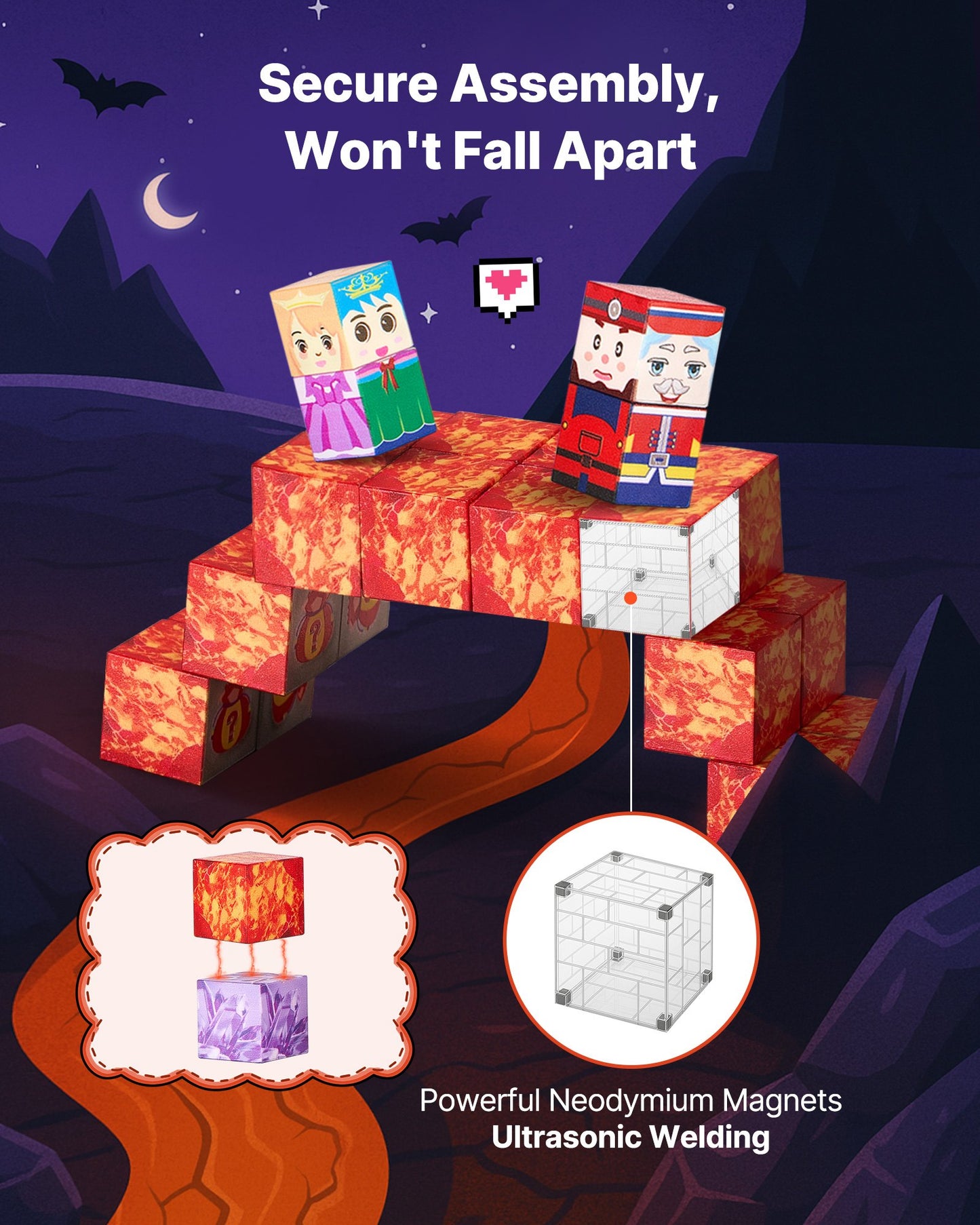
For magnetic products, damaged pieces deserve special attention because loose magnets can be dangerous if swallowed. Follow product-specific warnings, remove compromised pieces immediately and seek appropriate medical help if magnet ingestion is suspected.
When a Sensory Toy Is Too Easy or Too Difficult
A well-matched activity is understandable but not completely automatic. If the child finishes instantly and never returns, add a small variation: sort in a new way, build from a picture, use fewer colors, create a pattern or add a pretend-play purpose.
If the child cannot begin without full adult help, simplify. Remove extra pieces, demonstrate one movement or choose an easier variation. The objective is not to push through frustration. Children learn more when they can make meaningful decisions and see the result of their own actions.
Interest matters too. A perfectly age-appropriate toy may still be a poor fit for a child who dislikes that type of play. Watch what the child chooses voluntarily. Those choices provide better buying information than broad age-based lists.
Related Learning Paths
Sensory play connects naturally with other learning goals, but each collection should keep a clear shopping purpose. Use Early Development Toys when the main goal is broad early-stage play, Problem-Solving Toys for logic and challenge, Building & Construction Toys for structure and design, and Montessori Educational Toys for Montessori-oriented browsing.
For shoppers specifically searching sensory toys, stay with the Sensory Learning Toys collection. This keeps the commercial path clear while allowing this guide to answer broader informational questions.
Frequently Asked Questions About Sensory Toys
1. What are sensory toys?
Sensory toys are play materials that invite children to use touch, movement, sound, sight, pressure, balance or other sensory information while actively playing.
2. What are good sensory toys for toddlers?
Age-appropriate sorters, stackers, textured toys, busy boards, simple musical toys and chunky building materials can be useful when the exact product guidance fits the child.
3. Are sensory toys educational?
They can provide opportunities to practise observation, language, hand control, problem solving, sorting, building and cause-and-effect learning. They do not guarantee specific outcomes.
4. Can sensory toys support calm play?
Some children enjoy predictable repetitive activities such as sorting, building or squeezing, but preferences differ. No one toy is calming for every child.
5. Are fidget toys the same as sensory toys?
Fidgets are one type of sensory product. The wider sensory category also includes building, sorting, texture, music, practical-life and movement-based play.
6. How do I choose a sensory toy by age?
Start with the manufacturer’s age guidance, then consider piece size, the child’s play habits, supervision needs and whether the action is understandable and interesting.
7. What sensory toys help with fine motor practice?
Suitable posting toys, busy boards, stackers, lacing activities, shape sorters and building toys can provide opportunities for controlled hand movements.
8. How many sensory toys should I keep out at once?
A small number of complete activities is often easier to use than a crowded shelf. Rotate when interest fades rather than displaying everything.
9. Do sensory toys have to be messy?
No. Blocks, sorters, textured books, activity boards, instruments and reusable drawing toys can all provide sensory experiences without messy materials.
10. Are sensory toys good for travel?
Compact products with few loose pieces can be convenient for travel when used safely and according to the product instructions.
11. Can sensory toys help children learn words?
They create concrete experiences for words such as rough, smooth, heavy, light, loud, quiet, fast and slow, making descriptive language easier to connect with real objects.
12. Are Montessori toys sensory toys?
Some overlap, but the categories are not identical. Montessori is a broader educational approach, while sensory describes how a child receives and uses sensory information during play.
13. What should I check before buying a busy board?
Review age guidance, fastening security, small parts, cords, materials, condition and the exact actions included in the product.
14. Can building toys be sensory toys?
Yes. Building involves touch, pressure, balance, visual planning and movement, so many construction toys provide sensory-rich hands-on play.
15. What if my child dislikes a texture or sound?
Do not force the experience. Reduce the intensity, offer a different material and follow the child’s preferences while keeping the activity safe.
16. How should sensory toys be cleaned?
Follow the specific product’s care instructions. Cleaning methods vary by wood, fabric, plastic, electronics and other materials.
17. What makes a sensory toy open-ended?
Open-ended toys can be used in several ways without one fixed final result. Blocks, loose sorting materials and some creative toys are common examples.
18. Can sensory play be part of homeschooling?
Yes. Hands-on materials can support informal practice with sorting, patterns, language, construction and observation alongside other learning activities.
19. Should sensory play always be adult-led?
No. Adults can prepare a safe setup and provide brief help, while children should have room to explore and make decisions independently when appropriate.
20. Where can I compare sensory toys for toddlers and kids?
Browse WonderKidsToy’s Sensory Learning Toys collection and review each live product page for current age guidance, details and warnings.
Choose the Sensory Experience First
Start with the child’s age, interests and preferred hands-on action. Then compare the exact product details, supervision needs and replay value.
Shop Sensory Learning Toys