
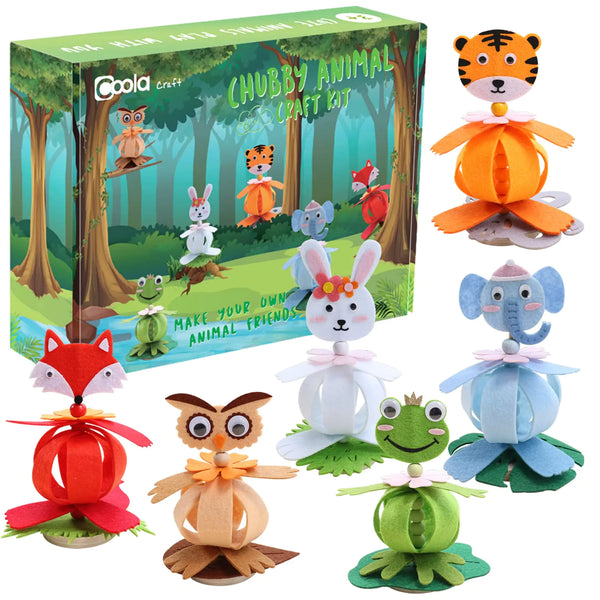
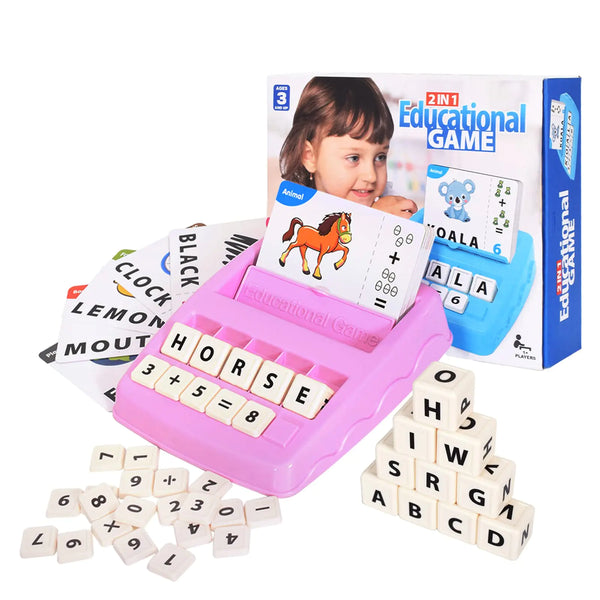
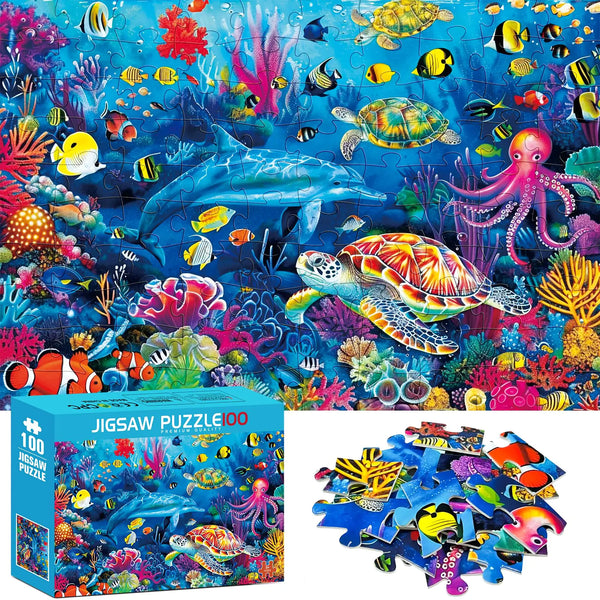
In today's digital age, it's crucial to engage children in activities that move beyond passive scrolling. Educational craft kits are a fantastic way to encourage hands-on learning and artistic expression. These kits are not just toys; they are carefully designed tools that enhance cognitive growth, creative logic, and fine motor precision.
By blending art with science and engineering, these kits turn your living room into a maker lab. In this guide, we explore the top-rated craft sets that help toddlers and school-age children build the technical confidence they need for a future of innovation.
Table of Contents
Flashy Gadgets vs. Purposeful Crafting
Many traditional toys are designed for passive entertainment. They feature blinking lights and pre-programmed sounds that do all the work for the child. This creates a spectator mindset where the child isn't required to think, imagine, or solve problems. When a toy performs the action, the brain's creative centers stay idle. Educational craft kits shift this dynamic, requiring the child to be the protagonist of their own creation.
Why Lack of Tactile Play Stalls Milestones
Early childhood is a unique window for developing executive function and fine motor mastery. Without the need to physically troubleshoot a design or coordinate their fingers to thread a jewelry bead, children miss out on forming vital neural pathways. Research on cognitive skill development shows that children need physical resistance and trial-and-error to build the logical sequencing and persistence required for school readiness.
Active Discovery: Turning Craft into Success
The right craft kits turn your home into a laboratory of innovation. Instead of just observing, kids use physical materials to understand cause and effect through immediate results. This "active discovery" helps them understand complex concepts like structural engineering and color theory through immediate sensory cues. This approach pairs perfectly with Stacked High Block Toys to build vertical spatial logic while they create.
Ready to spark their inner hero?
Discover curated kits that encourage independence and a lifelong love of discovery.
Shop Art & Creativity KitsTop Educational Discovery Categories
1. Science Experiment Kits
These are "manual logic trainers" for small hands. As children assemble circuits or mix safe chemicals, they are developing the pincer grip and understanding auditory discrimination. These kits are vital for sensory brain mapping. Learn more in our expert guide on choosing tools.
2. Jewelry-Making and Beading
Jewelry kits act as a multi-sensory workout for the developing mind. When a child pieces together a pattern of beads, they are practicing visual tracking and mental rotation. This builds the academic confidence needed for math and reading. For age-appropriate advice, see our guide on age-appropriate learning.
Milestone Comparison: Fine Motor Mastery
Beading Kits
Focus: Pincer grip & hand-eye sync.
Main benefits: Concentration, patterns.
Typical age: 5 - 10 years
Dough & Clay
Focus: Sensory & hand strength.
Main benefits: Tactile logic, grit.
Typical age: 2 - 6 years
STEM Build Kits
Focus: Engineering & Logic.
Main benefits: Troubleshooting, focus.
Typical age: 6 - 12 years
The STEAM Dimension: Blending Science and Art
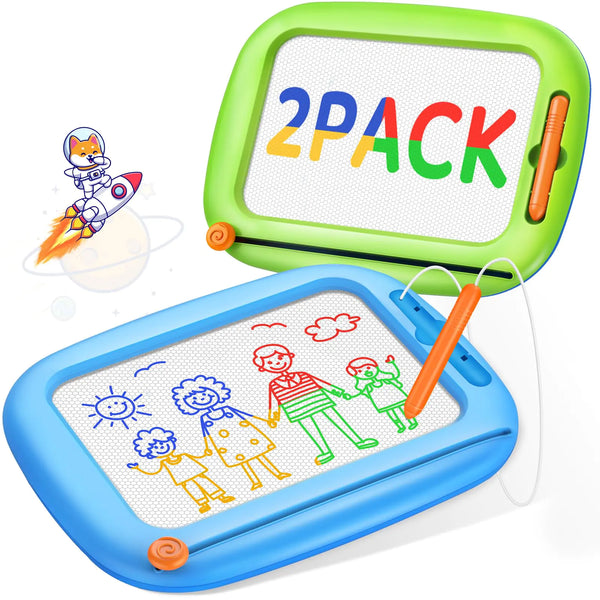
Multi-sensory engagement is "brain food" for young creators. Using tools like an Educational Toy Drawing Pad allows children to storyboard their science experiments or plan their engineering builds. This grounding in reality is a core part of the Montessori approach to science. It helps children categorize their world with precision.
Pairing art with STEM helps children understand cause and effect through immediate sonic or visual results. For more on this, check out our guide on how STEM kits transform learning.
FAQ
1. What are educational craft kits?
They are interactive tools like science sets, jewelry kits, and sculpting dough designed to teach Science, Math, and logic through hands-on play.
2. How do toys benefit brain development?
They foster spatial reasoning, logical planning, and executive function by requiring active participation and perspective-taking from the child.
3. What age group are these kits for?
Craft play starts as early as age 2 (soft dough) and remains vital throughout early elementary school (complex strategy and narrative kits).
4. Are educational toys safe for home use?
Yes, high-quality brands follow strict safety standards like ASTM to ensure materials are non-toxic, lead-free, and age-appropriate.
5. What is the Montessori approach to crafts?
It focuses on child-led choice and realistic materials to ground the child in physical logic before moving to abstract concepts.
6. Do these kits reduce screen time?
Yes, providing high-engagement physical alternatives is the best way to limit dependence on passive digital media from a young age.
7. Can crafts help with speech delays?
Yes, by encouraging children to name colors, shapes, and describe their creative process during shared play.
8. Can toys teach math naturally through crafts?
Yes, through counting physical pieces, understanding geometric patterns in jewelry, and exploring volume in dough play.
9. Why is "Grit" important in craft play?
It is the persistence to finish a complex build or finding a missing step—a vital trait for future school success fostered by complex toys.
10. How do I maintain wooden discovery toys?
Wipe them with a damp cloth and mild soap; never soak them in water to avoid warping the natural grain.
11. Do these toys help with ADHD focus?
Yes, the high level of tactile engagement and clear, physical goals help children build longer concentration spans.
12. What are the best toys for travel?
Small magnetic puzzle cubes, fabric books, and portable drawing boards are easy to carry and engaging on the go.
13. Can motor skills improve reading readiness?
Yes, visual tracking and hand coordination developed through crafts help eyes move smoothly across text later.
14. Are expensive sets worth it?
High-quality, durable materials offer far more long-term play value and accurate sensory feedback than cheap imitations.
15. What is "Narrative Play"?
Play where a child tells a story through their creation, which builds sentence structure and social confidence.
16. Why choose non-toxic finishes for toys?
Babies explore with their mouths and skin; ensuring toys are lead-free and BPA-free is vital for their long-term health.
17. What is an Object Permanence Box?
A Montessori classic that teaches infants things exist even when out of sight—foundational for later understanding complex symbols.
18. Can toys teach physics at home?
Yes, through ramps, pulleys, and gear sets that show forces like gravity and motion in action.
19. Are there STEM toys for 2-year-olds?
Yes, focus on "Cause and Effect" like ball-drops, large sorting rings, and chunky naming cards.
20. Do eco-toys help social skills?
Yes, collaborative builds and shared story sets teach turn-taking and shared problem-solving.
21. How do I setup a discovery area?
Use low shelves, clear bins for organization, and a flat surface to define the "work" space, allowing for independent choice.
22. What is "symbolic play"?
When a child uses a block or craft project to represent something else, building the cognitive flexibility needed for abstract math.
23. Can building sets teach math?
Yes, through understanding proportions, symmetry, and volume during tactile construction play.
24. How many toys should be out at once?
Montessori experts recommend keeping 6-10 purposeful toys accessible to maintain concentration and avoid overwhelm.
25. Do magnetic tiles foster creativity?
Absolutely. They allow for 3D architectural exploration and imaginative building that standard blocks cannot.
26. Why avoid battery-operated "performing" toys?
They often perform "for" the child, taking away the opportunity for the kid to use their own spatial and linguistic logic.
27. How does active play help with sleep?
The mental exertion of problem-solving and focus helps regulate a child's natural sleep-wake cycle.
28. Is toy rotation hard to manage?
No, just put half your toys in a bin in the closet and swap them every two weeks to maintain novelty.
29. Can math happen without numbers?
Yes, through learning proportions, symmetry, and volume during tactile construction and building play.
Where can I find high-quality educational toys?
Explore our specialized collections for every age and skill level at WonderKidsToy for vetted, high-quality options.
Nurturing a Lifetime of Awareness
Selecting intentional craft kits is much more than giving a plaything—it is an investment in your child’s cognitive potential. By selecting tools that encourage rhythm, logic, and physical mastery, you are setting the stage for a lifetime of innovative thinking. Every pieces snapped and ogni project completed is a building block for a bright future.
Ready to build a better discovery box? Explore our curated range of Montessori and STEM toys today. Your journey toward purposeful play starts here.