
Every parent has felt it. That creeping guilt when your child has been glued to a screen for too long. The worry that all those hours of swiping, tapping, and watching are replacing something more valuable. You are not imagining it. Research consistently shows that excessive screen time in young children is linked to shorter attention spans, delayed language development, reduced physical activity, and weaker social skills. But the alternative does not have to be boring. In fact, the best screen free educational toys for kids make learning so engaging that children forget they are not holding a device.
The shift away from screens is not about deprivation. It is about replacement. When you put the right hands-on toys in front of a child, something remarkable happens. They build. They experiment. They fail, adjust, and try again. They develop the exact skills that screens cannot teach — fine motor control, spatial reasoning, creative problem-solving, persistence, and deep concentration. Our full collection of educational toys is built around this exact philosophy: real learning through real play.
In this complete guide, you will discover why screen free toys matter more than ever, what makes a toy genuinely educational versus just screen free, the best categories of hands-on toys by age and skill, how to transition a screen-dependent child to hands-on play, and specific toy recommendations that parents consistently report seeing real results with. If you are ready to reclaim your child's attention from screens and redirect it toward meaningful learning, this is the place to start.
Table of Contents
Kids Are Spending More Time on Screens Than Ever Before
The numbers are staggering. Children between ages 2 and 5 now spend an average of over two hours per day on screens. For school-aged children, that number jumps to four, five, or even six hours daily when you include entertainment screens outside of school. Tablets, phones, smart TVs, and gaming devices have become the default babysitter, the go-to boredom buster, and in many homes, the primary source of stimulation for kids.
Parents are not to blame. Screens are engineered to be addictive. App developers, game designers, and content creators invest billions in making their products as sticky as possible. Bright colors, rapid scene changes, reward sounds, and infinite scrolling are all designed to capture and hold attention. When a child picks up a tablet, they are not just using a device. They are engaging with technology specifically built to keep them coming back.
The challenge for parents is real. You want your child to learn and grow. You want them to be entertained without being bored. But you also sense that something is being lost when screens become the dominant form of play. That instinct is correct. And the solution is simpler than most parents think.
What Too Much Screen Time Is Really Costing Your Child
Screen time feels harmless because the child appears calm and engaged. But what is happening beneath the surface tells a different story. Excessive screen use in early childhood has been linked to delayed speech development, shorter attention spans, reduced ability to self-regulate emotions, weakened fine motor skills, lower physical fitness, disrupted sleep patterns, and decreased creativity during free play.
The most insidious effect is what researchers call "attention fragmentation." Screens train the brain to expect rapid stimulation. Scene changes in children's shows happen every few seconds. Games deliver instant rewards. Social feeds refresh endlessly. This conditions the brain to crave constant novelty, making it harder for children to sustain focus on activities that are slower, quieter, or require patience — like reading, building, drawing, or having a conversation.
Parents see the symptoms everywhere. The child who cannot sit still during dinner. The toddler who throws a tantrum when the tablet is taken away. The 5 year old who says "I'm bored" thirty seconds after being handed a book, a puzzle, or a set of building blocks. These are not personality quirks. They are often the direct result of a brain that has been trained to expect screen-level stimulation from everything.
The good news is that these effects are reversible. When children are given engaging, hands-on alternatives that satisfy their need for stimulation through active participation rather than passive consumption, attention rebuilds, creativity returns, and the dependency on screens naturally fades.
Screen Free Educational Toys Replace Passive Consumption with Active Learning
Screen free educational toys work because they flip the dynamic. Instead of passively watching and tapping, children actively build, sort, stack, thread, solve, create, experiment, and discover. The stimulation comes from their own effort, not from a pre-programmed response. That shift — from consumer to creator — is the single most powerful change you can make in your child's play environment.
The best screen free toys are not just "not screens." They are positive replacements that deliver what screens promise but rarely provide: real learning, deep engagement, and lasting skill development. A child who builds a marble run is learning physics. A child who threads beads is developing the same fine motor control they need for writing. A child who sorts shapes is building the spatial reasoning that supports mathematics. These are not abstract claims. They are measurable developmental outcomes that hands-on play delivers and screens do not.
What makes this approach work is that it does not require willpower, discipline, or constant battles over screen limits. When a child has access to toys that are genuinely engaging, they choose them voluntarily. The key is finding the right toys for your child's age, interests, and developmental stage. That is exactly what this guide is designed to help you do.
Ready to swap screen time for skill time?
Explore our curated collection of hands-on toys that make learning irresistible — no batteries or Wi-Fi required.
Shop Screen Free Educational ToysWhat Actually Makes a Screen Free Toy Educational?
Not every toy without a screen is educational. A plain rubber ball is screen free but does not teach much beyond throwing. A random plastic figurine is screen free but offers limited developmental value. Truly educational screen free toys share specific characteristics that make them powerful learning tools.
They Build a Specific Skill
The best educational toys target at least one developmental area: fine motor skills, gross motor skills, spatial reasoning, logical thinking, language development, creativity, problem-solving, or social skills. A stacking toy builds hand-eye coordination and size discrimination. A building set develops spatial reasoning and engineering thinking. A puzzle strengthens pattern recognition and persistence.
They Encourage Active Participation
Educational toys require the child to do the work. The child makes decisions, manipulates materials, tests ideas, and evaluates results. There is no "play" button that does it for them. This active participation is what transforms play into learning.
They Are Open-Ended
Open-ended toys can be used in multiple ways. A set of wooden blocks can become a tower, a bridge, a wall, a road, a castle, or a pattern. This flexibility keeps the toy engaging over time and encourages creative thinking rather than rote repetition.
They Grow with the Child
The best educational toys are useful for months or even years. A 2 year old stacks three blocks. A 3 year old builds a tower of ten. A 4 year old creates complex structures. Same toy, deeper engagement, more advanced skills. This longevity is a hallmark of quality educational design.
They Provide Feedback
Self-correcting toys let children know when something is wrong without adult intervention. A puzzle piece that does not fit. A shape that will not go through the wrong hole. A tower that falls when unbalanced. This built-in feedback loop teaches children to observe, adjust, and try again independently. For a deeper comparison of toy approaches, read our guide on educational toys versus traditional toys and which is better for your child.
Best Categories of Screen Free Educational Toys
1. Building and Construction Toys
Wooden blocks, magnetic tiles, interlocking bricks, and engineering kits are among the most versatile screen free toys available. They teach spatial reasoning, balance, symmetry, planning, and creative problem-solving. Children who build regularly develop stronger math skills, better engineering intuition, and greater persistence. Explore our complete building and construction toys collection for age-appropriate options.
2. STEM Toys
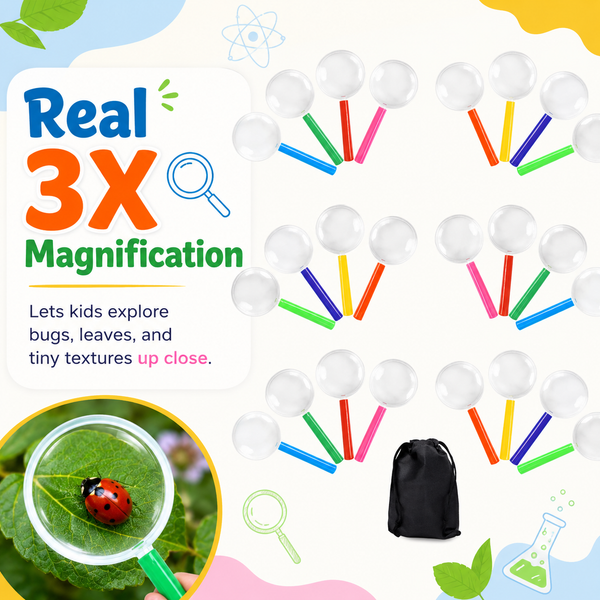
Science kits, experiment sets, magnifying tools, simple machines, and nature exploration kits make abstract concepts tangible. When a child mixes two liquids and watches a chemical reaction, they are learning science in a way no video can replicate. The tactile, multisensory nature of STEM toys creates deeper memory encoding and stronger conceptual understanding. Browse our STEM toys collection for hands-on science and engineering options.
3. Puzzles and Brain Teasers
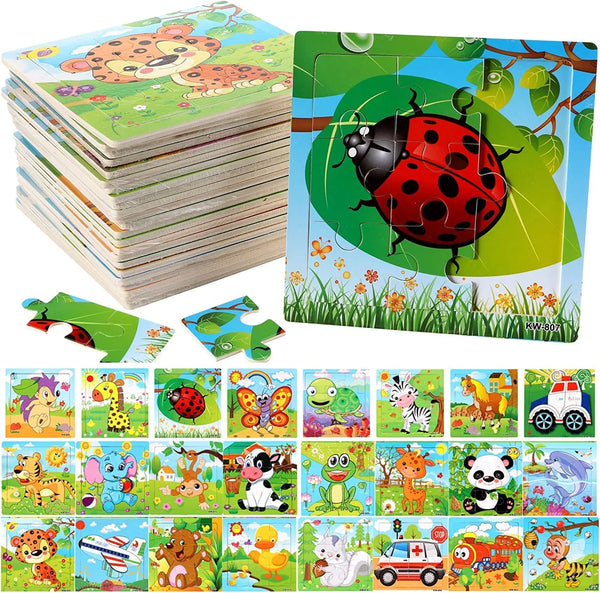
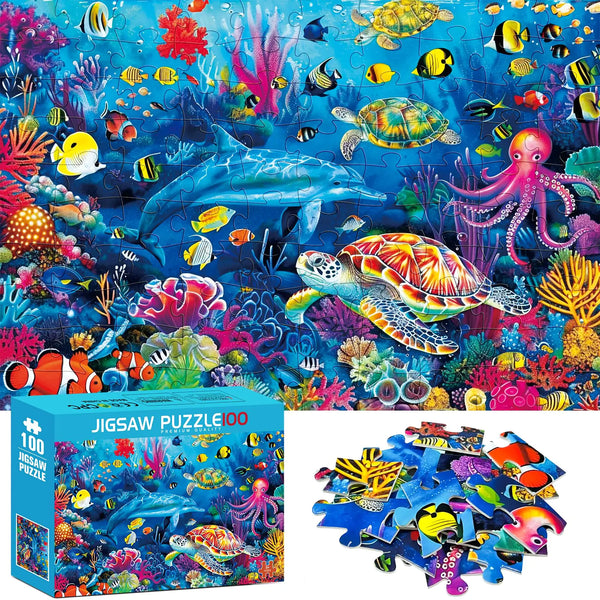
Jigsaw puzzles, tangrams, logic games, and pattern blocks develop critical thinking, spatial awareness, patience, and visual processing. Puzzles are one of the few toys that consistently build sustained attention in children because the satisfaction of completing them creates a natural dopamine reward — the healthy kind, earned through effort rather than passive consumption.
4. Montessori Toys
Montessori materials — stacking toys, shape sorters, practical life sets, sensory boards, and counting materials — are inherently screen free. They are designed for independent, child-led learning using natural materials. For toddlers and preschoolers especially, Montessori toys provide the perfect bridge between play and skill development.
5. Arts and Crafts Kits
Drawing supplies, painting sets, clay modeling kits, origami paper, and craft project boxes give children a creative outlet that screens simply cannot match. Creating something with their own hands builds self-expression, fine motor skills, color recognition, and the confidence that comes from making something tangible.
6. Board Games and Strategy Games
Age-appropriate board games teach turn-taking, strategic thinking, counting, pattern recognition, social skills, and emotional regulation. They are also one of the best screen free activities for the entire family because they create shared experiences and genuine connection.
7. Musical Instruments
Xylophones, drums, keyboards, tambourines, and rhythm sets engage multiple senses simultaneously. Music toys develop auditory processing, rhythm recognition, coordination, and creative expression. They also provide a physical outlet for energy that screens suppress.
8. Language and Reading Toys
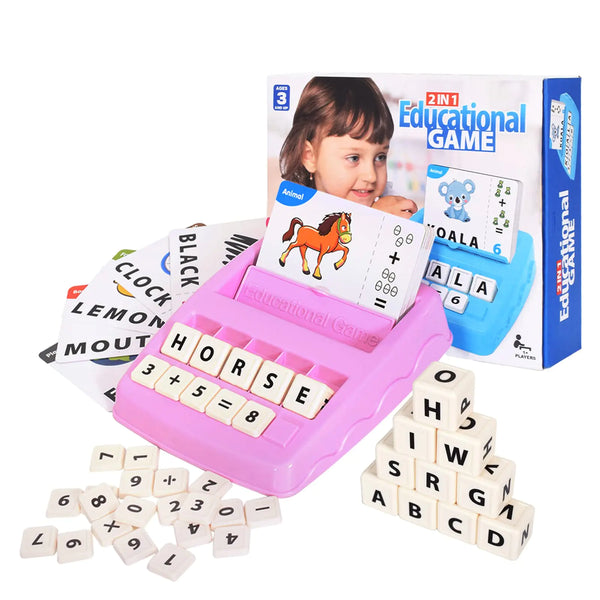
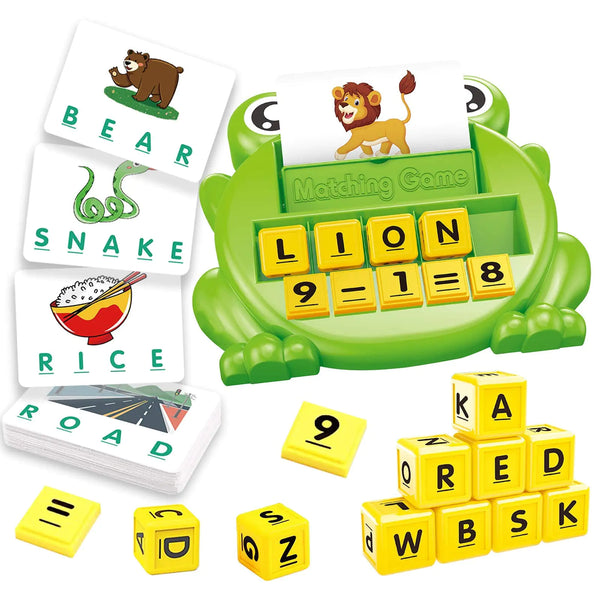
Alphabet blocks, phonics puzzles, flashcards with real images, storytelling sets, and reading games support the language development that screen time often delays. Hands-on language toys encourage active vocabulary building, letter recognition, and early literacy skills that form the foundation for reading success.
Best Screen Free Educational Toys by Age Group
Ages 1 to 2: Sensory and Motor Exploration
At this age, focus on toys that develop sensory awareness and basic motor skills. Stacking rings, nesting cups, shape sorters, soft blocks, textured balls, wooden push toys, and simple musical instruments are all excellent choices. The goal is exploration through touch, sound, and movement.
Ages 2 to 3: Independence and Problem-Solving
Toddlers in this range are ready for slightly more complex challenges. Knob puzzles, threading beads, sorting sets, coin boxes, practical life toys like pouring kits, and larger building blocks allow them to practice independence and persistence while building fine motor skills and early logic. You can find more specific guidance in our article on the best Montessori toys for 2 year olds that actually build skills.
Ages 3 to 5: Creativity and Structured Learning
Preschoolers thrive with more complex building sets, jigsaw puzzles, science experiment kits, alphabet and counting toys, art supplies, and cooperative board games. This is the age where children start combining multiple skills — building a structure that tells a story, sorting objects by two attributes, or following multi-step instructions in a science kit.
Ages 5 to 8: Engineering and Strategy
School-aged children benefit from more complex STEM kits, robotics starters, strategy board games, advanced building systems, coding toys that work without screens, detailed craft projects, and science experiment sets. The focus shifts from basic skill building to applying skills in more complex, multi-step challenges.
Ages 8 and Up: Advanced STEM and Creative Projects
Older children engage deeply with electronics kits, advanced robotics, complex engineering challenges, detailed art projects, strategy games with deeper mechanics, and science kits that produce real experimental results. At this stage, screen free toys compete directly with digital entertainment and win when they offer genuine creative challenge and tangible outcomes.
Top Screen Free Educational Toy Picks
These specific types of screen free toys consistently deliver strong engagement and measurable developmental results across age groups. They are the categories parents come back to again and again.
Rainbow Building Blocks
Open-ended wooden rainbow blocks are one of the most versatile screen free toys available. Toddlers stack and nest them. Preschoolers build bridges and tunnels. Older children create elaborate structures and patterns. They teach color recognition, spatial reasoning, symmetry, and creative design. Our rainbow arch bridge building blocks are a parent favorite for open-ended, screen free creative play.
Creative Building Block Sets
Construction block sets that come in multiple shapes and colors invite children to engineer their own creations rather than following a screen-based tutorial. The tactile experience of clicking pieces together, testing structures for stability, and iterating on designs builds engineering thinking from an early age. Our creative building kits and educational block sets offer exactly this kind of engaging, screen free construction play.
Science Experiment Kits
Hands-on science kits let children perform real experiments — mixing solutions, growing crystals, building circuits, or observing chemical reactions. The wow factor rivals anything on a screen, but the learning goes far deeper because the child is an active participant, not a passive viewer.
Wooden Puzzles and Brain Teasers
From simple knob puzzles for toddlers to complex 3D brain teasers for older kids, puzzles remain one of the most effective screen free learning tools ever created. They build patience, spatial reasoning, logical thinking, and the satisfaction of earned accomplishment.
Sorting and Counting Materials
Color sorting bowls, counting bears, bead frames, and classification sets make math tangible for young children. Instead of watching numbers on a screen, children physically manipulate objects, count them, group them, and discover mathematical relationships through their own hands. This concrete experience builds number sense that abstract screen-based apps cannot match.
What Skills Do Screen Free Educational Toys Actually Build?
Sustained Attention
Hands-on toys rebuild the deep focus that screens erode. When a child works on a puzzle or building project, they practice sustaining attention for minutes rather than seconds.
Fine Motor Skills
Grasping, threading, stacking, sorting, and building all strengthen the small hand muscles that swiping a screen never activates. These skills are critical for writing, drawing, and self-care.
Creative Thinking
Open-ended toys force children to imagine, plan, and create. There is no algorithm deciding what comes next. The child's own creativity drives the experience.
Problem-Solving
Hands-on toys present real challenges with real consequences. A tower falls. A piece does not fit. A structure wobbles. Children learn to diagnose, adjust, and persist.
Social Skills
Board games, cooperative building, and shared art projects teach turn-taking, negotiation, teamwork, and communication in ways that solo screen time never can.
Emotional Regulation
Working through frustration, waiting for a turn, and handling failure gracefully are all practiced naturally during hands-on play. These emotional skills are essential for school and life.
These are not skills that can be developed through passive screen consumption. They require active, physical, multi-sensory engagement — exactly what screen free educational toys are designed to provide. For more on how hands-on learning compares to screen-based approaches, read our in-depth article on how to get your child off the screen and into real learning.
Quick Comparison: Screen Free Toy Categories
Use this comparison to quickly identify which category of screen free toys best matches your child's interests and developmental needs.
Building Toys
Best for: Kids who love creating and engineering
Main skills: Spatial reasoning, planning, creativity
Ages: 1 to 12+
STEM Kits
Best for: Curious kids who love experiments
Main skills: Scientific thinking, cause and effect
Ages: 3 to 12+
Puzzles
Best for: Kids who enjoy logic and patterns
Main skills: Critical thinking, patience, focus
Ages: 1 to 10+
Arts and Crafts
Best for: Creative, expressive children
Main skills: Fine motor, self-expression, design
Ages: 2 to 12+
Board Games
Best for: Social learners and family play
Main skills: Strategy, social skills, counting
Ages: 3 to 12+
Musical Toys
Best for: Kids drawn to sound and rhythm
Main skills: Auditory processing, coordination
Ages: 1 to 8+
Screen Time vs Hands-On Learning: What the Research Shows
The debate between screen-based learning and hands-on learning is not really a debate anymore. Study after study confirms that physical, tactile learning produces stronger cognitive outcomes in young children than screen-based alternatives. A 2023 meta-analysis published in JAMA Pediatrics found that each additional hour of daily screen time in children under 5 was associated with measurable declines in language development and executive function.
The reason is neurological. When a child manipulates a physical object, their brain processes information through multiple channels simultaneously — visual, tactile, proprioceptive, and sometimes auditory. This multi-channel encoding creates stronger, more durable memory traces than the single-channel visual processing that screens primarily engage. A child who physically builds a bridge with blocks understands balance better than one who watches a video about it because their body participated in the learning.
This does not mean all screens are evil or that technology has no place in a child's life. It means that for the core developmental skills of early childhood — motor control, spatial reasoning, language, social skills, emotional regulation, and creative thinking — hands-on play is objectively more effective than screen-based alternatives.
The practical takeaway for parents is clear: make hands-on, screen free toys the foundation of your child's play environment, and treat screens as an occasional supplement rather than the primary form of engagement. You can explore more on this topic in our article about screen time versus hands-on learning and why hands-on wins.
How to Transition a Screen-Dependent Child to Hands-On Play
If your child is already deeply attached to screens, switching to hands-on toys can feel like an uphill battle. The key is to make the transition gradual and positive rather than abrupt and punitive. Taking screens away cold turkey often triggers resistance and power struggles. A smarter approach replaces screen time with something genuinely engaging.
Step 1: Start with High-Engagement Toys
Choose screen free toys that have the highest chance of grabbing your child's attention immediately. Science experiment kits with dramatic reactions, building toys with satisfying magnetic click sounds, or art supplies with vibrant colors can compete with screen stimulation more effectively than quieter toys.
Step 2: Play Together First
Sit down and play with the new toys alongside your child for the first few sessions. Your presence and enthusiasm make the activity more appealing. Once they are engaged, gradually step back and let them continue independently.
Step 3: Create a Screen Free Zone
Designate specific times or spaces where screens are not available. Fill those times and spaces with accessible, inviting hands-on toys. When the default environment supports hands-on play, the transition happens naturally over time.
Step 4: Reduce Gradually, Not Suddenly
Cut screen time by 15 to 30 minutes per day rather than eliminating hours at once. Replace each removed block of screen time with a specific hands-on activity. This makes the change manageable for both parent and child.
Step 5: Be Patient and Consistent
The first few days may be rough. A child used to screens may resist, complain of boredom, or test boundaries. This is normal. Within one to two weeks, most children begin engaging with hands-on toys more naturally as their attention span rebuilds and they discover the satisfaction of creating rather than consuming.
Parent Tips for Making Screen Free Play a Success
- Keep toys visible and accessible. Toys stored in closed bins or high shelves get forgotten. Use low, open shelves where your child can see and reach everything independently.
- Rotate toys regularly. Display 6 to 10 toys at a time and swap them every 1 to 2 weeks. This prevents boredom and makes old toys feel new again.
- Model the behavior. Let your child see you reading, building, drawing, or doing a puzzle instead of scrolling your phone. Children mirror what they see more than what they are told.
- Create routines around hands-on play. Designate specific times for screen free activities — morning play time, post-nap building time, or evening family game time. Routines reduce resistance.
- Celebrate process over product. Instead of praising the finished tower, acknowledge the effort: "You tried so many different ways to balance those blocks." This builds intrinsic motivation.
- Follow your child's interests. If they love animals, provide animal-themed puzzles, sorting sets, and figurines. If they love building, invest in blocks, construction sets, and engineering toys. Interest-led play is always more engaging.
- Accept imperfect play. A 2 year old who stacks three blocks and knocks them over is learning. A 4 year old who paints a messy picture is creating. Do not correct or direct their play unless they ask for help.
Replace Screen Time with Skill Time
Every toy in our collection is screen free, hands-on, and designed to build real skills through play. Give your child the gift of meaningful learning.
Shop Screen Free Educational ToysYou can also browse our STEM toys, building and construction toys, puzzle and brain teasers, and Montessori educational toys for targeted screen free learning options across every age and interest.
Frequently Asked Questions About Screen Free Educational Toys for Kids
Final Thoughts: Screen Free Play Is the Best Investment in Your Child's Future
The screen time battle does not have to feel like a battle at all. When you fill your child's environment with genuinely engaging, hands-on educational toys, the choice becomes easy — for them and for you. Children naturally gravitate toward activities that satisfy their developmental needs. Screen free toys do exactly that. They offer the challenge, creativity, and sensory richness that growing brains crave.
You do not need to be anti-technology to be pro-play. This is not about banning devices. It is about making sure that the foundation of your child's play experience is built on real, physical, meaningful interaction with the world around them. The fine motor skills, the sustained attention, the creative thinking, the problem-solving resilience — these are the skills that will serve your child for the rest of their life. And they are built through hands, not screens.
Start today. Pick one or two categories from this guide. Choose toys that match your child's interests. Set them up in an accessible space. Step back and watch what happens. The results will speak for themselves.
Ready to make the switch? Browse our full collection of screen free educational toys and find hands-on learning tools that make every moment of play count. For more ideas on reducing screen dependency, explore our guide on the best toys for building independence in kids.