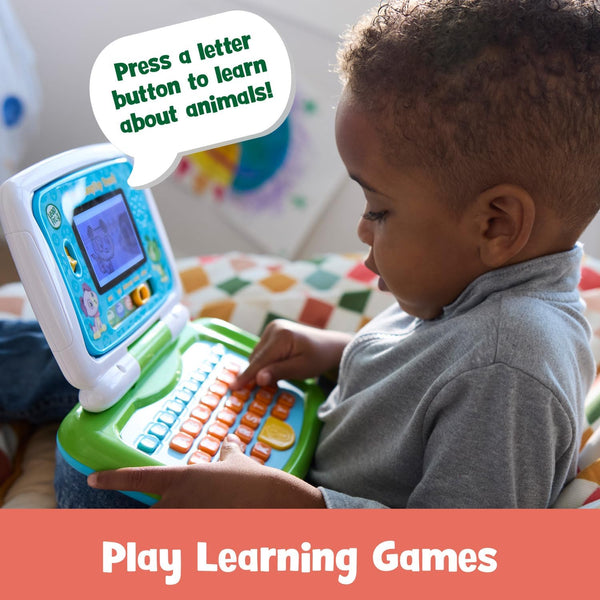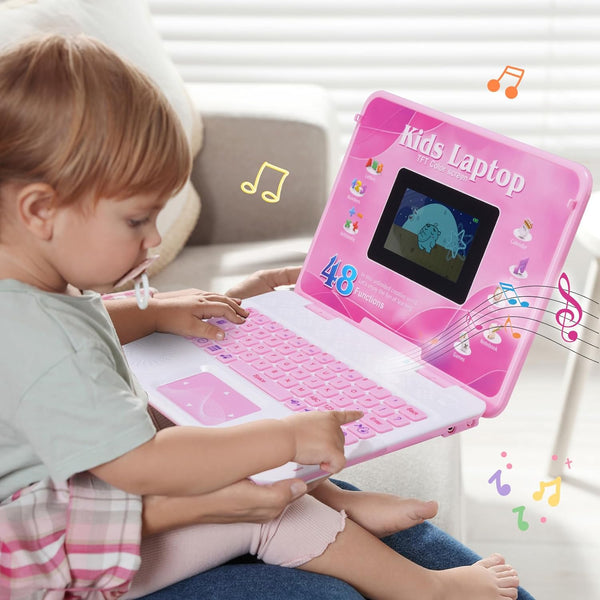
Finding the best pretend laptop toys for kids sounds simple, but many parents quickly realize it is not. A lot of pretend laptops look fun at first, yet they end up being too noisy, too flimsy, too limited, or not educational enough to keep a child interested for long. Parents want something better. They want a toy that feels exciting like a real laptop but still supports screen-free learning, language growth, memory, focus, and imaginative play.
That is exactly why pretend laptop toys remain such a strong category. Children naturally love copying what adults do. They see parents using laptops for work, writing, shopping, planning, and communication, so having their own pretend version feels exciting and meaningful. When chosen well, a pretend laptop can become much more than a novelty toy. It can support early learning while satisfying that natural curiosity about grown-up tools.
The best pretend laptop toys for children often combine imitation play with simple educational value. They can help support letters, sounds, matching, listening, memory, first-word recognition, and independent play routines. Some children love them because they feel like a “real” device. Parents love them because they offer a smarter alternative to handing over an actual screen.
In this guide, you will learn what makes a good pretend laptop toy, why children enjoy them so much, what features matter most, and how to choose the right one based on age and learning goals. Families building a stronger learning setup at home also often explore educational toys, language learning toys, early development toys, problem-solving play sets, and educational toys for 3 year olds.
Table of Contents
Top Picks (Quick Answer)
If you want the fastest starting point, these are the strongest places to begin when shopping for pretend laptop toys for kids.
Best Child Toy Laptop for Learning and Fun
A strong parent-focused guide for comparing laptop-style learning toys and understanding what actually offers value beyond novelty.
Best for: parents researching the full pretend laptop and toy laptop category
Read the GuideEducational Toys Collection
A smart option if you want screen-free learning toys beyond pretend laptop play, especially for language, matching, and early skill-building.
Best for: parents comparing pretend laptop toys with broader learning alternatives
Explore Educational ToysWhy So Many Pretend Laptop Toys for Kids Disappoint
Pretend laptop toys are appealing because the concept is strong. Kids love them before they even open the box. But many products do not live up to that promise. Some are too noisy, some are too flimsy, some have almost no replay value, and some are really just random button-pushing toys dressed up to look educational.
That creates a common problem for parents. The toy looks like it should support learning, yet it ends up feeling shallow and repetitive. The child may enjoy it for a little while simply because it looks like a real laptop, but that excitement fades quickly if the toy does not offer anything meaningful in return.
That is why the best pretend laptop toy is not the flashiest one. It is the one that keeps a child engaged while encouraging useful early learning and imaginative play.
The Wrong Pretend Laptop Can Feel Like a Gimmick Instead of a Real Learning Toy
Children do not need more noise. They need toys that support attention, language, memory, matching, listening, and independent play. When a pretend laptop is too passive or too overstimulating, it may feel modern and exciting but still fail to support those goals in a meaningful way.
This matters because many parents choose pretend laptop toys specifically to avoid handing over real screens. If the toy does not hold interest, the child may go right back to asking for actual devices. That means the pretend laptop missed one of its biggest jobs: offering a satisfying screen-free alternative.
A good pretend laptop should feel familiar, playful, and rewarding without becoming chaotic, frustrating, or instantly forgettable.
The Best Pretend Laptop Toys for Kids Make Screen-Free Learning Feel Exciting
A great pretend laptop toy works because it blends imitation play with simple, repeatable learning. Children feel drawn to it because it looks like a grown-up tool. Parents value it because it supports familiar early skills like sounds, letters, recognition, matching, and listening without relying on real screen time.
The strongest pretend laptop toys respect how children actually learn. They keep activities simple enough to understand, interesting enough to repeat, and structured enough to feel educational. That balance is what turns a pretend gadget into a truly useful toy.
When chosen well, pretend laptop toys can fit naturally alongside language learning toys, early development toys, and problem-solving toys.
Looking for smarter screen-free learning toys?
Explore educational toys that help children build language, focus, memory, and confidence without relying on real devices.
Browse Educational ToysWhy Kids Love Pretend Laptop Toys So Much
Children love role play. They naturally copy adults, especially when adults use objects that look important or exciting. Laptops fall directly into that category. A pretend laptop feels like access to the grown-up world, which makes it appealing before any “learning feature” even starts.
That is one reason pretend laptop toys can work so well. They already begin with strong emotional interest. The child does not have to be convinced to use it. They usually want to explore it right away because it feels familiar, special, and playful.
When that natural interest is paired with simple educational interaction, the toy becomes much more valuable. It keeps learning connected to curiosity instead of making it feel forced.
Learning Benefits of Pretend Laptop Toys for Kids
Language and Listening Development
Many pretend laptop toys support letter sounds, word recognition, listening prompts, or basic response-based learning. That makes them helpful for early language development.
Memory and Recognition Skills
Simple matching, sound recognition, and memory-style activities are common strengths in laptop-style toys and can help children strengthen first learning routines.
Independent Screen-Free Play
Pretend laptop toys can keep children engaged independently for longer because they feel personal and familiar while still being safe and screen-free.
Imitation-Based Confidence
Children often feel more confident using toys that reflect the adult world around them. Pretend laptop toys give them a satisfying sense of “I can do this too.”
Replay Value Through Familiarity
Because pretend laptop play connects to everyday life, children often return to it again and again, which is exactly what gives the toy longer-term value.
Best Features to Look for in Pretend Laptop Toys for Kids
Not every pretend laptop toy is worth the space or money. The strongest ones usually share a few key strengths.
Children should be able to use the toy without needing constant help or explanation.
The toy should support language, letters, matching, recognition, or other simple early learning goals.
A pretend laptop for kids should hold up to repeat play, drops, and rough handling.
Too much noise or flashing can make the toy feel stressful rather than useful.
The best toys keep children interested across many sessions, not just for one quick burst.
A toy that feels too babyish or too advanced will usually lose value quickly.
Best Pretend Laptop Toys by Age Stage
Ages 1 to 2
At this stage, children usually do best with very simple pretend laptop toys that emphasize imitation play, basic sounds, and easy button interaction.
Ages 2 to 3
This is often the strongest age range for pretend laptop toys. Children are highly motivated by imitation and can usually enjoy simple learning features more meaningfully.
Ages 3+
Older toddlers and preschoolers may still enjoy pretend laptop play, but parents should also compare these toys with broader educational toys for 3 year olds and language learning toys for better all-around development.
Best Pretend Laptop Toys for Kids by Learning Goal
These quick cards can help you choose based on the type of learning or play you want to support most.
Language Growth
Best for: children learning words and sounds
Main skills built: vocabulary, listening, sound recognition
Explore language toysIndependent Play
Best for: kids who enjoy familiar solo play
Main skills built: confidence, routine play, self-directed engagement
Explore early development toysRecognition and Matching
Best for: children ready for simple learning games
Main skills built: memory, matching, first problem-solving
Explore problem-solving toysBroader Early Learning
Best for: parents comparing laptop toys with other learning options
Main skills built: balanced early development
Explore educational toysHow to Choose the Best Pretend Laptop Toy for Kids Fast
Match It to the Child’s Age Stage
A pretend laptop that feels too simple or too advanced usually will not hold interest. Age fit matters more than feature count.
Choose Learning Over Hype
Look for toys that support language, recognition, listening, memory, or matching instead of relying only on noise and flashy effects.
Think About Screen-Free Replacement Value
A strong pretend laptop should satisfy a child’s curiosity about computers without leading straight back to requests for real screens.
Compare It Against Other Learning Toys
Sometimes the strongest choice may be a broader educational toy that supports the same skill even better, so compare thoughtfully before buying.
Final Thoughts: The Best Pretend Laptop Toys for Kids Make Screen-Free Learning Feel Real
The best pretend laptop toys for kids are not the ones with the longest feature list. They are the ones that keep a child interested while offering familiar, repeatable, and meaningful learning through play. That is what makes them worth buying.
When a pretend laptop helps support language, memory, recognition, and independent screen-free play, it becomes much more than a fun gadget. It becomes a learning tool that fits naturally into everyday routines and pretend play.
If you want the best result, choose a pretend laptop carefully and always compare it against the bigger goal: helping your child learn, imagine, and stay engaged without depending on a real screen.
Frequently Asked Questions About Pretend Laptop Toys for Kids
1. What are pretend laptop toys for kids?
Pretend laptop toys are child-friendly toy computers that let kids imitate adults while exploring simple screen-free learning and imaginative play.
2. Are pretend laptop toys good for kids?
Yes, good pretend laptop toys can support language, listening, matching, memory, and independent screen-free play while still feeling fun and familiar.
3. What age is best for pretend laptop toys?
Many pretend laptop toys work best from around age 2 to 4, though some simpler ones suit younger toddlers and some more advanced ones suit preschoolers.
4. What do pretend laptop toys help children learn?
They can help children practice letters, sounds, words, listening, matching, recognition, memory, and independent play routines.
5. Are pretend laptop toys educational?
They can be educational when they are designed with real learning value rather than only noise and button-pushing.
6. What should I look for in a pretend laptop toy?
Look for simple controls, durability, age-appropriate learning, replay value, low overstimulation, and clear early learning goals.
7. Are pretend laptops better than real tablets for young children?
For many families, yes. Pretend laptops can give children the fun of a “computer” without relying on real-screen time.
8. Why do kids love pretend laptop toys?
Kids love them because they enjoy copying adults and like having their own version of something that feels important and grown-up.
9. Do pretend laptop toys help with independent play?
Yes, they can help children stay engaged independently because the toy feels familiar, personal, and rewarding to use.
10. Are pretend laptop toys screen-free?
Yes, they are usually screen-free or low-tech toys designed to imitate real laptops without handing children an actual device.
11. What pretend laptop toy is best for a toddler?
The best pretend laptop toy for a toddler is simple, durable, easy to use, and focused on basic sounds, words, recognition, or imitation play.
12. What pretend laptop toy is best for a preschooler?
A preschooler may enjoy a pretend laptop toy with slightly more structure, such as letters, matching, first words, or memory-based learning.
13. Do pretend laptop toys help language development?
Yes, they can help with language development when they include sounds, words, listening prompts, or simple interactive learning.
14. Can pretend laptop toys help with memory skills?
Yes, many laptop-style toys support memory, matching, recognition, and recall through simple interactive activities.
15. Are pretend laptop toys noisy?
Some are, which is why it is usually smarter to choose a simpler toy with clearer educational value and less overstimulation.
16. What makes a good pretend laptop toy?
A good pretend laptop toy feels engaging, easy to understand, durable, age-appropriate, and genuinely useful for early learning or imaginative play.
17. What makes a bad pretend laptop toy?
A weak pretend laptop toy is usually too noisy, too confusing, too passive, or too limited to hold a child’s attention for long.
18. Are pretend laptops the same as toy computers?
They are closely related, though “pretend laptop” usually emphasizes imitation play while “toy computer” can refer more broadly to learning-focused computer-style toys.
19. Are pretend laptop toys worth buying?
They can be worth buying when they offer replay value, useful early learning, and a satisfying alternative to real-screen curiosity.
20. Do pretend laptops reduce screen time?
For some families, yes. A good pretend laptop can reduce requests for real devices by giving children a familiar but screen-free alternative.
21. Are pretend laptop toys Montessori-style?
Most are not strictly Montessori-style, but some can still support independence and simple learning if they are purposeful and not overstimulating.
22. What learning goals pair best with pretend laptop toys?
Language learning, listening, matching, memory, recognition, and independent play are the strongest fits.
23. What are the best alternatives to pretend laptop toys?
Strong alternatives include language toys, early development toys, matching games, memory toys, and broader educational toys.
24. Are pretend laptop toys a good birthday gift?
Yes, they can make a strong gift when the child enjoys imitation play and the toy offers real learning or replay value.
25. What if my child gets bored quickly with learning toys?
Choose toys with stronger replay value and simple repeatable activities. Sometimes a broader educational toy category may work better than a pretend laptop specifically.
26. Are pretend laptop toys better for younger or older kids?
They are often strongest for toddlers and preschoolers because imitation play is especially powerful during those years.
27. Do pretend laptop toys help confidence?
Yes, they can help confidence because children feel capable using a familiar grown-up-style object in their own way.
28. Where can I find good pretend laptop toys for kids online?
You can compare pretend laptop guidance alongside broader educational toy options through WonderKidsToy learning pages and collections.
29. Should I choose a pretend laptop or a toy laptop?
That depends on your goal. Pretend laptop toys lean more into role play, while toy laptops may include slightly more structured learning features. Many parents compare both before choosing.
30. What is the biggest benefit of the best pretend laptop toys for kids?
The biggest benefit is that they make screen-free learning feel familiar and fun while helping children build useful early skills through imitation play.