 Skip to content


What the listing highlights
Wooden puzzle toy for problem solving wooden puzzle toy for kids — the 60- to 204-piece theme options create a supervised screen-free activity for jigsaw problem solving, visual matching ...

Product details
Wooden Puzzle Toy for Problem Solving Wooden puzzle toy for kids — The 60- to 204-piece theme options create a supervised screen-free activity for jigsaw problem solving, visual matching and patience. Turn quiet time into a hands-on thinking…
Wooden puzzle toy for kids — The 60- to 204-piece theme options create a supervised screen-free activity for jigsaw problem solving, visual matching and patience.
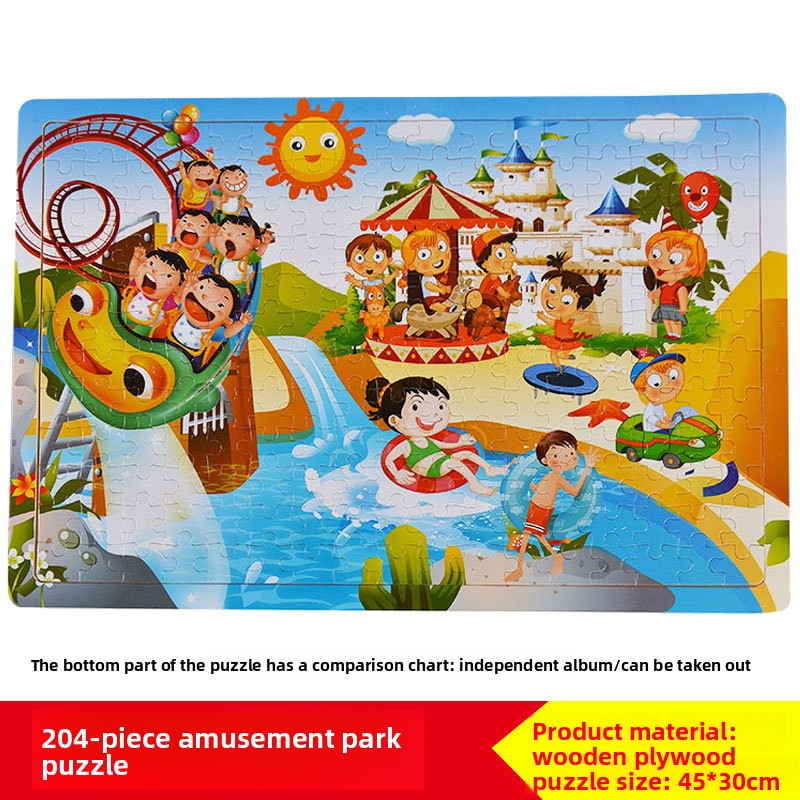
Turn quiet time into a hands-on thinking activity with this wooden puzzle toy for kids. Designed around illustrated story themes and multi-piece layouts, it gives children a practical way to work on matching, visual attention, patience and step-by-step problem solving without a screen. The available designs may include themes such as dinosaurs, animals, underwater scenes, princess stories and other picture-based challenges. Because the product is offered in multiple variants, parents should review the selected design, stated piece count and product images before ordering.
Puzzles invite children to slow down, observe details and test possibilities. Instead of receiving instant answers, children compare shapes, colors and picture clues until each piece finds its place. This process can support persistence, flexible thinking and confidence. It also creates an easy opportunity for parents to sit nearby, ask simple questions and encourage children without taking over the task.
Begin by sorting pieces into simple groups such as corners, edges, similar colors or matching characters. Younger or less experienced puzzlers may benefit from completing one small section at a time. Parents can offer prompts such as “What colors do you notice?” or “Can you find a piece with a straight side?” For a second challenge, ask the child to describe the finished scene or invent a short story about the characters. Siblings can work cooperatively by dividing the puzzle into sections.
This listing includes multiple themes and piece-count options. Some variants may be more complex than others. Check the exact title shown in the selector, the product images and all listed dimensions before purchase. Choose a lower-complexity option for a child who is new to puzzles and a higher-piece-count option for an experienced puzzler who enjoys longer activities.
Use the puzzle on a flat, dry and well-lit surface. A tray, table mat or shallow box can help keep pieces contained. After play, count the pieces and return them to a labeled storage bag or container. Keeping each design separate prevents mixed sets and makes the next activity easier to begin.
Adult supervision is recommended. Review the age guidance and piece size before giving the puzzle to a child. Keep small pieces away from babies and children who still place objects in their mouths. Inspect the puzzle before each use and discontinue use if any piece becomes cracked, splintered or damaged. Wipe gently with a dry or slightly damp cloth and dry immediately. Do not soak wooden pieces or use harsh cleaners.
The listing offers multiple design variants. The selected option determines the theme and piece count included.
Suitability depends on the selected piece count, piece size and the child’s puzzle experience. Review the listing details and supervise play.
It can support matching, observation, fine-motor control, patience and problem-solving practice through play.
Yes. Children can sort pieces, complete different sections and discuss the picture cooperatively.
Wipe with a soft, slightly damp cloth and dry promptly. Avoid soaking.
No. Difficulty may vary by piece count, image detail and the child’s experience.
It may work for travel when stored in a secure zip bag or lidded container, but piece management is important.
Confirm the exact variant name, theme, piece count, dimensions and product images shown for your selection.
Compare every live variant, image and package detail before ordering. Choose only an option whose size, functions and contents match the child’s readiness and the family’s available play space.
No. It can create useful play opportunities, but conversation, supervision and shared routines remain important. Learning and developmental outcomes vary between children.
Begin with one simple feature or activity. Demonstrate briefly, then allow time for exploration before adding another challenge or accessory.
Confirm the selected variant, package contents, instructions, age label and warnings. Inspect every component for shipping damage, loose parts or missing pieces before use.
Rotate short prompts, change the pretend story and store the product between sessions. Avoid presenting every possible activity at once.
It may suit a child interested in this type of play when the purchaser first confirms age guidance, specifications, space, supervision needs and the exact included contents.
Follow the manufacturer’s instructions and keep all parts together in a clean, dry, secure place that younger children cannot access without supervision.
Use the delivered label and manufacturer instructions as the final reference. Stop setup and contact the seller if a material difference affects safe or intended use.
Shared play may be possible when all users meet the current guidance and an adult manages space, turn-taking and any small, powered or moving components.
No. The product may offer practice opportunities, but it cannot guarantee academic, physical, creative or developmental results.
Use only the care method approved for the confirmed materials. Avoid soaking powered parts, harsh chemicals and any cleaning process not supported by the instructions.
Stop use if a component becomes cracked, loose, sharp, unstable, unusually hot, difficult to control or inconsistent with the supplied safety instructions.
Keep the manual, order details, variant information and key packaging labels. They can help with setup, care, replacement parts and future safety checks.
Before purchasing Wooden Puzzle Toy for Problem Solving, compare the live images, selected option and delivered instructions with your child’s interests, readiness and usual play habits. Consider where the product will be used, how much adult setup or supervision it needs, how every component will be stored and whether younger siblings can reach it. A good fit is not determined by age alone; attention, coordination, ability to follow boundaries and comfort with the product’s specific actions also matter.
Plan the first session before opening every accessory. Choose a clear play area, remove unrelated distractions and introduce one feature at a time. This makes it easier for a parent to notice how the child responds and prevents the product from feeling like a test. Keep expectations realistic: a thoughtfully selected toy can invite practice, conversation and imaginative activity, but it cannot promise a specific learning or developmental result.
These are editorial product insights based on the listing details—not customer reviews.
Wooden puzzle toy for problem solving wooden puzzle toy for kids — the 60- to 204-piece theme options create a supervised screen-free activity for jigsaw problem solving, visual matching ...
The listing suggests opportunities to explore numbers, counting, sorting, or other early math ideas.
The puzzle, building, block, or shape-based format may encourage planning, matching, and experimentation.
The pretend-play theme can support storytelling, conversation, and open-ended play.
The art or music focus gives children a way to explore ideas and express themselves through play.
Use the description and images to decide whether Wooden Puzzle Toy for Kids – Problem-Solving Jigsaw Activity suits your child's interests and current abilities.
Confirm the age guidance, dimensions, included pieces, materials, and supervision needs shown in the product details.
The exact product, model, colour, size, quantity and included accessories depend on the option selected above. Please review the selected variant and product description before ordering.
If your product arrives damaged, defective, incorrect, or with important parts missing, contact us within 30 days of delivery.
Please include your order number, a clear description of the issue, clear photos, a video when the issue cannot be shown clearly in photos, and packaging photos when relevant.
After review, an appropriate resolution may include a replacement, resend, partial refund, or full refund, depending on the circumstances.
For eligible products without a quality issue, change-of-mind return requests must be made within 7 days of receiving the product. Please contact us before returning any item. Returns sent without prior authorization may not be accepted.
For an eligible change-of-mind return, the customer is responsible for return shipping costs. The item must be unused and in its original condition, with original packaging, tags, accessories, manuals and included parts where applicable.
Returned products may be inspected. Items showing misuse, post-delivery damage, missing accessories or other conditions that make them unsuitable for return may not qualify for a refund.
Original shipping charges, customs duties, taxes, brokerage charges and other third-party fees are generally non-refundable unless required by applicable law or specifically approved as part of an order issue.
Order cancellations: Cancellation may be possible if an order has not entered processing or fulfillment. Once processed, customized, prepared for shipment or shipped, cancellation may no longer be possible. Customized, personalized, made-to-order, pre-order or specially prepared products may have additional restrictions.
Package not received: If a package appears significantly delayed, contact us with your order number and tracking information. If tracking shows delivered but you cannot locate it, first check your delivery location, household members, mailbox or parcel locker, neighbours where appropriate, building reception and the local carrier.
Refunds or replacements may not be available when delivery fails because of an incorrect or incomplete address, unknown recipient, refusal of delivery, failure to collect a package, failure to complete required customs clearance, or other circumstances outside our reasonable control.
Minor cosmetic damage to outer packaging may not qualify for a refund or replacement when the product itself is unaffected and fully usable.
Once a refund is approved, it is normally issued to the original payment method. Your bank, credit card company or payment provider may require additional time to display it.
Certain customized, personalized, made-to-order or other products that cannot reasonably be resold may not be eligible for change-of-mind returns.
Helpful ways to discover closely related toys, learning categories and parent guides.
🎯 Parent-Friendly Play Highlights
A closer look
Explore 6 highlighted product images. Tap an image for a larger view. The main gallery above contains all 26 images.
WONDERKIDSTOY · LEARNING THROUGH PLAY
As a parent, you want the excitement that comes with a new toy — but you also want the time your child spends with it to feel worthwhile. At WonderKidsToy, we focus on educational, STEM, Montessori-inspired and hands-on play that gives children something meaningful to do, discover and figure out for themselves.
We believe some of the best learning happens when children are busy building, testing, sorting, creating, imagining and asking “what happens if I try this?” Our goal is to make it easier for you to find engaging toys that encourage curiosity, creativity, problem-solving and independent exploration — without making playtime feel like homework.
Hands-on experiences that let children learn through doing, not just watching.
Explore STEM, science, puzzles, building, creative play and Montessori-inspired learning.
Toys that invite children to build, explore, imagine, experiment and solve.
Your purchase also includes our digital learning library with 130+ educational books and activities.
We’re here to help you find toys that feel worth bringing home — engaging enough for children to enjoy and purposeful enough for you to feel good about choosing them.


