 Skip to content


What the listing highlights
Purposeful play for curious kidsmontessori math stick game for kids – counting & strategy play: hands-on learning through play montessori math stick game — counting and strategy activ...

Product details
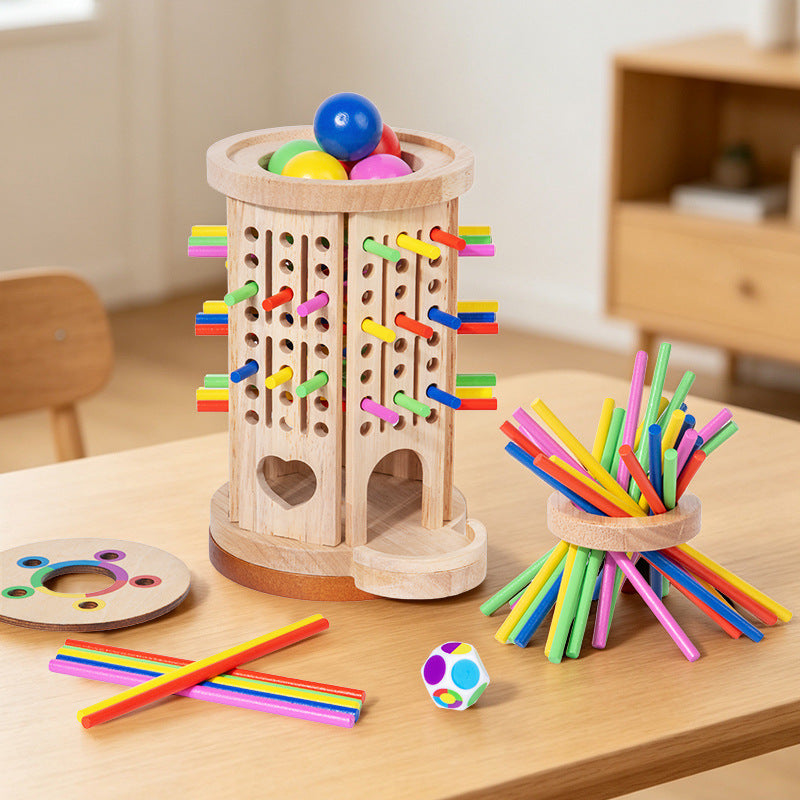
Montessori Math Stick Game for Kids – Counting & Strategy Play: Hands-On Learning Through Play Montessori math stick game — Counting and strategy activities create a supervised screen-free way to practise number thinking, fine-motor control and turn-taking. The…
Montessori math stick game — Counting and strategy activities create a supervised screen-free way to practise number thinking, fine-motor control and turn-taking.
The Montessori math stick game for kids gives families a practical way to add more active, meaningful play to the day. Its focus is counting, strategy, pattern play and hand control, helping children participate instead of simply watching entertainment. It can support quiet afternoons, parent-child time, homeschool enrichment, classroom activity stations and thoughtful gift giving.
Children learn through repeated attempts. They notice what happens, make a choice, adjust their approach and try again. This page explains how to choose the correct option, introduce the activity safely and encourage useful conversation without promising results that no single toy can guarantee.
Children create the next step through their own hands, choices and observations.
Adults can simplify the first task or add a new rule as confidence grows.
The selected activity can be explored in different ways instead of having only one correct use.
Caregivers can naturally discuss colors, positions, numbers, actions, patterns and predictions.
These benefits are opportunities for practice. Every child develops differently, and the experience depends on readiness, interest, repetition, supervision and the exact variant selected.
During counting, strategy, pattern play and hand control, children may practise hand-eye coordination, controlled movement, visual attention and planning. When something does not work immediately, a calm adult can encourage the child to pause, observe and test another idea. This makes persistence part of ordinary play without turning the activity into a lesson or performance.
Language can grow naturally when adults describe what the child is doing: “You placed that beside the blue piece,” “The track turns here,” or “You chose a different letter.” Open prompts such as “What do you notice?” and “What could you try next?” invite thinking while leaving ownership of the play with the child.
Fully screen-free. The core activity does not require an app, phone or tablet. It can provide a useful physical alternative during routines when families want children to engage with real pieces, movement and conversation.
Screen classification describes how the product is used; it does not guarantee attention span or learning outcomes. Families can keep sessions balanced by preparing a clear play area, offering one manageable challenge and putting the activity away together when play ends.
Place the chosen version on a clear, stable surface and allow time for observation. Name a few visible features without explaining every step. Demonstrate one safe action, then pause so the child can continue.
Offer one achievable prompt based on counting, strategy, pattern play and hand control. Ask the child to choose, compare, match, arrange, build, test or describe. If the task feels difficult, remove extra components or model the first step. If it feels easy, add a gentle sequence, timer-free challenge or story.
Repeating an action helps children connect movement with result. Avoid correcting every choice. Instead, describe what happened and let the child decide whether to change the approach.
End before tiredness becomes frustration. Count or sort the components together, recognize effort and store the activity so it is ready for another session.
Questions should feel conversational, not like a quiz. Silence, observation and child-led repetition can be just as valuable as adult instruction.
This live listing currently has 9 options. Variant names can indicate design, quantity, color, model, language or included accessories, but they do not replace the product images or package details. Review the selector carefully and confirm the chosen option in the cart.
Contents, measurements, materials, piece counts, batteries and functions may vary. Please review the product images or packaging for confirmation. When the order arrives, compare it with the selection and supplier instructions before allowing play.
Read all manufacturer age guidance, warnings, assembly directions and power instructions before first use. Inspect the product for loose, cracked, sharp, swollen, exposed or difficult-to-operate parts. Keep small components away from children who mouth toys and from younger siblings.
Use the activity on a stable surface and confirm that every piece is appropriate for the child’s ability. Check painted, wooden, card, fabric, adhesive or metal components for ordinary wear before each session.
Follow the package care directions. Avoid soaking materials that may warp, separate or damage electronic parts. Store all pieces together in a dry place away from heat, moisture, pets and heavy objects. Regular inspection helps families notice wear before it becomes a problem.
It centres on counting, strategy, pattern play and hand control. Children can explore the selected version through repeated, hands-on attempts while an adult offers simple prompts and allows time for independent discovery.
Yes. The core activity is fully screen-free and can fit quiet-time, travel, classroom or home-learning routines without requiring an app or digital device.
Follow the manufacturer’s age guidance and warnings shown on the packaging. Also consider the child’s ability to use every component safely, follow directions and manage the activity without mouthing small parts.
Not necessarily. This listing has 9 selectable options, and designs, quantities, accessories, functions or packaging can vary. Confirm the exact variant name and matching images before checkout.
Depending on the child’s readiness, the activity can encourage observation, hand-eye coordination, vocabulary, planning, persistence and problem-solving. These are practice opportunities, not guaranteed developmental outcomes.
Yes. Parents and educators can connect it with short conversations, counting, descriptive language, prediction, sequencing or creative storytelling while keeping the experience playful rather than test-like.
Begin with one safe demonstration, then invite the child to try. Use short prompts, reduce the challenge if frustration appears, and end the session while interest remains so returning to the activity feels positive.
Many children can take turns choosing pieces, building, guessing, describing or checking a result. An adult should set clear sharing rules and supervise according to the children’s ages and the included components.
No. A toy cannot guarantee academic, therapeutic or developmental results. Its value depends on the child’s interest, readiness, repetition, adult support and the suitability of the chosen variant.
Confirm the selected variant, compare the contents with the package information, inspect all parts, and read every age, assembly, power and safety instruction before play begins.
Follow the care directions supplied with the selected version. Avoid soaking wood, electronics, adhesives, layered cards or metal mechanisms unless the manufacturer specifically permits it, and store all components together in a dry place.
Yes, especially during first use and whenever the product includes small, detachable, moving, battery-powered or art-related components. Supervision should match the child and the chosen option.
It can be a thoughtful educational gift when the activity matches the child’s interests and readiness. Keep the packaging and instructions available so the caregiver can review the exact contents and safety guidance.
Review the selector, compare the gallery images and choose the option that best fits your child’s interests and readiness. With careful setup, realistic expectations and supportive supervision, the Montessori math stick game for kids can turn an ordinary play session into a useful chance to explore, practise and feel proud.
Compare more hands-on number activities in our Montessori math and counting toys.
These are editorial product insights based on the listing details—not customer reviews.
Purposeful play for curious kidsmontessori math stick game for kids – counting & strategy play: hands-on learning through play montessori math stick game — counting and strategy activ...
The product information highlights tactile, Montessori-inspired, sensory, or fine-motor play.
The listing suggests opportunities to explore numbers, counting, sorting, or other early math ideas.
The puzzle, building, block, or shape-based format may encourage planning, matching, and experimentation.
The art or music focus gives children a way to explore ideas and express themselves through play.
Use the description and images to decide whether Montessori Math Stick Game for Kids – Counting, Strategy & Fine Motor Play suits your child's interests and current abilities.
Confirm the age guidance, dimensions, included pieces, materials, and supervision needs shown in the product details.
The exact product, model, colour, size, quantity and included accessories depend on the option selected above. Please review the selected variant and product description before ordering.
If your product arrives damaged, defective, incorrect, or with important parts missing, contact us within 30 days of delivery.
Please include your order number, a clear description of the issue, clear photos, a video when the issue cannot be shown clearly in photos, and packaging photos when relevant.
After review, an appropriate resolution may include a replacement, resend, partial refund, or full refund, depending on the circumstances.
For eligible products without a quality issue, change-of-mind return requests must be made within 7 days of receiving the product. Please contact us before returning any item. Returns sent without prior authorization may not be accepted.
For an eligible change-of-mind return, the customer is responsible for return shipping costs. The item must be unused and in its original condition, with original packaging, tags, accessories, manuals and included parts where applicable.
Returned products may be inspected. Items showing misuse, post-delivery damage, missing accessories or other conditions that make them unsuitable for return may not qualify for a refund.
Original shipping charges, customs duties, taxes, brokerage charges and other third-party fees are generally non-refundable unless required by applicable law or specifically approved as part of an order issue.
Order cancellations: Cancellation may be possible if an order has not entered processing or fulfillment. Once processed, customized, prepared for shipment or shipped, cancellation may no longer be possible. Customized, personalized, made-to-order, pre-order or specially prepared products may have additional restrictions.
Package not received: If a package appears significantly delayed, contact us with your order number and tracking information. If tracking shows delivered but you cannot locate it, first check your delivery location, household members, mailbox or parcel locker, neighbours where appropriate, building reception and the local carrier.
Refunds or replacements may not be available when delivery fails because of an incorrect or incomplete address, unknown recipient, refusal of delivery, failure to collect a package, failure to complete required customs clearance, or other circumstances outside our reasonable control.
Minor cosmetic damage to outer packaging may not qualify for a refund or replacement when the product itself is unaffected and fully usable.
Once a refund is approved, it is normally issued to the original payment method. Your bank, credit card company or payment provider may require additional time to display it.
Certain customized, personalized, made-to-order or other products that cannot reasonably be resold may not be eligible for change-of-mind returns.
Helpful ways to discover closely related toys, learning categories and parent guides.
🎯 Parent-Friendly Play Highlights
A closer look
Explore 6 highlighted product images. Tap an image for a larger view. The main gallery above contains all 14 images.
WONDERKIDSTOY · LEARNING THROUGH PLAY
As a parent, you want the excitement that comes with a new toy — but you also want the time your child spends with it to feel worthwhile. At WonderKidsToy, we focus on educational, STEM, Montessori-inspired and hands-on play that gives children something meaningful to do, discover and figure out for themselves.
We believe some of the best learning happens when children are busy building, testing, sorting, creating, imagining and asking “what happens if I try this?” Our goal is to make it easier for you to find engaging toys that encourage curiosity, creativity, problem-solving and independent exploration — without making playtime feel like homework.
Hands-on experiences that let children learn through doing, not just watching.
Explore STEM, science, puzzles, building, creative play and Montessori-inspired learning.
Toys that invite children to build, explore, imagine, experiment and solve.
Your purchase also includes our digital learning library with 130+ educational books and activities.
We’re here to help you find toys that feel worth bringing home — engaging enough for children to enjoy and purposeful enough for you to feel good about choosing them.


