What Are the Best Building Toys? Complete Guide for 2026

Building toys are among the most consistently recommended educational toys by child development specialists, educators, and parents. But with hundreds of products available across dozens of systems — wooden blocks, magnetic tiles, LEGO bricks, KAPLA planks, K'NEX rods, construction sets with moving parts, and everything in between — the question "what are the best building toys?" requires a more nuanced answer than a single product recommendation. The best building toy depends entirely on the child's age, developmental stage, current spatial capability, and what specific cognitive skills would benefit most from building play at this moment.

This guide provides the definitive answer to what the best building toys are — ranked overall, by age, by developmental goal, and by budget — backed by child development research and educator experience. Whether you're shopping for a toddler's first blocks or an engineering-minded teenager, this is the guide that tells you exactly which building toy is genuinely best for your situation. Explore our complete collection of building and construction toys to find your perfect match.

Quick Navigation

The Best Building Toys Overall (2026)

1. LEGO Classic — Best Building Toy Overall

Age: 4–16+  |  Best for: Creative design, spatial reasoning, broad age range

LEGO Classic sets without instruction books deliver open-ended construction play with the most precise, versatile building system available. The creative constraint of limited-but-varied pieces, combined with the precision interlocking system, develops spatial reasoning and design creativity across one of the widest age ranges of any toy. LEGO Classic is the most purchased building toy globally for good reason: it provides years of genuine developmental engagement. The key is prioritising open-ended building over instruction-following sets.

2. KAPLA Planks — Best for Pure Structural Engineering

Age: 3‑16+  |  Best for: Balance engineering, physics intuition, elaboration

KAPLA planks are the most demanding and rewarding building toy for pure structural engineering play. The elegance of identical planks held by balance alone, with no connectors or interlocking, means every structure is a genuine engineering achievement. Used in engineering education globally. The challenge deepens indefinitely as building ambition grows.

3. Magnetic Tiles (Connetix / Magna-Tiles) — Best for Geometric Discovery

Age: 3’9  |  Best for: 2D/3D geometry, visual creativity, early STEM

Premium magnetic tiles develop geometric creativity through a unique capability: flat arrangements that fold into three-dimensional structures. The mathematical discovery of which flat patterns fold into which 3D forms is genuinely sophisticated geometry developed through play. Excellent quality translucent tiles create light-play effects that make aesthetic exploration as compelling as structural.

4. Unit Blocks (Hardwood) — Best for Mathematical Intuition

Age: 2–8  |  Best for: Number sense, fractions, spatial reasoning

The classic educational building system whose mathematically precise dimensions encode a natural number system into the block sizes. Two small squares exactly equal one rectangle. Children discover fractions, ratios, and geometric relationships through physical play that formal mathematics instruction builds on. The gold standard in preschool and early primary educational settings globally.

5. Hape Wooden Railway — Best Building Toy with Narrative Play

Age: 18 months–6  |  Best for: Spatial planning, narrative, toddler construction

Wooden railway systems develop construction play by requiring children to build a working track — a spatial planning challenge — and then to use it for narrative play. The combination of spatial construction (the track must connect) and narrative use (where does the train go?) develops both spatial reasoning and language development simultaneously. Hape's wooden railway is the highest quality, most sustainably made option in the category.

6. GraviTrax — Best STEM Building Challenge System

Age: 8–14  |  Best for: Physics, engineering challenge, marble run

GraviTrax turns marble run building into genuine physics engineering by providing defined engineering challenges: route the marble from start to target. Every design decision has an observable physical consequence. The expanding system of elements — each introducing a new physics principle — ensures continuously deepening challenge.

7. Melissa and Doug Wooden Blocks — Best Budget Quality Starter Set

Age: 2–6  |  Best for: First building play, affordable quality

Melissa and Doug wooden block sets provide excellent quality at accessible price points, making them the best entry-level building toy for families wanting genuine educational value without the premium price of professional unit block sets. The bright colours and varied shapes develop colour recognition and shape understanding alongside spatial reasoning.

Best Building Toys by Age Group

Best Building Toy Ages 1–2

Mega Bloks First Builders: Oversized, safe, easy-to-grasp blocks with simple stacking and interlocking. The ideal first building toy for children aged 12 to 24 months. Develops first spatial reasoning through the most accessible construction format available. Also excellent: wooden stacking rings, nesting cups, and simple shape sorters that build the foundational spatial concepts that later building play develops further.

Best Building Toy Ages 2–4

Unit Blocks or Melissa and Doug Hardwood Blocks: At this stage, children begin intentional construction — building structures that represent real things (a house, a tower, a bridge). Unit blocks with multiple shapes develop the most sophisticated play at this stage. Magnetic tiles are also excellent from age 3. LEGO DUPLO is the LEGO entry point appropriate for this age range.

Best Building Toy Ages 4–8

LEGO Classic + KAPLA Planks: This is the prime window for the most cognitively rich building play. LEGO Classic develops creative design thinking. KAPLA develops structural engineering intuition. Together, they cover the most important building toy developmental territory. Magnetic tiles remain excellent through this age range for geometric exploration.

Best Building Toy Ages 8–16

GraviTrax + K'NEX + LEGO Technic: At this stage, building play develops into engineering design. GraviTrax for physics challenges, K'NEX for structural mechanics and triangulation, LEGO Technic for mechanical engineering. For the most advanced builders, Zometool provides three-dimensional geometric challenges that engage teenagers and adults equally. Our guide on best building toys for smart play covers this range in full depth.

Best Building Toys by Developmental Goal

Best for Spatial Reasoning

Unit Blocks — the mathematically precise dimensional system develops spatial reasoning most directly through construction play that discovers spatial equivalences and geometric relationships.

Best for Creative Design

LEGO Classic (open-ended, no instructions) — the design-under-constraint creative challenge of translating imagined designs into what can be built with available pieces.

Best for Physics and Engineering

KAPLA Planks — balance-only construction demands genuine understanding of structural physics. GraviTrax for marble physics engineering.

Best for Maths

Unit Blocks and Cuisenaire Rods — both encode mathematical relationships into physical dimensions, allowing mathematical concepts to be discovered through building play.

Best for Persistence and Focus

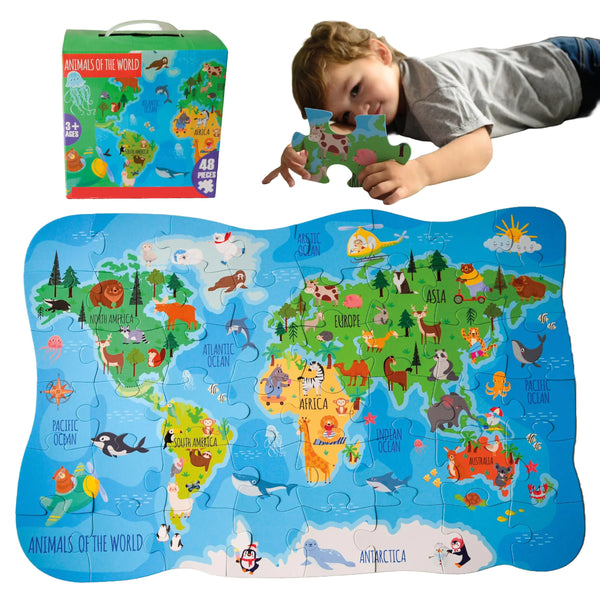
KAPLA Planks and large jigsaw puzzles — both require sustained, patient engagement over extended periods with no shortcut to completion.

Best for STEM Integration

GraviTrax Power, mBot2, LEGO SPIKE Prime — physical building combined with electronics and coding for the deepest STEM integration available in building toy format.

Best Building Toys by Budget

Under $30: Best Value Building Toys

Melissa and Doug wooden block sets ($15–25), KAPLA starter pack ($25), Kanoodle ($10–15), basic Snap Circuits Jr. kit ($25–30). All provide genuine educational building value at accessible prices. The Melissa and Doug wooden blocks and KAPLA starter pack provide the most authentic building toy value in the under-$30 range.

$30–$80: Best Mid-Range Building Toys

LEGO Classic large boxes ($50–70), premium magnetic tile starter sets ($40–80), GraviTrax starter set ($50–70), K'NEX construction sets ($30–60). This is the sweet spot for building toy value: all of these provide multi-year developmental engagement that fully justifies the investment.

$80+: Best Premium Building Toys

Professional unit block sets ($80–$200+), large Connetix magnetic tile sets ($100–$200), mBot2 robotics kit ($80–$120), LEGO SPIKE Prime ($300–$400). Premium building toys justify their price through decades-long durability, the richest developmental returns, and the professional educational heritage of their design.

What to Look For in a Building Toy

  • Open-ended potential: Can the child build anything they imagine, or only specific predetermined designs? Open-ended building toys provide far more developmental value over time.
  • Structural constraint: Does the toy impose real physical laws (gravity, balance, connection precision) that the child must understand? Structural constraint is what makes building play cognitively demanding.
  • Material quality: Cheap building toys with imprecise pieces, weak connections, or poor durability frustrate rather than challenge. Quality building toys provide reliable, satisfying physical feedback.
  • Scale appropriate for age: Oversized pieces for young children, more precise pieces for older children. The building toy that requires slightly more fine motor precision than the child currently possesses is the right challenge level.
  • Depth of challenge: The best building toys remain genuinely challenging across years of increasing capability. Avoid toys whose challenge ceiling is low — that will be completed and abandoned in months.

Find the Best Building Toy for Your Child

Shop All Building and Construction Toys

Also explore STEM toys, engineering toys, and Montessori educational toys.

Frequently Asked Questions: What Are the Best Building Toys?

1. What are the best building toys for kids overall?

The best building toys overall are LEGO Classic (ages 4–16, creative design), KAPLA planks (ages 3–16, structural engineering), unit blocks (ages 2–8, mathematical spatial play), and premium magnetic tiles (ages 3’9, geometric exploration). These four systems cover the widest age ranges, the deepest developmental engagement, and the highest consistency in educational value. The best specific choice depends on the child's age and current developmental priorities.

2. Are LEGO sets the best building toys for children?

LEGO is the most versatile building toy system available and provides excellent developmental value when used for open-ended building without instructions. Instruction-set LEGO develops fine motor skills and spatial reading but not creative design thinking. For the full developmental return of LEGO, prioritise LEGO Classic sets without instruction books and encourage open building alongside any instruction-based sets the child has. LEGO is not necessarily the "best" building toy for every child — KAPLA planks, unit blocks, and GraviTrax each excel in specific developmental domains that LEGO does not cover.

3. What is the best building toy for a 3-year-old?

For 3-year-olds: unit blocks (if available in a quality set), large magnetic tiles, LEGO DUPLO, or a quality wooden block set from Melissa and Doug or Hape. The key criterion at this age is size — pieces large enough to grasp reliably and safe for children who still occasionally mouth toys. KAPLA planks are also excellent from age 3 because the simple plank shape is easy to grasp and stack, though complex structures are not achievable until age 5 or 6.

4. What is the best building toy for a 7-year-old?

For 7-year-olds: LEGO Classic (open-ended creative design), KAPLA planks (structural engineering), or magnetic tiles (geometric exploration). At this age, children can execute ambitious building designs that were previously beyond their fine motor precision. The best choice depends on whether the priority is creative design (LEGO), structural engineering (KAPLA), or geometric discovery (magnetic tiles). Most families benefit from at least two of these three systems operating simultaneously.

5. Are magnetic tiles worth the price?

Premium magnetic tiles (Connetix, Magna-Tiles) are worth the price for the 3 to 9 age range. The developmental value — geometric discovery, spatial reasoning, and visual creativity — sustains engagement across 3 to 5 years of regular play. Budget magnetic tiles with weak magnets and imprecise geometry provide a significantly inferior building experience that may not justify even their lower price. For the developmental benefits of magnetic tile play to materialise, the tiles need to connect strongly, align precisely, and hold three-dimensional structures reliably.

6. What is GraviTrax and is it a good building toy?

GraviTrax is a physics-based marble run building system where children design tracks to route a marble from start to target. It is an excellent building toy for the 8 to 14 age range because it combines spatial construction with genuine physics engineering challenges. The success criterion is unambiguous (does the marble reach the target?), making GraviTrax one of the most cognitively demanding building toys available at this age level. The expandable system ensures continuously increasing challenge as the child's engineering capability grows.

7. What building toys develop maths skills?

Unit blocks develop mathematical intuition most directly through their dimensionally precise system where every block is a mathematical multiple or fraction of the basic unit. Cuisenaire rods extend this into arithmetic, fractions, and algebraic thinking. LEGO develops counting and measurement through piece quantity and dimension. KAPLA planks develop ratio and proportion intuition. The research on building toys and mathematical development consistently finds that children with extensive unit block play experience show significantly stronger mathematical reasoning than those without, with the spatial-mathematical relationship as the primary mechanism.

8. What is the most educational building toy?

"Most educational" depends on the educational goal. For spatial and mathematical education: unit blocks (the most researched, most enduring educational building system globally). For physics and engineering education: KAPLA planks and GraviTrax. For creative design education: LEGO Classic. For coding and electronics education: LEGO SPIKE Prime, mBot2. There is no single "most educational" building toy because different toys develop different educational capabilities. The most educational building toy library is a diverse one.

9. How long do children typically play with building toys?

High-quality building toys provide the longest engagement arcs of any toy category — years rather than months. LEGO users regularly span 4 to 14 years of active use from the same collection. KAPLA plank users report sustained engagement across the entire childhood period. Unit block engagement typically spans ages 2 to 8. Magnetic tile engagement typically spans ages 3 to 9. The multi-year engagement of quality building toys makes their cost-per-hour of developmental engagement exceptionally low compared to most other toy categories.

10. Should children build from instructions or freely?

Both — but free building is more developmentally valuable for creativity and spatial reasoning than instruction-following. Instruction-following develops technique (learning how specific structures are built) and spatial reading (interpreting three-dimensional diagrams). Free building develops creative design thinking and spatial problem-solving. The most effective approach: build from instructions to learn techniques, then apply those techniques in open-ended building. Never only follow instructions; always ensure significant free building time alongside.

11. What is the best building toy for girls?

The same building toys that are best for boys are best for girls. Research on STEM gender gaps identifies differential exposure to building play — not differential capability — as the primary driver of the gap. Girls who have equal access to LEGO Classic, KAPLA, unit blocks, and magnetic tiles develop the same spatial reasoning, engineering intuition, and design creativity as boys. Magnetic tiles may appeal more to children who also enjoy aesthetic play, and LEGO sets with architectural, botanical, or creative themes have been found to engage a broader range of children. The key is equal access and equal expectation.

12. What are the best wooden building toys?

Best wooden building toys: professional unit block sets (Community Playthings, Guidecraft) for mathematical-spatial play; KAPLA planks for structural engineering; Hape wooden blocks for accessible quality at home-use price points; Melissa and Doug wooden block sets for budget-friendly starter collections. Wood provides tactile satisfaction, acoustic feedback (the satisfying sound of a wooden tower collapsing), and natural material aesthetics that plastic building toys cannot replicate. For young children especially, wooden building toys are preferred by most child development specialists for their sensory quality and durability.

13. What are the best building toys for toddlers?

Best building toys for toddlers (ages 18 months to 3 years): Mega Bloks First Builders (safe, large, satisfying interlocking), wooden stacking blocks (simple, satisfying, durable), large magnetic tiles (accessible from age 3), and wooden shape sorters that build spatial fitting concepts. The key criteria for toddler building toys are: large enough to be safe, easy enough to grasp with small hands, durable enough to withstand enthusiastic use, and non-toxic in materials and finish.

14. Are there building toys for children with special needs?

Yes — and building toys are widely used in occupational therapy for children with a range of developmental profiles. Large foam blocks develop spatial reasoning in children with limited fine motor precision. Magnetic tiles with strong connections are more accessible to children with coordination difficulties than interlocking systems requiring precise alignment. LEGO Therapy is a structured social skill development programme specifically designed for children with autism, using LEGO as the social interaction medium. Always consult relevant specialists for recommendations specific to your child's profile.

15. What building toys last the longest?

Hardwood unit blocks (decades, used in nurseries across generations of children), KAPLA planks (indefinitely — planks do not wear out), LEGO bricks (LEGO compatibility is maintained across all sets, making bricks purchased in the 1960s still compatible with current sets), and premium magnetic tiles (5 to 10+ years under normal use). Of these, professional unit block sets and KAPLA planks have the longest documented lifespans in educational settings, regularly used for 20 to 30 years in nursery and primary school environments.

16. Where can I buy the best building toys for kids?

Explore a carefully curated selection of the best building and construction toys at WonderKidsToy. Every product is selected for genuine developmental value, construction quality, and the multi-year engagement that makes building toys among the highest-value educational toy investments available.

Final Thoughts: The Best Building Toy Is the One That Gets Built With Every Day

The definitive answer to "what are the best building toys?" is this: the best building toy for your child is the one that gets played with regularly, at the edge of their current capability, for years. Quality matters. System choice matters. But sustained, motivated engagement matters most. A child who builds with KAPLA planks for 30 minutes every day for five years will develop more spatial intelligence, engineering intuition, and creative problem-solving than one who plays with a premium building system for a week and then abandons it. Choose well, provide abundantly, and protect the time for daily building play.

Explore our complete range of building and construction toys to find the perfect system for your child's age and developmental goals.

Related Posts

Unlock the Power of Montessori Teen Board for Your Teenager
Watching your teenager grow is very fulfilling. I remember the...
Best Toys for 3 Year Olds (2026): Educational, Fun, and Worth Buying
Choosing the best toys for 3 year olds can feel harder...
Best Montessori Toys for 3-Year-Olds: Building Skills, Confidence & Independence
Quick Answer: The best Montessori toys for 3-year-olds focus on...
What Are Interactive Toys? The Complete Guide for Parents (2026)
Walk into any toy store and you will see the...
Montessori Counting Beads: Unlock Your Child's Potential
Watching your child grow and learn new things is very...
Montessori Bead Bars: Enhance Your Child's Learning
As a parent, you want the best for your child....
Back to blog

Top Picks (Quick Answer)

If you want the best options quickly, these are our top recommended toys based on learning value, fun, and long-term use.

BEST OVERALL

Creative Building Kits Educational Blocks Sets

A powerful all-in-one toy that helps kids build creativity, problem-solving skills, and focus through hands-on play.

Best for: creativity, building skills, and long-term engagement

Shop Now
BEST FOR YOUNGER KIDS

Jigsaw Puzzle Large 12 Piece Rainbow Blocks

Perfect for toddlers and preschoolers to build coordination, shape recognition, and early problem-solving skills.

Best for: ages 2–5, early learning, and hands-on play

Shop Now
Exclusive Bundle

FREE: Get $99 worth Creative Digital Vault

Order now and get instant access to 130+ Digital Learning Books. While your item ships, your child can start learning immediately!

✓ Link Sent Instantly to Your Email Post-Purchase