
The universe has always been a source of wonder and mystery, captivating the minds of young and old alike. For children, the vastness of space can spark immense curiosity and a desire to learn more about the world beyond our planet. High-quality astronomy toys serve as more than just entertainment; they are gateways to understanding physics, geometry, and the history of our galaxy.
In this guide, we explore the best tools to introduce children to the wonders of the cosmos. Whether your child is wobbly at 18 months or a logic-driven elementary student, these educational toys provide the hands-on engagement needed to master complex scientific concepts.
Astronomy play works beautifully when paired with our broader ranges of STEM toys and space exploration toys to create a rich learning environment at home.
Table of Contents
Space Often Feels Too Abstract for Young Minds
For a child, concepts like "planetary orbits" or "light years" are completely abstract. Looking at a textbook or a static image on a screen doesn't provide the tactile feedback needed to grasp the sheer scale of our solar system. Many parents notice that their children show interest in the stars but quickly disengage because they lack a physical way to interact with those interests. Without hands-on tools, space remains just another "school subject" rather than a gateway to infinite curiosity.
Why Missing Hands-On Milestones Stunts Scientific Grit
The early childhood years are a peak "sensitive period" for logic and spatial reasoning. If children aren't given the chance to physically manipulate models or build their own structures, they miss out on developing executive function and problem-solving resilience. As we explored in our guide on cognitive skill development, the absence of tactile science play can lead to shorter attention spans and a lack of independence in learning.
The Solution: Active Discovery through Astronomy Toys
The best solution is to move space from the textbook to the playroom floor. High-quality astronomy toys turn abstract ideas into something a child can grasp, build, and observe. When a child constructs a solar system model or launches a circuit-powered rocket, they receive haptic feedback that reinforces the laws of physics and geometry. This is the cornerstone of effective STEM learning.
By utilizing these tools, you allow your child to lead their own discovery, building the confidence needed for future success. These tools pair perfectly with our problem-solving play sets to help children master the mechanical logic of the universe.
Ready to launch your child's curiosity?
Explore our expert-vetted collection of space exploration kits designed to inspire the next generation of astronauts.
Shop Space Toys Now1. Solar System Puzzles
Imagine your little one piecing together the mysteries of our solar system! The Solar System Puzzle is a gateway to learning about the cosmos. Puzzles are excellent for developing spatial awareness and fine motor skills. Shutterstock

2. Star Projectors and Torches
Transform a bedroom into a personal planetarium! Projectors beam high-quality images of planets and constellations onto the ceiling. This provides a visual anchor for storytelling and helps children memorize celestial bodies without effort. As we explored in our guide on best astronomy toys for explorers, visual repetition is key for long-term memory.

3. Rocket Circuit Explorers
These kits combine the thrill of space with the logic of electronics. Kids must build the circuits correctly to make the rocket "blast off" with lights and sound. This provides an immediate Control of Error—if the wires aren't right, the light won't shine. This is a core pillar of robotics and coding play.

Astronomy Tool Selection Guide
Magnetic Rockets
Best for: Developing fine motor skills
Main benefits: Tactile logic, assembly
Typical age: 2 - 5 Years
Solar Mobile Kits
Best for: Understanding scale and order
Main benefits: DIY Art, orbital logic
Typical age: 8 - 12 Years
Stomp Rockets
Best for: Physics and energy play
Main benefits: Force and motion study
Typical age: 5 - 10 Years
Expert Picks for Future Astronauts
To truly elevate your child's astronomical journey, consider these high-impact examples that bridge the gap between play and real-world science.
The Physics Logic Masterpiece: Stacked High Block Toys
Building a "launchpad" often requires spatial logic. Our stacked high block toys help children understand height, balance, and the structural integrity needed for a rocket ship.
The Structural Wonder: Arch Bridge Rainbow Blocks
The curve of a planet or the arc of a rocket flight is best understood through structural toys. Our rainbow arch bridge blocks provide a hands-on lesson in gravity and balance.
Conclusion: Investing in a Lifetime of Wonder
Astronomy toys are more than just playthings; they are the architectural tools for your child's logical mind. By choosing tactile engagement over passive screens, you are building a cognitive foundation that will serve them for a lifetime. As we discussed in our guide on the power of educational toys, every rocket launched is a neural connection forged.
Ready to explore the universe?
Browse our full range of space exploration toys and prepare for your child's most exciting learning season yet.
Explore All Educational ToysFrequently Asked Questions About Astronomy Toys
1. What is the best astronomy toy for a 5-year-old?
Solar system puzzles, star projectors, and magnetic rockets are ideal for building motor skills and curiosity in this age group.
2. Are rocket building kits safe for home use?
Yes, most kits designed for children use safe air propulsion or simple electronics. Always launch in open spaces away from trees.
3. How do star projectors help kids sleep?
They provide a soothing, static, or rotating nightlight that reduces fear of the dark while educating them about constellations.
4. Do astronomy toys help with math skills?
Absolutely. Counting planets, measuring rocket flight heights, and understanding scale models are core math applications.
5. What age group are telescopes for kids best for?
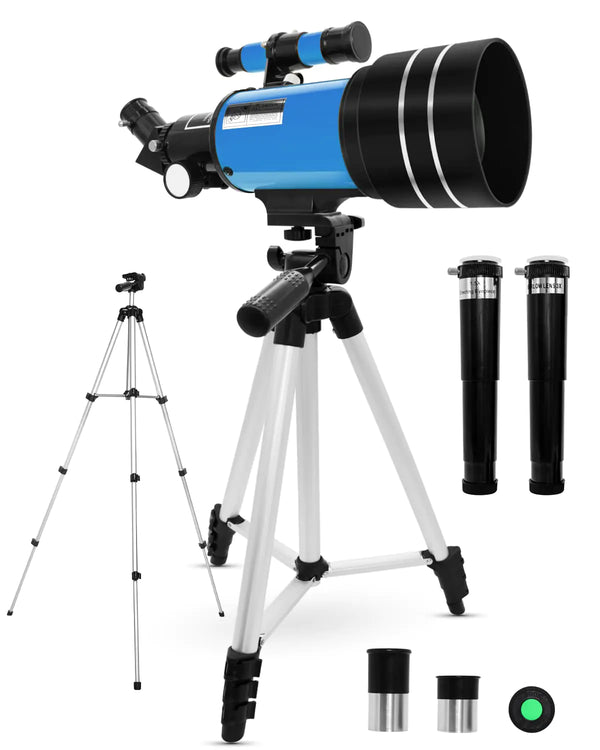
Beginner refractor telescopes are best for children aged 6-10 who have the patience to focus on the moon and bright planets.
6. Can space toys support school readiness?
Yes! They build focus, vocabulary, and an understanding of scientific methods before they even start school.
7. Why choose wooden space toys over plastic?
Wood provides superior haptic feedback and is generally more sustainable and long-lasting than uniform plastic.
8. What is the benefit of a "Glow-in-the-Dark" mobile?
It allows for nighttime observation and helps children understand the positioning of planets in a 3D space.
9. Are there astronomy toys for toddlers?
Yes, soft plush planets and chunky wooden rockets with magnets are safe and engaging for toddlers under 3.
10. How do I maintain a child's star projector?
Store it in a dry place, replace batteries as needed, and ensure the lens is kept free of dust for the clearest images.
11. Do rocket kits help with handwriting?
Yes, the fine motor control needed to assemble small parts and circuits builds the hand strength needed for pencil control.
12. Can a child learn to read from space toys?
Many sets come with fact cards or guides that encourage children to associate words with pictures, aiding early literacy.
13. What is a "Control of Error" in astronomy toys?
It’s a design feature where the child can see for themselves if a model is correct, like a puzzle piece only fitting in one slot.
14. Are magnetic rockets safe for all ages?
Always check for age ratings; high-quality wooden magnetic toys from Wonder Kids Toy are typically safe for 2+.
15. How long should a science play session last?
15-30 minutes is ideal for toddlers. Older kids may spend hours building complex circuit or mobile models.
16. Why is storytelling important in astronomy?
It provides context for stars and planets, showing the child that symbols create a bigger narrative of the universe.
17. Do space erasers actually help with learning?
Yes! They serve as a tactile reference during study time and act as conversation starters about planetary features.
18. How do I clean plastic solar system models?
Wipe with a damp cloth and mild soap; ensure they are completely dry before storage to prevent mold.
19. Can toys help with an interest in NASA?
Yes, NASA-branded sets provide realistic context for actual space missions and aerospace engineering.
20. What is the benefit of a 3D space puzzle?
It forces the brain to translate a mental image into a 3D structure, massive for spatial development.
21. Are LEGO space sets considered educational?
Absolutely. they teach structural engineering, following multi-step instructions, and patience.
22. Can I make DIY space crafts at home?
Yes! Bottle rockets, paper mache planets, and cardboard box spaceships are fantastic budget-friendly options.
23. Why is "cause and effect" important in rockets?
Understanding that stomping (cause) makes the rocket fly (effect) is the foundation of scientific logic.
24. Why choose Wonder Kids Toys for space gear?
We curate only high-quality, durable, and safety-vetted tools designed for genuine childhood joy.
25. Do astronomy toys help with vocabulary?
Yes! Learning words like 'orbit', 'axis', and 'atmosphere' broadens a child's language and descriptive skills.
26. What is haptic feedback in 3D models?
It is the physical information the brain receives through touch, like the weight of a wooden block.
27. Do toys help with understanding orbits?
Interactive rotatable models show the physical relationship between the sun, earth, and moon best.
28. Is adult supervision required for space kits?
Yes, active adult interaction significantly boosts the educational value and ensures safety with small parts.
29. Can water toys be educational for space?
Yes! Exploring buoyancy with 'space capsules' in the bath can teach concepts of weightless environments.
30. Where can I find more astronomy parenting tips?
Explore the Wonder Kids Toy blog for expert guides on early childhood development and learning through play.