
Speech and language development are among the most exciting milestones in a child's early life. While every child grows at their own pace, the right environment can make a world of difference. That is why educational toys for speech development have become essential tools for parents looking to support their little one's communication journey.
Many parents find themselves asking: what toys help with speech? The answer lies in toys that encourage mimicry, auditory processing, and back-and-forth interaction. By turning vocalization into a game, these toys help children build the confidence they need to find their voice.
In this guide, you will discover the best tools to boost vocabulary and phonics. These speech-focused items work hand-in-hand with language learning toys, early development toys, and sensory learning toys to create a talkative, engaging home environment.
Table of Contents
When Play is Too Silent
Many traditional toys are "one-way" devices. They might make a sound when a button is pressed, but they don't require anything back from the child. This leads to a passive environment where a child observes but doesn't participate. For speech development, silence is not always golden; children need to hear words repeated and be encouraged to attempt those sounds themselves.
Parents often worry when their toddlers are quiet, but without toys that prompt a response, children lack the "auditory exercise" needed to strengthen their verbal muscles and expand their vocabulary.
Why Active Communication Matters Now
The window for rapid language acquisition is relatively short. During these early years, the brain is uniquely wired to pick up sounds, rhythms, and sentence structures. If a child isn't stimulated to speak, they may miss out on building the neural pathways required for clear pronunciation and effective communication later in school.
It is much easier to foster a love for talking through play than through forced lessons. By neglecting speech development toys, we miss the chance to turn everyday moments into significant learning milestones.
The Solution: Toys That Talk Back
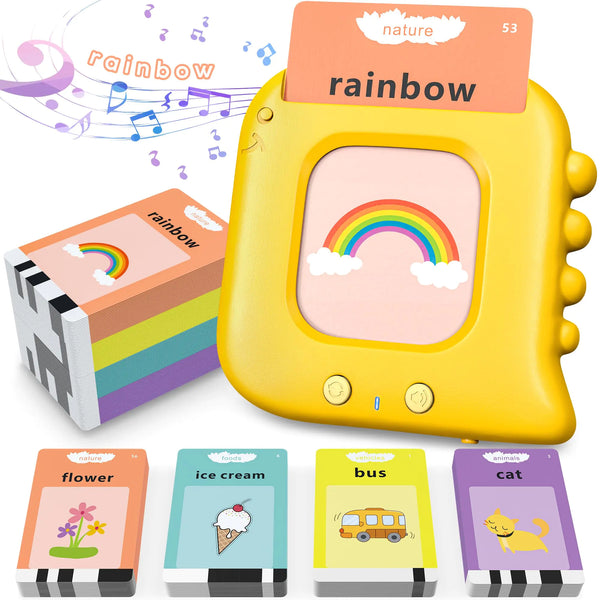
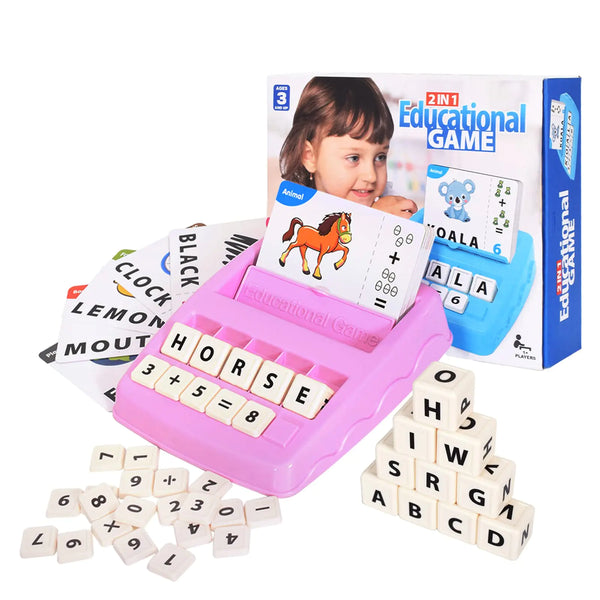
The best speech toys are those that create an interactive loop. When a toy says a word, and the child tries to repeat it, the child receives instant auditory feedback. This repetition is the key to mastering speech. Interactive flashcards, phonics books, and talking plushies act as a patient, always-available practice partner for your child.
Using toys that focus on clear pronunciation and catchy songs helps children distinguish between different letter sounds (phonics), which is the first step toward reading. You can find many such tools in our reading and writing toys collection.
Ready to start the conversation?
Explore our expert-selected toys designed to boost vocabulary and phonics skills through joyful play.
Shop Speech Development ToysTop Speech-Boosting Picks
Depending on your child's age, different toys will target different parts of speech development. Here are our top recommendations:
Vocabulary & Mimicry (0-2 Years)
For the youngest learners, focus on toys that introduce "first words." The Fisher-Price Laugh & Learn Puppy and LeapFrog 100 Words Book are perfect for creating a broad vocabulary base through repetition and song.
Phonics & Sentence Building (2-5 Years)
As they get older, children need to understand the sounds that letters make. The LeapFrog Magnetic Letter Reader is a household favorite for teaching phonics in a fun, tactile way on the fridge.
Speech Stage Comparison Guide
Mimicry Phase
Best for: Learning first words & animal sounds
Main benefits: Auditory processing, sound repetition
Typical age: 9 - 24 months
Phonics Phase
Best for: Recognizing letter sounds
Main benefits: Speech clarity, early reading readiness
Typical age: 2 - 4 years
Conversation Phase
Best for: Building sentences & storytelling
Main benefits: Social EQ, vocabulary expansion
Typical age: 3 - 6 years
How to Choose the Right Toy for Speech
Look for Clear Audio Quality
If the toy is muffled, your child won't be able to hear the subtle differences in vowel and consonant sounds. Choose high-quality electronic toys known for clear speakers.
Prioritize Reciprocal Play
Choose toys that require an action to get a sound. This teaches children the "social contract" of speech—that communication is a back-and-forth exchange.
The Power of Pretend
Sometimes the best "speech toy" is a set of dramatic play pretend toys. When children "play house" or "store," they practice real-world dialogue and social scripts.
Final Thoughts
Speech development is a journey of a thousand tiny words. By providing your child with interactive, audible, and engaging toys, you aren't just giving them a way to play—you're giving them the tools to express their thoughts, feelings, and dreams. The joy of hearing that first clear sentence is worth every minute of playful practice.
Pair your speech tools with Montessori educational toys for a balanced approach to growth. The best results happen when the whole family gets involved in the game!
Start the conversation today!
Discover our range of speech and language toys designed to help your child find their voice.
Explore Language ToysSpeech Development FAQs
1. What are the best toys for speech development?
Toys that encourage mimicry, like talking flashcards, interactive books, and phonics readers, are best.
2. Can toys really help a child speak earlier?
Interactive toys provide auditory stimulation and prompts that can help children practice sounds more frequently.
3. What age should I start speech-focused toys?
You can start as early as 6 months with toys that make simple sounds and music.
4. Do talking flashcards actually work?
Yes, they are highly effective for connecting a visual image to its spoken name through repetition.
5. What are phonics toys?
Phonics toys teach children the individual sounds (phonemes) that letters and groups of letters make.
6. Are books better than electronic toys for speech?
Both are valuable. Books encourage parent-child interaction, while electronic toys provide consistent pronunciation models.
7. Can musical toys help with speech?
Yes, rhythm and song help children notice sound patterns and distinctions, which is vital for language.
8. How do I encourage my child to repeat words?
Pause after the toy speaks to give your child space to fill in the word or sound.
9. Are pretend play toys good for speech?
Absolutely. Pretend play allows children to practice social scripts and full-sentence communication.
10. What if my child isn't talking yet?
Consult a pediatrician or speech pathologist if you have concerns, but continue providing a sound-rich play environment.
11. Do toys help with bilingual learning?
Yes, many talking toys offer dual-language modes to introduce multiple vocabularies early.
12. Are wooden blocks helpful for speech?
Indirectly, yes. Narrating your child's building ("You put the red block on top!") builds their receptive language.
13. What is auditory processing?
It is the brain's ability to interpret and make sense of the sounds heard, a foundational skill for speech.
14. Do toys help with pronunciation?
Yes, hearing a word pronounced clearly by a toy multiple times helps a child refine their own sounds.
15. What are receptive vs expressive language skills?
Receptive is understanding what is said; expressive is the ability to communicate ideas through speech.
16. Can magnetic letters teach speech?
Yes, especially magnetic "readers" that say the letter or sound when the piece is placed.
17. Are silent toys better for toddlers?
Silent toys encourage imagination, but sound-based toys are specifically designed to target speech goals.
18. How long should we play with talking toys each day?
Just 15-20 minutes of focused, interactive play can have a huge impact on vocabulary.
19. Do toys help children with speech delays?
They are often used as supplementary tools by speech therapists to make practice engaging.
20. What is a "talking book"?
A book with buttons or touch-sensitive pages that read words and play sounds out loud.
21. Can toys help with social anxiety in speaking?
Practicing with a toy is a low-pressure way for a child to build confidence before talking to people.
22. Are puzzles for vocabulary effective?
Yes, name-matching puzzles help reinforce word identification and pronunciation.
23. What role does mimicry play in speech?
Mimicry is the primary way children learn the motor patterns required to form speech sounds.
24. Do toys help with stuttering?
Rhythmic musical toys can sometimes help with speech fluency and cadence.
25. Are educational toys expensive?
Many effective speech tools like flashcards and basic books are very affordable.
26. Can toys help with reading readiness?
Yes, speech development is the foundation of literacy and reading skills.
27. Do parents need to be involved in the play?
Yes, toys are most effective when a parent joins in to model the speech and interaction.
28. What are sensory speech toys?
Toys that combine touch and sound to help children engage multiple parts of their brain during learning.
29. Can toys help a child ask for things?
Interactive games help children learn that vocalizing their needs leads to a positive response.
30. Where can I find the best speech toys?
WonderKidsToy offers a curated selection of the best educational toys for language and speech.