
Choosing the best wooden educational toys for babies can be a delightful yet challenging task for parents. These toys not only provide endless hours of fun but also play a crucial role in the early development of a child's sensory and motor skills. In this article, we explore the benefits of wooden toys, highlight top brands, and offer expert recommendations on selecting the safest and most enriching options for your little one.
Many parents search for the best wooden toys for babies because they value natural materials and high educational ROI. Choosing toys that promote independent play is a smart move for early brain growth. Exploring a high-quality educational toys collection is the first step in building a purposeful playroom.
In this guide, you will learn why wooden materials are superior for sensory development, which brands lead the market, and how to pick the safest options. These toys pair perfectly with Montessori educational toys and early development toys to create a rich environment for your baby to thrive.
Table of Contents
Why Traditional Entertainment Often Falls Short
Many modern baby toys are made of lightweight plastic and focus on "passive entertainment." They flash, beep, and sing at the baby, who remains a spectator. This "one-way" interaction provides very little cognitive challenge and often leads to overstimulation followed by quick boredom. Furthermore, plastic toys often lack the organic texture and weight required for high-quality sensory feedback.
Parents today are looking for more. They want tools that build mental stamina and encourage babies to use their hands and minds to solve problems rather than just pushing a button for a pre-recorded sound.
Why Missing Active Play Stalls Brain Development
Early childhood is a critical window for neural plasticity. If a baby only interacts with passive electronics, they miss out on the vital feedback loops that strengthen hand-eye coordination and spatial reasoning. Without the challenge of fitting a physical piece or balancing a block, the development of fine motor skills—essential for later writing and self-care—can be delayed.
Choosing specialized sought-after wooden toys ensures that your child is learning cause and effect naturally. By ignoring these foundations, we risk raising kids who rely on screens for dopamine rather than the "aha!" moment of independent discovery.
The Lasting Value of Wooden Toys
Wooden toys turn playtime into an active discovery mission. Instead of just looking, babies feel the grain of the wood, the temperature, and the specific weight of each piece. This "active discovery" helps them understand structural logic and balance in a way plastic cannot replicate. Whether it’s a Wooden Stacking Ring or a Geometric Shape Sorter, the result is a focused, confident learner.
By introducing toys that require active interaction, you provide your child with a foundation for lifelong innovation. Exploring sustainable building blocks is the most effective way to foster these essential motor skills at home.
Ready to build a better toy box?
Discover our hand-picked collection of wooden treasures designed for safe, durable, and joyful learning.
Shop Wooden Educational Toys Now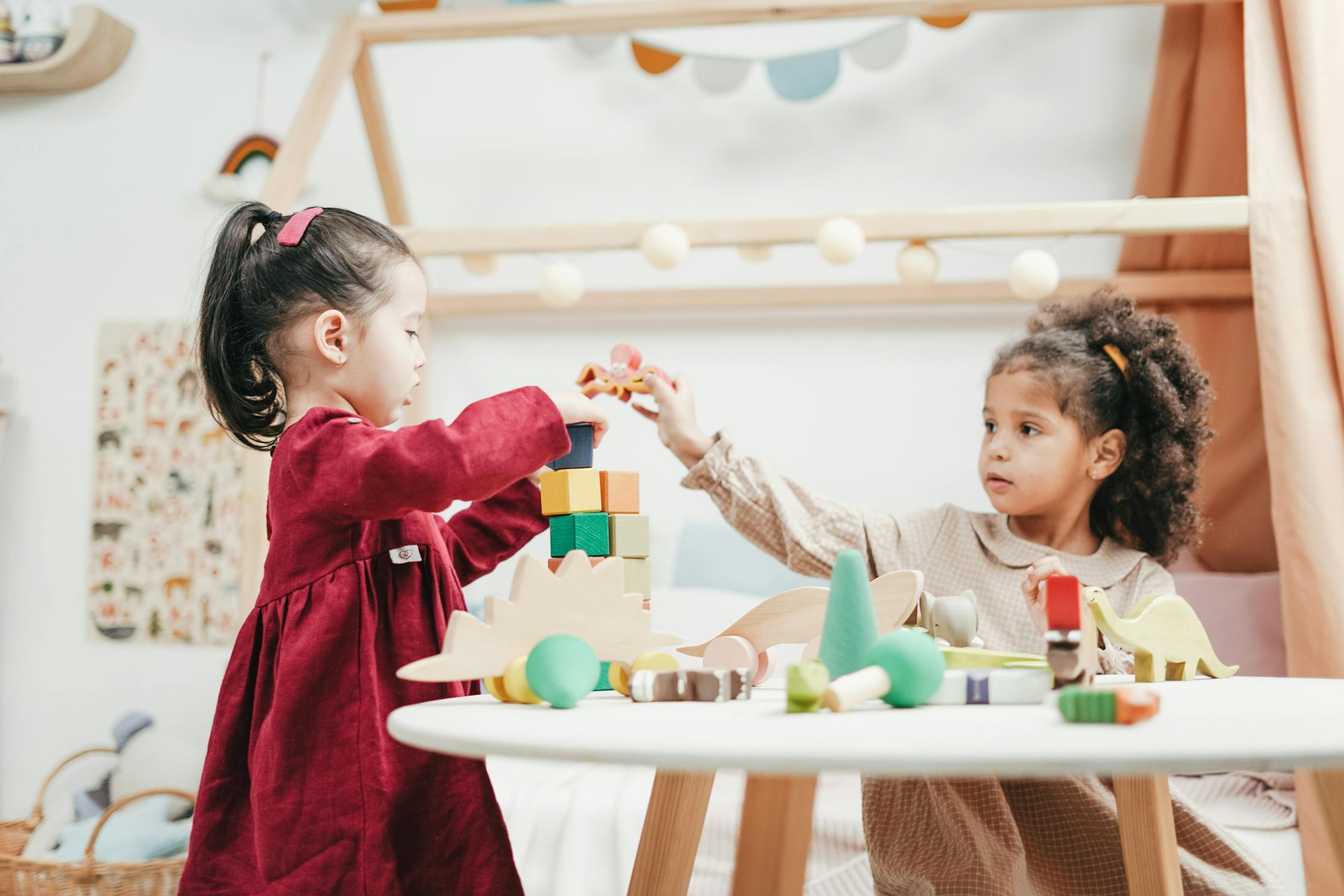
Focused interaction with natural materials helps babies build coordination and spatial logic during floor play.
Top Wooden Toy Brands for Babies
When it comes to your child, quality and safety are non-negotiable. Here are the leading brands that experts recommend:
Melissa & Doug
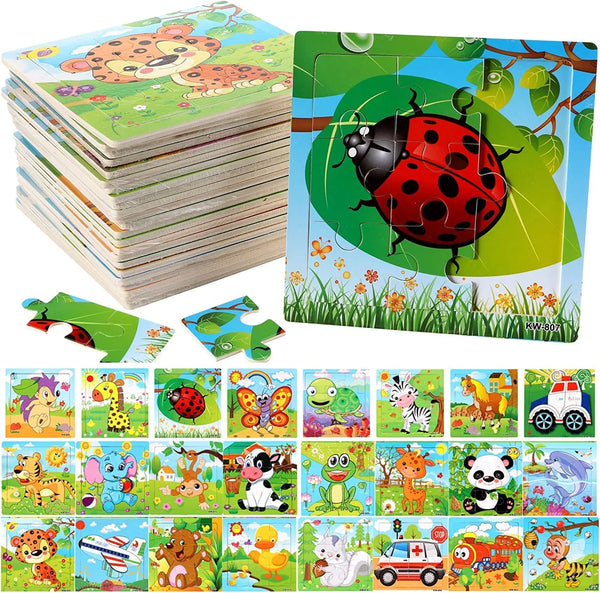
Known for their massive variety and extreme durability. Their Wooden Puzzles are staples in nurseries worldwide because they combine high-contrast colors with manageable pieces for tiny hands.
Hape
Hape leads the way in sustainable design, often using bamboo and non-toxic water-based paints. Their toys focus on imaginative play and helping children explore the mechanics of the world.
PlanToys
PlanToys uses chemical-free rubberwood and organic pigments. They are famous for their focus on fine motor skills and creating toys that feel like pieces of art. Check out our expert insights on choosing toys for more details.
Supporting Sensory & Motor Skill Development
Wooden toys provide "unplugged" developmental benefits that batteries simply can't match:
- Tactile exploration: Different wood types provide different weights and temperatures, which is key for sensory brain mapping.
- Pincer grip training: Picking up small wooden animals or puzzle pieces prepares fingers for holding a pencil.
- Hand-eye coordination: Pull-Along Toys and stacking sets require precision and focus.
These foundations are a core part of the problem-solving play set philosophy, where the child learns through experimentation and persistence.
Quick Comparison: Best Wooden Toy Types
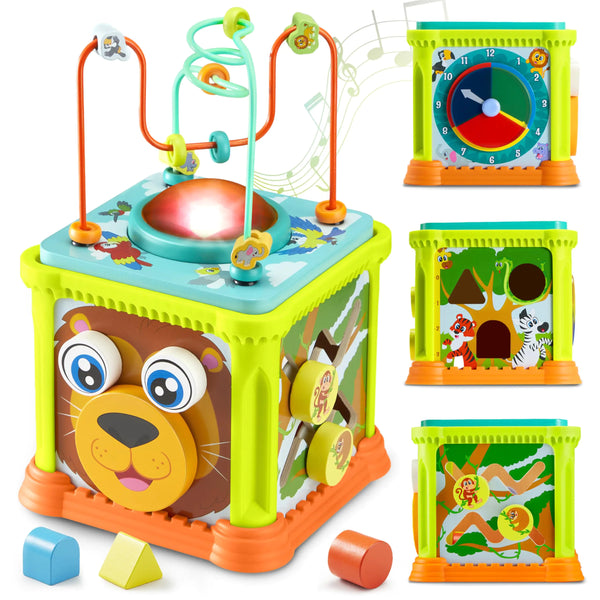
Activity Cubes
Best for: Multi-skill engagement.
Main benefits: Hand-eye coordination, focus.
Age range: 12 months to 3 years
Building Blocks
Best for: Open-ended creativity.
Main benefits: Balance, spatial logic.
Age range: 18 months to 8 years
Pull Toys
Best for: Gross motor & walking.
Main benefits: Balance, coordination.
Age range: 1 to 2 years
How to Choose Safe & Enriching Wooden Toys
Non-Toxic Materials are Essential
Babies explore with their mouths. Always look for toys with CPSC or ASTM certification and finishes made from food-grade oils or water-based paints. Avoid toys with sharp edges or visible glue.
Avoid the "Toilet Paper Roll" Test Failure
A simple safety rule: if a part can fit through a toilet paper roll, it's a choking hazard for children under 3. Stick to "chunky" designs for infants and toddlers. Refer to our complete Montessori guide for age-based safety tips.
Choose "Active" Designs
The best toys are 90% child and 10% toy. Blocks, stackers, and Stacked High Block Toys allow the child to lead, which builds independence and curiosity better than any pre-programmed gadget.
Final Thoughts
Wooden educational toys are much more than simple playthings—they are investments in your child's physical and mental potential. By selecting tools that encourage rhythm, logic, and motor mastery, you are setting the stage for a lifetime of innovative thinking. Every block stacked and puzzle solved is a milestone in their building block for a bright future.
Ready to build a better toy box? Explore our curated range of wooden and educational toys today. Your journey toward meaningful play starts here. You can even check out products like our Creative Building Kits to get started!
Make Playtime Truly Wonderful
Discover expert-selected toys that inspire curiosity, build confidence, and make learning irresistibly fun.
Visit WonderKidsToy TodayParent FAQ: Wooden Educational Toys
1. Why are wooden toys better for babies?
They are durable, naturally anti-bacterial, non-toxic, and provide superior tactile sensory feedback compared to plastic.
2. Are wooden toys safe for babies to chew on?
Yes, if they use non-toxic, water-based paints or natural oils. Always check for safety certifications like ASTM or EN71.
3. How do wooden toys help brain development?
They encourage "active play" where babies must solve problems (like stacking) themselves, strengthening neural pathways for logic.
4. What are the best wooden toy brands?
Experts recommend Melissa & Doug for variety, Hape for modern sustainability, and PlanToys for organic quality.
5. Do wooden toys help with fine motor skills?
Yes, picking up blocks, sliding beads, and fitting puzzle pieces builds hand strength and precision.
6. How do I clean wooden toys?
Wipe them with a damp cloth and mild soap. Never soak them in water as it can warp or crack the wood.
7. Are wooden toys worth the higher price?
Yes, they are heirloom-quality and can last for generations, often making them cheaper than buying multiple plastic replacements.
8. Can wooden toys reduce screen time?
Yes, providing engaging tactile alternatives is the most effective way to limit a child's dependence on digital media.
9. What is "Self-Correction" in wooden toys?
A design (like a puzzle) where the child can see the mistake immediately (piece won't fit) and fix it without adult help.
10. Are wooden blocks considered STEM toys?
Absolutely. They teach gravity, balance, structural integrity, and foundational math through play.
11. What is the "Pincer Grip"?
The ability to hold items between thumb and forefinger, a skill trained by using wooden peg puzzles and sorting sets.
12. How often should I rotate toys?
Every 2-4 weeks. This maintain interest and prevents the baby from being overwhelmed by too many choices.
13. Do wooden toys help with speech delays?
Yes, by encouraging naming, turn-taking, and social interaction during collaborative building or pretend play.
14. What are the best travel-friendly wooden toys?
Small magnetic puzzles, pocket-sized wooden cars, and fabric quiet books with wooden elements are ideal.
15. Can wooden toys teach biology?
Yes, through wooden gardening kits or animal figure sets that spark curiosity about the natural world.
16. Are there specific wooden toys for infants (0-6m)?
Yes, simple wooden rattles, grasping beads, and smooth teething rings are perfect for early discovery.
17. Why avoid battery-operated noise toys?
They often over-stimulate and perform "for" the child, taking away the opportunity for active brain work.
18. What is a "busy board"?
A wooden board with various latches, buttons, and gears that trains specific finger movements and persistence.
19. Can wooden toys help children with ADHD focus?
Many parents find the tactile focus and lack of flashing distractions very grounding for children with focus challenges.
20. Do wooden toys teach math to 3-year-olds?
Yes, through counting blocks, matching shapes, and understanding volume through nesting toys.
21. Are wooden toys safe for babies with allergies?
Generally yes, as high-quality wood is a natural material free from the synthetic off-gassing found in some plastics.
22. What is "grit" in play?
The persistence to keep trying a difficult puzzle or build—a vital trait for future school success trained by wooden toys.
23. Why use "Real-World" kitchen sets?
Imitating adult tasks (like cooking) with wooden sets builds social intelligence and practical life skills.
24. Can I buy these toys online?
Yes, specialized stores like WonderKidsToy curate collections based on developmental milestones and safety.
25. How do I know if a toy is high-quality?
Look for natural materials, smooth finishes, non-toxic labels, and awards from developmental associations.
26. What are the best toys for crawling babies?
Push-and-pull wooden animals or rolling balls that encourage babies to move and retrieve them.
27. Can wooden toys help with anxiety?
Structured, repetitive play like sorting beads can be very grounding and calming for anxious toddlers.
28. Why reality-based toys over fantasy?
Montessori principles suggest reality-based learning helps children understand their world before exploring abstract fantasy.
29. Can wooden toys teach patience?
Yes, complex builds and jigsaw puzzles require sustained effort to see a finished result.
30. Where can I find curated wooden collections?
Explore the specialized collections for every age and skill level at WonderKidsToy.