

Every parent wants to raise a child who can think independently, solve small problems, trust their own abilities, and approach life with confidence. But independence does not suddenly appear one day. It is built slowly through everyday experiences, especially through play. That is why the best toys for building independence in kids are not always the flashiest or loudest. The most valuable toys are often the ones that invite children to explore, experiment, try again, and discover solutions without constant adult direction.
In today’s world, many children are surrounded by passive entertainment, step-by-step instructions, and screen-based activities that do most of the thinking for them. While those tools may hold attention for a while, they do not always help children develop autonomy. Toys that support independent play do something different. They create space for children to make decisions, manage frustration, follow curiosity, and feel the deep pride that comes from saying, “I did it myself.”
The right independence-building toys can support real growth across many areas of development. They help children strengthen focus, patience, emotional regulation, fine motor control, creativity, and problem-solving. They also encourage children to rely a little less on constant reassurance and a little more on their own judgment. That matters not only for playtime, but also for school readiness, self-care, resilience, and confidence later in life.
In this guide, you will learn why some modern toys can accidentally limit autonomy, what independent play really looks like, how Montessori-style materials support self-directed learning, and which kinds of toys work best for toddlers, preschoolers, and older children. You will also discover how to pair toys with collections like educational toys, Montessori educational toys, early development toys, problem-solving play sets, and building & construction toys to create a home environment that helps children become more capable every day.
Table of Contents
Why So Many Children Struggle to Build Independence Today
Modern parenting often comes with the best intentions. We want to help. We want to support. We want to protect children from frustration and keep them moving forward. But in trying to make everything easier, it is possible to remove the very moments children need in order to grow. Independence is built in those little spaces where a child pauses, thinks, tests an idea, makes a mistake, and tries again.
Many children today live in highly structured environments. Their days are organized, their activities are planned, and their entertainment is often designed to keep them occupied with minimal effort. On top of that, many toys and devices respond instantly. Push a button and the toy sings. Tap the screen and the answer appears. This may seem harmless, but over time it can reduce opportunities for children to practice patience, persistence, and self-direction.
A child who is always shown exactly what to do can become hesitant when that guidance disappears. A child who rarely has to struggle through a manageable challenge may lose confidence quickly when something feels difficult. That does not mean children need hard experiences all the time. It simply means they need regular chances to be active participants in their own learning.
This is where the right play materials matter. Independence-building toys encourage children to become problem-solvers instead of spectators. They help kids learn how to stay with a challenge a little longer, think a little deeper, and trust themselves a little more. That is why so many parents today are turning toward open-ended materials, educational toys, and hands-on collections that support real engagement instead of passive entertainment.
How Passive Toys Can Quietly Hold Development Back
Not all entertaining toys are bad, but many passive toys are designed to keep children occupied by doing most of the work for them. They light up, talk, perform, and guide the interaction from start to finish. The child’s role is often reduced to watching, pressing, waiting, and reacting. That kind of play may create instant excitement, but it usually does not leave much room for invention, decision-making, or independent thought.
When a toy always provides the next step, children are not asked to generate their own ideas. When a toy corrects everything automatically, children do not have to notice errors or adjust their approach. When the reward is constant stimulation rather than meaningful effort, the child may begin to expect every activity to be instantly engaging. This can make slower, deeper learning experiences feel harder than they really are.
Over time, passive play can also affect confidence. Children build strong self-belief when they experience themselves as capable. That feeling does not come from watching a toy perform. It comes from doing something hard enough to matter, but manageable enough to solve. It comes from stacking the blocks, fitting the puzzle, zipping the frame, sorting the shapes, or building the structure on their own.
That is why families often notice a real difference when they replace highly automated toys with more purposeful materials such as problem-solving play sets, building & construction toys, and tactile activities that invite children to participate fully. These toys may look simpler, but their developmental impact is often much stronger.
What Independent Play Toys Do Differently
The best toys for building independence are simple enough for a child to understand, but open enough for that child to stay involved. They do not overwhelm. They do not entertain the child instead of engaging the child. Instead, they invite action. They ask the child to touch, test, sort, stack, match, build, balance, open, close, compare, and repeat. This is exactly what independence needs: active participation.
These toys help children strengthen something incredibly important: internal motivation. Rather than chasing nonstop stimulation, children learn to enjoy concentration, mastery, and progress. They begin to experience the quiet reward of figuring something out. That is one of the most valuable feelings a child can build, because it creates a strong foundation for learning in every area of life.
Independent play toys also support emotional growth. They teach children how to deal with small frustrations, wait through uncertainty, and recover from mistakes. A child who experiences these little moments of struggle in play becomes more prepared to handle challenge elsewhere too. That is why collections like Montessori educational toys, early development toys, and STEM toys are so powerful when chosen thoughtfully.
Looking for toys that build confidence, not just excitement?
Explore hands-on learning toys that help children think, solve, create, and grow more independent every day.
Shop Educational ToysWhat Independence Really Means in Child Development
When parents hear the word independence, they sometimes think only about children doing things alone. But real independence in child development is broader than that. It is the ability to approach tasks with confidence, make age-appropriate decisions, persist through manageable difficulty, and increasingly rely on one’s own skills instead of constant adult rescue.
For toddlers, independence may look like choosing a puzzle piece, placing a ring on a stacker, or using a simple busy board without help. For preschoolers, it may mean completing a multi-step activity, pouring carefully, buttoning clothing, or building a design from blocks. For older children, independence can grow into planning, self-correction, strategy, and following through on more complex projects.
This matters because independence is linked to confidence. Children who repeatedly experience themselves as capable begin to carry that belief into new situations. They are more likely to try unfamiliar tasks, recover from mistakes, and trust that effort leads somewhere meaningful. That is why building independence through play is so much more than a parenting trend. It is a long-term investment in resilience.
Parents can support this growth by choosing toys that allow children to experience “just enough challenge.” A toy should not be so hard that it shuts the child down, but it should not be so easy that it requires no thinking. The sweet spot is where learning feels possible, effort feels meaningful, and success feels earned.
Why Montessori Toys Work So Well for Building Independence
Montessori-inspired toys and activities are often some of the strongest tools for building autonomy because they are designed around child-led learning. Instead of overwhelming children with too many sounds, steps, or distractions, Montessori materials typically focus on one skill at a time. This helps children concentrate deeply and understand what they are actually doing.
Another important feature is self-correction. Many Montessori-style materials allow children to notice errors on their own. A shape does not fit. A piece is out of place. A sequence does not work. This is incredibly powerful because it lets the child learn without waiting for an adult to say, “That’s wrong.” It strengthens observation, patience, and internal problem-solving.
Montessori materials also often connect directly to real life. Practical activities like pouring, spooning, zipping, lacing, sorting, and organizing help children feel capable in everyday routines. These activities do not just prepare children academically. They help children feel useful, trusted, and involved in their environment.
That is why many families love pairing Montessori educational toys with early development toys, language learning toys, and mathematics & counting toys to create a balanced learning environment that respects both independence and growth.
Best Toys for Building Independence in Toddlers (1–3 Years)
Toddlers are in a stage of intense discovery. They want to touch everything, repeat actions, and test how the world works. This is an ideal time to introduce simple independence-building toys because toddlers are naturally motivated to do things for themselves. The key is choosing materials that are safe, manageable, and easy to understand without too much explanation.
Stacking toys are excellent for this stage. They help toddlers practice coordination, sequencing, and visual judgment. The beauty of stacking play is that toddlers can quickly see the outcome of their actions. If the stack falls, they rebuild. If the size order does not work, they adjust. That process builds confidence far more effectively than a toy that always performs perfectly on its own.
Shape sorters and matching toys are also powerful independence tools. They teach toddlers how to compare, rotate, test, and solve. Instead of being told exactly what to do, the child experiments until the right shape fits. That creates a strong sense of “I figured it out,” which is exactly the emotional experience that independence needs.
Busy boards and practical life toys help toddlers practice real-world movements like zipping, buttoning, opening, closing, turning, sliding, and fastening. These are not small skills. They lay the groundwork for dressing, self-care, hand control, and frustration tolerance. They also help toddlers feel more capable in everyday life, which can reduce clinginess and increase confidence.
Parents can build a strong toddler play environment by combining early development toys, sensory learning toys, and Montessori educational toys that support repetition, focus, and hands-on exploration.
Best Independence-Building Toys for Preschoolers (3–5 Years)
Preschoolers are ready for more layered challenges. At this age, children are developing stronger attention spans, richer imagination, better language, and more interest in doing things “all by myself.” This is a wonderful stage for introducing toys that require planning, sequencing, and self-correction.
Puzzles and brain teasers are especially effective. They help children stay with a challenge, notice patterns, and organize their thinking. Preschoolers who work through simple puzzles on their own are not just learning visual skills. They are learning that effort leads to completion. That is a major confidence builder.
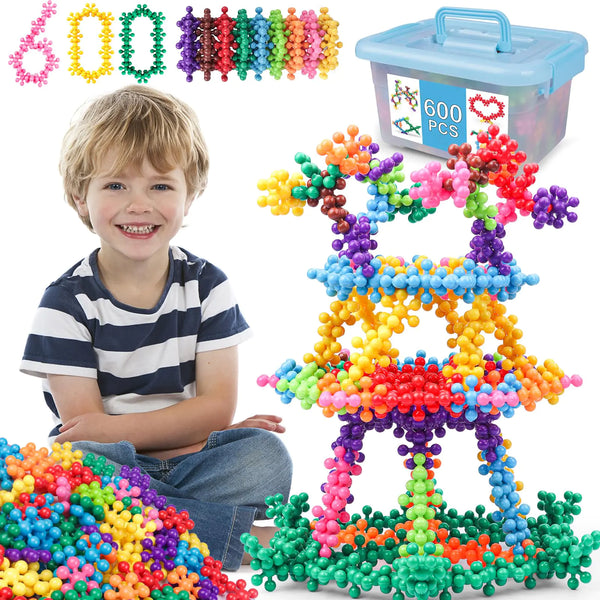
Building and construction toys are another strong choice because they encourage children to imagine, plan, test, rebuild, and improve. When a preschooler builds a tower, bridge, or little structure, they are practicing independence through action. They are making design choices, observing outcomes, and adjusting without needing every step explained.
Sorting, counting, and early learning sets also support autonomy. These toys help children complete goal-based activities with growing independence while building pre-math and classification skills. They work especially well when materials are clearly arranged and simple enough for the child to manage without extra noise or distraction.
For this stage, many families enjoy combining educational toys for 3 year olds, problem-solving play sets, puzzle brain teasers, and building & construction toys to support both independence and school readiness.
Best Toys for Building Independence in Older Kids (6+ Years)
As children grow older, independence starts to look more strategic. Instead of simply completing small tasks alone, older kids begin to plan, troubleshoot, and persist through longer challenges. The best toys at this stage are those that respect growing intelligence and give children room to think deeply.
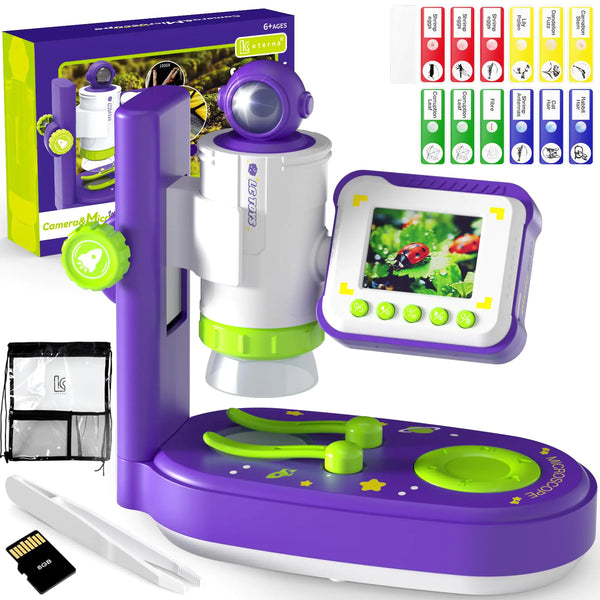
STEM toys, engineering sets, and robotics kits are excellent for this. These toys ask children to follow steps, understand systems, solve problems, and revise their ideas. They build real intellectual independence because children must think through challenges instead of relying on constant direction.
Advanced building sets and logic games are also powerful. They encourage strategy, planning, and self-correction while still feeling fun. Children who complete a more complex build or solve a harder logic challenge often experience a huge confidence boost because the success feels meaningful and earned.
Creative open-ended kits can also support independence in older children. Art, design, and invention-based toys invite children to take ownership of ideas and follow through on them. This kind of self-directed creation supports both autonomy and identity, especially when children begin to see themselves as capable makers and thinkers.
At this stage, a strong mix might include STEM toys, engineering toys, robotics kits for kids, coding & programming toys, and science kits & experiments.
Quick Selection Cards: Best Toy Types for Independence
These mobile-friendly cards make it easier to choose the right style of independence-building toy based on age and learning goal.
Busy Boards
Excellent for toddlers who want hands-on, real-world practice with everyday motions.
Best for: fine motor skills, self-help confidence, focus
Explore Early Development Toys →Shape Sorters & Practical Sets
Ideal for self-correction, repetition, and calm child-led learning.
Best for: autonomy, concentration, trial-and-error learning
Explore Montessori Toys →Puzzles & Logic Play
Great for children ready to persist through manageable challenges on their own.
Best for: patience, reasoning, completion confidence
Explore Brain Teasers →Building Toys
Perfect for kids who love making, testing, rebuilding, and improving their own ideas.
Best for: imagination, resilience, self-directed problem-solving
Explore Building Toys →Problem-Solving Sets
Strong choice for children who benefit from challenge-based learning.
Best for: logic, focus, confidence through mastery
Explore Problem-Solving Toys →STEM & Engineering Toys
Best for deeper thinking, project-based independence, and growing intellectual confidence.
Best for: persistence, strategy, independent project work
Explore STEM Toys →Practical Life Toys: The Hidden Key to Real Independence
One of the most overlooked ways to build independence is through practical life play. These are toys and activities that mirror real tasks children see adults do every day. Pouring water, stirring, fastening, sweeping, sorting, organizing, and dressing are not “small” activities to a child. They are deeply meaningful because they connect play to real life.
Practical life toys matter because they help children feel capable in their own world. When a child can zip a jacket, button a frame, transfer objects with a spoon, or complete a simple cleaning task, they gain more than a skill. They gain evidence that they are competent. This kind of competence changes behavior. Children often become more cooperative, more engaged, and more confident when they are trusted with real or real-feeling tasks.
These activities also strengthen concentration in a unique way. Because the tasks feel purposeful, children often stay with them longer than adults expect. Repetition becomes satisfying rather than boring. That repetition is exactly what strengthens neural pathways and helps skills become more natural over time.
If you want toys that support this kind of growth, explore Montessori educational toys, early development toys, and age-appropriate materials that encourage self-help, sequencing, and real-world confidence.
How to Choose the Right Toy for Building Independence
Choosing the right toy is less about buying something trendy and more about understanding what independence needs. The best choices are usually simple, open-ended, and slightly challenging without being frustrating. The toy should invite the child to participate actively rather than sit back and watch.
Start by asking whether the toy allows the child to do something meaningful. Can they solve, sort, stack, build, connect, fasten, match, pour, or create? Does the toy give them space to make decisions? Can they notice and correct mistakes on their own? If the answer is yes, that toy is likely doing more for development than a highly automated toy that entertains without requiring thought.
Also think about age and stage. A toy that is too advanced can lead to frustration, while a toy that is too easy may not inspire growth. The goal is not perfection. The goal is engagement. You want the child to feel stretched, but not defeated.
It also helps to rotate toys instead of keeping everything available all the time. Too many choices can reduce focus. A smaller, calmer selection often leads to deeper play. When children can see and access toys clearly, they are more likely to choose activities independently and return to them with purpose.
A strong setup might combine educational toys, problem-solving play sets, building & construction toys, and focused age-based options like educational toys for 3 year olds.
Final Thoughts: Independence Starts with the Right Kind of Play
Independence is one of the greatest gifts a child can build. It shapes how they approach problems, how they respond to setbacks, and how much they trust themselves in new situations. The good news is that independence does not require intense pressure or formal lessons. It grows naturally when children are given the right tools, enough time, and the space to figure things out.
The best toys for building independence in kids are the ones that respect the child as an active learner. They offer calm challenge instead of constant stimulation. They encourage effort instead of instant reward. They make room for repetition, mistakes, and mastery. Over time, those small moments of self-directed success become the foundation of real confidence.
Whether you are supporting a curious toddler, a determined preschooler, or an older child ready for bigger thinking, the right toy choices can make a real difference. Start simple. Choose purposeful materials. Trust the process. Then watch your child grow into that beautiful, powerful feeling of “I can do it myself.”
Looking for the best toys for your child?
Explore our top-rated educational toys collection designed to boost learning, confidence, and independence through hands-on play.
Explore Learning Toys NowFrequently Asked Questions About Toys for Building Independence in Kids
1. What are the best toys for building independence in kids?
Some of the best toys for building independence include Montessori educational toys, puzzles, stacking toys, practical life materials, building toys, and problem-solving sets that allow children to explore and correct their own mistakes.
2. How does independent play help child development?
Independent play helps children build confidence, patience, decision-making, focus, emotional regulation, and problem-solving skills because they are practicing how to think and act without constant adult intervention.
3. At what age should children start independent play?
Children can begin practicing short periods of independent play in toddlerhood with simple age-appropriate toys that are safe, engaging, and easy to understand.
4. Why are Montessori toys good for independence?
Montessori toys support independence because they are simple, hands-on, and often self-correcting, which allows children to experiment, notice mistakes, and learn without constant correction from adults.
5. Do toys really help children become more confident?
Yes. When children complete challenges on their own, even small ones, they develop a stronger sense of competence and start to believe in their own abilities.
6. What types of toys build autonomy in toddlers?
Stacking toys, shape sorters, busy boards, matching toys, and simple practical life materials are excellent for helping toddlers practice self-directed action and early independence.
7. Are building toys good for independence?
Yes. Building toys encourage children to plan, experiment, rebuild, and solve problems on their own, which strengthens resilience and confidence.
8. Do puzzles help children become more independent?
Yes. Puzzles help children practice concentration, persistence, and self-correction while working through a challenge independently.
9. What are practical life toys?
Practical life toys are materials that help children practice real-world movements and routines such as pouring, fastening, sorting, scooping, lacing, and organizing.
10. How long should independent play last?
It depends on age and temperament. Toddlers may begin with 5 to 10 minutes, while preschoolers and older children can often engage longer when the toy matches their interests and developmental stage.
11. Are electronic toys bad for independence?
Not all electronic toys are bad, but many passive electronic toys do more entertaining than teaching. Independence grows best with toys that require active thinking and effort from the child.
12. What toys help with self-help skills?
Busy boards, dressing frames, practical life kits, and Montessori-style activities help children practice self-help skills like zipping, buttoning, fastening, and organizing.
13. Can independent play reduce clinginess?
It can help over time because children gain confidence in their ability to stay engaged, solve simple problems, and enjoy activities without needing constant adult involvement.
14. What toys are best for preschool independence?
Puzzles, construction toys, practical life sets, sorting activities, counting toys, and beginner logic games are all strong choices for preschoolers.
15. Do STEM toys build independence too?
Yes. STEM toys often require planning, testing, revising, and solving, which helps older children become more independent thinkers and learners.
16. What are self-correcting toys?
Self-correcting toys are materials that allow children to notice mistakes themselves, such as shapes that only fit one way or sequences that clearly do not work until corrected.
17. Why is self-correction important for confidence?
Self-correction helps children trust their own thinking and feel ownership over the learning process instead of waiting for an adult to approve every step.
18. Are open-ended toys better for independence?
Yes. Open-ended toys can be used in many ways, so children have more freedom to make decisions, explore ideas, and create their own direction during play.
19. How can I encourage independent play at home?
Offer a small selection of accessible toys, avoid over-directing, create a calm play area, and choose materials that your child can use successfully with little help.
20. Should I rotate toys?
Yes. Toy rotation can keep materials feeling fresh while reducing overwhelm and improving focus during independent play.
21. Are wooden toys good for independence?
Often yes, because wooden toys are usually simpler, calmer, and more tactile, which can support deeper concentration and more purposeful play.
22. Can these toys help with focus?
Yes. Toys that require sorting, building, matching, lacing, or solving often help children practice sustained attention and concentration.
23. Are practical life toys only for Montessori homes?
No. Practical life toys can benefit any home because they support useful real-world skills, confidence, and self-direction in everyday routines.
24. Can I find independence toys for 6-year-olds?
Yes. Older children often benefit from engineering toys, robotics kits, coding toys, advanced construction sets, and richer logic challenges that build strategic independence.
25. Do these toys help with fine motor skills?
Yes. Many independence-building toys involve gripping, turning, stacking, lacing, zipping, sorting, and matching, which all help strengthen hand-eye coordination and motor control.
26. Can independence-building toys help with school readiness?
Yes. These toys support confidence, concentration, problem-solving, self-help skills, and persistence, all of which are important for school readiness.
27. Are Montessori toys safe?
Quality Montessori toys are typically made with child-safe materials and designed for age-appropriate hands-on use. Always choose trusted products suited to your child’s stage.
28. Can these toys help with emotional regulation?
Yes. Independent play teaches children how to stay with mild frustration, try again after mistakes, and experience calm satisfaction through progress.
29. What should I avoid when choosing independence toys?
Avoid toys that are overly noisy, overly complicated, or too passive to engage the child’s thinking. The best toys invite action, not just attention.
30. Where can I shop toys that build independence in kids?
You can explore WonderKidsToy collections such as educational toys, Montessori educational toys, problem-solving play sets, and early development toys to find purposeful toys that support independence through play.