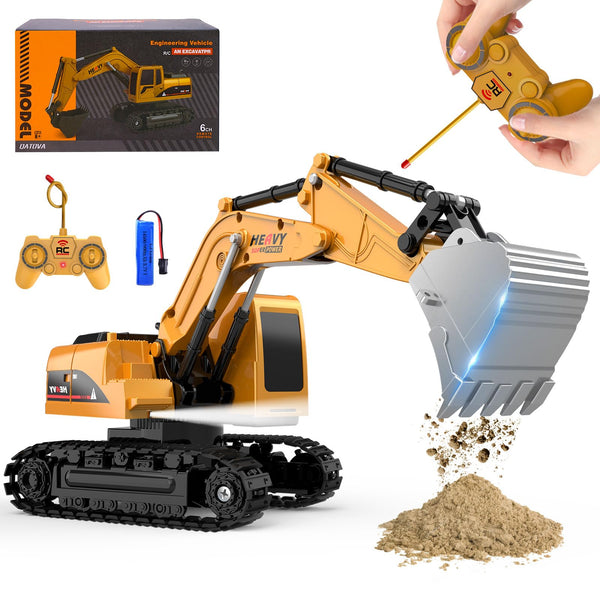

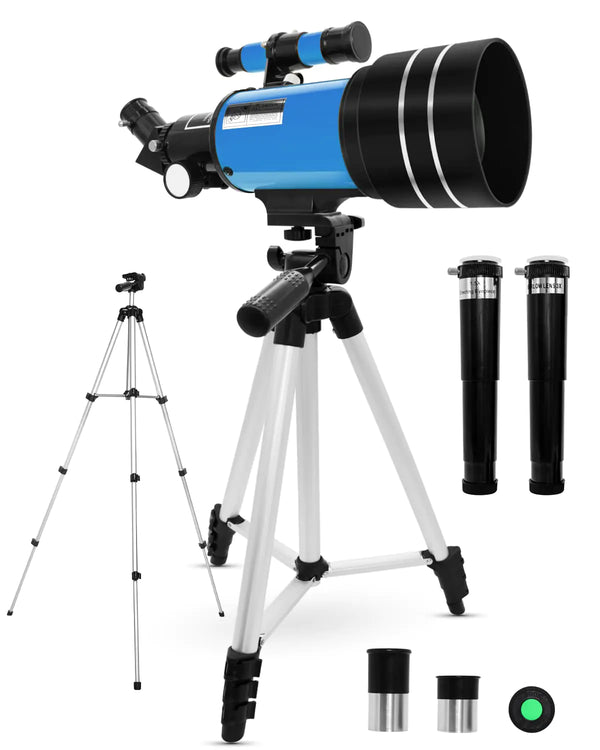
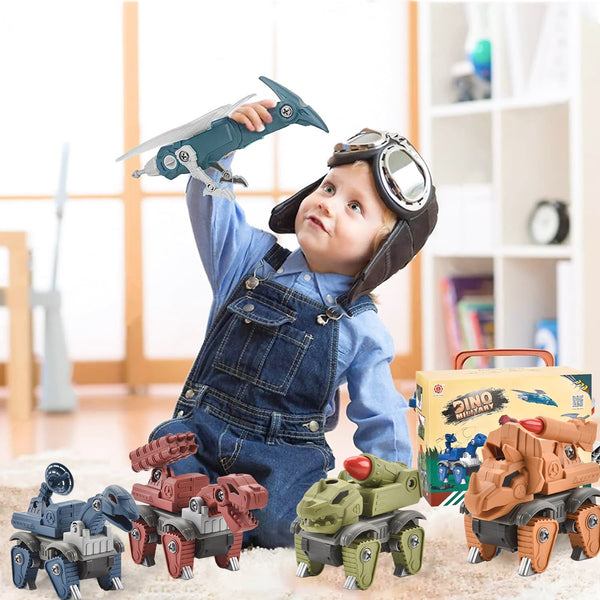


A child who builds something with their hands learns spatial reasoning, engineering intuition, and physical problem-solving in ways that no screen can replicate. A child who programmes something learns algorithmic thinking, logical sequencing, and the satisfaction of making a machine do exactly what they instructed. For decades, these two categories of learning lived in separate toy boxes. That separation is over. The most exciting category in children’s toys today is building toys for kids with tech features — construction sets that combine the irreplaceable developmental value of hands-on building with motors, sensors, lights, programmability, and app connectivity that take what a child builds and make it move, respond, and think.
This category is genuinely new and genuinely powerful. When a child builds a structure from physical components and then programmes it to do something — a crane that lifts, a robot that navigates, a vehicle that avoids obstacles — they are experiencing the complete engineering design cycle: design, build, programme, test, debug, and iterate. That cycle, practised from childhood through early adolescence, is the foundation of every engineering and technology career. Explore our full range of building and construction toys for kids to see every type of hands-on construction toy we carry.
In this complete guide, we ranked the best building toys for kids with tech features in 2026 — by build quality, tech depth, age appropriateness, and how effectively they sustain engagement beyond the first weekend. Whether your child is 5 or 15, there is a tech-enhanced building toy on this list that will challenge, inspire, and develop them in ways that neither pure building toys nor pure tech toys can achieve alone.
Table of Contents
Traditional Building Toys Are Losing Children’s Attention — and Screens Alone Are Not the Answer
Classic wooden blocks, simple construction sets, and basic building toys have extraordinary developmental value. Research on their benefits is decades deep and unambiguous. But there is a real and growing challenge: children raised in a world of responsive, interactive, programmable technology increasingly find purely physical building toys less engaging than they once did. A child who has experienced the immediate feedback of a video game, a coding app, or a programmable robot does not always find the slower, more patient experience of stacking blocks as naturally compelling.
On the other side, purely screen-based tech toys — coding apps, virtual building simulators, digital creative tools — provide the responsiveness that children find engaging but lack the physical, spatial, tactile dimension that makes hands-on construction so developmentally powerful. You cannot feel the weight of a beam, experience the physics of a collapsing structure, or understand the three-dimensional relationship between physical components through a screen. The spatial intelligence built through physical construction is genuinely irreplaceable.
The solution is not to choose between building toys and technology. It is to find building toys that bridge both worlds — providing the physical construction experience that develops spatial reasoning, engineering intuition, and fine motor skills, while adding the technological layer that provides the responsiveness, programmability, and immediate feedback that makes the modern child’s brain light up with engagement.
The Gap Between Building Skills and Tech Skills Is Where Future Engineers Get Lost
University engineering programmes consistently report the same challenge: students who have strong theoretical coding skills but little hands-on mechanical experience, and students who have strong practical building intuition but no programming capability. Both types struggle in professional engineering contexts because real engineering requires both. A software engineer who cannot understand how their code will interact with physical hardware makes different — and often worse — design decisions than one who has hands-on mechanical experience. A mechanical engineer who cannot write basic code to automate, test, or analyse their designs is increasingly disadvantaged in a field where software integration is standard.
The children who develop both skills simultaneously — who build physical structures and then make them respond to code — develop an integrated mechanical-digital intelligence that is exactly what the most in-demand engineering roles require. Mechatronics engineers, robotics engineers, embedded systems designers, product engineers, and IoT developers all work at the intersection of physical hardware and software. That intersection is where the most interesting and most compensated engineering work happens.
Building toys with tech features are not just educational toys. They are early training for this intersection. Every child who programmes a motorised LEGO Technic crane, builds and codes a sensor-equipped robot car, or constructs a marble run with electronically triggered gates is developing the integrated spatial-digital intelligence that defines the most capable engineers of the coming generation.
Tech-Enhanced Building Toys Give Children Both Dimensions of Engineering in One Experience
The best building toys with tech features are designed around a complete engineering loop: the child designs a structure, assembles it from physical components, adds the technological layer (motors, sensors, electronic modules, programmable hub), codes the behaviour they want, tests it, observes the result, identifies what to improve, and modifies both the physical structure and the code. This loop is the complete engineering design process — the same process that professional engineers follow, condensed into a toy experience that a 10-year-old can meaningfully engage with.
What makes this loop so developmentally valuable is that it creates genuine interdependence between the physical and digital dimensions. A programming error produces a physical consequence — the motor turns the wrong direction, the sensor misreads the obstacle, the light sequence plays in the wrong order. The child must understand both the code and the hardware to diagnose and fix the problem. This bidirectional troubleshooting builds a depth of integrated understanding that neither standalone building nor standalone coding can achieve.
The other remarkable thing about this category is the open-ended creative ceiling. A building toy with tech features rarely has a single correct outcome. The child who builds a robot car and programmes it to follow a line today can build a completely different robot tomorrow and programme it to do something else entirely. The combination of physical and technological creativity produces a virtually unlimited space for invention and exploration. For more on the developmental science behind construction play specifically, our guide on the best building toys for kids that boost creativity, problem-solving, and STEM learning covers the foundational research.
Ready to find the perfect tech-enhanced building toy for your child?
Browse our collection of STEM toys and construction kits designed to combine hands-on building with real technology.
Shop STEM Building ToysWhy Building Toys With Tech Features Produce Uniquely Powerful Development Outcomes
The intersection of physical building and digital technology creates learning experiences that neither domain can produce alone. When a child physically constructs a structure and then adds a technological component that makes it functional — a motor that makes it move, a sensor that makes it respond to its environment, a programmable hub that makes it follow instructions — they are experiencing the fundamental principle of mechatronics: the integration of mechanical systems, electronics, and computer programming into unified functional devices.
This integration activates multiple cognitive systems simultaneously. Spatial reasoning (how does this structure need to be built to accommodate the motor and sensor placement?), programming logic (what code will produce the movement sequence I want?), mechanical intuition (why is the motor stalling under this load?), and systematic debugging (the sensor reading is wrong — is it a code error or a hardware placement issue?) all engage together in a way that produces more comprehensive learning than any of them would in isolation.
Research from engineering education contexts consistently shows that students who have hands-on experience integrating physical structures with electronic and software components before formal engineering education perform significantly better in mechatronics and systems engineering courses. The intuitive understanding of how code translates to physical behaviour — built through years of tech-enhanced building play — cannot be efficiently taught in a classroom. It must be developed through direct experience. Building toys with tech features provide that experience in an age-appropriate, intrinsically motivating format.
Skills Children Build Through Tech-Enhanced Construction Play
Mechatronics Thinking
Understanding how mechanical structures, electronic components, and software code must be co-designed to produce a functional system is the core mechatronics skill. Tech-enhanced building toys introduce this integrated thinking from an early age through direct physical experience.
Structural Engineering
Building structures that must support motors, carry sensors, and transmit mechanical force requires understanding load distribution, structural rigidity, and joint design. These engineering concepts are built directly through construction experience rather than theory.
Coding and Programming
Controlling the tech features of a building toy — programming motor sequences, defining sensor responses, creating conditional behaviours — develops functional coding skills within a motivating physical context that makes abstract concepts immediately concrete.
Systems Thinking
A tech-enhanced building toy is a system — where every component affects every other. Understanding how changing one element (moving a sensor, adjusting gear ratio, modifying code) ripples through the whole system builds the systems thinking that underpins complex engineering design.
Iterative Design
Building something, testing it, identifying what does not work, and redesigning is the engineering design cycle in miniature. Tech-enhanced building toys create genuine design iterations because real-world physics and electronics provide honest feedback that cannot be argued with.
Creative Problem-Solving
The open-ended nature of tech-enhanced building means there is no predetermined correct design. Children must creatively combine physical and technological elements to achieve their goals, developing the design thinking that distinguishes great engineers from technically competent ones.
Types of Building Toys With Tech Features
1. Motorised Construction Sets
These sets include electric motors, battery packs, and sometimes gear systems that bring physical structures to life through movement. LEGO Technic is the category leader — models include working pneumatic systems, motorised cranes, functioning differentials, and multi-speed gearboxes. The mechanical complexity of motorised Technic builds is genuinely sophisticated, teaching gear ratios, torque, and mechanical advantage through direct hands-on experience. K’NEX and Meccano also produce motorised sets at various complexity levels. These are ideal for children who love understanding how mechanical systems work rather than focusing primarily on programming.
2. Programmable Building Systems
These systems add a programmable electronic hub to a physical building kit, allowing children to write code that controls the motors, lights, and sensors built into their constructions. LEGO Mindstorms, LEGO SPIKE Prime, and the VEX IQ system are the top examples. The programmable hub is the interface between the physical structure the child builds and the code they write — making the relationship between code and physical movement directly visible and immediately testable. These systems produce the deepest engineering learning outcomes because they require simultaneous competence in both construction and programming.
3. Electronics and Circuit Building Kits
Kits that combine structural building with circuit construction — Snap Circuits, littleBits, and electronics-focused engineering sets — teach children to build both the physical structure and the electronic system it runs on. Understanding how structural components and electronic components must be co-designed is a fundamental engineering skill. These kits are particularly powerful for developing the hardware-software integration thinking that drives embedded systems engineering.
4. App-Connected Building Toys
A growing category of building toys connects physical construction to companion apps that add augmented reality, sensor integration, or programming interfaces. GraviTrax with its app extension, LEGO sets with companion AR apps, and various smart building toys use Bluetooth or Wi-Fi to create a bridge between what the child builds physically and what they can control and visualise digitally. These toys are particularly engaging for children who are already comfortable with tablet interfaces and want to extend their physical building into the digital domain.
5. Sensor-Enhanced Construction Sets
These sets include sensors — distance, colour, light, sound, or touch — that the child integrates into their physical structure to create responsive systems. A crane that stops automatically when it detects an obstacle. A vehicle that follows a line. A machine that responds to sound or light. Sensor-enhanced building teaches children to think about how physical systems can perceive and respond to their environment — the foundational concept of all autonomous and smart systems from self-driving cars to smart home devices.
Best Building Toys for Kids With Tech Features in 2026 (Ranked)
1. LEGO Technic — Best Motorised Mechanical Building
Age: 9–16 years | Tech type: Motors, pneumatics, gears | Price: ~$40–$400+ depending on set
LEGO Technic is the undisputed leader in motorised building toys for children and the standard against which all competitors are measured. Sets range from entry-level motorised vehicles at around $40 to flagship engineering masterpieces at $400-plus featuring working differentials, multi-speed gearboxes, pneumatic systems, and realistic suspension. The engineering authenticity of top Technic models is remarkable — children building the flagship sets are working with mechanical principles used in real vehicles and machinery. The Power Functions and CONTROL+ systems add programmable motor control to many Technic models. Best for: Children aged 9 and above who are excited by mechanical engineering, vehicles, and the challenge of making complex physical systems work.
2. LEGO Mindstorms Robot Inventor — Best Programmable Building System
Age: 10–16 years | Tech type: Programmable hub, motors, sensors | Price: ~$350
LEGO Mindstorms Robot Inventor combines the construction depth of LEGO Technic with a fully programmable intelligent hub containing a gyroscope, colour sensor, and distance sensor. Five different robot models can be built from the same 949-piece set, each supporting both visual Scratch-based coding and Python programming. The complete engineering loop — design, build, programme, test, debug — is available in its fullest form in this platform. The LEGO ecosystem compatibility means any Technic parts can expand what Mindstorms can build. Best for: Children aged 10 to 16 who want the deepest available integration of physical building and programmable technology in a single platform.
3. LEGO SPIKE Prime — Best for Schools and Structured STEM Learning
Age: 10–14 years | Tech type: Smart hub, motors, force and distance sensors | Price: ~$330
LEGO SPIKE Prime is the education-grade counterpart to Mindstorms, specifically designed around structured STEM curriculum delivery. It features a Smart Hub with multiple sensor ports, large motor, medium motors, and a force sensor. The SPIKE app provides guided learning experiences that progress from visual blocks to Python, with over 50 structured activities covering engineering, science, and mathematics concepts. Schools use SPIKE Prime for curriculum-aligned STEM education — but it is equally excellent for home use by children who prefer structured challenges over open-ended exploration. Best for: Children aged 10 to 14 who learn best through structured activities and want a building system with genuine curriculum depth.
4. littleBits Electronic Building Blocks — Best for Electronics + Construction
Age: 8–14 years | Tech type: Electronic modules, snap connectivity | Price: ~$60–$160 depending on kit
littleBits uses magnetic snapping electronic modules — power supplies, sensors, logic gates, motors, lights, sound modules, and wireless components — that connect without any soldering or wiring to create functioning electronic circuits within physical constructions. Children can build an alarm that triggers when motion is detected, a fan that responds to sound, a vehicle controlled by wireless signals, or hundreds of other functioning devices. The snap-together system makes electronics accessible to children who would find traditional circuit construction intimidating. Best for: Creative children aged 8 to 14 who want to build functioning electronic gadgets without circuit complexity or soldering.
5. GraviTrax Pro — Best Interactive Building with Physics
Age: 8–14 years | Tech type: Electronic triggers, motors, app integration | Price: ~$80–$200 depending on configuration
GraviTrax Pro is the most sophisticated marble run system available and an exceptional physics and engineering learning tool. The GraviTrax Pro expansion adds electronic elements including motor-driven switches, electronic catapults, and digital timing modules that transform the marble run into a programmable physics experiment. Children design elaborate multi-level tracks, predict the path of each marble through gravity and momentum, and use electronic modules to create complex triggered sequences. The app integration allows track design, timing measurements, and electronic trigger programming. Best for: Children aged 8 to 14 who love physics, cause-and-effect systems, and the challenge of designing elaborate sequential mechanical systems.
6. K’NEX Education STEM Building Sets — Best for Mechanical Engineering
Age: 7–14 years | Tech type: Motors, gears, pulleys | Price: ~$40–$100
K’NEX Education sets use the K’NEX rod-and-connector system to build mechanical structures and machines, with electric motors and gear systems that bring constructions to life. The education-grade sets include teacher guides and activity cards that make specific mechanical engineering concepts explicit — gear ratios, wheel and axle, pulley systems, inclined planes, levers, and cams. The physical robustness of K’NEX construction (the pieces click firmly together and hold under motor torque) makes it one of the most satisfying construction systems for children who want their machines to actually work reliably. Best for: Children aged 7 to 14 interested in mechanical engineering principles and who want their constructions to do real mechanical work.
7. Creative Building Kits Educational Block Sets — Best for Multi-Skill Construction Learning
Age: 4–10 years | Tech type: Educational guidance, structured challenges | Price: Available at WonderKidsToy
Our Creative Building Kits Educational Block Sets combine open-ended building pieces with guided construction challenges and picture-instruction cards that introduce engineering thinking at the younger end of the age spectrum. Children can follow structured building sequences to construct specific designs — developing sequential thinking and instruction-following — or use the same pieces for free-form creative construction. The dual functionality keeps the toy engaging across a wide age range and skill development period. Best for: Children aged 4 to 10 who benefit from both structured engineering challenges and open-ended creative building in a single versatile set.
8. Makeblock Airblock — Best Modular Programmable Building Robot
Age: 8–14 years | Tech type: Modular motors, programmable via app | Price: ~$120–$160
The Makeblock Airblock is a modular programmable drone and hovercraft kit in one. Children assemble the hexagonal modules into either a flying drone or a ground hovercraft configuration, then programme flight patterns, movements, and sensor responses using the mBlock app on a tablet. The modular design means the child physically decides how many motor modules to include, where to position them, and how they connect — creating a genuine engineering design challenge before any code is written. Best for: Children aged 8 to 14 who are fascinated by drones and want to combine physical engineering with programmable flight control.
9. Thames and Kosmos Physics Lab — Best for Science-Engineering Integration
Age: 8–14 years | Tech type: Electronic measurement, motors, sensors | Price: ~$60–$120
Thames and Kosmos Physics Lab sets integrate electronics and physical construction with formal scientific investigation. Children build mechanical systems — pulleys, levers, ramps, pendulums, wheels and axles — and then use electronic sensors and measurement tools to quantify the physical principles at work. Calculating actual mechanical advantage from a lever system they built, measuring the acceleration of a ball on a ramp, or timing the period of a pendulum of different lengths makes physics concepts viscerally real. Best for: Children aged 8 to 14 who want to build physical systems and simultaneously understand the science behind why they work.
10. Meccano MeccaSpider or MeccaDinosaur — Best Motorised Building for Young Teens
Age: 10–16 years | Tech type: Multiple motors, infrared sensor, app connectivity | Price: ~$80–$120
Meccano’s motorised creature kits combine metal construction with multiple electric motors, infrared sensors, and Bluetooth app connectivity to create functional robots that the child builds from scratch. The metal component system teaches authentic engineering assembly with nuts, bolts, and structural bracing. Multiple motors create complex independent movement sequences that can be programmed through the companion app. The authentic engineering materials and the complexity of the final build make these some of the most impressive functional constructions available in this category. Best for: Young teens aged 10 to 16 who want a sophisticated motorised engineering build that feels genuinely technical rather than toy-like.
Quick Comparison: Best Building Toys With Tech Features
LEGO Technic
Tech: Motors, pneumatics
Age: 9–16 years
Price: ~$40–$400+
LEGO Mindstorms
Tech: Programmable hub + sensors
Age: 10–16 years
Price: ~$350
LEGO SPIKE Prime
Tech: Smart hub, curriculum
Age: 10–14 years
Price: ~$330
littleBits
Tech: Electronic modules
Age: 8–14 years
Price: ~$60–$160
GraviTrax Pro
Tech: Electronic triggers, app
Age: 8–14 years
Price: ~$80–$200
K’NEX Education
Tech: Motors, gears, pulleys
Age: 7–14 years
Price: ~$40–$100
Creative Building Kits
Tech: Educational guidance
Age: 4–10 years
Price: WonderKidsToy
Makeblock Airblock
Tech: Modular motors, app
Age: 8–14 years
Price: ~$120–$160
Thames and Kosmos
Tech: Electronic measurement
Age: 8–14 years
Price: ~$60–$120
Meccano Motorised
Tech: Multiple motors, app
Age: 10–16 years
Price: ~$80–$120
Best Tech-Enhanced Building Toys by Age
Ages 4–7: Introduction to Tech-Enhanced Building
At this age, tech features should be simple, immediate, and satisfying. LEGO DUPLO with basic motorised components, push-and-go building vehicles, and simple light-up building sets introduce the concept that constructed objects can also do things mechanically without the complexity of programming. The Creative Building Kits Educational Block Sets are ideal for this age — structured enough to teach engineering thinking, open-ended enough to develop creativity, and appropriately challenging for the 4 to 8 developmental window. The goal at this stage is to build the association that things you construct can also be made to function.
Ages 7–10: Mechanical Engineering and Basic Electronics
Children at this age are ready for genuine mechanical complexity. K’NEX Education sets with motors and gears, GraviTrax with electronic extensions, and entry-level LEGO Technic motorised sets are all ideal. This age group benefits from building functional machines with real mechanical principles — gear trains, pulley systems, linkages — where the tech features (motors) make the mechanical work visible and satisfying. littleBits electronic modules are also excellent from age 8 for introducing electronics construction without programming complexity.
Ages 10–14: Programmable Building Systems
This is the prime window for the most powerful tech-enhanced building experiences. LEGO Mindstorms, LEGO SPIKE Prime, and Meccano motorised sets all shine at this age. Children at 10 to 14 can handle the full engineering loop — design, build, programme, test, debug — with genuine sophistication. The programmable systems in this category support both visual block coding and Python, creating a natural coding progression alongside the physical engineering. Makeblock Airblock is also excellent for this age group for those drawn to drone engineering specifically.
Ages 14 and Above: Advanced Engineering Platforms
Teenagers aged 14 and above who are serious about engineering are ready for the most complex mechanical and electronic building systems available. LEGO Technic flagship sets, VEX IQ competitive robotics, and Arduino or Raspberry Pi-based custom construction projects all provide appropriate challenges at this level. At this age, the limiting factor is rarely the hardware ceiling of the toy — it is the teenager’s willingness to invest the time and patience the most complex builds require. For teens who make that investment, the engineering depth available through these platforms is genuinely substantial. Our complete guide to construction and building toys for every age covers the full developmental landscape from toddler to teen.
How to Choose the Right Tech-Enhanced Building Toy for Your Child
Identify the Tech Type That Matches Your Child’s Interest
Tech-enhanced building toys cover very different types of technology. A child excited by mechanical engineering and how machines work should start with motorised Technic or K’NEX. A child interested in coding should go straight to programmable building systems like Mindstorms or SPIKE Prime. A child curious about electronics should explore littleBits. A child fascinated by physics should look at GraviTrax Pro. Matching the type of technology to the child’s natural interest dramatically increases engagement and therefore learning depth.
Assess Build Complexity vs Current Ability
Tech-enhanced building toys vary enormously in construction complexity. A LEGO Technic flagship set with 2,000+ pieces and multiple motorised systems requires significantly more fine motor skill, patience, and three-dimensional spatial reasoning than a 200-piece K’NEX motorised vehicle. Start with a complexity level that is slightly challenging but clearly achievable for your child. Completing a build successfully is more motivating than abandoning an overwhelming one.
Consider the Programming Learning Curve
If the tech features include programmability, assess honestly how comfortable your child is with coding. Programmable building toys are significantly more educational when the child can engage with the programming dimension. A child with no coding experience who receives a programmable building set will often build the structure but ignore the programming because it feels too complex. Start them with a simpler robotics kit to develop coding fundamentals first, then progress to programmable building systems once basic coding confidence is established.
Think About Expansion and Ecosystem
The best tech-enhanced building toys belong to larger ecosystems that can be expanded over time. LEGO’s entire Technic catalogue is compatible with Mindstorms. The K’NEX system expands with additional motorised components. GraviTrax’s base system expands with dozens of extension packs. This expandability means the initial investment grows in value over time as new components are added — rather than requiring a completely new system every time the child is ready for a new challenge.
Parent Tips for Getting the Most from Tech-Enhanced Building Toys
- Create a permanent dedicated workspace. Tech-enhanced building projects often span multiple days or weeks. A surface where the build can stay undisturbed — with components organised and accessible — enables the kind of sustained, iterative building that produces the deepest engineering learning. Packing everything away between sessions breaks the continuity of thought that drives complex build progress.
- Document the design before building. Encouraging your child to sketch what they plan to build before they start — even a rough diagram on paper — introduces the engineering design process. The sketch does not need to be accurate. It just establishes the habit of planning before executing, which is one of the most valuable engineering behaviours you can develop.
- Engage with the technical challenge, not the outcome. When a motorised system does not work, the most valuable parent response is curiosity rather than problem-solving. “Why do you think the motor is stalling?” “What happens if you change the gear ratio?” These questions keep the diagnostic ownership with the child rather than transferring it to the adult.
- Connect the tech features to the real world. LEGO Technic’s pneumatic system works on the same principle as the air brakes on a bus. The gear ratio in a K’NEX model applies to the transmission in a car. The distance sensor in a Mindstorms robot uses the same principle as the parking sensors in a vehicle. These real-world connections make the learning feel meaningful and expansive.
- Encourage modification after the initial build. The most educational use of a tech-enhanced building toy is not completing the kit as instructed — it is modifying the completed build. “What would happen if you added an extra gear stage?” “Can you modify the code to make it move faster?” Modification requires deeper understanding than initial construction and produces significantly more engineering insight.
- Take photos and videos of what they build. Creating a visual record of builds motivates children to take them more seriously, creates a portfolio of engineering achievement they can look back on with pride, and provides documentation for any competition or school applications where technical project experience is valued.
Find the Building Toy That Brings Technology to Life
The right tech-enhanced building toy teaches structural engineering, mechanical thinking, coding, and the integrated design skills that define the most capable engineers of the coming generation.
Shop Engineering and Building ToysYou can also explore our full collection of building and construction toys, our STEM toys for all ages, and our range of coding and robotics kits to build a complete engineering education environment for your child.
Frequently Asked Questions: Building Toys With Tech Features
Final Thoughts: The Child Who Builds Things That Work Is Learning to Change the World
The toys we give children do not just entertain them. They shape the neural pathways that determine how they will think for the rest of their lives. A child who spends years building physical structures and making them move, respond, and function through motors, electronics, and code is building something deeper than engineering skill. They are building the belief that the physical world is buildable — that technology is not a black box handed to them by someone else, but a set of principles they understand and can apply. That belief is the foundation of all engineering careers and all technological innovation.
The best building toys with tech features are not the most expensive or the most complex. They are the ones that connect most directly to your specific child’s natural curiosity — whether that is mechanical systems, electronics, programming, physics, or the pure satisfaction of building something that actually does something. Find that connection, provide the tools, step back, and watch what happens when a curious young mind is given the right materials to work with.
Explore our full collection of engineering and building toys and find the perfect tech-enhanced construction kit for your child. For more on how building toys develop specific skills across all ages, our comprehensive guide to the best building toys for kids that boost creativity, problem-solving, and STEM learning covers the complete developmental picture.