Easy Returns
24 x 7 Support
2 to 5 Day Delivery
Easy Returns
24 x 7 Support
2 to 5 Day Delivery
Easy Returns
24 x 7 Support
2 to 5 Day Delivery
Easy Returns
24 x 7 Support
2 to 5 Day Delivery
Easy Returns
24 x 7 Support
2 to 5 Day Delivery
Easy Returns
24 x 7 Support
2 to 5 Day Delivery
Easy Returns
24 x 7 Support
2 to 5 Day Delivery
Easy Returns
24 x 7 Support
2 to 5 Day Delivery
Easy Returns
24 x 7 Support
2 to 5 Day Delivery
Easy Returns
24 x 7 Support
2 to 5 Day Delivery
Easy Returns
24 x 7 Support
2 to 5 Day Delivery
Easy Returns
24 x 7 Support
2 to 5 Day Delivery


HOT PRODUCT | LOW STOCK
Montessori Monkey Balance Scale Math Toy for Kids — 30 Challenge Cards · 4 Difficulty Levels · Counting, Addition & Number Sense Game Ages 3–7
Montessori Monkey Balance Scale Math Toy for Kids — 30 Challenge Cards · 4 Difficulty Levels · Counting, Addition & Number Sense Game Ages 3–7

That's absolutely fantastic to hear! My child genuinely adored this toy.
Couldn't load pickup availability
FREE: Get $99 worth Creative Digital Vault
Order now and get instant access to 130+ Digital Learning Books. While your item ships, your child can start learning immediately!
🐒 Monkey Balance Scale · 4 Levels · 30 Cards · 19 Weighted Monkeys · Ages 3–7
Your 4-Year-Old Doesn't Know She's Learning That 3 + 2 = 5. She Thinks She's Balancing Monkeys. Her Kindergarten Teacher Knows the Difference.

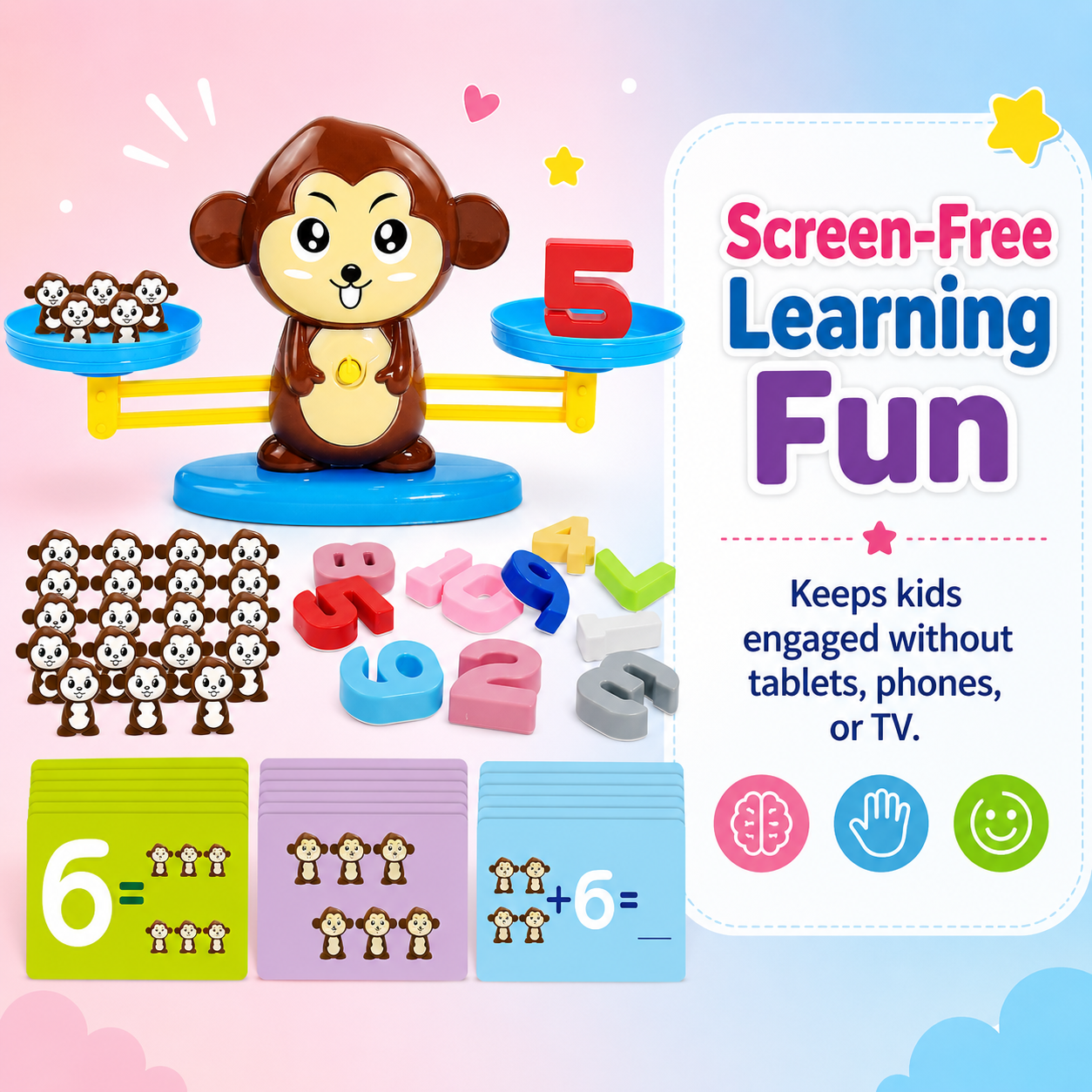
19 numbered monkey weights. 2 weighing plates. 30 double-sided challenge cards. 4 escalating difficulty levels. She places monkeys on each side until the scale balances — and every time she does, she's physically experiencing that numbers on the left must equal numbers on the right. That's not just addition. That's the foundation of algebraic thinking. And she figured it out herself because the scale told her when she was wrong.
✅ 30-day guarantee🇺🇸 Ships 2–5 days🔒 Secure checkout
⚖️ How Balance = Math Understanding:
She places Monkey 5 on the left ⬅️
She tries Monkey 3 on the right → tips ❌
She adds Monkey 2 → BALANCED ✅
She just proved: 5 = 3 + 2. Without being taught. Without a worksheet.
Cards
Monkeys
Levels
Play modes
Ages
Mess
"My daughter played with this for two weeks before I realized she was doing addition and subtraction. She was just 'balancing the monkeys.' Then one afternoon she looked at me and said 'Mom, if Monkey 7 is on this side then I need Monkey 4 AND Monkey 3 because 4 plus 3 is 7.' She's four years old. She derived addition facts independently by playing with a toy. I sat down."— Amanda W., mom of 2, Austin TX · ✔ Verified Purchase

⚖️ The Scale Self-Corrects — She Learns Without You
When she places the wrong monkey combination, the scale tips. She sees immediately that her answer is wrong — without you saying a word. That physical feedback from the scale is called "control of error" in Montessori methodology — it's the design principle that means the material teaches rather than the adult. She adjusts, tries again, and when the scale balances she has proven her own answer correct. That self-directed correction builds math confidence in a way adult correction never can.
🐒 19 Numbered Monkeys = Numbers You Can Touch
Each monkey figure is labeled with its number and has a weight that corresponds to that number. Monkey 3 is three units heavy. Monkey 7 is seven units heavy. When she places Monkey 7 on one side and tries to balance it, she's physically searching for combinations that equal 7 — experiencing addition as weight rather than as symbols. This concrete-to-abstract progression is exactly how mathematical understanding is built in the brain's most lasting way.
📊 Balance = Equality — The Foundation of Algebra
Every time the scale balances, she has proven an equation: the left side equals the right side. That physical experience of equality — where two different things weigh the same — is what the equals sign means. Children who understand balance before they see equations arrive at algebra ready to think flexibly about equivalence rather than treating "=" as "put the answer here." Multiple math teachers describe the balance scale as the single most important pre-algebra tool for this age group.
🃏 30 Challenge Cards — Structure That Grows for Years
The 30 double-sided challenge cards provide a structured progression from simple single-monkey balance at Level 1 to complex multi-monkey equation challenges at Level 4. She picks a card, reads the visual challenge, places the monkeys, and waits for the scale to confirm her answer. The card-based structure means every session has a clear goal and a physical right-or-wrong result — which keeps engagement sustained across weeks, months, and years of escalating difficulty.
The reason worksheets don't teach addition to 3-year-olds is that "3 + 2 = 5" is an abstraction their brains aren't ready for yet. But a scale that balances when she places the right monkeys proves 3 + 2 = 5 in a way her hands can feel. That's the difference.
Mathematical understanding develops in three stages: concrete (physical objects), pictorial (diagrams), and abstract (symbols). The vast majority of preschool math instruction skips directly to abstract — flash cards, worksheets, apps — and then wonders why children memorize facts without understanding them. The balance scale is the most powerful concrete math tool available for ages 3–7 because it makes abstract relationships physical. When she places Monkey 4 and Monkey 3 on one side and Monkey 7 on the other and the scale balances, she has felt what 4+3=7 means in her hands. That understanding stays. Memorized symbols fade. This is the difference between a child who knows her addition facts and a child who understands mathematics.

Why 2,700+ Moms Call This the Math Toy That Actually Works
Not the flashiest. The one that produces the "wait, she understands math?" moment parents describe in their reviews.
A child who memorizes "4+3=7" on a flashcard knows a fact. A child who has balanced the scale with those numbers 30 times knows why. The difference shows up in 2nd grade when problems become complex — children with concrete mathematical understanding adapt flexibly; children who only memorized facts struggle when the format changes. This toy builds the foundational understanding that makes every subsequent math skill easier.
When an adult corrects a wrong answer, the child learns "I needed help." When a scale corrects a wrong answer, the child learns "I found the right answer." That distinction in how the correction is delivered changes the child's relationship to mistakes. Children who use self-correcting materials consistently develop the error-tolerance and persistence that makes independent learning possible. The scale teaches her to trust herself.
The skills covered — number recognition 1–10, counting, addition within 10, subtraction within 10, number relationships, equivalency — are exactly the kindergarten readiness assessment categories. Children who arrive in kindergarten having physically proven these relationships through balance play are measurably ahead of peers who've only seen them on paper. Multiple teachers describe recognizing "balance scale kids" in the first week of school.
Numbered wooden blocks produce one session of engagement. Numbered monkey characters produce months of daily engagement — because the monkey personalities create emotional investment in the outcome. She's not balancing abstract weights; she's figuring out which monkey teams are equally strong. That narrative layer keeps her returning to the challenge when plain manipulatives would be in the donation pile.
Level 1 is accessible to age 3 — simple single-weight balance. Level 4 challenges age 7 with complex multi-number equations. The same toy is mathematically appropriate across a 4-year developmental span. One purchase produces genuinely different and challenging math at age 3, 4, 5, 6, and 7 — making this the most sustained value-per-dollar educational toy purchase in this category.
Multiple reviews from kindergarten and 1st grade teachers describe purchasing this set for classroom use after recommending it to parents. The fact that teachers with access to professional educational suppliers choose to buy this specific toy is the clearest quality endorsement available. When an educator spends their own money on a product for their students, the developmental credibility is genuine.
"She played for 2 weeks before I realized she was doing addition. Then she said 'I need Monkey 4 AND Monkey 3 because 4 plus 3 is 7.' She's 4. She derived that independently. I sat down."
— Amanda W., Austin TX · Verified Buyer"My son used to cry when he got a math problem wrong. Since this scale, he treats wrong answers as a puzzle to solve. 'The scale says try again!' The error-tolerance shift is extraordinary."
— Sarah K., Chicago IL · Verified Buyer"Kindergarten teacher requested we get this over the summer. September assessment: our daughter was 'remarkably ahead' on number relationships. Teacher said this toy is the reason she recognizes it."
— Jennifer T., Portland OR · Verified Buyer"My 6-year-old and my 3-year-old both use this daily. Different challenge levels, same toy, both fully engaged. The 3-year-old watches the 6-year-old and tries harder cards. Learning through watching."
— Rachel H., Dallas TX · Verified Buyer😩 Before the Balance Scale
- 📝Flashcards she recites correctly but doesn't understand — math as memorization
- 😤Worksheets she resists because the symbols don't connect to anything real
- 😢She cries when she gets answers wrong — wrong answer = shame
- 😓Addition feels abstract and disconnected from any physical reality she can grasp
- 📱Math apps that drill facts but don't build the understanding behind them
- 😰Kindergarten math assessment anxiety — you're not sure the facts she's memorized will hold
🌟 After the Balance Scale
- ⚖️"The scale says try again!" — wrong answers become puzzles, not failures
- 🐒She's adding because she's balancing monkeys — the math motivation is intrinsic
- 🧠Number relationships felt in her hands — 4+3=7 understood, not memorized
- 📊Equivalency concept forming — both sides must be equal, just like an equation
- 🎓Kindergarten teacher notices number relationship understanding from week one
- 📅30 cards + 4 levels = still actively challenging at age 6 and 7
4 Difficulty Levels — One Toy for Ages 3 Through 7
The same scale that teaches a 3-year-old to count challenges a 7-year-old with complex equations. Four years of math in one box.
Simple Single Balance
Place one monkey on each side and discover which numbers are equal. Introduces the concept that the same number balances itself — the foundation of the equals sign. Accessible to 3-year-olds from the first session.
Two-Monkey Balance
One monkey on one side, two monkeys on the other. She figures out which pair of numbers adds up to balance the single number. Basic addition through physical discovery — 5 = 3+2, 4 = 1+3, and so on.
Multi-Monkey Challenge
Multiple monkeys on both sides require more complex number combinations. Subtraction emerges naturally as she removes monkeys to rebalance. Early number decomposition and flexible thinking about quantity.
Equation Challenges
Card challenges require solving multi-step balance problems. Some monkeys are hidden (unknown values to find). Introduces the concept of a missing number — the algebraic foundation that 2nd grade math builds on.
⚖️ The Scale Tells Her. Not You. That's Why It Works.
When you correct a wrong answer, your child learns to rely on you for validation. When the scale tips, your child learns to rely on the evidence. That shift — from adult-dependent to evidence-dependent thinking — is the most important mathematical habit a child can develop, and the balance scale builds it automatically through every session.
"I've been teaching kindergarten math for 10 years. The balance scale is the single most powerful concrete math tool I use — and I requested this specific set after a parent showed it to me. The numbered monkey characters make children emotionally invested in the outcome. The self-correcting scale removes me from the correction cycle completely. And the 4 difficulty levels mean I can use it with every ability level in my classroom simultaneously. I've recommended it to every parent at orientation this year."— Karen L., Kindergarten Math Teacher (10 years), Columbus OH · ✔ Verified Purchase
This Is Perfect For You If…
Check everything that sounds like your child and family.
Your child memorizes math facts but doesn't understand them — the scale builds the "why" that makes facts make sense
Your child cries or shuts down when she gets answers wrong — the scale treats wrong answers as "try again" puzzles, not failures
Kindergarten is coming and you want addition, subtraction, and number relationships understood physically before they're required on paper
You follow Montessori or hands-on learning principles — the concrete-to-abstract progression and self-correcting design are core Montessori methodology
You have multiple children of different ages — 4 difficulty levels mean a 3-year-old and a 7-year-old can both find appropriate challenge on the same toy
You want STEM foundation building — balance, weight, equivalency, and number relationships are the pillars of early mathematical and scientific thinking
Your child resists formal math instruction — balancing monkeys never feels like math, which is precisely why it produces math results
You're buying an educational gift for a 3–7 year old that produces visible math development parents will describe and appreciate for years
"10-year kindergarten teacher. Most powerful concrete math tool I use. Numbered monkey characters = emotional investment. Self-correcting scale = removes me from correction. Recommended at every orientation."
— Karen L., Columbus OH · Kindergarten Teacher · Verified Buyer"My 6-year-old tried Level 4 cards. She worked on one for 22 minutes straight. 22. Without asking for help. Finding the missing monkey value. This is algebraic thinking at age 6."
— Monica R., Seattle WA · Verified Buyer"My son on the autism spectrum uses this daily. The visual balance feedback is exactly the right learning modality for him. His math therapist asked what changed. This scale changed it."
— Patricia D., Phoenix AZ · Verified Buyer"I bought this for my classroom after a parent showed it to me. Now I use it for differentiation — Level 1 kids and Level 4 kids in the same math center, one toy. Extraordinary classroom tool."
— Diana W., Nashville TN · 1st Grade Teacher · Verified BuyerWhat Real USA Moms & Teachers Are Saying
Verified reviews — no edits, no filters. Real families and classrooms across America.
"Two weeks of 'balancing the monkeys' before I realized she was doing addition. Then she looked up and said: 'Mom, if Monkey 7 is here I need Monkey 4 AND Monkey 3 because 4 plus 3 is 7.' She's 4. She derived that addition fact completely independently by playing with a toy. I sat down on the floor next to her. I didn't know what else to do."
➕ Derived 4+3=7 Independently at Age 4"My son used to cry every time he got a math answer wrong. Genuine tears and shutting down. Since the balance scale, he treats wrong answers completely differently: 'The scale says try again!' It's now a puzzle to fix rather than a failure to feel ashamed of. That error-tolerance transformation has spread to every other learning activity. The scale changed his relationship with being wrong."
💪 Wrong Answers Became 'Try Again' Puzzles"Our daughter's kindergarten teacher specifically requested we get a balance scale over the summer. We bought this one. September assessment: she was 'remarkably ahead' on number relationships and equivalency. Teacher said she recognizes balance scale kids immediately because they understand what the equals sign means rather than treating it as 'put the answer here.' That distinction matters enormously."
🎓 Kindergarten Teacher Requested This Specifically"The single most powerful concrete math tool I use in my classroom. The monkey characters create emotional investment that plain weights don't. The self-correction removes me from the correction loop entirely. And the four difficulty levels mean I have differentiated math instruction in one device — Level 1 kids and Level 4 kids work simultaneously in the same center. I recommended this to every parent at orientation this year."
🏫 Recommended at Every Parent Orientation"My 6-year-old and my 3-year-old both use this every single day. The 3-year-old does Level 1 — he's learning what numbers mean through single-monkey balance. The 6-year-old does Level 3 and 4 — she's working on multi-step equations. Same toy, four years apart, both appropriately challenged. And the 3-year-old watches the 6-year-old and pushes himself to harder cards. The age-range span of this toy is extraordinary."
👧👦 Ages 3 and 6 — Both Appropriately Challenged"My 6-year-old attempted a Level 4 challenge card yesterday. She worked on it for 22 consecutive minutes without asking me for help once. The challenge was finding the missing monkey value — essentially solving for an unknown. That is algebraic thinking. At age 6. I watched her try, tip, readjust, try again, and finally balance it. Then she pumped her fist. 22 minutes of algebra at age 6."
🔢 22 Minutes of Algebra at Age 6"My son is on the autism spectrum and processes best through visual and physical feedback. The balance scale is exactly the right learning modality — the scale shows him immediately and visually whether he's right without any verbal correction from me. His math therapist asked what changed at home after his assessment showed improvement. I showed her this toy. She said 'I need to recommend this to other families.'"
💙 Math Therapist Asked What Changed"I'm a Montessori homeschool mom and this is the best commercial balance scale I've found. The numbered characters are the Montessori isolation of difficulty done correctly. The self-correction is genuine control of error. And the four difficulty levels follow the Montessori progression principle exactly. Eight months of daily math circle use. My daughter can decompose any number to 10 fluently because of this scale."
🌿 8 Months Daily Montessori Use"My daughter started calling addition 'monkey balancing' and it's the most accurate description of early addition I've ever heard. She told her dad last week: 'Daddy, 6 and 4 balances with 10 because I tried it.' She proved an addition fact through physical experiment, stated it as a conclusion, and cited her evidence. At age 5. That is scientific mathematical thinking. From a monkey toy."
🔬 Cited Her Evidence for 6+4=10 at Age 5"Bought for my 3-year-old. She's now 5 and on Level 3 challenges. Same toy. The characters haven't lost their appeal because the mathematical challenge has kept escalating. We are two years into this toy and she still asks for 'monkey time' by name. Two years of daily voluntary math practice from a single toy purchase. The cost-per-session math on this is extraordinary."
📅 Two Years of Daily 'Monkey Time'"I bought this for my classroom after a parent showed it to me in a conference. Now I use it daily for math center differentiation — my below-grade students work Level 1 and 2 while my at-grade or above students work Level 3 and 4, all at the same center simultaneously. One toy serving every ability level in the room with zero modification. The most efficient single purchase I've made for my classroom."
🏫 Every Ability Level — One Center"Best educational birthday gift I've given. Mom texted me a month later: 'He understands addition. Like, actually understands it, not just recites it. His teacher asked what we changed.' Nothing changed except this scale entered the house. One toy. Genuine mathematical understanding. In a month. Through monkey balancing. I'm buying this for every preschool birthday I attend going forward."
🎁 Teacher Asked What Changed — One Month"Home daycare provider. Three of these in my space. They're used every free play and every math circle. Different difficulty levels mean every age 3–6 finds appropriate challenge. Most-used toy I own."
— Susan T., Sacramento CA · Home Daycare Provider · Verified Buyer"Bought at age 3. Now 5, on Level 3. Two years, same toy. 'Monkey time' requested by name daily. Cost-per-session math on this is extraordinary. Nothing else I've bought has lasted."
— Christine F., Atlanta GA · Verified Buyer"She called 6+4=10 a 'monkey balance' and cited her evidence. 'I tried it.' Scientific mathematical thinking at age 5 through character play. I could not have taught this deliberately."
— Lauren B., Houston TX · Verified Buyer"Teacher asked what changed after his assessment improved. I showed her this scale. She said 'I need to recommend this to other families.' Math therapist endorsed a monkey toy. Here we are."
— Patricia D., Phoenix AZ · Verified BuyerProduct Details & Specifications
She's Not Learning Math. She's Balancing Monkeys. Her Teacher Will Know the Difference in September.
2,700+ USA moms have watched their 4-year-olds derive addition facts independently, their crying-at-wrong-answers children transform wrong answers into puzzles, and their kindergarten teachers ask what changed over the summer. 30 challenge cards. 4 difficulty levels. 19 numbered monkey characters. The self-correcting balance scale that produces mathematical understanding no worksheet ever achieves.
🐒 Add to Cart — Balance the Math, Balance the Monkeys
Questions Moms Actually Ask Before Buying
1. How does balancing monkeys actually teach addition?
Each numbered monkey figure has a weight corresponding to its number — Monkey 4 weighs four units, Monkey 7 weighs seven units. When she places Monkey 7 on one side and needs to balance it, she must find monkey combinations that add up to the same weight. She might try Monkey 5 (tips) then add Monkey 2 (balances) — proving physically that 5+2=7. The balance confirms the correct answer without any adult instruction. She didn't memorize 5+2=7 from a flashcard; she proved it with her hands. That proven understanding is mathematically deeper than memorized facts.
2. What age is genuinely appropriate for this toy?
3 is the starting age for Level 1 activities — simple single-monkey balance that introduces the concept of equal weight. By 4–5, Level 2 and 3 challenges are appropriate. By 6–7, Level 4 challenges introduce finding unknown values — the foundation of algebraic thinking. Multiple parents describe starting at age 3 and still finding the toy mathematically challenging at age 6 or 7 because the four difficulty levels span the entire early elementary math development range.
3. What makes this better than flashcards for learning addition?
Flashcards develop memory. The balance scale develops understanding. A child who memorizes "4+3=7" knows a fact that she'll need to re-memorize if she forgets it. A child who has physically balanced Monkey 4 and Monkey 3 against Monkey 7 dozens of times knows why 4+3=7 — because she's felt it in her hands. When complex math problems arise later, the child with understanding adapts; the child who only memorized facts struggles. Multiple kindergarten teachers describe being able to identify "balance scale children" because they approach number problems flexibly rather than by recalling a memorized sequence.
4. Is this a Montessori-aligned toy?
Yes — authentically, not cosmetically. The self-correcting design (control of error through the physical scale tip) is core Montessori methodology. The concrete-to-abstract progression from physical balance to number understanding follows the Montessori math sequence precisely. The child-led discovery (she places monkeys, the scale responds, she adjusts without adult correction) is the Montessori principle of independence in learning. A Montessori homeschool reviewer in our reviews describes this as the most accurate commercial implementation of Montessori balance work she's found.
5. My child cries when she gets math wrong. Will this help?
This is one of the most specifically reported transformation outcomes. The self-correcting scale reframes wrong answers as physical information rather than adult judgment — "the scale says try again" instead of "that's wrong." Multiple parents describe this reframing changing their child's entire emotional relationship to being wrong in math, with the shift spreading to other academic areas. When the correction comes from an impartial physical device rather than an authority figure, the shame element of a wrong answer disappears completely.
6. How does the Level 4 difficulty work exactly?
Level 4 challenge cards include missing value problems — a card shows a balance with one monkey visible and the other side's total value indicated, requiring the child to find which monkey (or monkey combination) belongs on the empty side. This is the physical equivalent of "3 + ? = 7" — finding an unknown variable through trial and balance. That is algebraic thinking, and multiple parents describe their 6-year-olds working on Level 4 challenges for 20+ consecutive minutes. The same thought process underlies every equation in middle school algebra.
7. Can a 3-year-old actually use this independently?
Yes — Level 1 activities are genuinely accessible to age 3 with a brief 5-minute introduction. Show her how the scale tips when one side is heavier, show her one balance example, and she'll take it from there. The self-correcting nature means she doesn't need adult facilitation — when she places the wrong monkey, the scale tells her. Most 3-year-olds can work independently on Level 1 challenges within the first session. As confidence builds (typically within weeks), she moves to harder challenges on her own.
8. How is this different from a generic balance scale toy?
Two specific differences: (1) The numbered monkey characters create emotional investment that plain weights don't. She's not balancing abstract objects — she's figuring out which monkey teams are equally strong. That narrative element produces sustained engagement that plain balance scales consistently fail to maintain. (2) The 30 structured challenge cards provide the escalating difficulty progression that turns a free-play toy into a math curriculum. Plain balance scales are played with freely for a few sessions and then abandoned. The card system provides new challenges indefinitely.
9. Is this good for children with learning differences?
Multiple parents of children with autism spectrum differences, ADHD, and math learning difficulties describe this scale as specifically beneficial because the visual-physical feedback modality reaches children who don't process abstract instruction effectively. The scale provides immediate non-verbal, non-judgmental feedback. One reviewer's child's math therapist specifically endorsed it after seeing assessment improvement. Always confirm specific learning applications with your child's educational specialist, but the concrete physical feedback design is broadly accessible across learning styles.
10. Does the scale come fully assembled or does it require setup?
Simple snap-together assembly — the base, scale, and plates connect in a few minutes without any tools. Multiple parents describe completing assembly in under 5 minutes. The toy is stable once assembled and handles daily toddler-force use without disassembling during play. The weighing plates attach and detach easily for storage but stay secure during use.
11. Is this appropriate for classroom use?
Yes — multiple teachers and daycare providers in our reviews use this in professional educational settings. The four difficulty levels make it naturally differentiating — different ability levels can work at the same center simultaneously on appropriate challenges. One reviewer uses three sets in her daycare. Another uses it daily for kindergarten math center differentiation. The toy handles the wear of classroom daily use and provides structured independent activity that requires minimal teacher supervision once children are introduced to the system.
12. Is this a good gift for a child who "doesn't like math"?
This is specifically the toy for that child — because she doesn't have to know she's doing math. She's balancing monkeys. The math happens as a consequence of the play rather than the point of the play. Multiple parents describe children who resisted every formal math activity requesting "monkey time" daily. The character-driven, self-correcting format removes the identity barrier ("I'm not good at math") that causes resistance in the first place. One reviewer's child was in math intervention before the scale arrived. By the next assessment, she had caught up — because she'd been voluntarily doing addition every day without knowing it.
To ensure fast delivery, some orders ship through our trusted U.S. fulfillment partners. Since we also sell on Amazon, your package may sometimes arrive in Amazon-branded packaging. Your order was still placed directly through our store, and the product inside is exactly what you ordered.


Includes a FREE $99 Digital Learning Vault with your purchase
Sent Instantly to Your Inbox the Moment You Order
While your toy ships to your door, your child can start learning today. This hand-picked digital library was built specifically for parents who want screen-free, Montessori-inspired resources at home — and normally costs $99 on its own.
📚 Here's exactly what's inside your FREE vault:
"I didn't expect the digital vault to be this good. We used the Kindergarten Prep pack every morning for two weeks while waiting for our toy to arrive. My daughter walked into her first week of school and her teacher pulled me aside to say how prepared she was."
— Verified Mom, Colorado ⭐⭐⭐⭐⭐
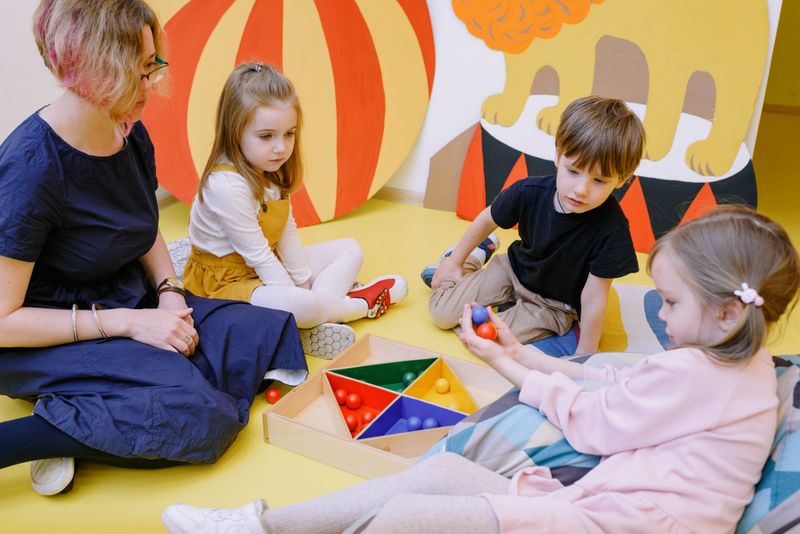
Less Screen Time. More "Mom, Look What I Built!"
Educational toys US parents trust for screen-free play that builds focus, creativity, and real skills.
Shop Screen-Free Toys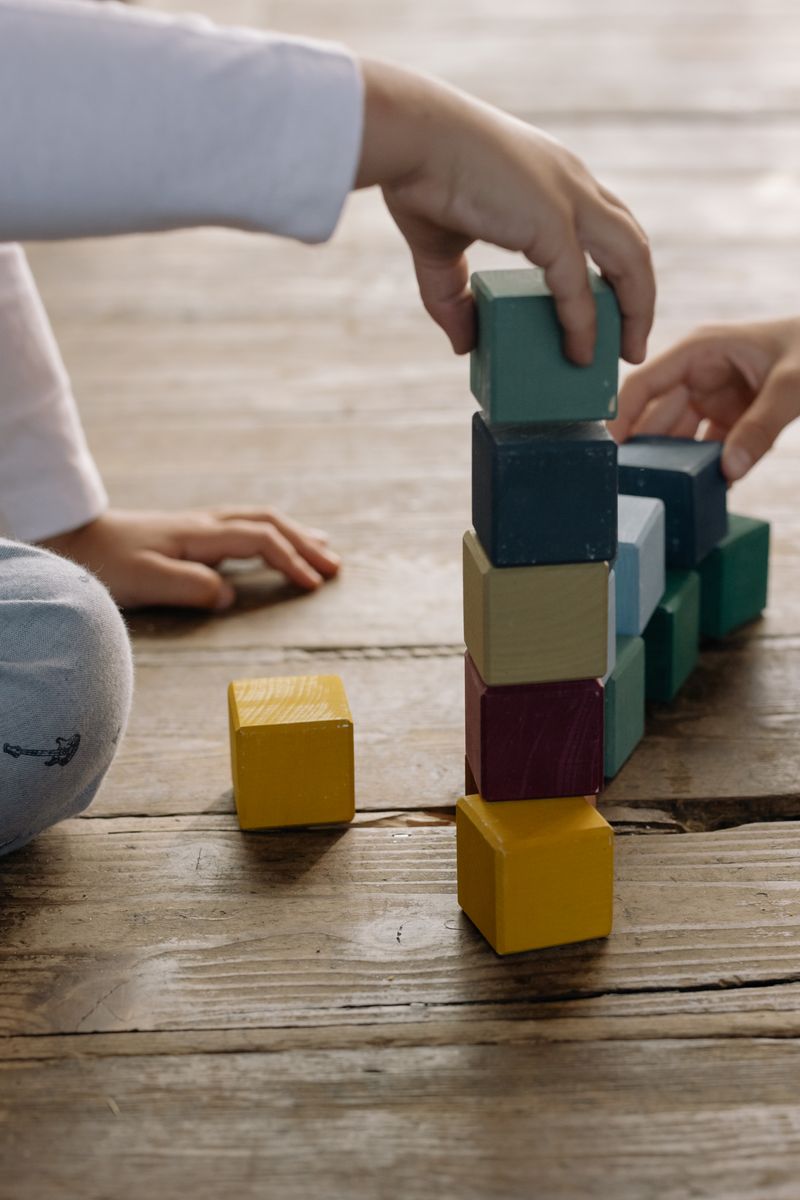 🧠 Builds Focus
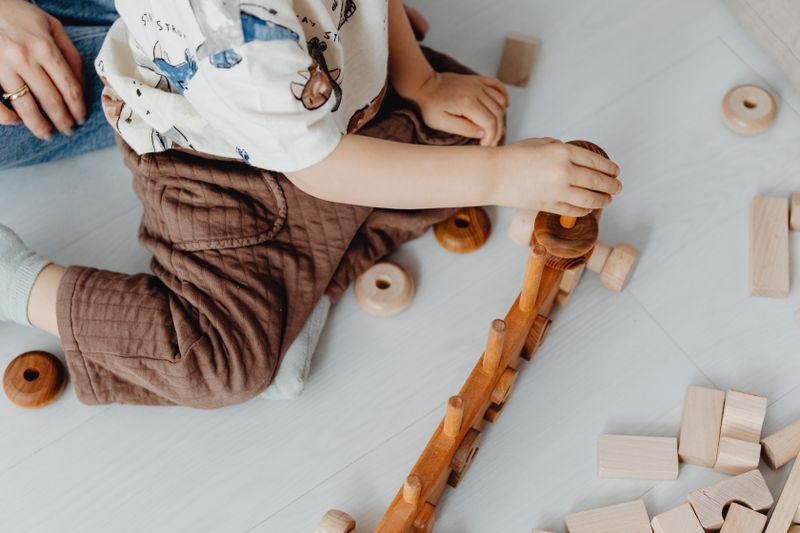 📵 100% Screen-Free
 🎨 Sparks Creativity
Safe Enough for the Kid Who Puts Everything in Their Mouth 👶
Every toy is non-toxic, BPA-free, and tested to meet or exceed US CPSIA safety standards.
- Non-toxic paints & finishes
- Clear age guidance on every product
Built to Survive Toddlers, Siblings & Gravity 💪
Dropped, thrown, "shared" with a little brother — our toys are made from quality wood and durable materials that last for years.
- Survives rough play (and the stairs)
- Quality you pass down to the next kid
Why Screen-Free Play Matters 🧠
The American Academy of Pediatrics recommends limiting screen time. Hands-on play does what screens can't:
- Focus — longer sustained attention
- Creativity — open-ended play builds imagination
- Motor skills — linked to reading & math readiness
- Calm — tactile play soothes busy little minds

Real Parents, Real Results 🇺🇸
"45 minutes of play while I made dinner. Didn't ask for the tablet once."
— Sarah M., Minnesota"Her daycare teacher noticed the improvement in 2 weeks."
— Jennifer K., California"Still her favorite after 8 months. Got one for her brother too."
— Marcus D., Texas"He has ADHD. Most toys overstimulate him. These are calming. Lifesaver."
— Robert M., Ohio"The robot kit turned my 5-year-old into a little engineer."
— Lisa W., New York"Our kids play together now instead of staring at tablets."
— Nicole B., GeorgiaFind the Perfect Toy by Age 🎯
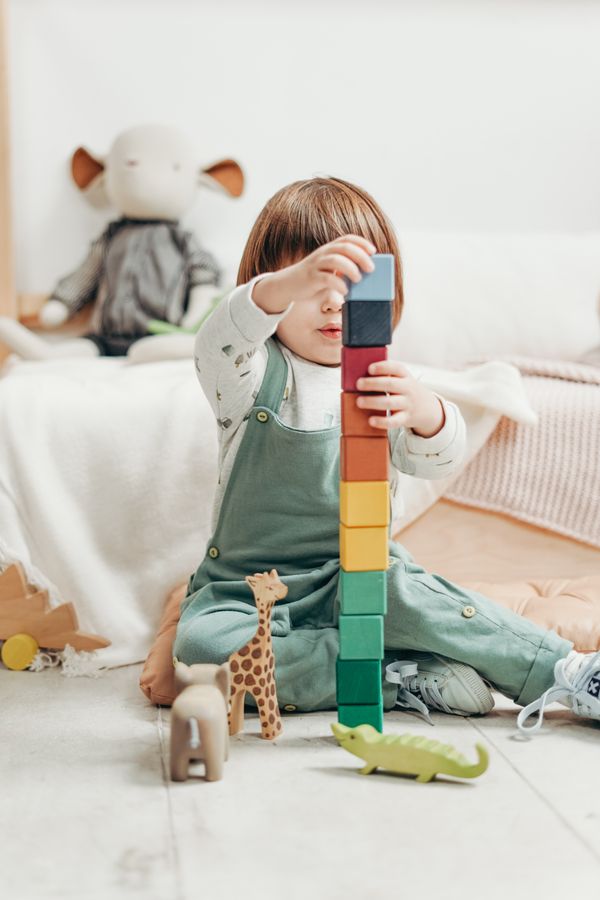
Builds touch, sight & grip

Builds fine motor & problem-solving

Builds logic & science thinking

Builds real tech skills & confidence
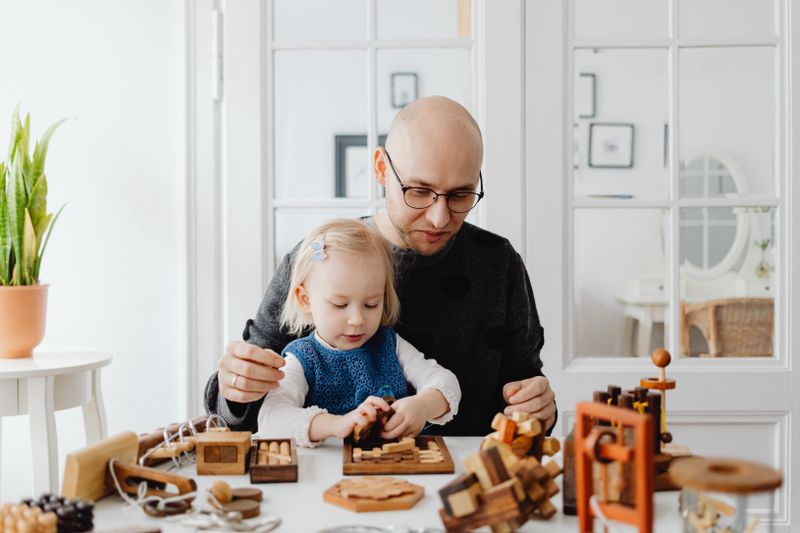
Good for Your Child. Kinder to the Planet 🌱
Less plastic junk headed for the landfill — eco-friendly materials and toys made to be kept, not tossed.
At Your Door in 3–5 Days. Help Available 24/7 🚚
Fast US delivery with tracking — and real humans on live chat & email any hour. Because mom life doesn't run 9 to 5.
- 3–5 business day US delivery
- Questions at 11pm? We're awake.

Quick Answers for Busy Parents
Is this toy safe for my child?
Will it actually keep my kid off screens?
How fast does it arrive?
What if my child doesn't love it?
My kid has ADHD / sensory sensitivities. Will these help?
How do I pick the right toy for my child's age?
Give Your Child 30 Screen-Free Minutes. You'll See the Difference.
Toys that build focus, creativity, and confidence — shipped fast to your door anywhere in the USA.
Shop Educational Toys NowEasy Returns
24 x 7 Support
2 to 5 Day Delivery
Easy Returns
24 x 7 Support
2 to 5 Day Delivery
Easy Returns
24 x 7 Support
2 to 5 Day Delivery
Easy Returns
24 x 7 Support
2 to 5 Day Delivery
Easy Returns
24 x 7 Support
2 to 5 Day Delivery
Easy Returns
24 x 7 Support
2 to 5 Day Delivery
Easy Returns
24 x 7 Support
2 to 5 Day Delivery
Easy Returns
24 x 7 Support
2 to 5 Day Delivery
Easy Returns
24 x 7 Support
2 to 5 Day Delivery
Easy Returns
24 x 7 Support
2 to 5 Day Delivery
Easy Returns
24 x 7 Support
2 to 5 Day Delivery
Easy Returns
24 x 7 Support
2 to 5 Day Delivery