

Easy Returns
24 x 7 Support
2 to 5 Day Delivery
Easy Returns
24 x 7 Support
2 to 5 Day Delivery
Easy Returns
24 x 7 Support
2 to 5 Day Delivery
Easy Returns
24 x 7 Support
2 to 5 Day Delivery
Easy Returns
24 x 7 Support
2 to 5 Day Delivery
Easy Returns
24 x 7 Support
2 to 5 Day Delivery
Easy Returns
24 x 7 Support
2 to 5 Day Delivery
Easy Returns
24 x 7 Support
2 to 5 Day Delivery
Easy Returns
24 x 7 Support
2 to 5 Day Delivery
Easy Returns
24 x 7 Support
2 to 5 Day Delivery
Easy Returns
24 x 7 Support
2 to 5 Day Delivery
Easy Returns
24 x 7 Support
2 to 5 Day Delivery


HOT PRODUCT | LOW STOCK
Wooden Human Organs Domino Set for Kids – 38-Piece Educational Anatomy Learning Toy
Wooden Human Organs Domino Set for Kids – 38-Piece Educational Anatomy Learning Toy

That's absolutely fantastic to hear! My child genuinely adored this toy.
Couldn't load pickup availability
FREE: Get $99 worth Creative Digital Vault
Order now and get instant access to 130+ Digital Learning Books. While your item ships, your child can start learning immediately!
🌈 Rainbow Pine Wood Domino Set · 100 or 120 Pieces
Set Them Up. Watch Them Fall. Watch Them Build It All Again.
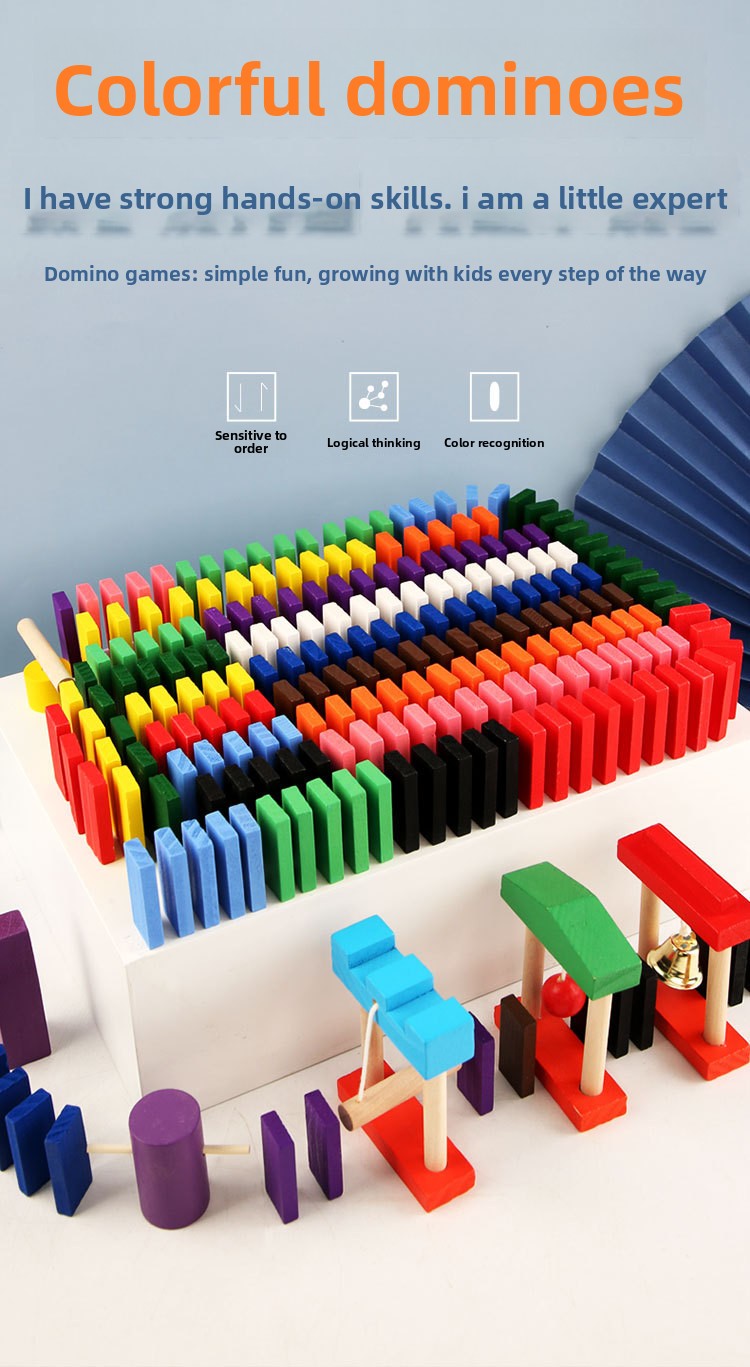
100 or 120 rainbow-coloured pine wood domino pieces. Eco water-based paint. Mechanism accessories, a pendulum method atlas, and a storage bag — everything needed to build, topple, and create something more impressive every single time.
🌲 Real Pine Wood Quality
Crafted from natural pine wood — warm, smooth, and satisfying to handle. Each piece has the solid weight that makes chain reactions sound and feel deeply gratifying.
🌿 Eco Water-Based Paint
Every vibrant rainbow colour is applied using certified water-based, environmentally friendly paint — safe for children and the planet without compromising on the richness of the rainbow palette.
⚙️ Mechanism Accessories Kit
Goes far beyond a plain domino set — included mechanism accessories unlock ramps, bridges, and trigger mechanisms for chain reactions that are genuinely complex and spectacular.
📖 Pendulum Method Atlas
A step-by-step building guide showing pendulum and chain reaction techniques — giving children a structured starting point that grows into fully independent creative design.
The Moment the Last Domino Falls — That's Not Just Play. That's Engineering.
Every chain of dominoes a child sets up requires planning, patience, spatial reasoning, cause-and-effect thinking, and the resilience to restart when one piece topples too early. These are the same cognitive skills that engineers, architects, and creative problem-solvers use every day — and they're built piece by colourful piece, one rainbow domino at a time.
Why This Domino Set Is in a Different League
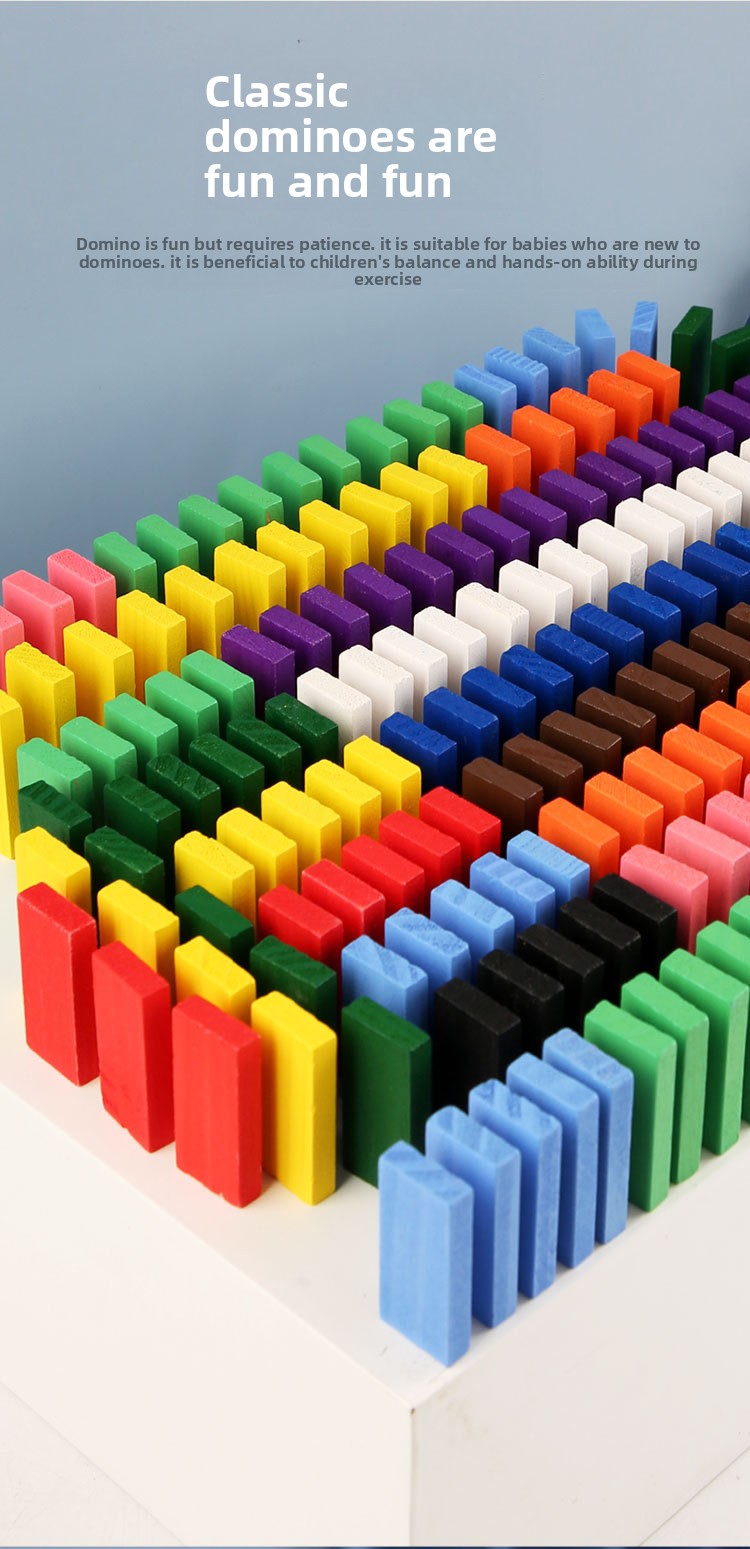
Colour is the first hook. When children see 10 or 12 vivid rainbow pieces, they immediately want to organise, sort, and build with them — which is also colour recognition, classification, and aesthetic thinking developing naturally.
A plain domino set runs out of ideas. With mechanism accessories, children can build ramps, bridges, spirals, and multi-level falls — turning a simple topple into a complex architectural chain reaction that takes real planning.
The included pendulum method atlas is a genuine curriculum — it shows specific build techniques step by step, giving children structured challenges to work through before graduating to free creative design.
Setting up 80 dominoes and having one fall early is the most character-building experience in a child's play repertoire. They restart. They figure out what went wrong. They try again. Real resilience, built through play.
Alone, it's a meditative, focused creative challenge. With friends or family, it becomes collaborative engineering — who sets up which section, how the pieces connect, who gets to trigger the first fall.
Pine wood with water-based eco paint gives parents complete confidence — no plastic, no harmful chemicals, no synthetic surfaces. Just beautiful natural materials that feel as good as they look.
From Scattered Pieces to a Perfect Chain
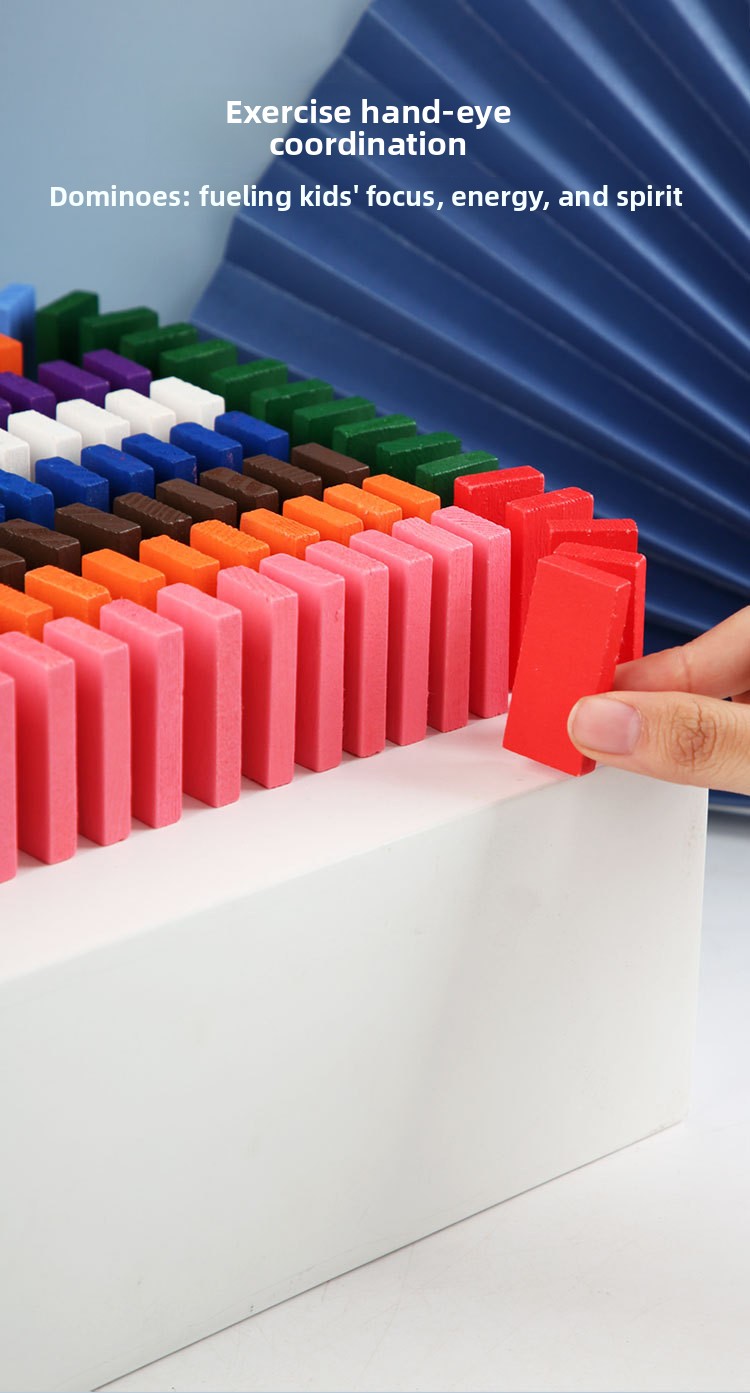
Before: 100 rainbow pine pieces spread across the floor — full of potential, waiting for a patient builder willing to think two moves ahead before placing any of them down.
After: A spiral of 10 colours threading across the floor, through a ramp accessory, over a bridge, and into a final tower collapse — built entirely by a child who spent an hour setting it up, and three seconds watching it fall. Then immediately started building the next one.
That build-and-reset loop is one of the most powerful learning patterns in childhood development — and rainbow dominos make children want to do it over and over again.
Choose Your Set — Two Sizes, Two Rainbow Palettes
Every option includes mechanism accessories, pendulum atlas and storage bag
This Is Perfect For You If…
You want a STEM toy that builds patience, planning and logical thinking through a game children actually choose to play with every day
You're looking for a gift that works for the whole family — parents, siblings, and grandparents all love building and toppling domino chains together
You care about eco-friendly natural materials and want a wooden toy with non-toxic paint that you can feel completely confident about
You want more than a plain domino set — the mechanism accessories and atlas take this from a simple game to a creative engineering challenge
Your child has good focus and loves satisfying, methodical play — setting up dominoes rewards patience and concentration in a way few other toys can match
You want a screen-free activity that holds attention for 30–60 minutes at a time and genuinely develops cognitive skills alongside creativity
What Builders Big and Small Are Saying
Verified-style reviews from families who turned floor space into a rainbow engineering lab
"My 5-year-old spent 45 minutes setting these up for the first time. When they fell, she clapped and immediately started again. The patience and focus it builds is extraordinary to watch."
"The wood quality genuinely surprised me. These are solid, smooth, and feel premium in the hand. The eco paint is vibrant and hasn't chipped at all after months of use."
"The mechanism accessories are what make this a completely different product from a standard domino set. My 7-year-old uses the ramps and bridges to build layouts that would take a full hour to fall — incredible."
"Bought the 120-piece 12-colour set for Christmas. Best decision. The extra 20 pieces make a genuine difference to how ambitious the builds can get. My kids used it every day of the holidays."
"The pendulum atlas was a revelation — my son didn't know how to get started and the atlas gave him 6 different designs to work through. He's now inventing his own layouts. Brilliant learning tool."
"My whole family gets involved. Dad builds the ramps, kids set up the chain, mum films it. The topple moment is genuinely exciting for everyone every single time. It never gets old."
"As a primary school teacher I use this in class. The combination of planning, fine motor precision, and cause-and-effect reasoning is exactly the kind of STEM activity that should be in every classroom."
"My 4-year-old loves sorting by colour before building. He always lays out all 10 colours in rainbow order first. It's like he invented his own pre-build ritual. So sweet and genuinely smart."
"The eco-friendly materials were the main reason I bought this. I don't let my kids play with plastic toys if I can avoid it. These are natural, beautiful, and completely safe — exactly what I was looking for."
"My daughter filmed her biggest chain reaction yet and sent it to her grandparents. It got more views in the family WhatsApp group than anything else that week. Pure joy to watch."
"The storage bag is a small detail that makes a big difference. Everything goes back in neatly, my son puts it away himself, and it's ready for next time. Practical design thoughtfully done."
"Six months of play and not one piece has warped, cracked, or faded. The pine wood construction is genuinely robust. This is a toy that will last through childhood and probably beyond."
Product Details
Set Up the Rainbow. Watch the Magic Fall.
100 or 120 pieces of real pine wood. 10 or 12 rainbow colours. Mechanism accessories, a pendulum atlas, and a storage bag — everything needed to build something spectacular and then build something even better.
🌈 Add the Domino Set to CartFrequently Asked Questions
1. What is the difference between the 100-piece and 120-piece sets?
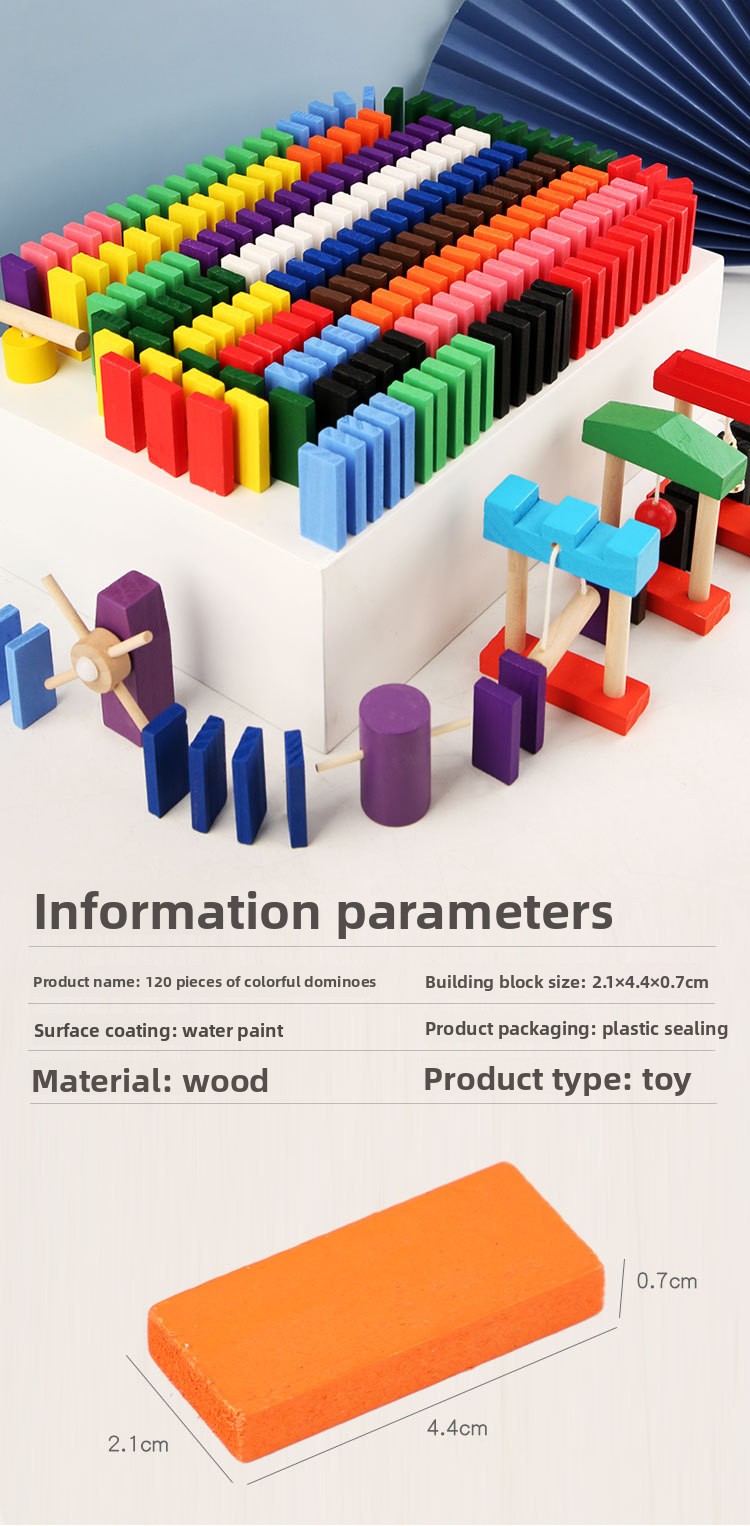
The 100-piece set uses beech wood pieces measuring 5.4 × 2.7 × 1 cm and comes in 10 rainbow colours — a perfect starting set for most children. The 120-piece set offers 20 additional pieces and 12 distinct colours, enabling larger, more ambitious chain reaction layouts and more detailed colour sorting and pattern designs. Both include all accessories.
2. What mechanism accessories are included?
The mechanism accessories kit includes components for building ramps, bridges, and structural supports that allow domino chains to change level, direction, and momentum mid-sequence. These transform standard linear chain reactions into multi-level, multi-directional designs that significantly increase play complexity and engagement duration.
3. What is the pendulum method atlas?
The pendulum method atlas is a step-by-step illustrated guide showing specific domino chain-reaction building techniques — including pendulum trigger mechanisms, spiral formations, bridge crossings, and multi-level designs. It gives children a structured curriculum of challenges to work through, bridging the gap between a first simple line and genuinely complex engineering layouts.
4. Is the paint safe for children?
Yes. All pieces are finished with certified water-based, environmentally friendly paint that is non-toxic and child-safe. The eco paint formulation is free from harmful chemicals and solvents, meeting children's toy safety standards. This makes it appropriate for children from a young age and gives parents complete confidence in the materials.
5. What age is this suitable for?
The set is suitable for children aged 3 and up. Younger children in this range enjoy stacking and sorting the colourful pieces. From age 4–5, children begin building simple linear chains. By ages 6–8, children use the mechanism accessories to create complex multi-directional layouts. Adults frequently enjoy the set alongside children — and sometimes more independently.
6. Is this a good STEM toy?
Yes. Domino building directly develops spatial reasoning (planning multi-dimensional layouts), cause-and-effect understanding (predicting how chain reactions will propagate), structural engineering thinking (supporting chains with accessories), fine motor precision (placing pieces accurately at the correct spacing), and mathematical thinking (counting, symmetry, and pattern creation). These are core STEM foundations.
7. How long does a typical build take?
Build time varies by age and ambition. Simple 20-piece linear chains take 5–10 minutes. A full 100-piece layout using mechanism accessories can take 45–90 minutes of focused setup for an older child. This extended engagement time is one of the set's most valuable attributes — it trains genuine sustained concentration in a way that few other toys can.
8. Can multiple children play together?
Yes — collaborative domino building is one of the most rewarding group activities available. Children can divide responsibility (one builds the ramp, one sets the spiral, one positions the final trigger), negotiate the design together, and share the collective joy of the chain reaction falling perfectly. Group play also develops communication and teamwork skills naturally.
9. What is the difference between mesh bag and colour box packaging?
The mesh storage bag is lightweight, breathable, and practical for everyday home storage — children can see the pieces inside and access them quickly. The colour box packaging presents the set beautifully for gifting, with a premium unboxing experience. Choose mesh bag for home use and colour box when purchasing as a birthday or Christmas gift.
10. Is pine wood durable enough for daily play?
Yes. Pine wood is a robust, dense hardwood that handles the physical demands of daily domino play — including being placed, tipped, collected, and stored repeatedly. The pieces maintain their shape and finish over years of use. Multiple customer reviews confirm the set's condition remains excellent after months of daily play by children under 10.
11. How does this compare to plastic domino sets?
Natural pine wood provides superior tactile quality — the weight, warmth, and texture of real wood makes each piece satisfying to handle and position in a way plastic pieces cannot replicate. Pine wood also produces a richer sound when pieces fall, which is a significant part of the sensory satisfaction of a successful chain reaction. Eco-friendly and plastic-free.
12. Can this be used as a group activity at school or nursery?
Yes — it is specifically valued as a classroom activity by early years and primary school teachers for exactly the STEM skills it develops. The combination of planning, precision, teamwork, and problem-solving it requires makes it an excellent structured activity for small groups aged 4 and above. Several customer reviews are from teachers using it in educational settings.
13. What happens when a chain reaction goes wrong mid-build?
This is arguably the most educationally valuable moment the set creates. When a piece falls early, children must identify where the error occurred, understand what caused it, and redesign or rebuild that section — a natural cycle of hypothesis, testing, and iteration that mirrors real scientific and engineering methodology. The frustration is real; the learning is deeper.
14. Is the storage bag large enough for all pieces and accessories?
Yes. The storage bag is sized to accommodate the full piece set alongside the mechanism accessories, keeping everything together in one location and making setup and pack-down straightforward. The mesh design also allows children to check pieces are all present before beginning a build.
15. Is this a good birthday or Christmas gift?
It is consistently described as one of the most impressive STEM gifts for children aged 4 and above — specifically because it is visually striking (rainbow colours, natural wood), immediately engaging, and provides genuine long-term play value. The colour box packaging option makes it gift-ready without any additional wrapping effort. Parents, grandparents, and aunts and uncles frequently report it becoming the child's most-used toy.
Fast U.S. Shipping
To ensure fast delivery, some orders are shipped through our trusted U.S. fulfillment partners using shared logistics and packaging networks. Because we also sell on Amazon, your package may occasionally arrive in Amazon-branded packaging. Rest assured, your order was placed directly through our store and the product inside is exactly what you ordered.


Loved by Parents. Built for Screen-Free Learning.
Educational toys that help kids think, create, build, solve, and play with purpose.



Parents Say It Best
Excellent Quality
Keeps my child busy without needing a screen.
Great Learning Toy
Fun, educational, and actually useful.
Screen-Free Favorite
A better alternative to tablet time.
Worth Buying
My child keeps coming back to it.
Builds Focus
Great for patience and problem-solving.
Perfect Gift
Parents loved that it was educational.
Creative Play
My child builds, imagines, and plays longer.
Very Engaging
Simple, hands-on, and keeps attention well.
More Than Just a Toy
The right toy helps kids build creativity, confidence, focus, and problem-solving skills through hands-on play.
Builds Thinking Skills
Screen-Free Play
Boosts Creativity
Fast Delivery
Give Your Child a Better Way to Learn & Play
Choose toys that help kids learn naturally through creativity, building, and hands-on discovery.
Easy Returns
24 x 7 Support
2 to 5 Day Delivery
Easy Returns
24 x 7 Support
2 to 5 Day Delivery
Easy Returns
24 x 7 Support
2 to 5 Day Delivery
Easy Returns
24 x 7 Support
2 to 5 Day Delivery
Easy Returns
24 x 7 Support
2 to 5 Day Delivery
Easy Returns
24 x 7 Support
2 to 5 Day Delivery
Easy Returns
24 x 7 Support
2 to 5 Day Delivery
Easy Returns
24 x 7 Support
2 to 5 Day Delivery
Easy Returns
24 x 7 Support
2 to 5 Day Delivery
Easy Returns
24 x 7 Support
2 to 5 Day Delivery
Easy Returns
24 x 7 Support
2 to 5 Day Delivery
Easy Returns
24 x 7 Support
2 to 5 Day Delivery