
Choosing the right counting toys for toddlers can be a delightful yet challenging task for parents. These toys not only provide hours of entertainment but also play a crucial role in the early development of mathematical skills. By transforming abstract numbers into tangible, colorful objects, these mathematics and counting toys help your child build a foundation for future academic success.
In this guide, we explore the top-rated tools that merge fun with high-impact learning. From classic rainbows to interactive smart blocks, these picks are designed to foster independence and curiosity in every little learner. These tools pair perfectly with our broader range of educational toys to support every stage of your child's journey.
Table of Contents
Why Traditional Math Drills Fail Toddlers
For a two-year-old, the symbol "4" is just a squiggle on a page. Many parents try to introduce numbers through repetition or videos, but these methods often fail to bridge the gap between memory and actual understanding. Without a physical way to connect a number name to a specific quantity, children can become frustrated and disengaged, viewing math as a chore rather than a puzzle to solve.
Why Missing Hands-On Milestones Hurts Growth
Early childhood is a "sensitive period" for order and logic. If toddlers aren't given the chance to physically manipulate quantities, they miss the opportunity to develop one-to-one correspondence. As we explored in our guide on cognitive skill development, the lack of tactile math play can lead to struggles with school readiness. Passive learning doesn't build the problem-solving resilience that comes from stacking, sorting, and self-correcting mistakes.
The Solution: Active Discovery through Multi-Sensory Play
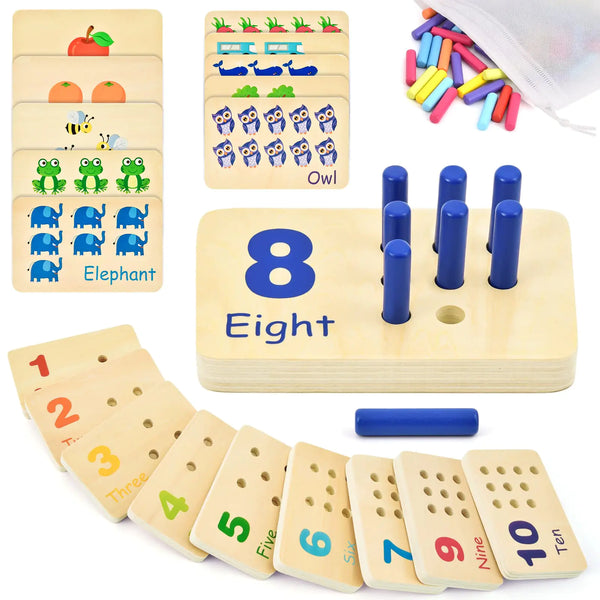
The best solution is to move math from the screen to the hand. High-quality counting toys turn numbers into something a child can grasp, stack, and move. When a child places a bear in a cup or a ring on a peg, they receive haptic feedback that reinforces the brain's understanding of quantity. This is the cornerstone of Montessori educational toys.
By utilizing these tools, you allow your child to lead their own discovery, building the confidence needed for future success. These tools pair perfectly with our problem-solving play sets to help children master the physical logic of the world.
Ready to make numbers your child's favorite game?
Explore our collection of expert-vetted counting toys designed for hands-on numerical mastery.
Shop All Counting Toys1. Rainbow Counting Bears: The Gold Standard
Rainbow Counting Bears are a fantastic educational tool. These colorful bears come in sets with different colors and sizes, making them perfect for sorting, counting, and even simple math operations.
Key Benefits: They turn math into a multi-sensory experience. By physically grouping bears, children understand that "3 blue bears + 2 blue bears = 5." For more tips on this, check out our post on top counting toys for math skills.

Sorting and grouping activities are the building blocks of early logical reasoning and categorization.
Counting Tool Selection Guide
Stacking Rings
Best for: 12 - 24 Months
Benefits: Size sorting, basic sequence
Skill: Hand-eye coordination
Shape Sorters
Best for: 18 - 36 Months
Benefits: Problem-solving, recognition
Skill: Fine motor grip
Smart Blocks
Best for: 3 - 5 Years
Benefits: Interactive, audio feedback
Skill: Symbol recognition
Expert Picks for 2026 Discovery
To truly elevate your child's mathematical journey, consider these high-impact examples that bridge the gap between play and school readiness.
The Structural Logic Masterpiece: Stacked High Block Toys
Understanding quantity often requires spatial awareness. Our stacked high block toys help children understand height, balance, and quantity simultaneously—a foundational skill for identifying how numbers grow.
Topical Authority: Supporting Growth
As we explored in our post on choosing the best educational toys, the key is to provide a "Control of Error" so children can self-correct during their discovery.
Conclusion: Investing in a Lifetime of Logic
Counting toys are more than just playthings; they are the architectural tools for your child's logical mind. By choosing tactile engagement over passive drills, you are building a cognitive foundation that will serve them for a lifetime. As we discussed in our guide on the power of educational toys, every counted bead is a neural connection forged.
Ready to start your first count?
Browse our full range of mathematics and counting toys and prepare for your child's most exciting learning season yet.
Explore All Educational ToysFrequently Asked Questions About Counting Toys
1. What is the best counting toy for a 2-year-old?
Stacking rings, wooden abacuses, and counting bears are ideal for building the motor skills needed for math.
2. How do counting toys help brain development?
They build 'one-to-one correspondence' and help toddlers understand quantity through touch, sight, and sound.
3. Are wooden counting toys better than plastic?
Wood provides superior haptic feedback (texture and weight) which helps the brain build stronger associations.
4. Do counting toys help with speech delays?
Yes, the rhythmic nature of counting and identifying colors can support early vocabulary and phonics.
5. What is "subitizing"?
It's the ability to instantly recognize the number of objects in a small group without counting them one by one.
6. Can math toys help with ADHD or focus issues?
The tactile, absorbing nature of sorting and stacking can help ground children and extend their focus span.
7. How do I introduce addition to a 4-year-old?
Use physical objects; show them one block, add another, and let them physically group them into two.
8. Are interactive electronic counting toys good?
They can be excellent for auditory learners who benefit from hearing numbers repeated with music.
9. How do I clean wooden math toys?
Wipe with a damp cloth and mild soap; never soak wood as it can warp or split.
10. Can counting toys help with school readiness?
Absolutely. Children who understand quantities before kindergarten have a significant academic advantage.
11. What is a 'Control of Error'?
A design feature (like a puzzle piece only fitting in one slot) that lets a child self-correct.
12. Are these toys safe for toddlers who mouth things?
Always check for non-toxic paint and large pieces that aren't a choking hazard for kids under 3.
13. Do math toys teach shapes too?
Many do! Sorting by shape is a key logical foundation for identifying numerical symbols later.
14. What age can a child start using an abacus?
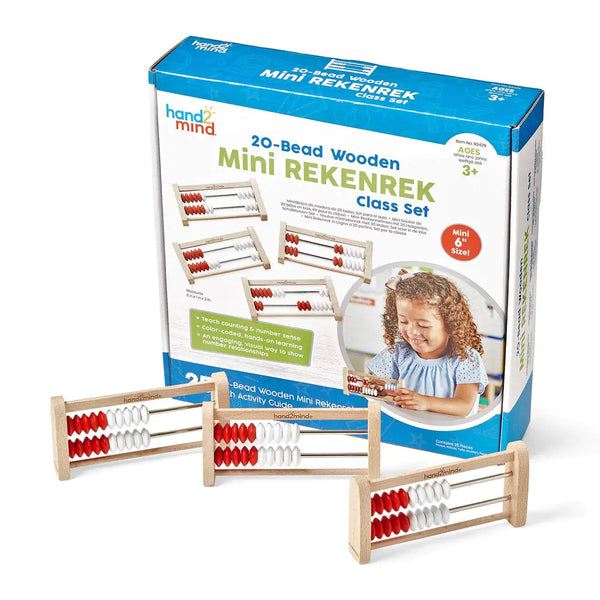
Simple bead moving can start at 18 months; formal counting usually begins around age 3.
15. Why choose Wonder Kids Toys gear?
We curate only high-quality, durable, and safety-vetted tools designed for genuine developmental joy.
16. Can math toys help with handwriting?
Yes, the pincer grasp used for small counters builds the hand strength needed for pencil control.
17. Are there counting toys for infants?
High-contrast cards and soft blocks with large numbers are excellent for early visual familiarity.
18. How do I manage math frustration?
Stop the activity immediately if they get upset. Math should always feel like a puzzle or a game at this age.
19. Can toys teach money skills?
Yes, toys like play cash registers use counting and sorting to build the logic of currency.
20. What is 'number recognition'?
The ability to identify the written symbol (e.g., '5') and name it correctly.
21. Why are neutral colors sometimes better?
Neutral wooden toys reduce visual noise, allowing the child to focus entirely on the quantity or shape.
22. Do counting toys help with social skills?
Yes, group games like 'who has more' teach sharing, turn-taking, and healthy competition.
23. Can I make DIY math toys?
Yes! Bottle caps, pasta shells, or stones can all be used for counting—just ensure they are clean and safe.
24. How long should a play session last?
10-20 minutes is typical for a toddler's natural attention span for focused sorting tasks.
25. Are these toys good for traveling?
Magnetic counting boards or soft number books are excellent for keeping kids occupied on the go.
26. What is 'number conservation'?
The understanding that the quantity remains the same even if the arrangement changes.
27. Do math toys help with school anxiety?
By making math a 'friend' early on, you prevent the fear of numbers that often starts in school.
28. Is adult involvement required?
Initially, yes, to model the counting; eventually, they will play and explore independently.
29. Can water toys be used for math?
Yes! Measuring cups or numbered ducks in the bath are great ways to keep counting active.
30. Where can I find the best math toys?
WonderKidsToy.com offers a full range of expert-vetted math, STEM, and educational kits.