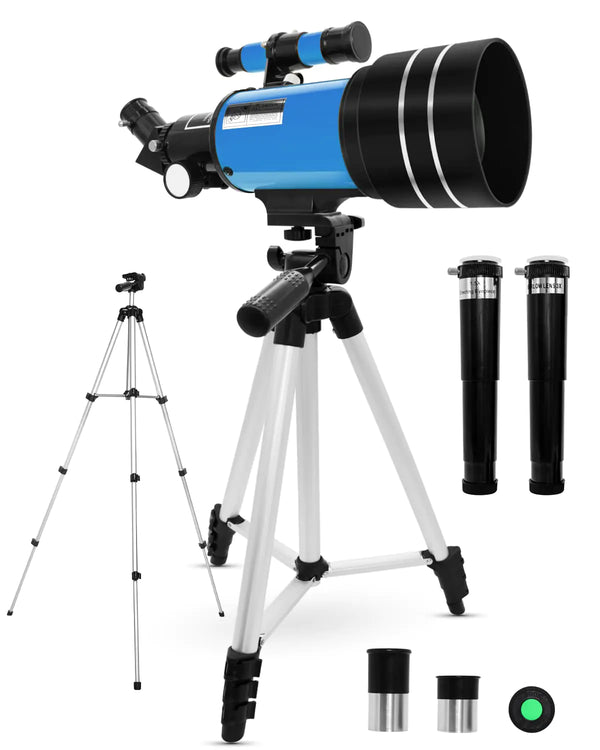


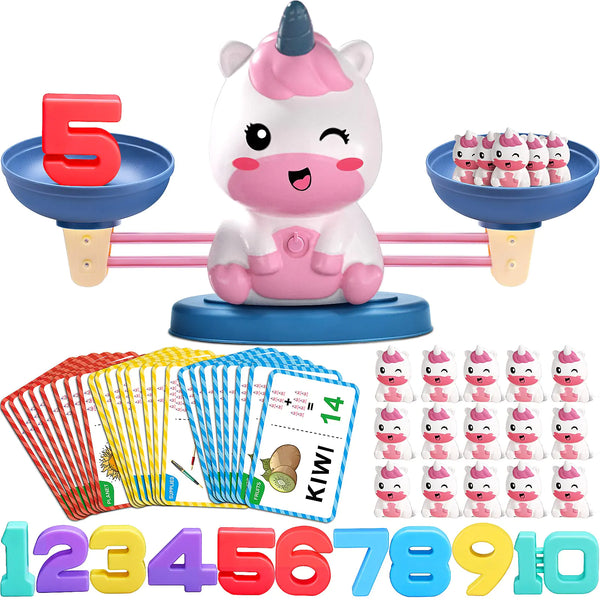

Being a dad is like being a constant student. You’re always learning how to give your kids the best start in life. One thing that’s been a total game-changer in our house is discovering STEM toys. These aren’t just regular playthings; they are little keys that unlock a whole world of discovery, sparking that “why?” in a child's eyes and turning it into a “wow!” moment.
Many parents search for the best STEM toys for kids to prepare them for a fast-changing world. Choosing toys that promote science, technology, engineering, and math is a smart way to make learning an adventure. Exploring a high-quality STEM toys collection is the first step in equipping your child with future-ready skills.
In this guide, I’ll share my journey of using STEM kits across different ages—from toddlers to teens. These tools pair perfectly with educational toys and problem-solving sets to foster lifelong curiosity.
Table of Contents
Why Traditional Education Often Feels Like a Chore
For many kids, subjects like math and science feel like abstract lists of rules to memorize. When children are only exposed to these topics through textbooks or passive videos, they struggle to see the real-world connection. This "engagement gap" often leads to a lack of confidence, where kids decide early on that they are "not good at math" or "not interested in science" simply because the delivery was uninspiring.
Parents today want their children to be innovators. They want tools that turn a living room into a dynamic laboratory where making a mess is just part of the scientific process.
Why Missing Hands-On Logic Stalls Future Potential
Childhood is a critical window for fostering computational thinking. If a child's only interaction with technology is consuming content, they miss out on the vital "feedback loops" that strengthen logical sequencing and troubleshooting skills. Without the challenge of building a circuit or balancing a tower, the development of high-level problem-solving and grit can be significantly delayed.
Ignoring these foundations means missing the chance to raise a creator. Choosing nurturing STEM toys ensures your child is learning how the world works through direct interaction. By neglecting hands-on discovery, we risk raising kids who are dependent on gadgets rather than masters of them.
Turning "I Don't Get It" into "Can We Do That Again?"
The right STEM toys turn playtime into a discovery mission. Instead of just looking at pictures, kids use Magnetic Tiles to understand geometry or Robotics Kits to see their code come to life. This "active discovery" helps them understand cause and effect through immediate, physical results. Whether it's a simple shape sorter or a complex electronics lab, the result is a focused, curious learner ready for the future.
By introducing toys that require active participation, you provide your child with a foundation for life-long innovation. Exploring our science kits and experiments is the most effective way to foster these essential skills at home.
Ready to spark their inner genius?
Discover our hand-picked collection of STEM toys designed to turn tiny sparks into big ideas.
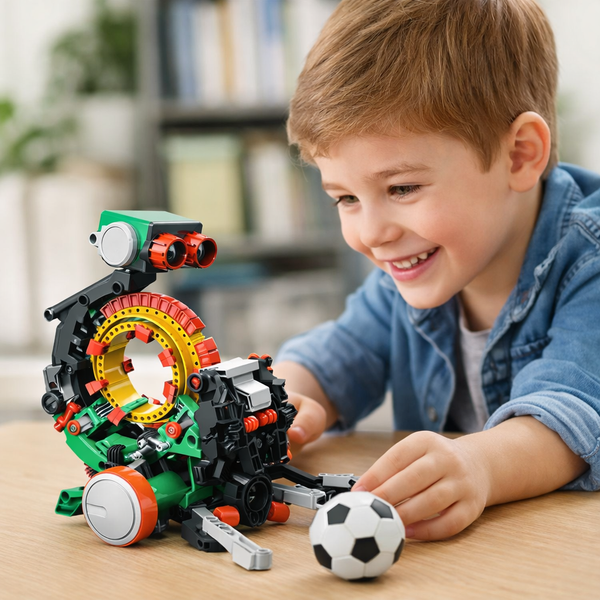
Shop STEM Discovery NowActive interaction with coding robots helps children build the logic and persistence needed for STEM success.
The Ultimate STEM Milestone Guide
Toddlers (1-2 Years): Sensory Foundations
It’s all about sensory exploration. Stacking cups and Soft Building Blocks teach gravity and volume. Check out our toddler potential guide for more tips.
Preschoolers (3-5 Years): The Age of Imagination
Four-year-olds are tiny inventors. Magnetic tiles and building blocks with gears introduce mechanical concepts. Explore engineering toys to help them bring their imaginations to life.
School Age (6-12 Years): Deep Dives into Tech
By six, they are ready for real science. Simple machine kits and Robotics Kits introduce coding and physics. For older kids, look at our robot kits for teenagers.
Quick Comparison: Best STEM Toy Types
Building Sets
Best for: Architecture & spatial math.
Benefits: Fine motor, balance.
Age range: 2 - 10 years
Science Kits
Best for: Chemistry & biology.
Benefits: Scientific method, observation.
Age range: 6 - 15 years
Robotics
Best for: Logic & tech literacy.
Benefits: Coding, sequencing.
Age range: 5 - 14 years
What Skills Are They Actually Building?
When kids engage with these toys, they are undergoing a cognitive workout:
- Critical Thinking: Asking "how can I make this taller?" or "why did the light blink?"
- Hand-Eye Coordination: Snapping parts and aligning gears builds physical precision.
- Grit: The persistence to rebuild when a tower falls or a code doesn't work.
For more on the physical benefits, see our guide on developing fine motor skills.
How to Pick the Right STEM Discovery Tool
Match Developmental Milestone, Not Just Level
If a kit is too easy, they're bored. If it's too hard, they're frustrated. Choose a tool that matches their current attention span. See expert insights on choosing toys for more tips.
Prioritize Open-Ended Interaction
The best STEM toys are 90% child and 10% toy. Kits that allow for unstructured exploration build better critical thinking than toys with only one "right" way to play. This is why we love the versatility of Creative Building Kits.
Final Thoughts: An Investment in Their Future
STEM toys are much more than simple playthings—they are investments in your child’s lifelong mastery. By selecting tools that encourage rhythm, logic, and exploration, you are setting the stage for a lifetime of innovative thinking. Every hour of purposeful play is a building block for a bright academic future.
Ready to build a better science box? Explore our expert-selected range of discovery and educational toys today. Your journey toward meaningful play starts here. You can even check out products like our Stacked High Block Toys to get started!
Empower Their Curiosity Today
Discover curated toys that inspire curiosity, build confidence, and make learning irresistibly fun.
Visit WonderKidsToy TodaySTEM Discovery FAQ
1. What are STEM toys?
They are tools designed to teach Science, Technology, Engineering, and Math through hands-on play and experimentation.
2. How do toys benefit brain development?
They foster spatial reasoning, logical planning, and troubleshooting skills by requiring active interaction from the child.
3. What age group are these toys for?
STEM toys range from simple cause-and-effect tools for 1-year-olds to complex robotics for age 12+.
4. Are they safe for young children?
Yes, reputable brands follow strict safety standards like ASTM to ensure materials are non-toxic and designs are age-appropriate.
5. What is computational thinking?
It's the process of breaking a big problem into small, logical steps—a core skill taught by coding robots.
6. Do STEM toys reduce screen time?
Yes, they provide high-engagement physical challenges that are often more rewarding than passive video watching.
7. Can toys help with math anxiety?
Yes, by turning abstract numbers into physical concepts like volume and fractions during construction play.
8. What is a "Self-Correcting" toy?
A toy where the feedback is immediate—for example, if a circuit doesn't light, the child knows to fix it without adult help.
9. Why choose wood over plastic for STEM?
Wood offers varied weights and textures, which provides more sensory information to a child's brain than uniform plastic.
10. How do I maintain electronics kits?
Keep components in a dry storage bin and remove batteries when not in use to prevent corrosion.
11. Do these toys help with ADHD focus?
Yes, the high level of tactile engagement and clear immediate goals help build concentration spans.
12. What are the best travel STEM toys?
Small magnetic puzzle cubes and handheld logic games are easy to carry and engaging on the go.
13. Can motor skills improve reading?
Yes, visual tracking developed through play helps the eyes move smoothly across a page of text later in life.
14. Are expensive sets worth it?
High-quality materials offer far more long-term play value and safety than cheap, flimsy sets.
15. What is "grit" in play?
The persistence to keep trying a difficult build—a vital trait for future school success fostered by STEM toys.
16. Do these toys help with school readiness?
Absolutely. They build the concentration, fine motor control, and logic needed for a structured classroom.
17. Can I buy STEM toys online?
Yes, specialized stores like WonderKidsToy curate collections based on developmental milestones and safety.
18. Why choose non-toxic materials?
Children explore with their senses; ensuring materials are BPA and lead-free is vital for their health.
19. Are there robotics for 5-year-olds?
Yes, simple "directional" coding robots teach logic without needing any reading or writing.
20. Do STEM toys help social skills?
Yes, collaborative sets teach turn-taking, communication, and shared problem-solving with peers.
21. How do I setup a science area?
Use flat surfaces, low shelves, and clear bins to categorize different types of pieces for easy access.
22. What is symbolic play?
When a child uses a block to represent a phone, building the cognitive flexibility needed for abstract science.
23. Can building toys teach physics?
Yes, through exploring balance, center of mass, and structural integrity with blocks and ramps.
24. How many toys should be out at once?
Montessori experts recommend 6-10 purposeful toys to maintain focus and prevent overwhelm.
25. Do magnetic tiles foster creativity?
Absolutely. They allow for 3D architectural exploration and imaginative building that standard blocks cannot.
26. Why avoid battery-operated "performing" toys?
They often perform for the child, taking away the chance for the kid to use their own logic to create results.
27. How does active play help with sleep?
The mental exertion of building and problem-solving helps regulate a child's natural sleep-wake cycle.
28. Is toy rotation hard to manage?
No, just put half your toys in a bin in the closet and swap them every two weeks to maintain novelty.
29. Can math happen without numbers?
Yes, through learning patterns, symmetry, and proportions during construction play.
30. Where can I find high-quality STEM toys?
Explore the specialized collections at WonderKidsToy for vetted, high-quality discovery tools.