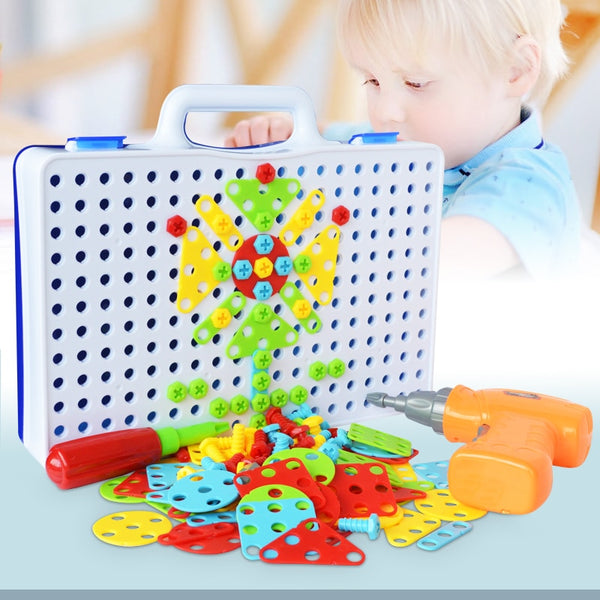

Magnetic building sets are not just toys; they are gateways to a world of creativity, learning, and fun for kids of all ages. These innovative play tools combine the wonder of magnetism with the joy of building, offering a unique hands-on experience that promotes cognitive development. From colorful blocks for toddlers to complex sets for preteens, magnetic toys can enhance a child's playtime in countless ways.
Many parents search for the best STEM toys for toddlers to spark early curiosity. Choosing sets that promote spatial awareness and fine motor skills is a smart way to support rapid brain growth. Exploring a high-quality educational toys collection is the first step in unlocking your child's inner architect.
In this guide, you will learn why magnetic tiles are essential for STEM discovery, how to choose safe materials, and how these sets adapt as your child grows. These tools pair perfectly with building and construction toys and Montessori educational toys to foster a lifelong love of creation.
Table of Contents
Breaking the Cycle of Passive Entertainment
In a world dominated by screens, children often engage in passive entertainment that requires very little critical thinking. Many modern toys do all the work—flashing, singing, and moving—leaving the child as a mere spectator. This lack of active manipulation prevents children from understanding the physical laws of the world, such as balance, geometry, and magnetic force. When play doesn't challenge the brain to solve spatial puzzles, children quickly grow bored and move on to the next digital distraction.
Families today want toys that act as a "blank canvas"—tools that require a child to envision, build, and troubleshoot to see a result.
Why Low-Engagement Play Stalls Cognitive Progress
Early childhood is a critical window for developing spatial reasoning and executive function. If a child’s environment is filled only with one-dimensional play, they miss out on the vital feedback loops provided by 3D construction. Without the challenge of figuring out how to make a structure stable or how shapes fit together, the development of logical sequencing and persistence (grit) can be delayed. This often translates to a lack of confidence in STEM subjects later in school. Learn more in our guide on building problem-solving skills.
Choosing specialized innovative building toys ensures your child is learning how to think. By neglecting these foundational logic builders, we risk raising kids who are consumers of tech rather than the engineers of it.
The Solution: Magnetic Discovery as a Bridge to Engineering
Magnetic building sets turn your living room into an architectural studio. Instead of just looking at pictures, kids use to explore geometry and physics firsthand. This active discovery helps them understand cause and effect through immediate, tactile results. Whether it's a simple cube or a gravity-defying castle, the result is a focused, curious learner ready for the future.
By introducing toys that require active participation, you provide your child with a foundation for life-long innovation. Exploring our STEM toys is the most effective way to foster these essential engineering skills at home.
Ready to spark their inner architect?
Discover our hand-picked collection of magnetic tiles, blocks, and 3D construction sets.
Shop Building Sets NowSafety and Quality: The Foundation of Play
When selecting magnetic sets, uncompromising safety standards are paramount. Look for high-quality ABS plastic that is BPA-free and durable. Smooth, rounded edges are essential to prevent scrapes, while rare-earth magnets must be securely ultrasonically welded inside the tiles to ensure they never come loose. For more on safe material choices, check out our expert insights guide.
Quality materials aren't just about safety; they are a promise of longevity. High-quality sets can be passed down through generations, making them a wise long-term investment for any family.
Boosting Brain Power: Educational Benefits
Magnetic building is a multi-sensory workout for the developing mind. As children play, they are unknowingly mastering high-level concepts:
- Spatial Awareness: Understanding how 2D shapes become 3D structures.
- Fine Motor Skills: Manipulating small pieces to achieve precise connections.
- Critical Thinking: Troubleshooting why a tower fell and how to reinforce it.
Pairing these sets with Stacked High Block Toys adds a layer of structural engineering, teaching children about gravity and center of mass. For more on cognitive growth, see enhancing brain power with toys.
Quick Comparison: Magnetic Set Styles
Magnetic Blocks
Best for: Toddlers & early motor skills.
Main benefits: Tactile, easy grip.
Age range: 18m - 3 years
Translucent Tiles
Best for: 3D geometry & light play.
Main benefits: Spatial logic, art.
Age range: 3 - 10 years
Architectural Kits
Best for: Preteens & advanced builds.
Main benefits: Realism, design.
Age range: 8 - 14 years
The Perfect Match for Every Age
Magnetic sets truly grow with your child. For infants and toddlers, focus on large, easy-to-grasp blocks that build visual discrimination. For preschoolers, introduced translucent tiles that allow them to explore colors and shadows.
As children reach middle school, advanced kits with rare shapes and motors challenge them to integrate technology with their builds. For age-specific guidance, see our guide to Montessori toys by age.
Final Thoughts: Building a Future of Innovation
Magnetic building sets are much more than simple playthings—they are investments in your child’s cognitive potential. By selecting tools that encourage rhythm, logic, and physical mastery, you are setting the stage for a lifetime of innovative thinking. Every magnetic "click" is a building block for a bright academic future.
Ready to build a better discovery box? Explore our expert-selected range of building and educational toys today. Your journey toward meaningful play starts here. You can even try our Stacked High Block Toys to get started!
Empower Every Discovery
Discover curated toys that inspire curiosity, build confidence, and make learning irresistibly fun.
Visit WonderKidsToy TodayFAQ
1. What are magnetic building sets?
They are innovative construction toys that use magnets to connect pieces, allowing children to build 2D patterns and 3D structures.
2. How do they benefit brain development?
They foster spatial reasoning, logical planning, and fine motor skills through active interaction and physical feedback.
3. Are magnetic toys safe for young children?
Yes, provided they are made by reputable brands that securely enclose magnets in ultrasonically welded, BPA-free plastic.
4. Do magnetic sets reduce screen time?
Yes, they provide high-engagement physical challenges that are often more rewarding than passive digital consumption.
5. Can toys teach math naturally?
Yes, by requiring counting of tiles, understanding geometric symmetry, and exploring 3D volume during play.
6. What is the difference between blocks and tiles?
Magnetic blocks are chunky and tactile for toddlers, while tiles are flat and translucent, better for complex 3D architecture.
7. Can toys help with math anxiety?
Yes, by making abstract geometric concepts tangible and easy to manipulate, children feel more in control.
8. What is a "Self-Correcting" toy?
A toy where the feedback is immediate—if a structure is top-heavy, it falls, allowing the child to troubleshoot independently.
9. Why choose non-toxic building toys?
Children explore with their hands and mouths; ensuring materials are lead-free and BPA-free is vital for their health.
10. How do I maintain magnetic tiles?
Wipe them with a damp cloth and mild soap; avoid submersing in water to keep magnets in perfect condition.
11. Do these toys help with ADHD focus?
Yes, the high level of tactile engagement and the "click" sound can help build longer concentration spans.
12. What are the best toys for travel?
Small magnetic puzzle sets and portable drawing boards are easy to carry and keep kids engaged on the go.
13. Can motor skills improve reading readiness?
Yes, visual tracking and hand coordination developed through play help the eyes move smoothly across text later.
14. Are expensive sets worth it?
High-quality, durable materials offer far more long-term play value and safety than cheap, flimsy alternatives.
15. What is "grit" in building play?
The persistence to keep trying a difficult build—a vital life skill fostered by STEM construction toys.
16. Do these toys help with school readiness?
Absolutely. They build the logic, focus, and motor skills needed for a structured classroom environment.
17. Can I buy magnetic sets online safely?
Yes, specialized stores like WonderKidsToy curate collections specifically vetted for developmental milestones.
18. What is the "E" in STEM?
It stands for Engineering—the practice of designing and building structures or machines, perfectly embodied by magnetic sets.
19. Are there building sets for 2-year-olds?
Yes, focusing on "Cause and Effect" like chunky magnetic blocks and large-button sorting sets.
20. Do eco-toys help social skills?
Yes, collaborative sets teach turn-taking and shared problem-solving with parents or peers.
21. How do I setup a building area?
Use flat surfaces, clear bins for parts, and low shelves to encourage independent choice.
22. What is "symbolic play"?
When a child uses a block to represent a phone; building sets provide the bridge to abstract, symbolic thinking.
23. Can toys teach physics at home?
Yes, through exploring balance, gravity, and structural integrity during block construction.
24. How many toys should be out at once?
Montessori experts recommend keeping 6-10 purposeful toys accessible to maintain concentration.
25. Do magnetic tiles foster creativity?
Absolutely. They allow for 3D architectural exploration and imaginative building that standard blocks cannot.
26. Why avoid battery-operated "performing" toys?
They often perform "for" the child, taking away the opportunity for the child to use their own spatial logic.
27. How does active play help with sleep?
The mental exertion of problem-solving helps regulate a child's natural sleep-wake cycle.
28. Is toy rotation hard to manage?
No, just put half your toys in a bin and swap them every two weeks to maintain novelty.
29. Can math happen without numbers?
Yes, through learning patterns, volume, and proportions during tactile construction play.
30. Where can I find high-quality building toys?
Browse our specialized building and construction collections for every age at WonderKidsToy.