
In today’s world of flashing lights, constant notifications, and fast-paced digital entertainment, one skill is becoming increasingly difficult for children to develop: Focus. Many parents worry that their child gets distracted easily, jumps from toy to toy, or struggles to complete a single activity.
The good news? The right environment and tools can make a massive difference. Montessori learning toys are specifically designed to strengthen concentration, patience, and deep thinking—starting from the toddler years. These aren't just playthings; they are expertly crafted educational toys designed to train the brain for long-term success.
In this guide, you will learn why traditional toys often overstimulate young minds, how the Montessori philosophy builds "mental muscle," and which specific Montessori toys are best for increasing your child's attention span naturally.
Table of Contents
The Struggle: A Generation of Constant Distraction
Many parents notice that their children seem unable to play with one thing for more than a minute. They wander through playrooms filled with noisy, flashing plastic gadgets but never seem truly "engaged." This results in a cycle of boredom and a constant demand for screens.
The problem isn't the child; it's the stimulation. When children are surrounded by toys that do all the work—singing, dancing, and flashing—they don't learn how to generate their own interest or effort. This creates a passive brain that struggles with the quiet requirements of school and problem-solving.
Why Traditional Toys Often Fail to Train the Mind
Most modern toys are designed for "instant gratification." They reward the child for a simple button press with an explosion of light and sound. This trains the developing brain to expect high levels of dopamine without any cognitive effort. For a three-year-old, this overstimulation makes it nearly impossible to develop the "executive function" needed for deep focus.
Without the foundation of independent discovery and patience, children can struggle with problem-solving play sets later in life. They become frustrated by challenges that aren't "solved" instantly, leading to reduced confidence and a shorter attention span.
The Montessori Method of Concentration
Focus is not an innate trait; it is a skill that must be trained through repeated, meaningful activity. This is the core of Montessori philosophy. By using Montessori learning toys that emphasize one skill at a time, we give the brain a chance to engage deeply without being overwhelmed. The environment becomes the teacher, and the child moves from a passive observer to an active architect of their own knowledge.
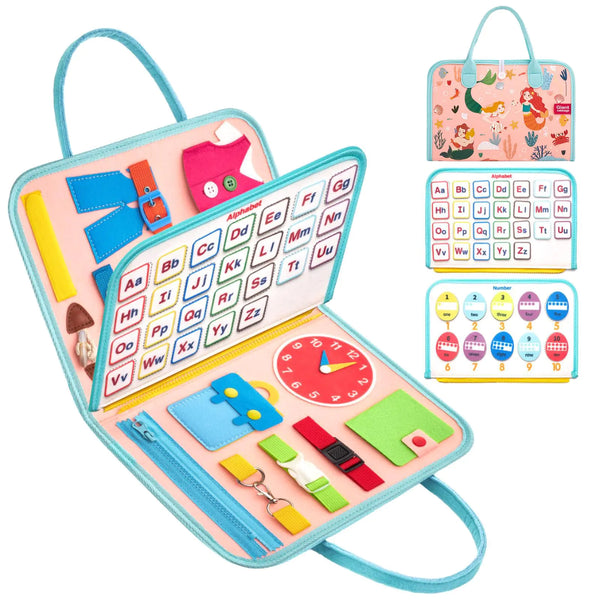
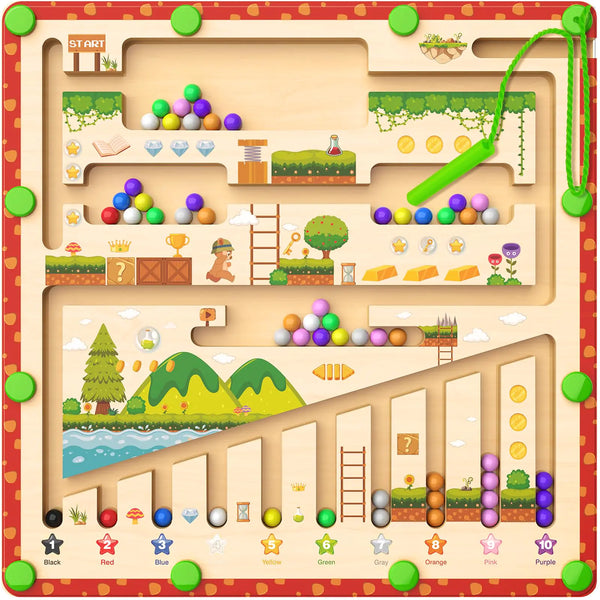
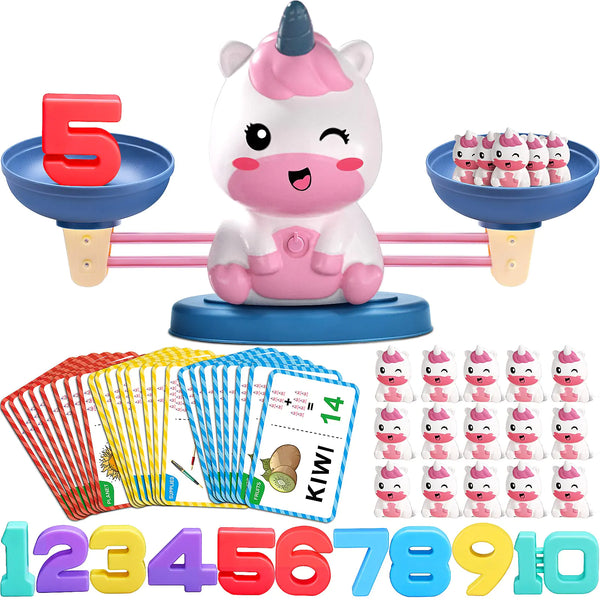
Whether it’s a mathematics counting board or a simple shape sorter, these tools invite the child to "do the work." This active learning is what naturally extends the window of concentration.
Ready to unlock your child's focus?
Explore our curated Montessori collections designed to build patience and independence through play.
Shop Montessori Toys NowHow Montessori Toys Build Concentration
Montessori toys differ from regular toys in several key ways that directly benefit attention span:
- One Clear Purpose: Each toy isolates one skill (like stacking or sorting). This clarity allows a child to focus without being distracted by secondary features.
- Active Engagement: The child must physically pick up, align, or match pieces. There are no "autopilot" buttons.
- Encouraged Repetition: Montessori philosophy values the "loop" of activity. Repetition is how the brain builds neural pathways for focus.
- Built-In Self-Correction: Many toys show the child they've made a mistake (like a piece not fitting) without a loud "error" sound. This builds patience and analytical thinking.
This approach also prepares children for more complex subjects like coding and programming by teaching them to stick with a problem until it is solved.
Toy Comparison: Flashing Lights vs. Montessori
Flashing Robot (Toy A)
Experience: Passive Watching
Brain State: High Dopamine / Overwhelmed
Effect: Moves on quickly once sound stops.
Wooden Tower (Toy B)
Experience: Active Experimenting
Brain State: Focused / Problem-Solving
Effect: Adjusts balance and tries again repeatedly.
Focus Training by Age
Toddlers (1–3 Years)
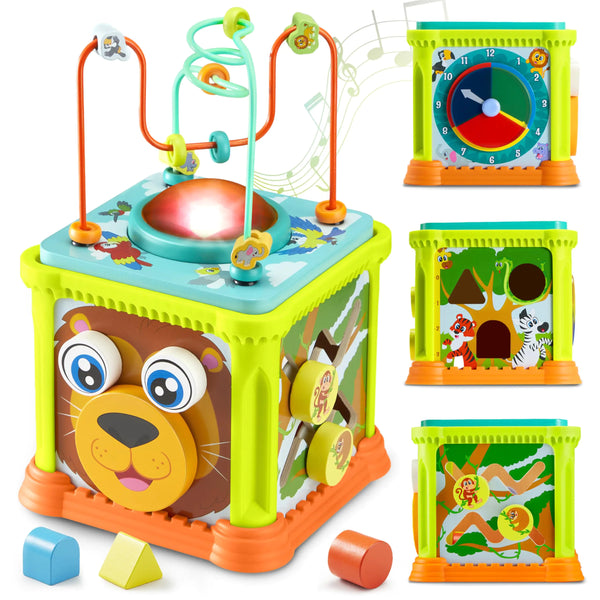
Focus on motor skill coordination. Stacking rings, shape sorters, and wooden puzzles help toddlers practice visual tracking and hand-eye control. At this stage, even 5–10 minutes of deep play is a victory.
Preschoolers (3–6 Years)
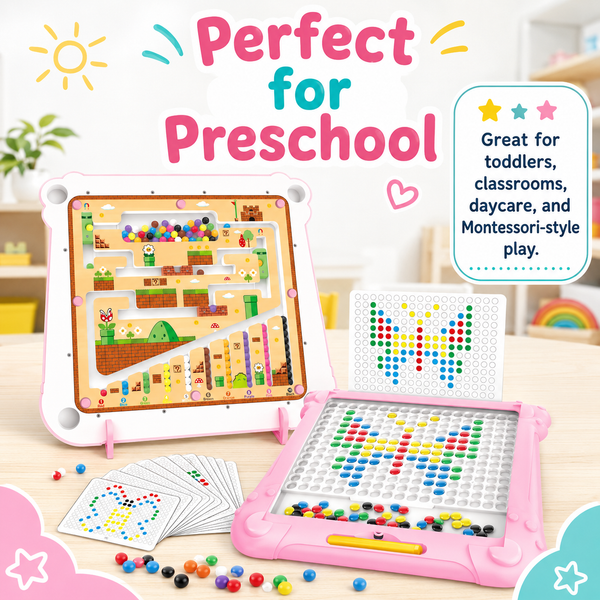
Move toward structured logic. Use letter tracing boards, matching games, and building blocks. These tasks require children to plan and execute, extending their focus window to 15–30 minutes naturally.
Building a Focus-Friendly Environment
You can multiply the results of Montessori play by making small changes at home. Creating a Montessori playroom means keeping toys visible but minimal. Too many choices overwhelm the brain—a small, high-quality collection works better than a mountain of noisy toys.
Avoid background TV and allow for "deep work" time. If your child is intensely focused on a task, try not to interrupt them. These uninterrupted moments are when their concentration "muscle" is actually growing.
Final Thoughts
In a world of constant distraction, focus is a superpower. Montessori learning toys are powerful tools for building real concentration, independent thinking, and problem-solving skills from the ground up.
Investing in your child's attention span is an investment in their entire future. Explore our site for more tips on getting kids off screens and into real learning. Let the learning journey begin today.
Empower their curiosity today.
Discover educational tools and Montessori kits that help children explore their potential with confidence.
Explore Learning ToysFrequently Asked Questions
1. What exactly are Montessori toys?
They are simple, high-quality, usually wooden toys that focus on isolating a single developmental skill at a time.
2. How do Montessori toys improve focus?
By removing the overstimulation of lights and sounds, they allow the child's brain to engage deeply with one purposeful task.
3. What is the "one clear purpose" rule?
A toy should focus on one skill (e.g., matching or stacking) so the child can concentrate on mastering that specific challenge.
4. Do Montessori toys really work for toddlers?
Yes, toddlers are in a peak stage of sensory discovery, making them highly receptive to hands-on Montessori materials.
5. Why are Montessori toys often made of wood?
Wood provides a grounding tactile experience, is more durable than plastic, and creates a calmer visual environment.
6. Can Montessori toys help with ADHD?
While not a cure, their low-distraction design can help children with ADHD practice the habit of quiet concentration.
7. What is "self-correction" in a toy?
A design feature that allows the child to see if they've made a mistake (like a block not fitting) without needing an adult to tell them.
8. How do these toys build confidence?
When a child completes a task independently, they gain a sense of "I can do it myself," which is the foundation of high self-esteem.
9. Are Montessori toys good for school readiness?
Absolutely. They develop the focus, patience, and motor skills required for the classroom setting.
10. How many toys should I give my child at once?
Fewer is better. Experts suggest having 6–10 toys available and rotating them weekly to keep them feeling new.
11. What are the best toys for increasing attention span?
Puzzles, sorting games, and building bricks are among the best for building sustained attention.
12. Is screen time really that bad for focus?
Passive screen time can decrease attention spans because the brain doesn't have to work to be entertained.
13. Do Montessori toys teach math?
Yes, through tactile counting toys that make abstract numbers concrete and physical.
14. Are Montessori toys expensive?
While some have higher upfront costs, they are made to last for years and are often more cost-effective than cheap plastic toys.
15. What is a "prepared environment"?
A space organized to be child-safe and child-accessible, encouraging them to pick activities on their own.
16. Can I use Montessori toys for homeschooling?
Yes, they are the foundation of many early childhood homeschooling curricula worldwide.
17. How do I clean wooden toys?
Wipe them with a damp cloth and mild soap. Avoid soaking them, as it can damage the wood.
18. Do these toys help with speech development?
Yes, by encouraging social interaction and the naming of realistic objects in their environment.
19. Why no battery-operated toys in Montessori?
Because batteries usually mean the toy does the work; Montessori wants the child to provide the energy and logic.
20. How do toys teach patience?
By requiring manual effort to achieve a result, like building a tower or fitting a puzzle piece correctly.
21. Are Montessori toys suitable for all ages?
Yes, from newborns to late elementary, there are age-appropriate materials following these principles.
22. What is "deep work" for a child?
It is a state of intense concentration where the child is fully immersed in an activity, oblivious to their surroundings.
23. Do Montessori toys have loose parts?
Some do, but they are designed to be safe and developmentally appropriate for the target age group.
24. Can I buy individual toys or should I buy kits?
Both work well! Kits provide a variety of skills, while individual toys allow you to follow your child's specific interests.
25. How do toys build analytical thinking?
Through tasks that require comparison, sequencing, and logic, such as sorting items by size or color.
26. Why is repetition good for the brain?
It strengthens the neural pathways associated with a specific task, making the cognitive load lighter over time.
27. Do Montessori toys help with emotional regulation?
Yes, by giving children a sense of control and mastery over their environment, which reduces frustration and anxiety.
28. What should I look for in a toy store?
Look for non-toxic materials, educator-backed designs, and toys that promote active rather than passive play.
29. Where can I find top-rated Montessori toys online?
WonderKidsToy offers a wide range of high-quality, vetted Montessori tools for every stage of development.
30. Can I earn commission by promoting these toys?
Yes, influencers and bloggers can join the WonderKidsToy affiliate program to earn income from their educational content.
Earn Commission Promoting Educational Toys
If you are a blogger, parenting influencer, teacher, or homeschool creator, you can earn commission by promoting educational toys from WonderKidsToy.
Our affiliate program allows creators to share Montessori toys, STEM toys, and learning toys for kids while earning income from their content. Joining takes less than a minute.
👉 Apply here: https://wonderkidstoy.com/pages/join-our-affiliate-program