
Hands-on learning is an invaluable approach for teaching complex subjects like physics. By engaging students with interactive educational toys, we can foster a deeper understanding and appreciation of the principles of the universe.
In this guide, we explore the best physics tools for students eager to learn through active play.
Many parents search for the best physics toys for kids to bridge the gap between dry textbooks and real-world application.
Choosing toys that demonstrate force, motion, and electricity is a smart way to inspire a future engineer. Exploring a high-quality educational toys collection is the first step in unlocking your child's scientific potential.
In this guide, you will learn about top-rated kits that make invisible forces tangible. These picks pair beautifully with STEM toys and robotics kits for kids to create a powerhouse for logical discovery.
Table of Contents
Why Abstract Physics Often Fails to Stick
For many students, physics feels like a collection of intimidating formulas and invisible laws. Reading about gravity or magnetism is vastly different from experiencing them. When kids are only taught through passive observation, they often lose interest before they can even grasp the fundamental concepts. This leads to a lack of confidence in STEM subjects that can persist into adulthood.
Families today want toys that provide a physical proof of science—tools that turn invisible energy into a working alarm or a levitating magnet.
Why Missing Hands-On Science Stalls Cognitive Progress
The window for fostering a scientific mindset is often wide open in middle childhood. If students only interact with screens, they miss out on the vital feedback loops that strengthen spatial awareness and troubleshooting skills. Without the challenge of assembling a circuit or balancing a robotic arm, the development of high-level logic and persistence can be delayed.
Ignoring these foundations means missing the chance to raise self-motivated problem solvers. Choosing comprehensive physics kits ensures your child is learning how to think, not just what to memorize.
Physics Toys that Empower Active Discovery
The right physics toys turn a living room into a laboratory. Instead of just looking at diagrams, kids snap together Snap Circuits or build functional gyroscopes. This "active discovery" helps them understand cause and effect through immediate, physical feedback. Whether it's a magnetic levitation kit or an electronics lab, the result is a focused, curious learner ready for the future.
By introducing toys that require active interaction, you provide your child with a foundation for life-long innovation. Exploring science kits and experiments is the most effective way to foster these essential engineering skills at home.
Ready to spark their inner scientist?
Discover our hand-picked collection of physics and engineering toys designed for the next generation of innovators.
Shop Physics & STEM Toys NowTactile interaction with circuitry and mechanics helps students build the logic and persistence needed for STEM success.
Electricity & Circuitry: Demystifying the Invisible
Understanding how power flows is a foundational skill in modern physics. The Snap Circuits Jr. Kit is a best-seller for a reason: it replaces dangerous soldering with safe, snap-together parts. This allows kids to build over 100 projects, including sirens and sensors, while learning about current, resistance, and voltage.
For more advanced learners, explore our engineering toys that introduce breadboards and real-world components, building the path toward electrical mastery.
Force & Motion: Mastering Mechanics
Mechanical physics comes to life through kits that focus on structural builds. The Thames & Kosmos Physics Workshop includes over 300 pieces to build catapults, gyroscopes, and pulleys. These tools help children understand buoyancy, angular momentum, and energy transfer by creating physical models that actually work. Refer to our guide on construction toys for similar building challenges.
Quick Comparison: Physics Toy Categories
Electronics Labs
Best for: Logical flow & circuitry.
Main benefits: Electricity basics, logic gates.
Age range: 8 - 12 years
Mechanics Kits
Best for: Force, motion & gravity.
Main benefits: Engineering, kinetic energy.
Age range: 9 - 14 years
Magnetic Kits
Best for: Visualizing invisible forces.
Main benefits: Magnetism, levitation.
Age range: 6 - 10 years
Robotics & Engineering: The Future of Physics
Robotics is where physics meets the digital age. The OWI Robotic Arm Edge is a fantastic way to introduce kids to motors and joints. With five motors and multiple joints, it requires critical thinking to assemble and operate. This provides a deep dive into robotic mechanics without needing advanced coding skills initially. Check out our collection of robot kits for more hands-on fun.
How to Choose the Right Physics Toy
Match the Developmental Stage
Younger kids (6-8) benefit from visual "magic" like magnetic levitation or simple color-mixing labs. Older students (9-12+) need multi-step projects that build toward a final working device, like a radio or a robot. For age-specific guidance, see our expert insights.
Prioritize Safety and Durability
Always ensure the kit is made from high-quality, non-toxic materials. Hardwood blocks and secure electronic components last longer and provide a better tactile experience. Check out our sustainable toys for eco-friendly science options.
Focus on "Grit" Building
The best physics toys are slightly challenging. If a circuit doesn't light up immediately, the child learns to troubleshoot and re-examine their work. This persistence is the most valuable skill a science toy can teach.
Final Thoughts
Physics educational toys are much more than simple playthings—they are bridges to the stars. By selecting tools that encourage rhythm, logic, and exploration, you are setting the stage for a lifetime of innovative thinking. Every tower balanced and circuit snapped is a building block for a bright academic future.
Ready to build a better science box? Explore our expert-selected range of physics and engineering toys today. Your journey toward meaningful play starts here. You can even check out products like our Creative Building Kits to get started!
Make Science Truly Interactive
Discover curated toys that inspire curiosity, build confidence, and make learning irresistibly fun.
Visit WonderKidsToy TodayPhysics Toy FAQ
1. What are physics educational toys?
These are interactive tools designed to teach principles like gravity, magnetism, and electricity through hands-on model building and experimentation.
2. At what age should I buy physics kits?
Simple kits like magnet sets or block balancers are great for ages 6+. More complex circuitry and robotics kits are usually best for ages 8-12+.
3. How do these toys help with brain development?
They foster spatial reasoning, logical planning, and troubleshooting skills by requiring active input and correction from the child.
4. Do physics toys reduce screen time?
Yes, they provide high-engagement physical challenges that are often more rewarding than passive video watching.
5. What is Snap Circuits?
A brand of educational electronics kits that use safe, snap-together parts to teach how electricity and components like resistors work.
6. Are these kits safe for home use?
Yes, reputable science toys are designed with safety standards like ASTM or EN71 and often avoid dangerous chemicals or extreme voltages.
7. Can physics toys teach math?
Yes, by requiring measurements, counting components, and understanding geometric properties during structural builds.
8. What is a "Self-Correcting" science toy?
A toy where the feedback is immediate—for example, if a pulley is not aligned, it won't lift, allowing the child to troubleshoot without adult help.
9. Why are wooden blocks considered physics toys?
They teach foundational mechanics including gravity, balance, center of mass, and structural integrity.
10. How do I maintain an electronics kit?
Keep components in a dry storage bin, remove batteries when not in use, and wipe parts with a clean, dry cloth.
11. Do physics toys help children with ADHD focus?
Many parents find the high level of tactile engagement and clear, immediate goals help children build concentration spans.
12. What are the best travel-friendly physics toys?
Small magnetic puzzle cubes or portable gear-spinning boards are excellent for on-the-go science.
13. Can toys teach the law of motion?
Yes, through catapults, car-launchers, and pendulum kits that show Newton's laws in action.
14. Are physics toys worth the higher price?
Yes, high-quality kits are designed to be used for dozens of different experiments, offering far more play value than one-and-done toys.
15. What is "grit" in science play?
The persistence to keep trying a complex build until it functions—a vital life skill fostered by STEM toys.
16. Do these toys help with school readiness?
Absolutely. They build the logic, focus, and observational skills required for a structured classroom environment.
17. Can I buy these toys online?
Yes, specialized stores like WonderKidsToy curate collections based on educational milestones and safety.
18. Why choose non-toxic materials for science kits?
Children interact closely with these tools; ensuring they are free from BPA and lead is vital for long-term health.
19. Are there physics toys for toddlers?
While complex kits are for older kids, toddlers start with simple ball-drops and nesting toys to learn about gravity and volume.
20. Do physics toys teach biology too?
Some cross-over kits exist, such as those examining how light (physics) affects plant growth (biology).
21. What is an OWI Robotic Arm?
A DIY robotic arm kit that uses motors and joints to pick up items, teaching mechanical and electronic control.
22. Do science toys require adult supervision?
Most kits for ages 8+ allow for independent play, but initial adult help is recommended for complex assembly.
23. Can physics toys teach optics?
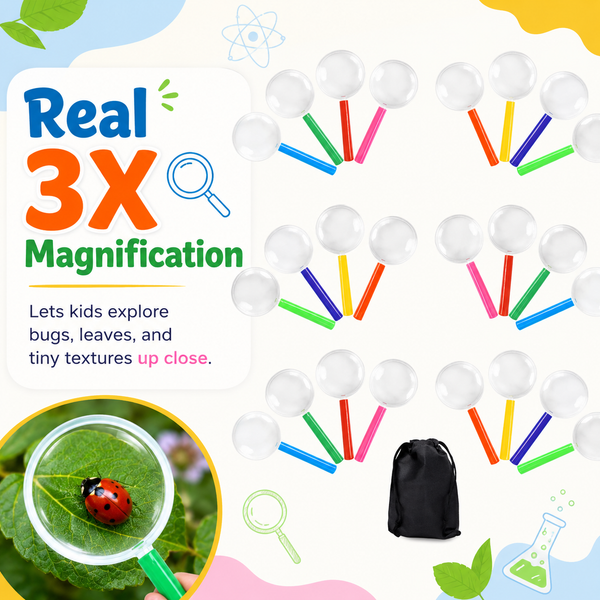
Yes, through kits that include lenses, mirrors, and prisms to examine reflection and refraction.
24. Are these toys gender-neutral?
Absolutely. Science is for everyone, and our kits are designed to appeal to any curious mind regardless of gender.
25. How long do physics toys keep kids interested?
Since they offer open-ended building and dozens of experiments, they often remain relevant for several years.
26. Can toys teach thermodynamics?
Simple experiments with heat conduction and solar-powered motors provide early introductions to heat energy.
27. Do physics toys improve reading skills?
Yes, as children must follow multi-step written instructions and learn new technical vocabulary.
28. Why rotate toys every few weeks?
It maintains novelty and prevents the student from being overwhelmed by too many parts at once.
29. Can toys teach astronomy?
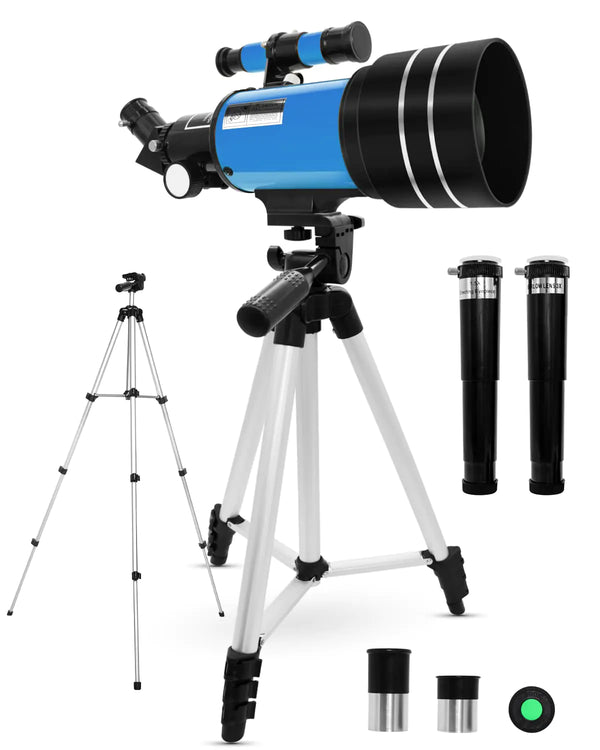
Yes, many kits include solar system models to teach orbital mechanics and gravity.
30. Where can I find the best physics toys online?
Explore the specialized STEM and science collections at WonderKidsToy for vetted, high-quality options.