

A Complete Parent’s Guide to Learning, Play, and Development at Age Two
The age of two is a magical—and often challenging—stage in a child’s life. Two-year-olds are curious, energetic, emotional, and determined to explore the world on their own terms. This is the age of “I do it myself,” rapid language growth, big feelings, and constant movement. Choosing the right educational toys for 2-year-olds can make a huge difference in how children learn, play, and grow during this critical period.
In this in-depth guide, we’ll explore what educational toys really mean at age two, why they matter, what skills to focus on, the best types of toys by developmental area, common mistakes parents make, and how to create a simple toy setup at home that encourages learning without overwhelm.
1. Understanding a 2-Year-Old’s Development
Before choosing toys, it’s important to understand what’s happening developmentally at age two.
Key developmental milestones around age two
Most 2-year-olds are:
- Walking confidently, climbing, pushing, and pulling
- Using 2–3 word sentences
- Understanding simple instructions
- Exploring cause and effect
- Imitating adults
- Experiencing strong emotions but limited self-control
- Developing fine motor control (stacking, scribbling, turning pages)
- Becoming more independent but still needing guidance
Educational toys should support these skills, not rush children into advanced learning like reading or writing.
2. What Are Educational Toys for 2-Year-Olds?
Educational toys for 2-year-olds are toys that support learning through play by encouraging:
- Exploration
- Problem-solving
- Language development
- Motor skills
- Emotional regulation
- Independence
At this age, learning is sensory and physical, not academic. Educational toys are not worksheets or flashcards—they are hands-on tools that let children learn by doing.
What educational toys are NOT:
- Toys that only light up or play music without interaction
- Toys that do everything for the child
- Toys designed to “teach” academics prematurely
The best educational toys:
- Respond to the child’s actions
- Allow repetition
- Encourage movement and exploration
- Grow with the child
3. Why Educational Toys Matter at Age Two
Age two is a brain-building year. Neural connections are forming rapidly, and play is the primary way children strengthen these connections.
Benefits of educational toys for 2-year-olds
a) Brain development
Toys that involve sorting, stacking, matching, and problem-solving help build neural pathways linked to thinking, memory, and focus.
b) Language development
Toys encourage naming, describing, and imitating sounds, which supports vocabulary growth.
c) Motor skill development
Both gross and fine motor skills develop quickly at this age through physical play.
d) Emotional development
Educational toys help children express emotions, practice patience, and experience success.
e) Independence and confidence
When children complete tasks on their own, they develop self-belief and motivation to try new things.
4. What Skills Educational Toys Should Build at Age Two
Instead of focusing on letters or numbers, educational toys for 2-year-olds should focus on foundational skills.
Core skill areas to target:
Fine motor skills
- Gross motor skills
- Language and communication
- Problem-solving and thinking
- Sensory exploration
- Social and emotional skills
- Independence and self-help skills
Let’s explore each area in detail and the toys that support them best.
5. Fine Motor Educational Toys for 2-Year-Olds
Fine motor skills involve small movements of the hands and fingers. At age two, children are learning to control their hands more precisely.
Best fine motor toys
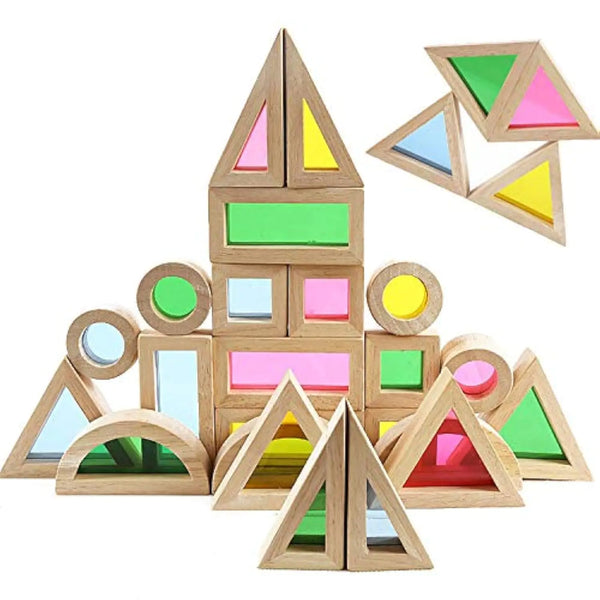
a) Stacking toys
- Wooden stacking rings
- Block towers
- Stack-and-nest cups
Skills built:
Hand-eye coordination, balance, problem-solving
b) Shape sorters
- Classic shape boxes
- Animal or vehicle sorters
Skills built:
Shape recognition, spatial awareness, persistence
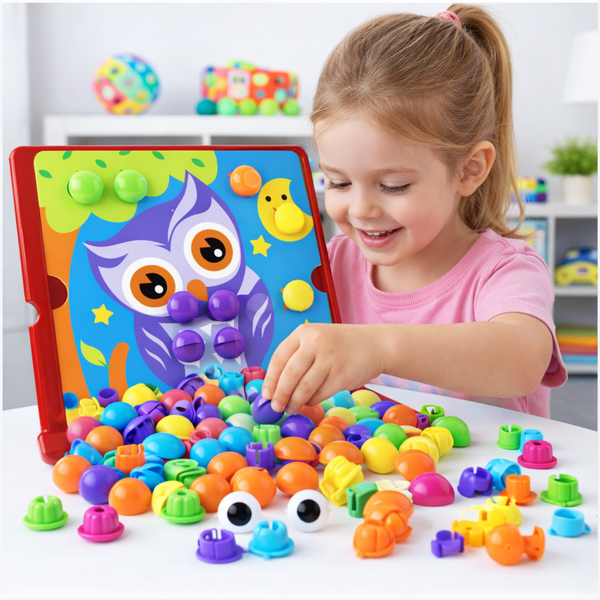
c) Peg boards and chunky puzzles
- Large wooden puzzles with knobs
- Peg-in-hole boards
Skills built:
Grip strength, matching, focus
d) Lacing and threading toys
- Large beads with thick strings
- Threading boards
Skills built:
Coordination, patience, concentration
6. Gross Motor Educational Toys for 2-Year-Olds
Two-year-olds learn with their whole bodies. Movement-based toys are essential.
Best gross motor toys
a) Push and pull toys
- Wagons
- Animal pull toys
- Push walkers
Skills built:
Balance, coordination, confidence
b) Ride-on toys
- Ride-on cars
- Scooters with stable bases
Skills built:
Leg strength, spatial awareness
c) Climbing toys
- Indoor slides
- Soft climbing blocks
Skills built:
Body control, risk assessment
d) Balls and rolling toys
- Soft balls
- Ball ramps
Skills built:
Coordination, cause and effect
7. Language and Communication Toys for 2-Year-Olds
Language explodes around age two. Toys can support vocabulary and communication naturally.
Best language-building toys
a) Board books with interaction
- Lift-the-flap books
- Touch-and-feel books
- Picture naming books
Skills built:
Vocabulary, attention, listening
b) Pretend play toys
- Toy phones
- Kitchen sets
- Dolls and animal figures
Skills built:
Imitation, storytelling, social language
c) Musical toys
- Drums
- Shakers
- Xylophones
Skills built:
Sound recognition, rhythm, expression
8. Problem-Solving Educational Toys for 2-Year-Olds
Problem-solving at this age is simple but powerful.
Best problem-solving toys
a) Nesting toys
- Cups
- Boxes
- Bowls
Skills built:
Size comparison, logic
b) Simple puzzles
2–6 piece puzzles
Matching boards
Skills built:
Reasoning, persistence
c) Cause-and-effect toys
Pop-up toys
Hammer-and-peg toys
Skills built:
Prediction, understanding consequences
9. Sensory Educational Toys for 2-Year-Olds
Sensory play is crucial at age two because children are learning how their bodies interact with the world.
Best sensory toys
a) Textured toys
Fabric blocks
Sensory balls
Skills built:
Tactile awareness, calming
b) Water play toys
Cups and funnels
Floating toys
Skills built:
Coordination, focus
c) Sand and dough toys
Playdough tools
Sand scoops
Skills built:
Hand strength, creativity
10. Social and Emotional Learning Toys for 2-Year-Olds
Two-year-olds are just beginning to understand emotions.
Best social-emotional toys
a) Dolls and soft toys
Baby dolls
Stuffed animals
Skills built:
Empathy, nurturing behavior
b) Role-play sets
Kitchen sets
Cleaning tools
Skills built:
Understanding routines, emotional expression
c) Emotion picture toys
Simple emotion cards
Face puzzles
Skills built:
Emotion recognition
11. Educational Toys That Build Independence
Independence starts early.
Best independence-building toys
Dressing boards (zippers, buttons)
Open-ended toys accessible on shelves
Simple clean-up toys
Skills built:
Confidence, self-help, responsibility
12. Montessori-Inspired Educational Toys for 2-Year-Olds
Montessori-style toys are especially effective for this age.
Characteristics:
Made of natural materials
Focused on one skill
Encourage self-correction
Simple and purposeful
Examples:
Object permanence boxes
Practical life toys
Sorting trays
13. What to Look for When Buying Educational Toys
Safety
Non-toxic materials
No small parts
Rounded edges
Simplicity
One main learning goal
Not overly stimulating
Durability
Wooden or high-quality plastic
Age-appropriate challenge
Slightly challenging but achievable
14. Common Mistakes Parents Make
1) Too many toys
Overwhelm reduces learning.
2) Toys that “teach” too much
Passive toys limit thinking.
3) Expecting structured play
Free play is more educational at this age.
4) Helping too quickly
Struggle builds learning.
15. How to Set Up an Educational Toy Space at Home
Simple setup:
6–8 toys available at once
Low shelves or baskets
Rotate weekly
Clear play area
16. Sample Educational Toy List for a 2-Year-Old
A balanced setup could include:
1 stacking toy
1 shape sorter
1 puzzle
1 pretend play set
1 musical toy
1 gross motor toy
1 book basket
17. How Parents Can Support Learning During Play
Follow the child’s lead
Use simple language
Describe actions
Encourage effort
Avoid correcting too much
18. Educational Toys vs. Screens for 2-Year-Olds
Educational toys:
Build real-world skills
Encourage movement
Support brain development
Screens:
Are passive
Reduce attention span
Limit physical engagement
Hands-on toys are far more effective at this age.
19. Long-Term Impact of Educational Toys at Age Two
The skills built now support:
School readiness
Emotional regulation
Problem-solving
Independence
Confidence
Educational toys at age two lay the foundation for lifelong learning.
20. Final Thoughts: Choosing the Best Educational Toys for 2-Year-Olds
Educational toys for 2-year-olds are not about early academics—they’re about building the brain through play.
The best toys:
Encourage exploration
Build confidence
Support movement and language
Allow mistakes
Grow with the child
When children are given the right tools, space, and freedom to play, learning happens naturally.