


Every parent wants their child to grow into a confident thinker who can solve problems and come up with new ideas. Creativity is one of the most valuable skills children can develop because it helps them explore the world, express themselves, and think independently. Creative children often show curiosity, imagination, and the ability to look at problems from different angles.
In a world dominated by digital distractions, choosing the right creative toys for kids has never been more important. The best toys don't just keep hands busy; they spark the "what if?" questions that lead to real brain development. Whether it's through arts and crafts for kids or complex building and construction toys, purposeful play is the engine of innovation.
In this guide, you will learn why "passive" toys stall creativity, how to spot high-value open-ended tools, and which specific categories—from Montessori toys to musical instruments—are most effective at turning your child from a spectator into a creator.
Table of Contents
Why Modern Play Often Stalls Imagination
Many toys today are designed for short-term entertainment. They flash, beep, and move automatically to grab a child's attention instantly. While these features seem fun, they create a "spectator" experience. When a toy does everything, the child doesn't have to imagine anything. They simply react to what the screen or the gadget shows them.
This reliance on passive entertainment can lead to boredom and a decreased ability to play independently. If a child's "creativity muscle" isn't exercised, they may struggle to find new ways to use their toys or solve basic problems without adult help.
Early Childhood Is a Peak Window for Cognitive Skill Development
The toddler and preschool years are critical for cognitive skill development. If play is restricted to automated outcomes, children miss opportunities to practice spatial reasoning and trial-and-error thinking. Without the challenge of creating something from nothing, the neurological pathways for "outside the box" thinking are not fully strengthened.
When children become used to waiting for a toy to react, they lose the patience needed for long-term projects. This is why many parents find that traditional noisy toys end up in the donation bin within weeks, while educational toys that require active participation remain favorites for years.
Unlocking the Power of Open-Ended Play
Creative toys work differently. Instead of doing everything for the child, they give children the freedom to experiment and invent. These are "open-ended" toys—items like blocks, clay, and instruments that have no single "correct" way to play. Every time a child picks them up, they can invent a new game, design, or story.
By providing problem-solving play sets and creative kits, you are giving your child the tools to turn their inner ideas into physical reality. This builds the confidence and resilience they need to succeed in school and beyond.
Ready to ignite your child's imagination?
Discover our hand-picked collection of creative, open-ended toys designed to build real skills and confidence.
Shop Art & Creativity KitsBest Creative Toys for Toddlers (Ages 1–3)
Toddlers are naturally curious explorers. For them, creativity is about discovering how things work. Focus on tools that build motor skills while allowing for sensory discovery.
- Stacking and Sorting: Simple stacked high block toys allow toddlers to experiment with balance and gravity.
- Visual Expression: Washable crayons and drawing boards let them explore colors and shapes freely.
- Montessori Mastery: These toys focus on independent exploration, perfect for the "I do it myself" stage.
Building and Construction: The Architect's Foundation
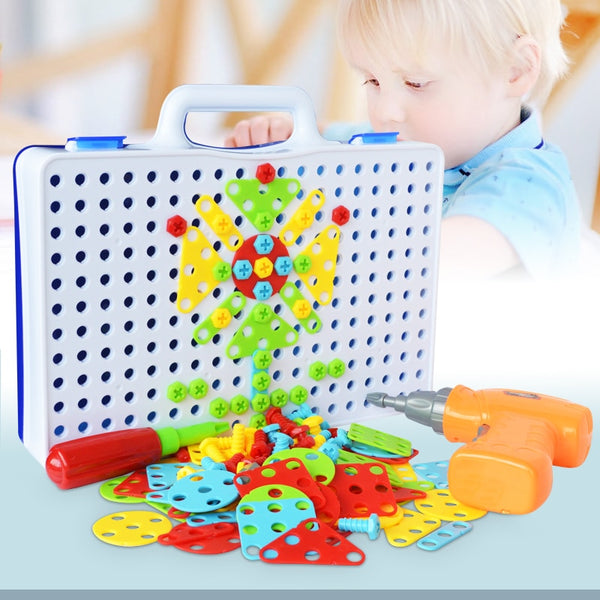
Building toys are among the most powerful tools for developing imagination. When a child builds a tower or a vehicle, they are practicing 3D logic. They learn how different pieces connect and support each other, which strengthens spatial awareness. This type of play is a direct path to success in STEM subjects.
Experts recommend sustainable building blocks because they offer a tactile weight and resistance that plastic often lacks, making the engineering challenge even more rewarding.
Quick Guide: Creative Play Styles
Art & Crafts
Best for: Emotional expression and focus
Main benefits: Fine motor control, patience
Typical age: 3 to 10 years
Building Sets
Best for: Logic and engineering
Main benefits: Spatial reasoning, 3D logic
Typical age: 2 to 12 years
Musical Toys
Best for: Rhythm and auditory learning
Main benefits: Memory, creative patterns
Typical age: 1 to 8 years
How Parents Can Foster a Creative Environment
Providing open-ended toys is the first step, but how you participate matters too. Try to allow your child to explore without strict instructions. Instead of telling them how to use a toy, ask "What else can this be?" or "How can we fix this?" This encourages them to find their own solutions.
Setting up a dedicated play space with art supplies, musical instruments toys, and construction sets sends a signal that their imagination is valued. For more on creating this environment, see our guide on getting kids off screens and into real learning.
Final Thoughts
Choosing high-quality creative toys is an investment in your child's future capability. By prioritizing imagination over passive entertainment, you are giving them the tools to think, create, and solve. The journey from scribbling on a board to building a robot starts with one simple, creative choice.
Explore our expert collections today and turn playtime into an extraordinary moment of discovery.
Ready to spark their genius?
Browse our premium selection of toys designed to nurture imagination and skill development.
Shop Creative Toys NowFrequently Asked Questions About Creative Toys
1. What exactly are "creative toys"?
These are toys that encourage active participation and imagination, such as blocks, art kits, or instruments, rather than passive entertainment.
2. Why are creative toys better than electronic gadgets?
Creative toys require the child to do the work, which builds neurological connections for focus, logic, and motor skills.
3. What are "open-ended" toys?
Toys that can be used in many different ways without a single "correct" method, allowing for endless invention.
4. Do creative toys help with school readiness?
Yes, they build the foundational skills of problem-solving, concentration, and fine motor control needed for the classroom.
5. What age should my child start creative play?
Creative play begins as early as infancy through sensory exploration and continues to grow throughout childhood.
6. Can building toys really improve math skills?
Yes, building requires an understanding of geometry, weight, and symmetry—all core math concepts.
7. How do musical toys help the brain?
Music activates multiple brain centers simultaneously, boosting memory, auditory processing, and pattern recognition.
8. Are Montessori toys considered creative?
Absolutely. They emphasize independent exploration and hands-on discovery, which are the roots of creativity.
9. How do I choose the right toy for a 3-year-old?
Look for items that match their motor skills but allow for imagination, like large puzzles, stacking sets, or simple instruments.
10. Can creative toys reduce screen time?
Yes, because they are more rewarding and engaging than passive watching, they naturally pull children away from devices.
11. What is the benefit of art kits?
They allow for emotional expression and significantly strengthen fine motor control through drawing and crafting.
12. Do creative toys help with social skills?
Yes, role-play toys and collaborative building sets teach sharing, communication, and empathy.
13. Why is "messy" play sometimes good for creativity?
Tactile experiences with clay or paint help children understand textures and physical properties in a way digital screens can't.
14. What are the best toys for imagination?
Blocks, dolls/figures, and dress-up items are the traditional leaders in imaginative play.
15. Can puzzles be creative?
Yes, they require logical creativity to see patterns and visualize how pieces form a whole.
16. Are expensive toys better for creativity?
Not necessarily. Simple, high-quality wooden blocks often offer more creative value than expensive electronic gadgets.
17. How do I store creative materials safely?
Use low, open shelves where kids can reach and tidy their own materials, fostering independence.
18. Do creative toys help with ADHD?
Focused creative activities can help build "attention stamina" and provide a calming outlet for energy.
19. Can parents play too?
Yes! Joining in play without taking over is a great way to bond and model creative thinking.
20. Why do kids get bored with automated toys so fast?
Because there's nothing left for the child to discover once the gadget has performed its pre-set actions.
21. Are there creative toys for older kids (ages 8+)?
Yes, advanced robotics, engineering kits, and sophisticated art sets remain highly creative for older children.
22. Do creative toys help with language development?
Yes, through storytelling and narrating their creations, kids significantly expand their vocabulary.
23. What is the "Flow State" in children's play?
It's a state of deep concentration where a child is entirely absorbed in their creation, a key goal of developmental play.
24. Are wooden toys safer?
High-quality wooden toys are typically non-toxic and more durable, making them a safe choice for families.
25. Can I mix different building toy brands?
Many parents do this to create "master sets" that offer even more creative possibilities.
26. Why is spatial awareness important?
It's the ability to visualize objects in 3D, a skill essential for science, technology, and engineering.
27. Do creative toys help with resilience?
Yes, when a tower falls or a drawing doesn't look right, kids learn to try again and solve the problem.
28. Can I find creative toys online?
Yes, specialized stores like WonderKidsToy curate vetted collections specifically for this purpose.
29. How do I know if a toy is "high-quality"?
Look for durable materials, educator-vetted designs, and safe, non-toxic finishes.
30. How can I earn money promoting these toys?
You can join our affiliate program to earn commission by sharing these high-quality tools with your community.
Earn Commission Promoting Educational Toys
If you are a blogger, parenting influencer, teacher, or homeschool creator, you can earn commission by promoting educational toys from WonderKidsToy.
Our affiliate program allows creators to share Montessori toys, STEM toys, and learning toys for kids while earning income from their content. Joining takes less than a minute.
👉 Apply here: https://wonderkidstoy.com/pages/join-our-affiliate-program


