
Best STEM Toys for 5-Year-Olds: Parent Buying Guide
Age 5 STEM Guide
Choosing STEM Toys That Match a Five-Year-Old’s Curiosity
The best STEM toys for 5-year-olds turn questions into hands-on action. Children at this age are ready to build, sort, test, predict and explain, but they still learn best through playful challenges with visible results. This guide helps parents compare science, technology, engineering and math toys without choosing something too simple or too advanced.
Shop STEM ToysQuick Answer
Choose STEM toys for 5-year-olds that offer a clear starting point, large enough pieces, visible cause and effect, and more than one possible solution. Strong options include beginner construction sets, simple science tools, gears and machines, pattern and math games, coding toys, ramps, balance challenges and age-appropriate robotics. Look for toys a child can begin with limited help and revisit with new ideas.
What STEM Means for a Five-Year-Old
STEM stands for science, technology, engineering and mathematics. For a five-year-old, these subjects should not feel like separate school courses. They appear naturally when a child asks why something rolls, builds a bridge, counts pieces, compares lengths, follows a sequence or tests which object will balance.
Science begins with observing and wondering. Technology includes tools and systems people use to solve problems. Engineering involves designing, building and improving. Mathematics includes number, shape, pattern, measurement and logical relationships. A single play activity can include all four areas without using formal labels.
For example, a child building a ramp may compare heights, predict which vehicle will travel farther, change the angle and describe the result. That one activity includes measurement, motion, design and cause and effect. The learning comes from the cycle of making an idea visible and then changing it.
At age five, children often enjoy rules and challenges, but they still need freedom. A toy that only asks for one correct answer may develop a narrow skill. A toy that offers a goal plus multiple ways to reach it can support deeper thinking. The child can make decisions, notice consequences and explain a personal solution.
Best STEM Toy Categories for 5-Year-Olds
Building and construction toys
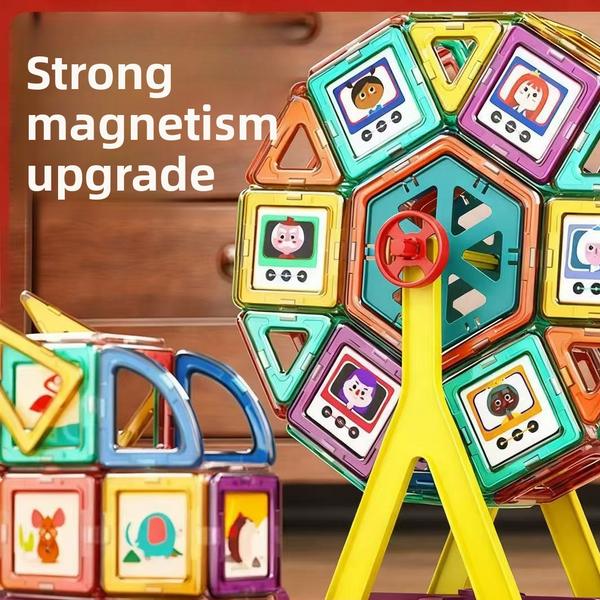
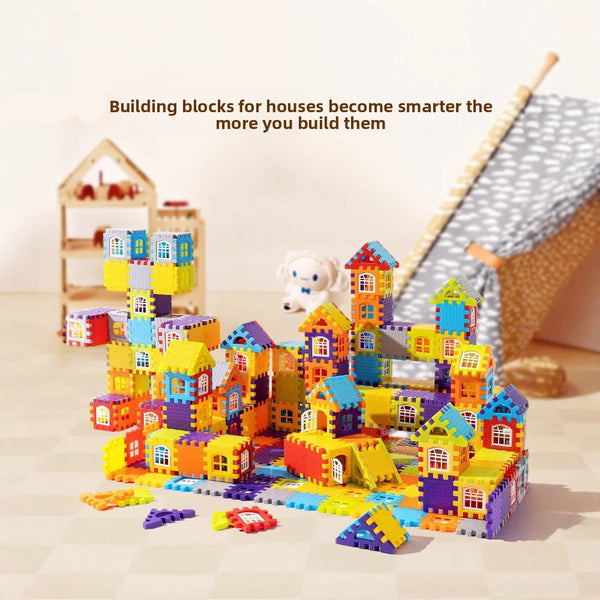
Construction sets are one of the most flexible STEM choices. They introduce shape, balance, stability, symmetry and planning. Five-year-olds may enjoy interlocking blocks, magnetic-style building pieces designed for their age, gears, connectors and beginner structural challenges.
Look for pieces the child can connect independently. A set loses value when every model requires adult strength or constant repair. The best construction toys support both guided models and free building, allowing the child to move between copying, inventing and storytelling.
Simple machines and engineering sets
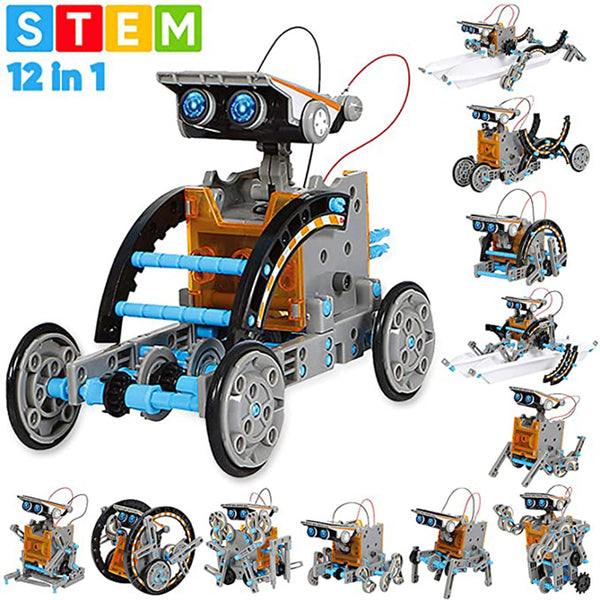
Gears, pulleys, wheels, levers and ramps make mechanical relationships visible. Children can see that one moving part affects another. Sets with moving pieces can be highly engaging, but the mechanism should be clear enough for the child to understand rather than hidden inside a sealed toy.
Beginner coding toys
Screen-free coding toys can teach sequencing, direction, planning and debugging through arrows, cards, buttons or physical paths. A five-year-old does not need to type computer code to practice computational thinking. The important part is arranging steps, testing the sequence and changing it when needed.
Science exploration tools
Magnifiers, observation containers, measuring tools, colour-mixing activities, magnets and simple experiment sets can turn everyday questions into investigations. Choose materials that produce a clear result and can be used more than once. Adult supervision may be required depending on the activity.
Math and pattern games
Math toys for this age should go beyond memorizing numbers. Pattern blocks, sorting sets, balance scales, counting games, spatial puzzles and simple strategy games can help children compare quantities and relationships. A useful toy makes number ideas visible and touchable.
Ramps, tracks and motion toys
Track-building and ramp systems introduce speed, slope, distance, direction and testing. Children can change one part of the setup and observe the effect. These toys work especially well when the child can rearrange the path instead of only watching a fixed track.
Age-appropriate robotics
Beginner robots can combine movement, coding and problem-solving. Look for simple controls, durable parts and a clear connection between the child’s command and the robot’s action. Advanced kits with tiny components or complex apps may be better saved for later.
Skills STEM Toys Can Support
Observation
Children learn to notice details, differences, patterns and changes before deciding what to do next.
Prediction
Before testing, a child can guess what might happen and compare the result with the original idea.
Spatial reasoning
Building, rotating and fitting pieces helps children think about position, size, direction and shape.
Planning
Children begin to think ahead, gather pieces and choose an order for completing a goal.
Flexible thinking
When the first idea does not work, the child can change one variable and try a new approach.
Communication
Explaining a design or result helps children organize their thinking and use precise language.
STEM play can also support confidence. Children see that difficult problems can be approached one step at a time. A failed tower, blocked route or unexpected result becomes information rather than proof that the child cannot do the activity.
Turn Curiosity Into Hands-On Learning
Explore STEM toys that encourage children to build, test, compare, code and solve through active play.
Browse STEM ToysParent Buying Checklist
Can the child begin without a long lesson?
A good STEM toy should reveal its basic action quickly. The child may need a short demonstration, but setup should not depend on an adult reading several pages every time. A clear first activity creates confidence and makes independent return more likely.
Does the toy show cause and effect?
Five-year-olds benefit from visible relationships. Turning a gear should move another part. Changing a ramp should affect motion. Rearranging a coding sequence should alter the route. When the mechanism is understandable, the child can form and test ideas.
Is there more than one way to use it?
Open-ended toys usually offer greater long-term value. Instructions can provide a starting point, but the child should be able to create personal models, routes, patterns or experiments. A toy with only one completed outcome may be exciting briefly and then feel finished.
Does the challenge match the child’s current skills?
Age guidance is helpful, but children vary in reading, attention, fine motor control and experience. Consider the actual actions required. Tiny screws, complicated diagrams or strong connectors may turn a promising toy into an adult project.
Can mistakes be inspected and changed?
STEM learning depends on revision. The child should be able to see why a structure fell, where a sequence changed or which part blocked movement. Toys that fail without clear feedback can cause frustration instead of productive problem-solving.

Is the setup practical for your home?
Check floor space, storage, charging, battery needs, app compatibility and cleanup. A toy that requires a large permanent setup may not be used often. A compact set that can be ready in two minutes may become part of a regular play routine.
Will the child still use it after completing the cards?
Challenge cards are useful, but they should not be the entire experience. Look for free-play possibilities, expansion options or ways to combine the set with blocks, figures, vehicles or household materials.
Easy STEM Play Ideas for Five-Year-Olds
Build a bridge challenge
Use blocks, cardboard or construction pieces to build a bridge for a toy vehicle. Add a simple condition: the vehicle must pass underneath, or the bridge must hold three small figures. Let the child decide how to strengthen it.
Test ramp height
Create a ramp using a sturdy board and books. Roll the same vehicle from different heights and mark how far it travels. Ask what changed and what stayed the same. Keep the activity playful rather than demanding a formal explanation.
Make a repeating pattern
Use blocks, beads designed for the child’s age, shapes or coloured cards to create a pattern such as red-blue-red-blue. Invite the child to continue it, copy it or invent a new pattern for the adult.
Design a rescue route
Place a figure at one side of a simple grid and an obstacle in the middle. The child can arrange arrows or give directions to reach the figure. Add a second obstacle when the first route becomes easy.
Sort mystery objects
Collect safe household objects and ask the child to choose a sorting rule. They might group by material, colour, use, shape or whether an object rolls. The important step is explaining the chosen rule.
Build the tallest stable tower
Offer a limited number of pieces and see how tall the child can build. If the tower falls, compare the base and top. Try wider pieces at the bottom, then test again. Avoid turning the activity into a competition unless the child enjoys that format.
Create a sink-or-float prediction chart
With close adult supervision, choose safe objects and predict whether each will sink or float in a container of water. Test one at a time and discuss surprises. Dry and store materials afterward.
How Adults Can Support STEM Thinking
Adults do not need to know every scientific answer. A strong response to a child’s question can be, “Let’s find out.” That phrase protects curiosity and models investigation. Instead of immediately explaining, invite the child to observe, predict or test.
Use descriptive language. Say, “The wider base stayed up longer,” or “The wheel moved when you turned the gear.” These comments connect words to visible events. Open questions such as “What could you change?” are usually more useful than repeated quiz questions with one expected answer.
Give children enough time to struggle productively. A short pause can lead to an independent solution. Step in when frustration becomes high, safety is involved or the child asks clearly for help. Offer the smallest useful hint rather than completing the project.
Finally, value the process. A finished model is easy to photograph, but the most important learning may have happened during the failed attempts, comparisons and revisions that came before it.
Common Mistakes to Avoid
Choosing a toy mainly because it looks advanced: Complex electronics or many components do not guarantee meaningful learning. The child needs to understand and control the core action.
Expecting independent use too soon: Some STEM sets require an adult introduction. The goal is to reduce help over time, not abandon the child with unfamiliar materials.
Correcting every design: A structure does not need to match the instruction image. Personal solutions are valuable, even when they look unusual.
Offering too many pieces at once: Large sets can overwhelm. Start with a smaller selection and add more as the child develops a plan.
Turning play into a lesson too quickly: Constant questions and explanations can interrupt concentration. Observe first, then add language or a challenge when the child is receptive.
Ignoring repeat use: A one-time experiment may be enjoyable, but reusable tools and open-ended materials often provide stronger long-term value.
Related Learning Toy Collections
- Engineering Toys for building, testing and redesigning.
- Coding & Programming Toys for sequencing and logic.
- Building & Construction Toys for spatial reasoning and open-ended design.
- Problem-Solving Play Sets for puzzles, planning and flexible thinking.
- Educational Toys for broader hands-on learning.
Frequently Asked Questions
What are the best STEM toys for a 5-year-old?
Good choices include open-ended building sets, simple machines, beginner coding toys, observation tools, pattern games, balance challenges, ramps and age-appropriate robotics. The best option depends on the child’s interests and current skills.
Should STEM toys be electronic?
No. Blocks, gears, measuring tools, puzzles, ramps and board games can all support STEM thinking. Electronics can add useful features, but visible cause and effect matter more than the amount of technology.
Can a five-year-old learn coding?
Yes. Children can begin with picture commands, arrows, movement games and screen-free coding toys. At this stage, sequencing, direction and debugging are more important than typing a programming language.
How long should STEM play last?
There is no fixed duration. Fifteen to thirty minutes may be enough for a focused activity, while open-ended construction may continue longer. Stop before frustration becomes the main experience and return another day.
How do I know whether a STEM toy is too hard?
If the child cannot begin after a simple demonstration, needs adult strength for every step or cannot understand why the toy responds, the set may be too advanced. Save it for later or simplify the activity.
Do STEM toys help children at school?
They can support habits that are useful in learning, including observation, planning, number sense, spatial reasoning, communication and persistence. They work best as part of varied play, reading, conversation and everyday experiences.
Final Takeaway
The best STEM toys for 5-year-olds do not simply present facts. They give children something meaningful to build, test, compare or change. Choose a toy with an easy entry point, visible feedback, age-appropriate pieces and room for more than one solution.
When adults protect time for experimentation and treat mistakes as useful information, STEM play becomes more than an activity. It becomes a way for children to approach unfamiliar problems with curiosity, patience and growing confidence.


