

A Complete, Parent-Friendly Guide to Sound, Rhythm, and Learning Through Play
Musical toys are more than just colourful objects that make noise. When chosen well and used intentionally, they become powerful tools that support a child’s brain development, emotional regulation, language skills, creativity, confidence, and even early math abilities. From a baby shaking a rattle to a 10-year-old experimenting with a keyboard or drum pad, musical toys help children understand patterns, express emotions, and interact with the world in meaningful ways.
In this in-depth guide, we’ll explore what musical toys for kids really are, how they work, why they matter, the different types available by age and skill, and how parents can use them to support learning without turning playtime into pressure.
1. What Are Musical Toys for Kids?
Musical toys for kids are play objects designed to produce sound, rhythm, melody, or music when a child interacts with them. These sounds can be created by shaking, pressing, tapping, blowing, plucking, or striking—mirroring how real musical instruments work but in a child-safe, developmentally appropriate way.
Unlike passive music (like background songs playing from a speaker), musical toys are interactive. The child is the cause of the sound. This cause-and-effect relationship is what makes musical toys so powerful for development.
Key characteristics of musical toys:
They respond to a child’s actions
They encourage exploration of sound and rhythm
They are usually durable and safe for small hands
They range from very simple (a bell) to complex (a keyboard or xylophone)
Musical toys can be:
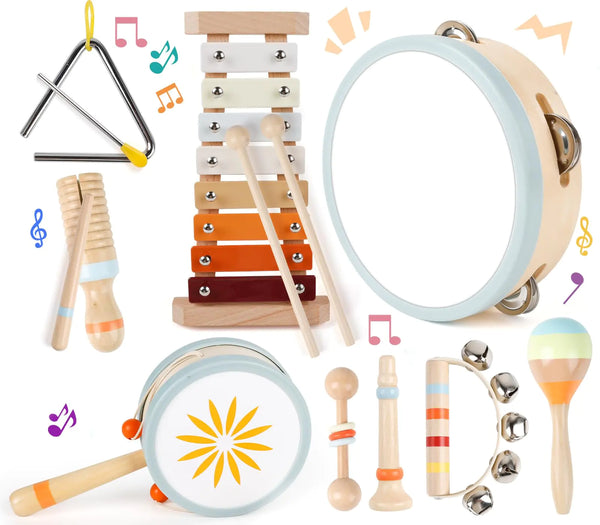
Instrument-like (drums, maracas, xylophones)
Electronic (keyboards, sound panels, music boards)
Acoustic (wooden instruments, metal chimes)
Hybrid toys (puzzles, books, or activity boards that include sound)
2. Why Musical Toys Are Important for Child Development
Musical play activates multiple areas of the brain at the same time. When a child plays with a musical toy, they are often using their hands, eyes, ears, memory, emotions, and body movement together.
Major developmental benefits include:
a) Brain development
Music strengthens neural connections. Rhythm and melody activate both the left and right hemispheres of the brain, improving coordination between logic and creativity.
b) Language and communication skills
Music and language share similar brain pathways. Children who engage with musical toys often:
Develop better listening skills
Recognize sound patterns more easily
Improve vocabulary and pronunciation
Learn rhythm and pacing of speech
c) Emotional expression and regulation
Musical toys give kids a safe way to express feelings. Loud drumming can release frustration, while gentle melodies can calm anxiety.
d) Motor skills
Gross motor skills: dancing, clapping, moving to rhythm
Fine motor skills: pressing keys, tapping bars, shaking instruments
e) Confidence and independence
When children realize “I made that sound!” it builds confidence and a sense of control over their environment.
3. How Musical Toys Support Learning Through Play
Children learn best when they are relaxed and curious. Musical toys naturally create this environment.
Learning happens through:
Repetition: kids repeat sounds they enjoy
Experimentation: changing speed, force, or order
Problem-solving: figuring out how to recreate a sound
Memory: remembering melodies or rhythms
Musical toys also help children:
Understand cause and effect
Recognize patterns and sequences
Develop early math skills (counting beats, timing)
Improve attention span and focus
Importantly, musical toys don’t require children to “perform correctly.” There is no wrong way to explore sound, which makes learning stress-free.
4. Types of Musical Toys for Kids
Musical toys come in many forms. Understanding the categories helps parents choose toys that match a child’s age, interests, and developmental stage.
4.1 Percussion Musical Toys
What they are:
Toys that produce sound when struck, shaken, or tapped.
Examples:
Drums
Tambourines
Maracas
Shakers
Bells
Castanets
Skills developed:
Rhythm and timing
Hand-eye coordination
Gross motor control
Emotional release
Why they’re great:
Percussion toys are intuitive—kids don’t need instructions. Even babies can enjoy shaking a rattle or tapping a drum.
4.2 Melodic Musical Toys
What they are:
Toys that produce different musical notes or pitches.
Examples:
Xylophones
Glockenspiels
Keyboards
Toy pianos
Metallophones
Skills developed:
Pitch recognition
Memory and sequencing
Fine motor skills
Early music theory concepts
Why they’re great:
They introduce melody and musical structure while still allowing free play.
4.3 String-Based Musical Toys
What they are:
Simplified versions of string instruments.
Examples:
Toy guitars
Ukuleles
Harps
Rubber-string boards
Skills developed:
Finger strength
Coordination
Listening and adjustment
Creativity
Why they’re great:
They encourage longer attention spans and imitation of real instruments.
4.4 Wind Musical Toys
What they are:
Toys that make sound through blowing air.
Examples:
Whistles
Harmonicas
Recorders
Pan flutes
Skills developed:
Breath control
Oral motor strength
Sound modulation
Focus and control
Important note:
These are best for older toddlers and preschoolers who can blow safely.
4.5 Electronic Musical Toys
What they are:
Battery-powered toys that play sounds or music when buttons are pressed.
Examples:
Electronic keyboards
Music panels
Sound books
Activity tables with music
Skills developed:
Cause and effect
Memory
Sequencing
Sensory integration
Parent tip:
Choose electronic toys with volume control and options for free play (not only pre-recorded songs).
4.6 Open-Ended Musical Toys
What they are:
Minimalist instruments that don’t guide the child too much.
Examples:
Wooden instruments
Tone blocks
Hand drums
Chime bars
Skills developed:
Creativity
Self-direction
Focus
Emotional expression
Why they’re great:
They grow with the child and encourage exploration without overstimulation.
5. Musical Toys by Age Group
Choosing the right musical toy depends heavily on age and developmental readiness.
5.1 Musical Toys for Babies (0–12 months)
What babies need:
Simple sounds
Safe materials
Easy grip
Gentle volume
Best musical toys:
Soft rattles
Bell balls
Crinkle sound toys
Simple shakers
Benefits:
Sensory development
Cause and effect awareness
Early listening skills
5.2 Musical Toys for Toddlers (1–3 years)
What toddlers need:
Durability
Big movements
Repetition
Freedom to explore
Best musical toys:
Drums
Xylophones
Push-button music toys
Shakers and tambourines
Benefits:
Gross motor development
Rhythm recognition
Confidence and independence
5.3 Musical Toys for Preschoolers (3–5 years)
What preschoolers need:
More control
Variety of sounds
Opportunities for imitation
Best musical toys:
Toy keyboards
Ukuleles
Rhythm sets
Musical memory games
Benefits:
Improved coordination
Early music patterns
Language and listening skills
5.4 Musical Toys for Early School Age (6–8 years)
What kids need:
Challenge
Creativity
Skill development
Best musical toys:
Advanced xylophones
Beginner guitars
Recorders
Rhythm and beat pads
Benefits:
Focus and discipline
Confidence
Independent learning
5.5 Musical Toys for Older Kids (9–12 years)
What older kids need:
Realistic instruments
Creative control
Mastery opportunities
Best musical toys:
Keyboards
Digital music pads
Beginner instrument kits
Music composition toys
Benefits:
Long-term skill building
Emotional expression
Identity and creativity
6. Educational Value of Musical Toys
Musical toys are often underestimated as “just noise makers,” but research shows they support learning in many areas:
a) Early math skills
Counting beats
Recognizing patterns
Understanding sequences
b) Memory and concentration
Remembering tunes
Repeating rhythms
Following musical instructions
c) Social skills
Playing together
Turn-taking
Group music games
d) Emotional intelligence
Expressing joy, excitement, frustration
Learning calming rhythms
Developing self-awareness
7. Musical Toys vs. Screen-Based Music Apps
Many parents wonder if music apps can replace musical toys. They can’t.
Musical toys:
Require physical interaction
Build motor skills
Encourage active participation
Promote creativity
Music apps:
Often passive
Limit physical engagement
Can overstimulate
Depend on screens
Musical toys offer hands-on learning, which is far more effective for young children.
8. What to Look for When Buying Musical Toys
Safety
Non-toxic materials
Rounded edges
Secure parts
Sound quality
Clear, pleasant tones
Not overly loud
Adjustable volume (if electronic)
Simplicity
Fewer buttons for younger kids
Open-ended play options
Durability
Wooden or high-quality plastic
Strong joints and finishes
Age appropriateness
Match complexity to developmental level
9. Common Mistakes Parents Make with Musical Toys
1) Choosing toys that play music automatically
Kids become passive listeners instead of active creators.
2) Too many musical toys at once
Overstimulation can reduce focus.
3) Expecting “performance”
Music play should be exploration, not pressure.
4) Ignoring child preferences
Some kids love rhythm, others melody—follow their interests.
10. How Parents Can Encourage Musical Play at Home
Create a small music corner
Rotate instruments weekly
Join in without directing
Encourage movement and dance
Let kids lead the play
Simple phrases help:
“What sound can this make?”
Can you make it louder/softer?”
“How does this one feel?”
11. Musical Toys and Emotional Well-Being
Music is deeply connected to emotions. Musical toys can:
Reduce stress
Help kids calm down
Provide an outlet for strong feelings
Support mindfulness
Many parents notice that children naturally turn to musical play when they feel overwhelmed.
12. Final Thoughts: Why Musical Toys Matter
Musical toys for kids are not about creating musicians—they’re about creating confident, curious, expressive learners.
They help children:
Understand themselves
Communicate emotions
Build coordination and focus
Explore creativity safely
Learn through joy
Whether it’s a baby shaking a rattle, a toddler pounding a drum, or a school-aged child composing melodies, musical toys support development in ways few other toys can.