
Creativity is one of the most powerful skills children can develop. It helps children express their ideas, solve problems, and explore the world in unique ways. During childhood, imagination plays an important role in learning and development. When children build, draw, invent stories, or experiment with toys, they strengthen important brain connections that support creativity and independent thinking.
While many modern gadgets offer passive entertainment, true creative toys for kids turn playtime into an active laboratory for innovation. Instead of telling children exactly how to play, these tools encourage open-ended exploration. By choosing high-quality educational toys, you empower your child to become a confident problem-solver.
In this guide, you will learn how building and construction toys foster spatial awareness, why Montessori educational toys support independence, and how to create a home environment that nurtures a lifelong growth mindset.
Table of Contents
Entertainment vs. Engagement
In a world of constant digital distraction, many toys focus mainly on short-term entertainment. Gadgets that light up, sing, or move automatically might capture a child's attention for a moment, but they rarely inspire deep thought. When a toy does all the "work," the child becomes a passive spectator rather than an active creator.
This reliance on passive play can lead to shorter attention spans and a lack of self-confidence. Children often lose interest in these toys because there is no challenge to overcome and no room for their own ideas to flourish.
Why Early Imagination Cannot Wait
Early childhood is a critical window for neurological development. If children aren't given tools that require them to think and build, they miss out on strengthening the mental pathways responsible for problem-solving and flexible thinking. Passive entertainment limits a child’s ability to practice cognitive resilience—the capacity to try, fail, and try again.
Parents want toys that build focus and persistence. Ignoring the need for puzzle and brain teaser toys or imaginative tools can lead to a "growth mindset" gap that affects classroom performance later in life.
Toys That Turn Play into Preparation
The best creative toys turn playtime into an active learning experience. By using simple, open-ended materials, children learn to navigate their own curiosity. Whether it is through STEM building sets that teach balance or Montessori toys that foster independent discovery, active play builds the foundation for academic and life success.
When children see their ideas come to life through physical building or storytelling, they develop a deep sense of pride. This positive reinforcement motivates them to take on bigger challenges and view problems as exciting opportunities to innovate.
Ready to ignite your child's genius?
Explore our curated collection of toys designed to build real skills and lasting confidence.
Shop Creative Toys NowLogic and Engineering through Building
Building toys are among the most versatile learning tools. They help children understand spatial relationships, geometry, and structural integrity through hands-on discovery. When a child builds a tower that eventually collapses, they aren't just playing—they are conducting a physical experiment in cause and effect.
These experiences build the resilience needed to rethink designs and try again. By utilizing high-quality construction toys, you are giving your child a head start in engineering and scientific reasoning.
Quick Guide: Which Creative Toy for Which Goal?
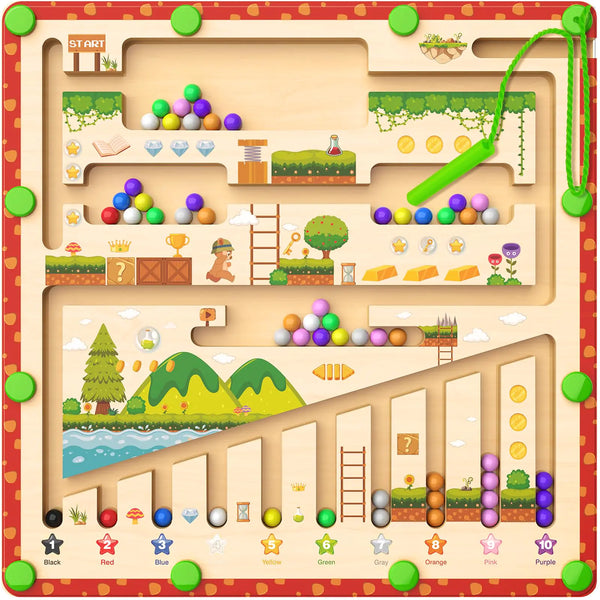
Puzzles
Goal: Logic & Persistence
Best for: Focus and pattern matching.
Age: 3 to 10 years
Montessori
Goal: Independence
Best for: Self-led exploration and motor skills.
Age: 1 to 6 years
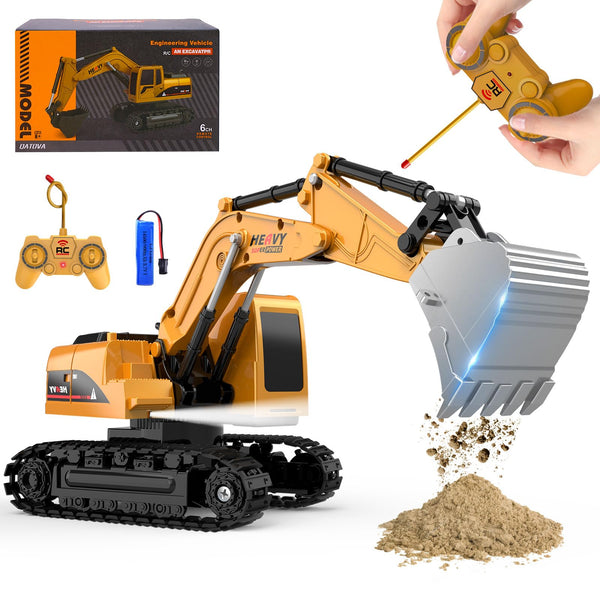
Robotics/STEM
Goal: Innovation
Best for: Understanding systems and coding logic.
Age: 5 to 12 years
How Creativity Builds Brain Power
When a child builds, draws, or solves a challenge, they activate neural pathways related to memory and fine motor control. Regular engagement in creative play is linked to improved communication and storytelling abilities. It turns a "learned" skill into an intuitive ability to navigate complex situations.
Creating a creative play environment at home is simple: provide tools that support discovery, rotate them to maintain interest, and step back to let the child lead. For more on this, check out our guide on getting kids off screens and into real discovery.
Final Thoughts
Creative toys are more than just playthings; they are catalysts for lifelong capability. By choosing toys that respect a child's intelligence and natural pace, you set them on a path toward becoming confident, innovative adults. The right tool can turn an ordinary afternoon into an extraordinary moment of growth.
Empower their curiosity today.
Discover educational tools and Montessori kits that help children explore their potential with confidence.
Explore Learning Toys NowFrequently Asked Questions About Creative Toys
1. What are creative toys for kids?
They are open-ended tools like blocks, clay, and art supplies that encourage imagination and independent problem-solving rather than passive reaction.
2. Why are creative toys important?
They help children develop the flexibility to look at problems from different angles, a skill vital for academic and future professional success.
3. At what age should children start creative play?
Children can begin creative exploration as early as birth through sensory play and simple stacking toys in toddlerhood.
4. Do creative toys help brain development?
Yes, they stimulate multiple brain centers, strengthening neural connections responsible for memory, logic, and motor skills.
5. Are Montessori toys considered creative toys?
Absolutely. They emphasize self-led discovery and simple, tactile interaction which is the foundation of creativity.
6. What are the best creative toys for toddlers?
Stacking rings, shape sorters, large blocks, and simple drawing boards are perfect for this exploratory stage.
7. Can puzzles improve creativity?
Yes, by requiring children to experiment with different orientations and strategies to solve a visual challenge.
8. How do building toys help with math?
They introduce physical concepts of geometry, symmetry, and volume in a tangible, memorable way.
9. Are musical toys educational?
Yes, they improve auditory discrimination, rhythm awareness, and the ability to recognize patterns.
10. Do creative toys improve confidence?
Yes, completing a project or designing something unique gives a child a massive sense of agency and achievement.
11. What is an "open-ended" toy?
A toy with no set instructions or one "right way" to use it, allowing for infinite creative possibilities (e.g., plain wooden blocks).
12. How do toys help develop problem-solving skills?
By providing a physical "puzzle" where the child must test ideas and see immediate results through trial and error.
13. Do creative toys reduce screen time?
Yes, because they are physically engaging and mentally rewarding, they offer a superior alternative to passive digital consumption.
14. Are STEM toys good for 4-year-olds?
Yes, simple engineering kits and magnetic building tiles are excellent for introducing STEM logic to preschoolers.
15. What is the benefit of arts and crafts?
It improves fine motor control and allows children to process and express their emotions visually.
16. Why avoid toys with lots of lights and sounds?
They often provide "entertainment" that doesn't require thinking, which can overstimulate without educating.
17. Can creative toys improve social skills?
Yes, collaborative building sets and pretend play kits teach turn-taking, sharing, and teamwork.
18. What toys help with imagination?
Dolls, kitchen sets, building blocks, and puppets are classic imagination builders.
19. Are these toys expensive?
They vary in price, but because they are durable and multi-purpose, they offer better long-term value than many electronic toys.
20. How do I maintain a creative play space?
Keep tools accessible on low shelves, avoid clutter, and rotate toys monthly to keep them feeling new.
21. Do creative toys help with ADHD?
Focused physical activities like building or art can help some children practice sustained attention and focus.
22. Why are wooden toys better for creativity?
They offer a unique tactile weight and sensory texture that plastic cannot replicate, grounding the play experience.
23. Can I use household items as creative toys?
Yes! Spoons, pots, and boxes are great, but specific toys are optimized for child safety and specific skill-building.
24. Do creative toys prepare for school?
Yes, they build the concentration, logical sequencing, and motor skills needed for a classroom setting.
25. What are robotics toys for kids?
Kits that allow children to build and often program a moving machine, teaching engineering and code logic.
26. Do toys help with emotional intelligence?
Yes, especially role-play toys that allow children to "rehearse" social interactions and identify with others.
27. How often should I buy new toys?
Less is more. A few high-quality, versatile toys are better than a room full of simple gadgets.
28. Why should I buy from WonderKidsToy?
We curate only highest-quality, educator-vetted toys that focus on real developmental growth.
29. Can I find bilingual educational toys?
Yes, we offer products designed to aid early multi-language acquisition and phonetic awareness.
30. How do I start today?
Pick one skill your child is currently working on and find a tool that challenges them to master it through play!
Earn Commission Promoting Educational Toys
If you are a blogger, parenting influencer, teacher, or homeschool creator, you can earn commission by promoting educational toys from WonderKidsToy.
Our affiliate program allows creators to share Montessori toys, STEM toys, and learning toys for kids while earning income from their content. Joining takes less than a minute.
👉 Apply here: https://wonderkidstoy.com/pages/join-our-affiliate-program