PARENT-FOCUSED HANDS-ON PLAY
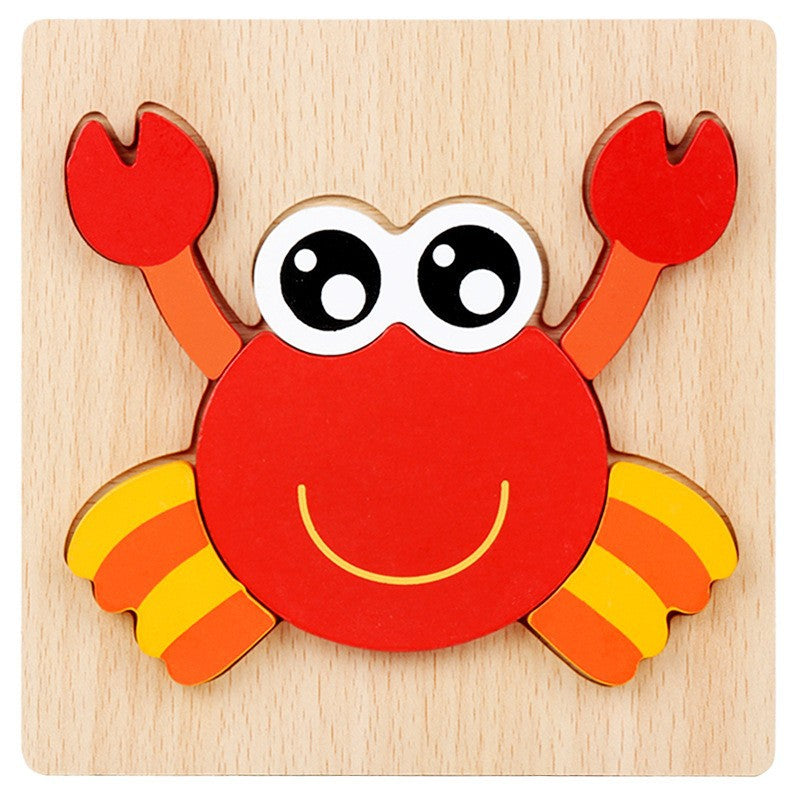
Wooden 3D Puzzle Models – Build Focus, Patience & Spatial Thinking
Parents want toys that do more than fill a few minutes. They want activities that invite participation, fit real family routines and give children a reason to return. The wooden 3D puzzle models for kids offers an approachable way to turn ordinary playtime into active practice, shared conversation and child-led discovery.
When passive entertainment stops holding attention, families may be left with clutter that is used once and forgotten. This product creates a clearer play invitation: demonstrate one action, let the child try, then build new challenges as confidence grows. The experience can remain simple on busy days or expand into stories, matching, counting and cooperative play when time allows.
The current listing confirms animal, dinosaur, vehicle and space designs. Select the exact option carefully because one purchase represents the chosen variant only.
Active Participation
Children make choices, use their hands and notice the result of each action.
Flexible Family Play
Use it for a quick activity, a longer story or a shared sibling challenge.
Confidence Through Practice
Repeating manageable actions can help children feel capable and willing to try again.
Parent-Friendly Guidance
Clear prompts make it easy to join without taking control of the child’s play.
Why Parents May Choose This Activity
A useful toy should meet children where they are. Some children will first explore the basic movement. Others may immediately create a story, organize pieces or invent rules. The open structure lets a caregiver adjust the activity without needing a complicated lesson plan.
Short sessions can fit before dinner, after school, during a home-learning break or on a quiet weekend morning. Starting small protects the fun. Parents can finish while interest is still high and bring the toy back another day with one new idea.
The activity also encourages meaningful interaction. Instead of asking a child to perform, try comments such as “I noticed how carefully you did that,” “What will you try next?” or “Can you show me your idea?” This language supports reflection while keeping ownership with the child.
Buying reminder: review the active option, images, package information and age guidance before ordering. Do not assume accessories from another variant are included.
Learning Benefits That Grow From Play
Coordination: Reaching, holding, placing, pressing, guiding or arranging parts can create opportunities to practise controlled movement and visual attention.
Problem-solving: Children learn from immediate feedback. When an attempt does not work, they can adjust position, sequence, speed or strategy and try again.
Language: Parents can naturally introduce action words, position words, colors, quantities and feeling words while the child plays.
Planning: Choosing what to do first, what comes next and how to finish can support sequencing and organization.
Social growth: Shared play may involve waiting, requesting, explaining, helping and celebrating another person’s turn.
Creativity: A familiar product can become part of many stories when children are free to change roles, settings and goals.
These are possible play opportunities, not guaranteed developmental results. Every child learns differently, and play products do not replace teaching, reading, therapy or attentive family interaction.
Simple Ways to Make Play More Engaging
Begin by showing only what is necessary for safe use. Give the child time to investigate before adding instructions. If help is needed, offer a small clue rather than completing the action for them.
For a language game, ask the child to describe what they notice. For early math, count attempts, compare groups or create a simple pattern. For memory, demonstrate a short sequence and invite the child to copy it. For imaginative play, choose a setting such as a home, classroom, shop, stage, clinic, café, workshop or adventure.
Turn-taking can be introduced with a predictable phrase such as “my turn, your turn.” If several children are involved, agree on the play boundary and cleanup routine before starting. Keep goals achievable and praise patience, careful effort and creative thinking instead of speed.
When attention fades, pause without pressure. Returning later with a fresh prompt often works better than extending a session beyond the child’s interest.
Choose the Correct Variant
This listing currently includes animal, dinosaur, vehicle and space designs. Variant names may describe design, color, quantity, packaging, accessory combination or power format. Images can show several versions together, so confirm the selected option before checkout.
Exact dimensions, complete materials, battery requirements, charging accessories, language, piece size and package contents are not fully verified unless the active variant explicitly states them. Please review the product images or packaging for confirmation.
Consider the child’s interests, the number of intended players, available storage space and how much setup the family prefers. A larger package is not automatically the best choice; the right option is the one that fits the child and household.
Safety, Supervision and Care
Adult supervision is recommended. Inspect all pieces, seams, connectors, cords, fasteners and powered components before use. Remove damaged packaging promptly and stop using any part that becomes cracked, loose, sharp or difficult to operate.
Follow the age guidance and instructions supplied with the product. Small or detachable components require special care around children who still mouth objects. Use the toy on a stable surface with enough room for safe movement.
If the item is electronic, an adult should handle batteries, charging and setup, confirm compartments are secured and keep it away from water. If it is wooden or fabric-based, avoid soaking it unless the packaging specifically permits washing. Store every component dry and together after play.
Commonly Asked Questions by Parents
What kind of play does this product support?
It is designed for screen-free construction play. Children can explore the main action, repeat it at their own pace and build stories or simple challenges around the activity.
What should parents confirm before ordering?
Review the selected variant, current product images and packaging details. The live listing confirms animal, dinosaur, vehicle and space designs, but other specifications should not be assumed.
Is the product suitable for independent play?
Readiness differs by child. An adult should introduce the activity, supervise use and decide when a child is ready for more independent participation.
Can parents join the activity?
Yes. A caregiver can demonstrate one action, take turns, ask open questions and let the child become the leader once the activity feels familiar.
Can siblings play together?
Yes, when the selected option and number of pieces allow it. Set simple turn-taking rules and keep all components within a clear play area.
What skills may children practise?
Depending on how it is used, the activity may support attention, coordination, language, planning, persistence, creativity and social interaction. Outcomes vary by child.
Does every pictured item come with the order?
Not necessarily. One order includes only the chosen variant and items clearly confirmed for that option. Gallery images may show more than one package.
What age is it for?
Exact age guidance is not fully verified here. Follow the age grade on the product packaging and consider the child’s abilities and any small or removable parts.
How should families introduce the toy?
Begin with one short demonstration, use simple language and allow time for exploration. Add counting, matching or storytelling only after the child understands the basic action.
How should it be cleaned?
Follow the care directions supplied with the product. In general, wipe accessible surfaces gently and avoid soaking wooden, fabric, electronic or internally powered parts.
What safety checks are recommended?
Inspect the product before every session. Stop use if a piece becomes loose, cracked, sharp or damaged, and keep packaging and unsuitable small parts away from young children.
Is it suitable for gifting?
It can be a thoughtful birthday, holiday or learning-play gift when the recipient’s age, interests, available space and the selected package are a good match.
What if a specification is unclear?
Please review the product images or packaging for confirmation. Choose only after checking the active variant name and all currently displayed listing information.
Bring More Purpose to Everyday Play
Compare the available options, choose the version that fits your family and create a play routine built around curiosity, participation and shared moments.