-
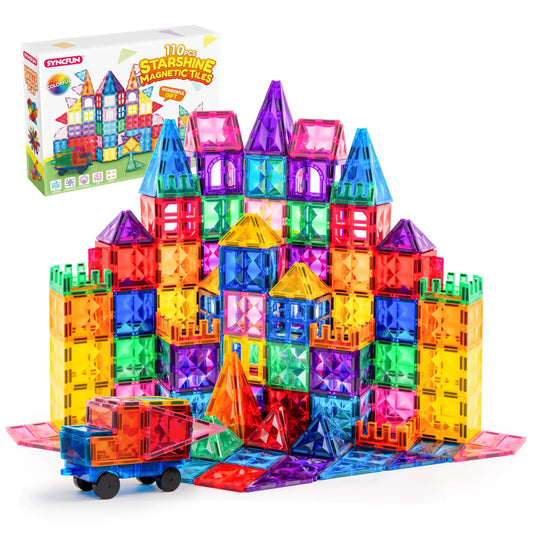
110-Piece Magnetic Tiles Building Set with Vehicle – 3D STEM Toy Ages 3+
Regular price $167.00Regular priceUnit price per$279.00Sale price $167.00SAVE 40% -

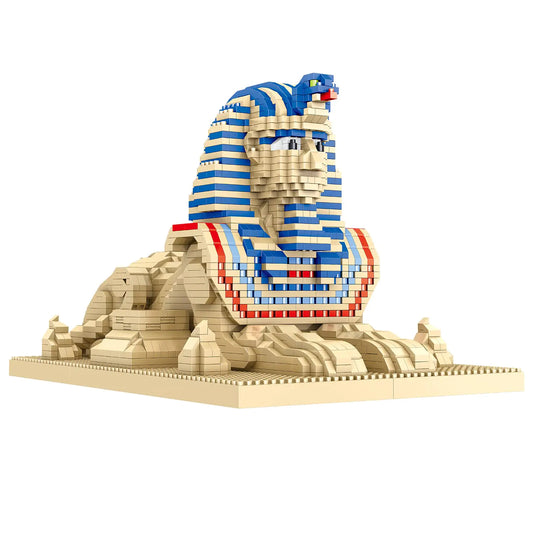
2732-Piece Great Sphinx of Egypt Micro Building Blocks Set – Advanced STEM Construction Toy
Regular price $181.00Regular priceUnit price per$321.00Sale price $181.00SAVE 44% -
Montessori Wooden Rainbow Block Set – 24-Piece Learning Toy
Regular price $279.00Regular priceUnit price per$418.00Sale price $279.00SAVE 33%



Non-Toxic, Eco-Friendly, and Built for Creative Learning
Wooden building blocks and construction toys for kids are two of the most enduring, effective, and genuinely enjoyable educational toys in existence. When children build, stack, balance, and design with quality blocks and construction sets, they develop spatial reasoning, problem-solving, creativity, fine motor skills, and engineering thinking — all through play that feels completely natural.
This collection focuses on sustainable building blocks, non-toxic wooden building blocks, eco-friendly construction toys, and natural construction toys that combine open-ended creative play with responsible, child-safe materials. Whether you are searching for the best construction toys for kids, wooden building blocks for toddlers, educational building blocks, or durable non-toxic wooden blocks, every option here is chosen for long-term play value, safety, and genuine developmental benefit.
Families who love building-based learning often explore building and construction toys, STEM toys, engineering toys, problem-solving play sets, and Montessori educational toys.
On This Page
Not All Building Blocks Are Educational — And the Difference Matters More Than Most Parents Realise
Many blocks look similar from the outside — natural wood, smooth finish, neat colours. But the gap between a genuinely educational building block set and a purely decorative or novelty one is significant. Parents who understand the difference can make much better buying decisions for their child's development.
Similarly, not all construction toys are equally valuable. Some are built for a single use case and lose appeal quickly. The best construction toys for kids are open-ended, grow with the child, and support real creative and cognitive development through repeated, self-directed play.
Educational Wooden Blocks vs Decorative Wooden Blocks — What's the Difference?
This is one of the most important questions parents ask when shopping for building toys — and the answer is clearer than it might seem.
Educational wooden blocks are designed with developmental goals in mind. They are typically sized and shaped to invite stacking, balancing, sorting, matching, and creative construction. They often include multiple shapes — arches, cylinders, rectangles, triangles — that teach spatial reasoning, geometric concepts, and engineering thinking through hands-on exploration. Children can build freely, fail, redesign, and try again. The learning happens through the doing.
Decorative wooden blocks, by contrast, are often designed primarily for visual appeal — as room décor, display pieces, or novelty gifts. They may look beautiful on a shelf, but they are not engineered to invite active, developmental play. They are usually uniform in shape, limited in what they can build, and designed to be admired rather than used repeatedly.
The clearest test: can a child pick this up, build something entirely their own, and come back to it again tomorrow with a new idea? If yes, it is educational. If it is designed primarily to look good in a photo, it is likely decorative.
The sustainable building blocks in this collection are deliberately chosen to be educational — open-ended, developmentally appropriate, and built for years of repeated creative play rather than display.
What Are the Best Construction Toys for Kids?
The best construction toys for kids share several key qualities: they support open-ended play with multiple possible outcomes, they are age-appropriate, they invite creativity and problem-solving, and they hold children's interest across many play sessions — not just the first few.
Across developmental research and parent experience, the most consistently recommended construction toys for children are:
Unit wooden blocks — classic sets with multiple shapes and sizes that children can use to build anything they can imagine. Architects, engineers, and designers often credit early block play as foundational.
Magnetic building tiles — connect via magnets, build in 2D and 3D, and develop spatial reasoning and pattern understanding rapidly.
Interlocking brick systems — building sets with connectable bricks that develop fine motor control, sequencing, and design thinking.
Construction challenge sets — STEM-focused kits that pair materials with specific challenges, building engineering thinking alongside creativity.
For children who love building, explore the full building and construction toys collection alongside these sustainable wooden block options.
Top Construction Toys That Encourage Creativity and Problem-Solving
The top construction toys that encourage creativity and problem-solving are consistently the ones that offer no fixed instructions — toys that invite children to design, fail, rebuild, and discover their own solutions. This is where wooden building blocks and open-ended construction sets outperform almost every other category.
When a child builds a bridge that collapses, they experience a real engineering problem. When they redesign it to hold weight, they practise iterative thinking. When they build something entirely new without a template, they develop genuine creative confidence. These are the skills that transfer to school, careers, and life — and they start with the right construction toys.
Top construction toys for building creativity and problem-solving include: natural wood unit block sets, open-ended building tile systems, mixed-material construction kits, and eco-friendly wooden block sets with multiple shape types. The defining quality is freedom — children lead, the toy supports.
Pair with problem-solving play sets and engineering toys for children who love a bigger challenge.
Non-Toxic Wooden Building Blocks — What to Look For and Why It Matters
For parents buying non-toxic wooden building blocks, the key questions are about the finish, not just the wood. Raw natural wood is inherently low-risk, but how a block is sanded, coated, painted, or finished makes a significant difference — especially for younger children who mouth, chew, or handle toys closely.
When shopping for durable non-toxic wooden building blocks, look for: water-based, food-safe, or natural oil finishes rather than solvent-based paints; blocks certified to relevant toy safety standards; natural wood sourced from responsibly managed forests; and smooth, splinter-free edges that are safe for daily handling.
The blocks in this collection are selected to meet these standards — combining the natural feel and durability of quality wood with child-safe materials throughout. They are designed for daily use, not occasional display.
Wooden Building Blocks vs Plastic Building Blocks — Which Are Better for Kids?
This is one of the most common questions parents ask — and both have genuine strengths. Here is what the evidence and experience suggest:
Wooden building blocks tend to be more durable over time, have a natural tactile quality that is pleasant to handle, are often made with more responsible materials, and offer a calmer, quieter play experience. They are also more likely to be open-ended — with no fixed system, children can build anything.
Plastic building blocks (particularly interlocking systems) offer precise connections, allow for more structurally complex designs, and are often more colourful. They are excellent for children who enjoy systematic building and following more detailed design challenges.
Neither is categorically better — the best choice depends on the child's age, interests, and what skills you want to develop. Many families use both, pairing wooden unit blocks for free creative play with interlocking systems for more structured building challenges.
For a broader range of construction options, explore the full building and construction toys collection.
Shop Sustainable Building Blocks and Construction Toys by Build Style
Find the right type of block or construction toy based on how your child loves to build.
Natural Wooden Unit Blocks
Classic multi-shape sets for completely open-ended construction — no instructions, all imagination.
Builds: creativity, spatial reasoning, balance, design thinking
Shop Wooden Blocks →Non-Toxic Eco Blocks
Child-safe finishes, natural materials, and responsible sourcing for parents who want added peace of mind.
Builds: fine motor, early learning, safe daily play
Shop Non-Toxic Sets →Construction Toy Sets
Structured sets that introduce design challenges, engineering problems, and building confidence.
Builds: STEM thinking, problem-solving, planning
Explore Construction Toys →Wooden Blocks for Toddlers
Large, smooth natural blocks for safe early stacking, sensory exploration, and independent play.
Builds: motor skills, balance, sensory awareness
Explore Early Learning →STEM Build Challenges
Challenge-based kits that test engineering skills, bridge-building, and structural problem-solving.
Builds: STEM confidence, experimentation, persistence
Explore STEM Toys →Montessori Building Toys
Simple, natural, child-led building toys aligned with Montessori philosophy and independent learning.
Builds: independence, focus, self-directed play
Explore Montessori Toys →Best Wooden Building Blocks and Construction Toys by Age
Building Blocks for Toddlers (Ages 1–3)
Toddlers need large, smooth, safe blocks with no small parts. The best building blocks for toddlers are sized for small hands, free from sharp edges, and finished with child-safe materials. Simple stacking and knocking down is deeply satisfying at this age — and genuinely developmental.
Best choices: large natural wooden unit blocks, chunky soft blocks, simple shape-stacking sets. Explore early development toys alongside this collection.
Building Blocks for Preschoolers (Ages 3–5)
Preschoolers are ready for more shapes, more structure, and more ambitious designs. They want to build houses, cities, roads, and towers — and they benefit from sets that include arches, ramps, and multiple piece types that invite more complex construction.
Best choices: multi-shape wooden unit block sets, eco-friendly construction toy kits, and beginning STEM build sets.
Building Blocks for Kids Ages 5–7
At this stage, children are ready for intentional engineering challenges — testing balance, symmetry, structural integrity, and design planning. They benefit from both open-ended block sets and more structured construction toys that introduce specific challenges.
Best choices: advanced wooden construction sets, beginner interlocking brick systems, and STEM challenge kits. Explore engineering toys here.
Advanced Construction Toys for Older Children (8+)
Older children thrive with sophisticated construction challenges — bridge-building kits, robotics-adjacent building sets, and complex engineering challenge toys. These support the critical thinking, persistence, and design skills that directly translate into school and beyond.
Best Wooden Toys for Sensory Development
Natural wood has a sensory quality that plastic cannot replicate. The weight, warmth, texture, and smell of quality wooden building blocks offer a richer tactile experience than most synthetic alternatives. For children who are sensitive to sensory input, or for parents who value natural materials, wooden building toys often feel noticeably different and more appealing.
The best wooden toys for sensory development are those with varied textures, natural weight differences between pieces, and smooth-finished edges that feel pleasant to hold and handle. These qualities support not just sensory processing but also fine motor control, grip strength, and hand-eye coordination. For more sensory-focused options, explore sensory learning toys.
Why Sustainable Building Blocks Are the Better Long-Term Choice
Beyond the environmental benefits of choosing sustainable materials, there is a practical case for sustainable building blocks that matters for play value: they are built to last. Quality wooden blocks that are properly made do not break, warp, or wear out within a few months. They are still usable when passed between siblings, donated to nurseries, or kept for years of use.
A set of quality eco-friendly wooden building blocks purchased when a child is two years old may still be in active use at age eight. That longevity means better value, less waste, and a toy that actually grows with the child. The best sustainable blocks aren't just greener — they are a smarter buy.
The best sustainable toy is not just better for the environment. It is also better for the way children learn — and better value for families who want toys that last.
Build Better, Build Smarter — Choose Wooden Blocks That Last
The best construction toys and wooden building blocks are the ones children return to again and again — building something different every time, growing in skill and ambition with every session. When those toys are also made from safe, natural, and durable materials, they deliver value that synthetic alternatives simply cannot match.
Shop non-toxic wooden building blocks, eco-friendly construction toys, sustainable building sets, and the best construction toys for creative children of every age.
Frequently Asked Questions About Wooden Building Blocks and Construction Toys
1. What are the differences between educational wooden blocks and decorative wooden blocks?
Educational wooden blocks are designed with multiple shapes to support open-ended building, spatial reasoning, and creative problem-solving. Decorative wooden blocks are designed for visual appeal — often uniform in shape and intended for display rather than active developmental play.
2. What are the best construction toys for kids?
The best construction toys for kids are open-ended, grow with the child, and support creative design and problem-solving. Top choices include natural wooden unit block sets, magnetic building tiles, interlocking brick systems, and eco-friendly construction challenge kits.
3. What are the best construction toys overall?
Across age groups, the most consistently recommended construction toys are natural wooden unit blocks, magnetic tile systems, interlocking brick sets, and STEM engineering challenge kits — all chosen for their open-ended, multi-skill developmental value.
4. What are the top construction toys that encourage creativity and problem-solving?
The top construction toys for creativity and problem-solving are ones with no fixed instructions — natural wooden block sets, open building tile systems, and eco-friendly construction kits that let children design freely, fail, and rebuild on their own terms.
5. What are non-toxic wooden building blocks?
Non-toxic wooden building blocks are blocks made from natural wood with child-safe finishes — typically water-based, food-safe, or natural oil coatings — free from harmful chemicals and safe for daily handling and play.
6. What should I look for in durable non-toxic wooden building blocks?
Look for sustainably sourced wood, water-based or natural oil finishes, toy safety certifications, smooth splinter-free edges, and solid construction that will withstand years of daily play without warping or breaking.
7. Are wooden building blocks better than plastic for kids?
Both have strengths. Wooden blocks are more durable, tactilely rich, and eco-friendly, with open-ended play value. Plastic interlocking blocks offer precise connections and more complex structural possibilities. Many families use both for different types of building play.
8. What are the best construction toys for kids reviews recommend?
Parents and reviewers consistently recommend wooden unit block sets, magnetic tile systems, and open-ended construction kits as the best construction toys because of their longevity, versatility, and the depth of creative play they support.
9. What are sustainable building blocks?
Sustainable building blocks are construction toys made from responsibly sourced, eco-friendly materials — typically natural wood, recycled materials, or organic finishes — designed for long-term use rather than disposable play.
10. Are wooden building blocks educational?
Yes. Educational wooden blocks support creativity, spatial reasoning, balance, fine motor skills, early engineering thinking, and problem-solving — all through open-ended, self-directed play.
11. What are the best wooden toys for sensory development?
The best wooden toys for sensory development have varied textures, natural weight differences, and smooth-finished edges. Natural wooden building blocks offer a tactile quality — warmth, weight, texture — that plastic cannot replicate.
12. What are the best wooden toys for babies?
The best wooden toys for babies are large, smooth, non-toxic, and sized so they cannot be swallowed. Simple stacking blocks, chunky wooden rattles, and soft natural wood exploration toys are ideal for early play.
13. Are sustainable building blocks good for toddlers?
Yes. Large natural wooden blocks are excellent for toddlers — safe for handling, developmentally appropriate for stacking and sensory exploration, and durable enough for enthusiastic play.
14. Do wooden building blocks support STEM learning?
Yes. Building with blocks introduces engineering concepts — balance, structural stability, spatial relationships, and design — that are foundational to STEM thinking from the earliest age.
15. What are eco-friendly construction toys?
Eco-friendly construction toys are building toys made with sustainable materials and responsible manufacturing practices, designed for long-term durability rather than quick disposal.
16. What are creative construction toys for children?
Creative construction toys are open-ended building sets that invite children to design freely rather than follow fixed instructions — wooden unit block sets, magnetic tile systems, and loose construction material sets are the most popular.
17. What are the best construction toys for kids in 2025 and 2026?
The best construction toys in 2025-2026 remain open-ended building systems — natural wooden unit blocks, magnetic tile sets, eco-friendly construction kits, and STEM challenge sets — because the skills they build are timeless.
18. Are Montessori building blocks better for development?
Montessori-aligned building toys — typically natural, open-ended, and child-led — are well regarded for development because they encourage independence, focus, and self-directed learning without automatic stimulation.
19. Do building blocks help with problem-solving?
Yes. When structures fall, children must observe, adjust, and rebuild — practising the iterative problem-solving process that supports learning across every area of development and education.
20. How do wooden building blocks support spatial reasoning?
Building, stacking, and arranging three-dimensional blocks helps children understand how objects relate in space — developing the spatial reasoning that supports mathematics, reading maps, and engineering thinking.
21. Are sustainable building blocks good for homeschool?
Excellent. Wooden building blocks and construction toys are among the most used homeschool learning materials because they support hands-on exploration, STEM concepts, and creative development without needing formal instruction.
22. Can siblings of different ages share wooden building blocks?
Yes. Open-ended wooden block sets work across a wide age range — a toddler can stack, a preschooler can build structures, an older child can engineer bridges — making them ideal for mixed-age families.
23. Are wooden building blocks Montessori-friendly?
Yes. Natural wooden unit blocks are a staple of the Montessori environment because they are simple, open-ended, hands-on, and invite independent, child-directed exploration.
24. Do construction toys help reduce screen time?
Yes. Quality construction toys are genuinely engaging — children who have good building materials available often choose them over screens because building is satisfying in a way that passive viewing is not.
25. What makes a building toy eco-friendly?
Eco-friendly building toys are typically made from sustainably sourced wood, use non-toxic water-based finishes, are designed for long-term use, and are manufactured with responsible environmental practices.
26. What are natural building blocks?
Natural building blocks are construction toys made primarily from wood or other natural materials, often with minimal processing and natural or food-safe finishes, designed to feel tactile and authentic during play.
27. Are wooden building blocks worth buying?
Yes. Quality wooden building blocks offer exceptional long-term value — they support open-ended creative play across years and multiple children, developing spatial reasoning, creativity, and problem-solving in a way that holds up far longer than most toys.
28. What are the top construction toy brands for building creativity?
The most respected brands for creative construction toys focus on open-ended design, quality natural materials, and developmental purpose — prioritising toys that children genuinely return to rather than novelty items with short appeal.
29. What should I look for in a good sustainable block set?
Look for sustainably sourced wood, non-toxic finishes, multiple shapes for open-ended play, smooth safe edges, durable construction for daily use, and certification to relevant toy safety standards.
30. Where can I buy the best wooden building blocks and construction toys online?
WonderKidsToy's sustainable building blocks collection offers carefully curated non-toxic wooden blocks, eco-friendly construction toys, and natural building sets for children of every age and stage.
More Collections
- Best Arts and Crafts for Kids
- Best Board Games for Kids
- Best Building and Construction Toys for Kids
- Best Developmental Toys for Babies and Toddlers
- Best Educational Toys for 3 Year Olds
- Best Geography Toys for Kids
- Best Global Learning Toys for Kids
- Best Language Learning Toys for Kids and Toddlers
- Best Learning Toys for Kids
FREE: Get $99 worth Creative Digital Vault
Order now and get instant access to 130+ Digital Learning Books. While your item ships, your child can start learning immediately!
Explore Screen Free Toys
Looking for more fun and educational toys for kids? Explore our most popular collections designed to support STEM learning, creativity, language development, problem-solving, and hands-on play.