

2026 Toddler STEM Guide • Ages 1–3
STEM toys for toddlers do not need coding screens, complicated experiments, or academic lessons. Early science, technology, engineering, and math begin with everyday questions: What rolls? What fits? What sinks? Which tower stays up? What happens when I push, pour, sort, or change the order?
This guide focuses on toddler-safe building, cause-and-effect, sorting, ramps, water play, simple tools, and observation. It shows parents how to introduce STEM through short, playful routines while keeping age guidance and supervision at the centre.

Table of Contents
Quick Answer: Toddler STEM Is Hands-On Cause and Effect
For toddlers, STEM is not a school subject. It is a way of exploring the physical world. A child rolls two objects down a ramp and notices that one moves farther. They stack blocks and discover that a wide base is more stable. They sort lids by size, pour water between containers, or fit shapes into openings. These are early experiences with observation, comparison, quantity, sequence, and design.
Choose toys with large age-appropriate parts, a clear action, and visible results. The child should be able to make something happen by moving, arranging, building, or testing. Adult language can add value: That one rolled. The cup is full. The tower leaned. There is no need to quiz the child or explain advanced concepts.
Start with one simple material and a short invitation. Toddlers may repeat the same action many times. Repetition is not a lack of imagination; it can be how they gain control and notice small differences.
What STEM Means for Children Ages One to Three
Science begins with observing and testing. Technology, in the broadest child-friendly sense, includes tools people use to solve problems—from a scoop and funnel to a wheel or simple mechanism. Engineering involves designing, building, and changing structures. Mathematics includes quantity, shape, size, pattern, position, and comparison.
These areas naturally overlap. When a toddler builds a ramp, chooses a ball, releases it, and compares where it stops, the activity can include engineering, motion, size, distance, and cause and effect. The learning value comes from the child controlling the action and seeing the result.
Parents should avoid claims that toddler STEM toys guarantee future academic success, create special neural pathways, or make children more intelligent. Play can provide useful practice and vocabulary, but development depends on many experiences and relationships.
STEM play also does not need to replace pretend play, books, music, art, outdoor movement, or rest. A balanced day gives toddlers many ways to explore.

Toddler Science Play: Observe, Compare, and Repeat
Simple science experiences use safe familiar materials and immediate results. Toddlers can explore which objects roll, how shadows move, what happens when ice melts, how water flows through a funnel, or how different containers hold different amounts. Adults should supervise closely and choose materials that are safe for mouthing and the child’s age.
Rolling and Ramps
Use a toddler-safe ramp or sturdy board with large balls and vehicles. Change the slope slightly and describe what happens without demanding a prediction.
Water and Pouring
Cups, scoops, funnels, and floating bath toys can introduce full, empty, more, less, sink, float, and flow. Constant close supervision around water is essential.
Light and Shadow
Notice shadows from hands, toys, or sunlight. Move an object nearer or farther from a safe light source and talk about size and position.
Nature Observation
Collect only safe, age-appropriate items with an adult. Look at leaves, stones too large to swallow, rain, snow, insects from a distance, or plant growth.
Sound and Vibration
Tap safe objects gently, shake enclosed instruments, or compare loud and quiet. Protect hearing and avoid small detachable parts.
Mixing and Change
Combine safe foods during cooking, mix colours in washable art, or watch ice become water. The toddler can stir or choose while the adult manages hazards.
Early Technology: Tools, Wheels, and Simple Mechanisms
Technology for toddlers does not have to mean a tablet. A tool is something designed to help perform a task. Scoops move material, tongs designed for toddlers pick up objects, wheels help vehicles move, and gears or levers designed for the age create visible mechanical results.
Offer tools that are sized for the child and safe for the material. A scoop in a bin of large objects, a child-safe magnifier, a rolling pin for dough, or a watering can can make the child an active problem-solver. Avoid real tools, sharp objects, hot appliances, and any kit above the intended age.
Electronic toys can be included when they require meaningful input—choosing a route, arranging pieces, or creating a sequence—rather than only pressing a button for a fixed performance. Check volume, battery security, privacy, and whether an app or internet connection is required.
The goal is not early device mastery. It is understanding that tools have purposes and that actions can be planned.

Toddler Engineering: Build, Balance, Connect, and Revise
Engineering play begins when a child tries to make something work. A tower needs a base. A bridge must span a gap. A track needs connected pieces. A container needs the correct lid. The first design may fail, and the child can change one part.
Large blocks are among the most flexible toddler engineering materials. Begin with stacking two or three pieces. Later, add figures, vehicles, cardboard, or a simple challenge such as making a home for an animal. The same pieces can support increasingly complex designs.
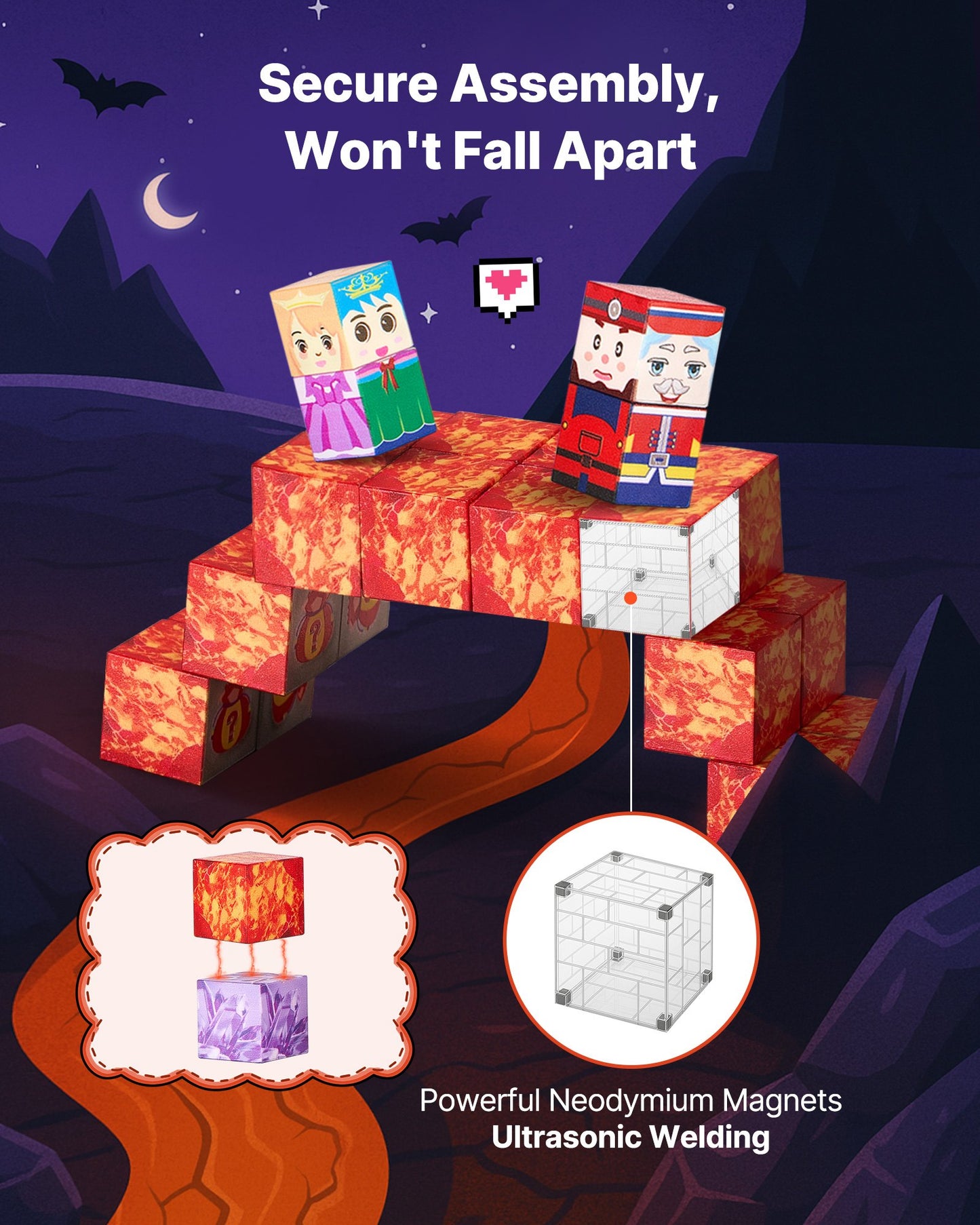
Connecting toys can also be useful, but the force required should match the child’s hands. If every connection needs adult strength, the child cannot control the build. Magnetic products must be specifically designed for the age and remain intact; loose high-powered magnets are a serious hazard.
Avoid praising only tall or perfect structures. Comment on decisions: You put the long block across the top. You made the base wider. Let the child knock down and rebuild when it is safe. Destruction can be part of understanding how structures behave.
For toddlers who prefer movement, engineering can happen at a larger scale with cushions, cardboard boxes, tunnels, and paths, provided the setup is stable and supervised.
Start With Building, Sorting, and Cause-and-Effect
Explore toddler-friendly STEM and construction categories that keep the child in control of the action.
Browse STEM ToysEarly Mathematics: Quantity, Shape, Pattern, and Position
Toddlers encounter mathematics before formal counting. They notice one and many, big and small, inside and outside, full and empty, near and far, same and different. Toys can make these relationships visible.
Sorting
Use large safe objects to sort by colour, shape, size, or use. Begin with two obvious groups and allow the child to create a different rule.
Nesting and Stacking
Cups, boxes, rings, and blocks introduce relative size, order, height, and how parts fit together.
Shape Matching
Chunky puzzles and sorters invite rotation and comparison. The child can feel whether a shape matches an opening.
Simple Patterns
At age three, copy or extend easy patterns with two colours or actions. Keep it playful and stop when the pattern becomes frustrating.
Counting in Context
Count stairs, blocks, fruit pieces, or toy animals during real play. Exact one-to-one counting develops gradually and should not become a test.
Position Words
Use language such as on, under, beside, behind, through, and between while moving toys through a scene.

STEM Toys by Toddler Age: One, Two, and Three
Around age one: prioritize large grasping, stacking, nesting, filling, emptying, rolling, securely enclosed sound toys, and simple cause-and-effect. The child may explore mainly by handling rather than using the toy in its intended way. Product guidance for the exact age is essential.
Around age two: many children enjoy larger construction pieces, shape sorters, two- to four-piece puzzles, ball tracks, simple pretend tools, water play, scooping, and matching. They can begin to compare size, position, and quantity through action.
Around age three: children may be ready for more complex building, simple board games, pattern copying, beginner counting, multi-step pretend routines, gear toys designed for preschoolers, and supervised nature or science activities. Short instruction sequences become easier, though open exploration remains important.
These are broad examples, not deadlines. A child may love stacking at three or be uninterested in puzzles at two. Choose from the safe age range based on how the child begins, handles pieces, responds to challenge, and asks to repeat the activity.
When younger siblings are present, store older children’s STEM parts securely. A product safe for a three-year-old may not be safe for a baby.
Six Everyday STEM Routines Without Buying More
Toddlers can explore STEM through daily life. Purchased toys are useful, but ordinary routines often provide the most natural context.
Laundry Sort
Match socks, group light and dark items, compare sizes, and place clothing into containers. Keep detergents and appliances inaccessible.
Snack Preparation
Count a few pieces, compare halves, pour with help, and notice changes in texture. Adults handle choking, allergy, knife, and heat risks.
Bath Exploration
Use cups and floating toys to explore water safely. An adult must remain within arm’s reach and give full attention.
Walk and Notice
Look for wheels, ramps, puddles, construction machines, patterns, shadows, birds, and changing weather.
Cleanup Classification
Place blocks, vehicles, books, and art tools into broad categories. Picture labels can make the system visible.
Cardboard Engineering
Large boxes can become tunnels, houses, ramps, or vehicles. Remove staples, tape hazards, and damaged edges before play.

How Adults Can Guide Toddler STEM Play
Demonstrate one safe action, then pause. Toddlers often need less explanation than adults expect. Showing how a ball enters a track or how two blocks connect can be enough to begin.
Use simple descriptive language instead of a stream of questions. The blue cup is full. That wheel turned. The tower fell to this side. These comments connect words with the child’s experience. Questions can be occasional and open.
Let the child repeat and diverge. They may use a sorting bowl as a hat or a block as food. Symbolic play can coexist with STEM exploration. Redirect only when the use is unsafe or likely to damage the product.
When frustration grows, reduce the task. Offer fewer shapes, hold a ramp steady, begin the first connection, or take a break. The objective is not to finish at any cost.
Avoid turning a spontaneous discovery into a formal lesson. A toddler who notices that a wet sponge drips is already exploring. A short comment and time to repeat can be enough.
Toddler STEM Toy Buying Checklist
Correct Age Range
Follow the manufacturer’s intended age and warnings. Check small parts, batteries, magnets, cords, liquids, and supervision.
Large Manageable Pieces
The child should be able to grasp and move components without adult strength or precision.
Visible Cause and Effect
Actions should create understandable results: roll, drop, fit, connect, balance, pour, turn, or sort.
Several Ways to Play
Look for materials that can be arranged, rebuilt, combined, or used at more than one challenge level.
Easy Setup and Cleanup
A toddler toy is used more when adults can present it quickly and pieces can be stored safely.
Realistic Claims
Choose a clear activity rather than promises about intelligence, neural development, ADHD, sleep, or guaranteed school readiness.
Toddler STEM Safety Reminders
Use only products intended for the child’s age. Small parts, loose magnets, accessible button batteries, water beads, long cords, sharp tools, hot materials, and adult science chemicals are not appropriate toddler STEM materials.
Inspect toys for cracks, loose fasteners, damaged battery doors, exposed wires, chipped finishes, and detached pieces. Follow cleaning and storage instructions. Recall and safety information can change, so keep product details available.
Supervision is active, not distant. Water play requires constant close attention. Magnets and batteries require secure enclosures. Outdoor exploration requires checking plants, insects, traffic, weather, and choking hazards.
A non-toxic marketing phrase does not remove the need to review the manufacturer’s materials and intended use. Likewise, wood is not automatically safer than plastic; design and condition matter.
Frequently Asked Questions About STEM Toys for Toddlers
What are STEM toys for toddlers?
They are age-appropriate materials that invite early science, tool use, building, sorting, quantity, shape, cause-and-effect, and problem-solving through hands-on play.
What STEM toys are good for a two-year-old?
Large blocks, shape sorters, ball tracks, nesting cups, toddler-safe gears, simple puzzles, scoops, and age-designed cause-and-effect toys are common categories.
Do toddlers need coding toys?
No. Sequencing can begin with movement directions, arranging picture steps, building routes, and repeating simple patterns. Formal coding products should match the stated age.
Are blocks STEM toys?
Yes. Blocks can involve engineering, spatial relationships, balance, shape, measurement language, and testing different designs.
How can I do toddler science at home?
Use safe everyday experiences such as ramps, shadows, ice melting, colour mixing, water flow, nature observation, and cooking with close adult supervision.
How long should toddler STEM play last?
There is no required duration. Follow the child’s interest and energy. A few focused minutes and repeated return can be meaningful.
Are electronic STEM toys useful for toddlers?
Some are, especially when the child makes choices and sees a result. Check age, volume, batteries, privacy, and whether the toy still encourages active play.
Can STEM toys improve intelligence?
No toy can guarantee intelligence or academic success. STEM play can provide opportunities to observe, compare, build, and solve simple problems.
What should I do if a STEM toy is too difficult?
Use fewer pieces, demonstrate one action, stabilize part of the setup, play together, or store it until the child is ready.
What is the most important toddler STEM safety rule?
Follow the exact intended age and keep small parts, loose magnets, accessible batteries, adult tools, and hazardous materials away from toddlers.
Make Curiosity the Starting Point
Choose toddler STEM toys that invite safe building, sorting, rolling, pouring, and trying again.
Explore Building ToysFinal Thoughts: Toddler STEM Is Wonder in Action
Toddlers do not need advanced vocabulary to explore scientific and mathematical ideas. When they drop, stack, pour, sort, compare, build, and repeat, they are learning how actions relate to results. A thoughtful toy can make these experiences easy to revisit.
Keep the setup simple, choose safely, and follow the child’s questions. The aim is not to produce a future career at age two. It is to protect curiosity and give children satisfying ways to investigate the world they already find fascinating.
Continue Shopping by Learning Goal
Start with Stem Toys, then explore Educational Toys and STEM Toys.
Secure checkout • Free worldwide shipping