
-
1200x Zoom Beginner Kids Microscope Kit – Portable STEM Science Experiment Toy Ages 8+
Regular price $139.00Regular priceUnit price per$208.00Sale price $139.00SAVE 33% -
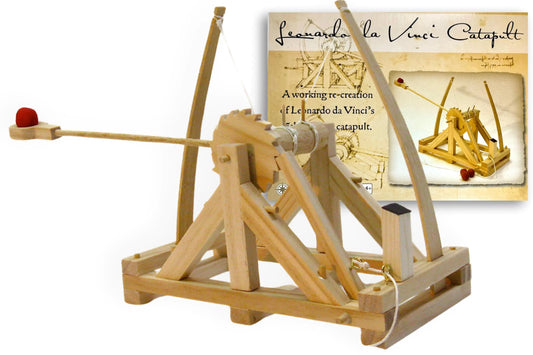
Wooden Leonardo Da Vinci Catapult STEM Trebuchet Kit
Regular price $169.00Regular priceUnit price per$169.00Sale price $169.00 -
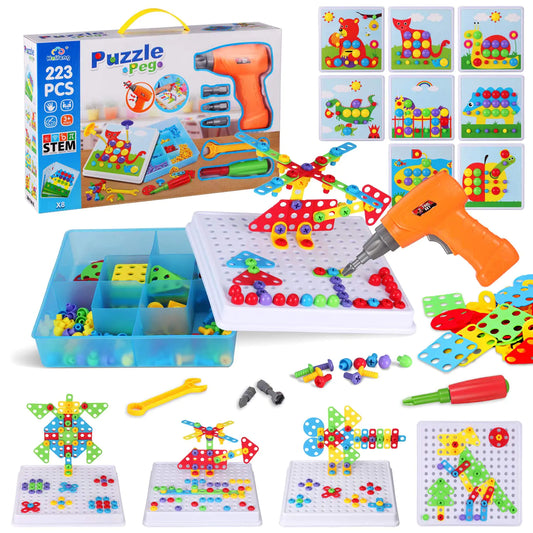
Kids Drill Construction Activity Center STEM Kit, 223 Pieces
Regular price $138.00Regular priceUnit price per$208.00Sale price $138.00SAVE 34% -


5-in-1 Programmable Mechanical Coding Robot Kit for Kids – Screen-Free STEM Engineering Toy Ages 8+
Regular price $208.00Regular priceUnit price per$319.00Sale price $208.00SAVE 35%





Inspire Discovery, Curiosity, and a Love of the Natural World
Science and nature toys for kids transform the natural world from something distant into something personal, fascinating, and genuinely understandable. When a child observes an ant colony, examines a leaf under a magnifying glass, watches planets through a telescope, collects rocks and shells, or builds a terrarium, they're not just learning science facts. They're developing genuine curiosity about how the world works. They're learning to observe carefully, ask questions, notice patterns, and think like a scientist.
This collection features nature discovery toys, science exploration kits, STEM learning toys, astronomy and space toys, bug catchers and insect exploration kits, nature observation tools, plant and garden activities, animal figurines and habitats, nature puzzles, fossil and rock exploration sets, and screen-free educational toys designed to help children explore, discover, and develop genuine scientific thinking.
Whether your child is curious about insects, fascinated by space, interested in plants and gardening, exploring ecosystems, or you're looking for meaningful screen-free activities that build scientific thinking and observation skills, this collection enables genuine discovery and wonder about the natural world. Explore related collections like science kits and experiments, STEM toys, problem-solving play sets, and educational toys.
Many Children Are Curious About Nature, but Don't Get Regular Opportunities for Real Nature Exploration and Discovery
Children are naturally drawn to the natural world. They notice bugs, wonder about stars, collect interesting rocks, watch birds, ask questions about plants. Yet many don't get regular, structured opportunities for real nature exploration—observing carefully, using tools to examine details, conducting investigations, documenting findings, and developing genuine scientific understanding.
Without consistent opportunities for nature exploration, children develop weaker observation skills, less curiosity about how nature works, reduced interest in outdoor learning, lower likelihood of pursuing science interests, and less connection to the natural world. These missed early experiences often lead to decreased science engagement later.
Without Regular Nature Exploration, Children Miss Opportunities to Develop Scientific Thinking and Environmental Understanding
Research consistently shows that early nature experiences shape lifelong environmental awareness, scientific interest, and ecological understanding. Children who engage regularly with nature develop stronger observation skills, deeper scientific thinking, greater curiosity about how systems work, stronger connection to the natural world, and higher likelihood of valuing environmental stewardship.
Without these formative experiences, children develop weaker observation abilities, less scientific curiosity, reduced understanding of ecological relationships, lower likelihood of environmental awareness, and less motivation to pursue science learning. These gaps widen over time, often resulting in science anxiety, reduced science achievement, and decreased interest in STEM pathways.
Science and Nature Toys Make Real Exploration Accessible, Structured, and Genuinely Exciting
Science and nature toys for kids provide the tools and invitation for genuine exploration. A child with a magnifying glass isn't just looking at a bug—they're discovering intricate details they'd never see otherwise. With binoculars, they're observing birds from a distance. With a telescope, they're exploring space. With a bug viewer, they're investigating tiny ecosystems. These tools transform casual observation into genuine scientific exploration.
Our collection of nature discovery toys, science exploration tools, astronomy equipment, biology and observation kits, nature collection sets, outdoor exploration toys, and hands-on STEM activities makes it easy to provide your child with tools, invitations, and structure for genuine nature exploration. Every toy supports real scientific thinking while keeping discovery genuinely engaging and joyful.
Help Your Child Discover the Wonder and Science of the Natural World
Shop science and nature toys that inspire real discovery and scientific thinking.
Explore Science & Nature ToysWhy Science and Nature Toys Are Essential for Scientific Thinking and Environmental Understanding
Science and nature toys aren't optional enrichment—they're essential to developing scientific thinking and genuine environmental understanding. Children who engage regularly with these toys develop stronger observation abilities, genuine scientific curiosity, deeper understanding of natural systems, greater environmental awareness, and authentic enthusiasm for science that fuels lifelong learning.
Using magnifying glasses, binoculars, microscopes, and other observation tools trains children to notice details they'd miss with naked eyes alone.
Real exploration naturally inspires questions: Why do insects look like that? How do planets move? What lives in soil? This curiosity fuels deeper learning.
Exploration requires observation, documentation, pattern recognition, questioning, and hypothesis formation—core scientific thinking skills.
Direct experience with nature fosters genuine care for the environment and understanding of ecological relationships.
Nature toys encourage outdoor exploration, movement, and active engagement with the natural world.
Real scientific terminology becomes meaningful when experienced firsthand through nature exploration.
Science and nature toys are invitations to wonder. They tell children that the natural world is worth exploring, that their questions matter, and that they can be scientists discovering answers themselves.
Discovery-Based Learning Through Nature Exploration
The most powerful science learning happens through direct observation and exploration. When children conduct real investigations in nature—observing insects, watching weather patterns, tracking plant growth, exploring habitats, studying constellations—learning sticks in ways that textbooks never achieve.
Science and nature toys provide structure, tools, and invitations for this discovery-based learning. They enable children to explore independently while maintaining enough guidance to support successful discovery. This balance between freedom and structure is key to building both scientific competence and genuine scientific enthusiasm.
Types of Science and Nature Toys for Kids
Different nature toys support different types of exploration and learning. Understanding these categories helps you choose materials that develop specific scientific interests and skills.
Nature Observation and Discovery Tools
Magnifying glasses, hand lenses, binoculars, microscopes, and observation kits that help children examine details and discover hidden worlds in nature.
Insect and Bug Exploration Kits
Bug catchers, insect observation containers, entomology kits, and ant farms that allow children to study insects up close.
Astronomy and Space Exploration Toys
Telescopes, constellation guides, planetarium toys, and space exploration sets that inspire wonder about the cosmos.
Plant and Garden Exploration Toys
Gardening kits, seed-growing sets, plant examination tools, and ecology activities that support plant science learning.
Rock, Fossil, and Geology Exploration
Rock tumbler kits, fossil excavation sets, geology specimens, and mineral exploration tools for earth science learning.
Animal Observation and Habitat Toys
Animal figurines, habitat playsets, ecosystem models, and wildlife exploration toys that support animal science learning.
Shop Science and Nature Toys by Exploration Interest
Find science and nature toys based on your child's specific interests. These mobile-friendly cards help parents navigate different exploration areas.
Nature Observation Tools
Magnifying glasses, hand lenses, binoculars, and microscopes for examining nature's details up close.
Skills built: Observation, attention to detail, scientific thinking
Explore Observation Tools →Bug and Insect Kits
Bug catchers, ant farms, insect observation containers, and entomology exploration sets.
Skills built: Observation, patience, entomology knowledge
Explore Bug Kits →Astronomy and Space Toys
Telescopes, constellation guides, planetarium toys, and space exploration activities.
Skills built: Astronomy knowledge, wonder, observation
Explore Astronomy Toys →Plant and Garden Toys
Gardening kits, seed-growing sets, plant science tools, and ecology exploration activities.
Skills built: Patience, plant biology, ecosystem understanding
Explore Garden Toys →Rock, Fossil, and Geology Toys
Fossil excavation kits, rock tumblers, mineral exploration sets, and geology specimens.
Skills built: Geology knowledge, fossil understanding, collection habits
Explore Geology Toys →Animal and Habitat Exploration
Animal figurines, habitat playsets, ecosystem models, and wildlife exploration toys.
Skills built: Animal biology, habitat understanding, ecological thinking
Explore Animal Toys →Science and Nature Toys for Every Age and Interest Level
The best science and nature toys match developmental stage while offering genuine exploration opportunities. As children grow, they can handle more sophisticated equipment, understand more complex concepts, conduct more detailed investigations, and sustain longer projects.
Science and Nature Toys for Toddlers (18 months - 3 years)
Sensory nature exploration, simple bug viewers, large magnifying glasses, basic animal figurines, and outdoor exploration invitations.
Science and Nature Toys for Preschoolers (3-5 years)
Magnifying glasses, bug catchers, simple binoculars, ant farms, plant-growing kits, basic telescopes, rock collections.
Science and Nature Toys for Early Elementary (5-8 years)
Compound microscopes, field guides, geology kits, fossil excavation sets, more sophisticated telescopes, documented nature journals.
Science and Nature Toys for School-Age Kids (8+ years)
Advanced microscopes, sophisticated telescopes, detailed fossil and mineral collections, ecology study kits, long-term research projects, independent nature investigations.
Science and Nature Learning Through Outdoor Exploration
The best science and nature learning happens outdoors. Children with proper tools and invitation explore their neighborhoods, backyards, parks, and natural areas with greater focus and curiosity. They notice details they'd miss otherwise, ask deeper questions, conduct informal investigations, and develop genuine connection to the natural world.
Science and nature toys transform ordinary outdoor time into genuine scientific exploration. A simple walk becomes a bug-finding expedition. A backyard becomes an ecosystem to study. The night sky becomes a constellation-mapping activity. These tools give children permission and structure for exploration that builds lasting scientific thinking.
Building Environmental Awareness and Stewardship
Research consistently shows that children who engage regularly with nature develop stronger environmental awareness and are more likely to value environmental protection. Direct experience with natural ecosystems, observation of wildlife, understanding of plant growth, and investigation of earth science all contribute to building genuine environmental stewardship.
When children have hands-on experience with nature—observing insects, growing plants, studying stars, examining rocks—they develop authentic care for the environment. They understand that nature isn't an abstract concept; it's a real, intricate, interconnected system they've personally explored and understood. This foundation shapes environmental values and behaviors for life.
How to Choose the Right Science and Nature Toys
When selecting science and nature toys, follow your child's genuine interests. A child fascinated by bugs will explore with a bug viewer. A child interested in stars will use a telescope. A child curious about plants will grow seeds. Trust these interests—they're where deep learning and sustained engagement happen.
Match toys to developmental stage. A 3 year old needs different tools than a 10 year old. Look for toys recommended for your child's age range that offer challenge without frustration. The best toys are ones that invite repeated use and deeper exploration as skills develop.
Choose toys that encourage outdoor exploration and hands-on discovery. The best science and nature toys get children outside, engaged with real ecosystems, observing real organisms, and investigating real natural phenomena. These direct experiences build understanding that nothing else can replicate.
Science and Nature Toys Make Meaningful, Lasting Gifts
If you're shopping for birthdays, holidays, or special occasions, science and nature toys are gifts that offer both immediate engagement and long-term value. Unlike toys that age out quickly, quality exploration tools provide years of discovery as children's interests deepen and skills develop.
These toys are especially valuable for curious children, those showing interest in nature and science, kids who love outdoor exploration, families seeking screen-free activities, and gift-givers wanting to support genuine learning and environmental awareness. They're gifts that invest directly in your child's scientific thinking and connection to the natural world.
Why Parents Choose WonderKidsToy for Science and Nature Toys
At WonderKidsToy, we believe science and nature toys should inspire genuine exploration while supporting real scientific thinking. That's why this collection includes carefully curated tools, observation equipment, exploration sets, and activities that make discovery accessible, inviting, and genuinely exciting.
- Age-appropriate exploration tools for every stage
- Quality equipment that supports real scientific investigation
- Diverse options spanning multiple science and nature interests
- Tools that encourage outdoor learning and environmental connection
- Equipment that grows with your child's interests and developing skills
- Thoughtful gifts that support science learning and environmental awareness
Explore More Science and STEM Learning Collections
Parents who value science and nature toys often explore these complementary collections:
- Science Kits and Experiments
- STEM Toys
- Engineering Toys
- Problem-Solving Play Sets
- Educational Toys
- Sensory Learning Toys
Help Your Child Explore and Understand the Natural World
Shop science and nature toys that inspire real discovery and scientific thinking.
Explore Science & Nature ToysFrequently Asked Questions About Science and Nature Toys
1. What are science and nature toys?
Tools and toys that enable children to explore the natural world through observation, investigation, and hands-on discovery.
2. Are nature toys important for kids?
Yes. They develop observation skills, scientific thinking, environmental awareness, and genuine curiosity about how nature works.
3. What age can kids use magnifying glasses?
2+ years for supervised use; 3+ for more independent exploration; develop stronger skills around age 5+.
4. Are bug catchers and ant farms safe?
Yes, when age-appropriate and properly supervised. They teach observation and responsibility with living creatures.
5. Can young kids use telescopes?
Simple telescopes yes, around age 4+; more sophisticated ones around 8+. Binoculars often work better for young kids.
6. Do nature toys support science learning?
Yes. They develop observation, scientific thinking, documentation skills, and genuine science understanding.
7. Are fossil kits good for kids?
Yes. They teach geology, paleontology, patience, and observation through hands-on excavation.
8. Can nature toys teach environmental awareness?
Yes. Direct nature experience builds environmental understanding and care for ecosystems.
9. Are gardening kits good for kids?
Yes. Growing plants teaches patience, plant biology, observation, and responsibility.
10. How do nature toys encourage outdoor play?
They provide tools and purpose for outdoor exploration, making outdoor time feel like adventure and discovery.
11. Can nature toys replace science classes?
They complement formal learning beautifully, but best combined with classroom science for comprehensive learning.
12. Are microscopes good for kids?
Yes. Child-friendly microscopes enable discovery of microscopic worlds and build biology understanding.
13. Do binoculars help with nature exploration?
Yes. Binoculars enable bird watching and wildlife observation from safe distances.
14. Can nature toys build scientific vocabulary?
Yes. Real exploration makes scientific terms meaningful and memorable.
15. Are rock and mineral collections educational?
Yes. They teach geology, mineral identification, and earth science concepts.
16. How do nature toys develop observation skills?
By requiring close attention to detail and pattern recognition while exploring nature.
17. Can kids document nature observations?
Yes. Nature journals, field guides, and documentation develop scientific thinking and communication.
18. Are nature toys better than indoor toys?
Different benefits. Nature toys encourage outdoor exploration; indoor toys build other skills. Both are valuable.
19. Do nature toys support homeschool science?
Yes. They provide hands-on science curriculum that makes learning engaging and meaningful.
20. Can nature toys inspire science careers?
Yes. Early nature experiences often spark lasting science and environmental interests.
21. Are all-terrain toys good for nature exploration?
Yes. Durable equipment suited to outdoor use supports extended exploration.
22. Do nature toys teach patience?
Yes. Gardening, observation, and fossil excavation all require sustained attention and patience.
23. Are nature toys good for homeschoolers?
Absolutely. They provide hands-on science that makes learning memorable and meaningful.
24. Can kids use field guides effectively?
Yes. They support identification, observation, and organized learning from nature exploration.
25. Do nature toys encourage sustainability?
Yes. They build environmental awareness that often leads to sustainable habits and values.
26. Are nature toys year-round activities?
Yes. Different seasons offer different nature exploration opportunities throughout the year.
27. Can nature toys support social learning?
Yes. Group exploration and nature activities build collaboration and shared discovery.
28. Are nature toys good for anxious kids?
Yes. Nature exposure and discovery activities often reduce anxiety and support emotional wellbeing.
29. How do nature toys compare to technology for learning?
Both have value. Nature toys offer tangible, hands-on learning; technology offers information. Combined is often best.
30. What's the biggest benefit of science and nature toys?
They build genuine curiosity about the natural world and teach children that they can understand and explore science independently.
Help Your Child Discover the Wonder and Science of Nature
Quality science and nature toys are invitations to wonder. They tell children that the natural world is fascinating, that their questions matter, and that they can understand and explore science themselves. When children have access to proper tools and supportive environment for nature exploration, they develop genuine scientific thinking, environmental awareness, and lasting curiosity about how the world works.
Shop science and nature toys that inspire real discovery, scientific thinking, and authentic love of learning.
More Collections
- Best Arts and Crafts for Kids
- Best Board Games for Kids
- Best Building and Construction Toys for Kids
- Best Developmental Toys for Babies and Toddlers
- Best Educational Toys for 3 Year Olds
- Best Geography Toys for Kids
- Best Global Learning Toys for Kids
- Best Language Learning Toys for Kids and Toddlers
- Best Learning Toys for Kids
FREE: Get $99 worth Creative Digital Vault
Order now and get instant access to 130+ Digital Learning Books. While your item ships, your child can start learning immediately!
Explore Screen Free Toys
Looking for more fun and educational toys for kids? Explore our most popular collections designed to support STEM learning, creativity, language development, problem-solving, and hands-on play.