
-
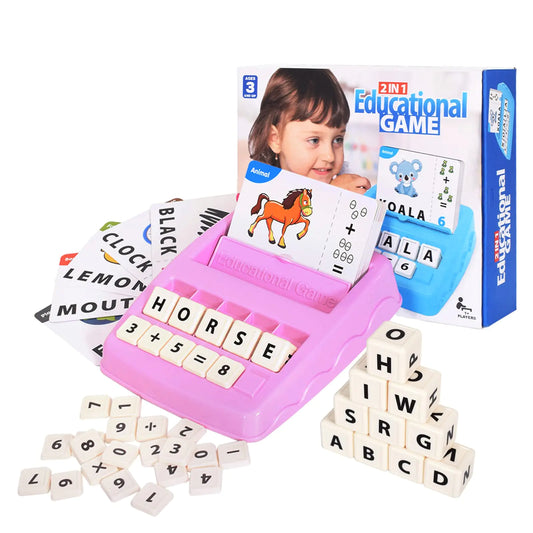
Matching Letters Words and Math Learning Game for Kids – Hands-On Educational Spelling Toy Ages 3-6
Regular price $127.00Regular priceUnit price per$127.00Sale price $127.00 -
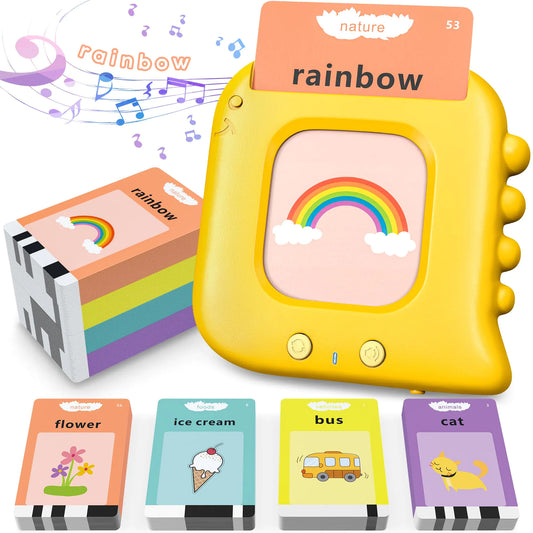
240-Word Talking Flash Cards for Kids – Interactive Speech and Language Development Toy Ages 2-5
Regular price $117.00Regular priceUnit price per$117.00Sale price $117.00 -
CVC Word Phonics Learning Game Set for Preschool and Kindergarten – Early Reading Toy Ages 4-6
Regular price $112.00Regular priceUnit price per$112.00Sale price $112.00 -
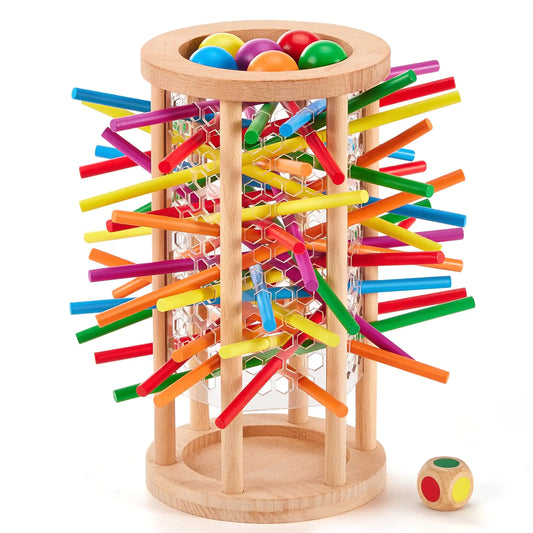
Montessori Wooden Kerplunk Dice Tower Game for Kids
Regular price $137.00Regular priceUnit price per$220.00Sale price $137.00SAVE 38% -

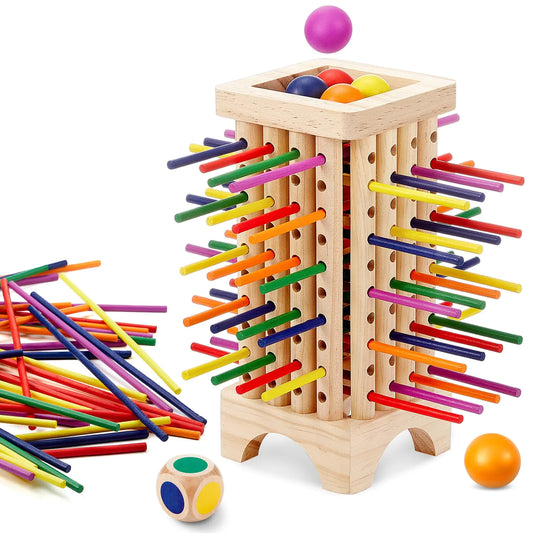
Montessori Wooden Tower Stacking Game with 42 Colorful Sticks – Strategy Toy for Kids Ages 3+
Regular price $110.00Regular priceUnit price per$165.00Sale price $110.00SAVE 33% -
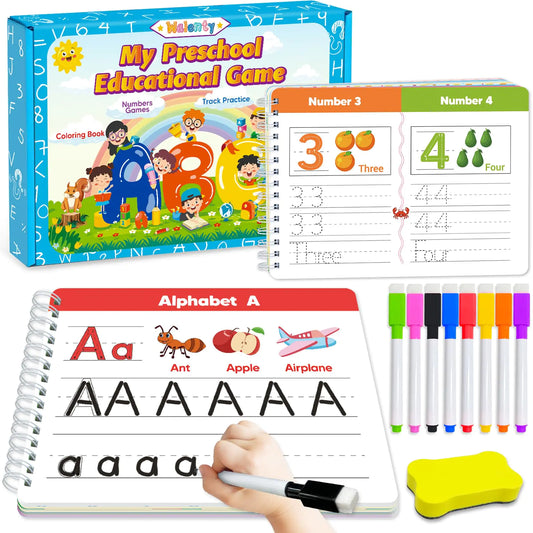
52-Page Reusable Preschool Learning Workbook for Kids Ages 3-5 – Writing and Math Activity Book
Regular price $122.00Regular priceUnit price per$122.00Sale price $122.00 -
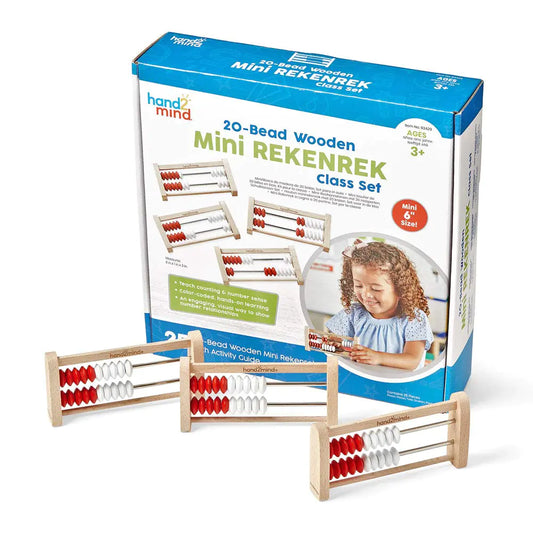
25-Piece Mini 20-Bead Wooden Rekenrek Class Set – Montessori Math Counting Abacus for Kids
Regular price $358.00Regular priceUnit price per$482.00Sale price $358.00SAVE 26% -
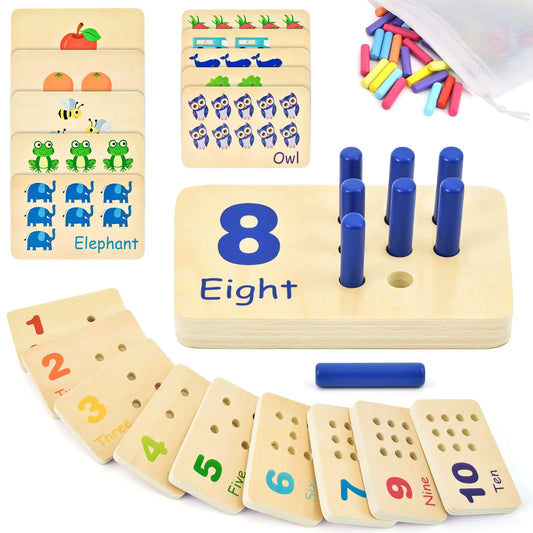
Wooden Counting Peg Board Montessori Toy – Hands-On Early Math Learning for Toddlers Ages 2-5
Regular price $152.00Regular priceUnit price per$152.00Sale price $152.00 -
48-Piece Natural Wood Montessori Math Counting Board – Early Number Learning Toy Ages 3-6
Regular price $28.00Regular priceUnit price per$41.00Sale price $28.00SAVE 32% -
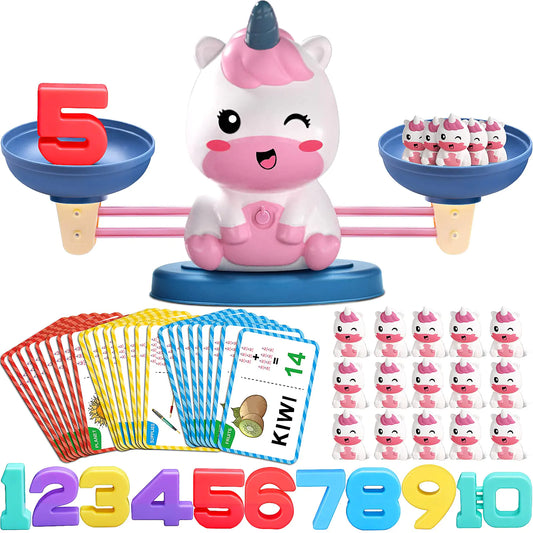
Unicorn Math Balance Scale for Kids – Montessori STEM Number Learning Toy Ages 3-7
Regular price $165.00Regular priceUnit price per$275.00Sale price $165.00SAVE 40% -
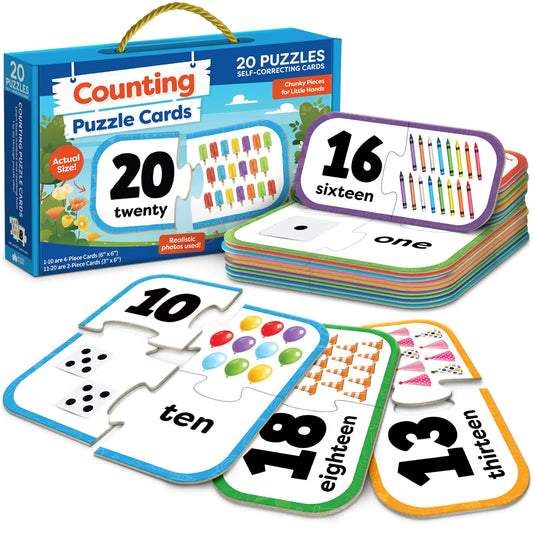
26-Piece Self-Correcting Number Matching Puzzle Set – Montessori Counting Game Ages 3-5
Regular price $110.00Regular priceUnit price per$137.00Sale price $110.00SAVE 20%











Build Number Sense, Confidence, and Early Math Skills
Math and counting toys for kids help children build genuine number sense through hands-on play. Instead of abstract numbers on a page, kids can see, touch, count, and manipulate objects that represent quantities. When math feels concrete and playful, children develop confidence and authentic understanding that transfers to formal math learning.
Our collection of math toys, counting toys, number learning materials, and math manipulatives includes counting beads, number blocks, math cards, sorting activities, pattern toys, addition and subtraction manipulatives, Montessori math materials, and early math games that support natural number discovery.
Whether your child is just learning to count, working on number recognition, exploring quantities and comparisons, or building early addition and subtraction understanding, this collection supports meaningful math learning. Explore related collections like puzzle and brain teasers, Montessori educational toys, educational board games, and STEM toys.
Many Kids Struggle With Math Because Numbers Feel Abstract and Disconnected From Reality
Children are naturally curious about quantities—they want to count, compare, sort, and understand "how many." But when numbers exist only on worksheets or screens, they remain abstract and confusing. Without real, tangible experience with quantities, children struggle to develop genuine number sense.
Parents often notice their children can recite numbers 1-10 without understanding what those numbers actually mean—that "5" represents a specific quantity, that you can show 5 with your fingers or 5 objects, that 5 is more than 3 but less than 7. Without that concrete understanding, formal math becomes rote memorization instead of genuine comprehension.
Without Hands-On Number Play, Children Fall Behind in Mathematical Thinking
Research in early childhood mathematics shows that children who develop strong number sense in their early years perform better in math throughout school. They understand place value, addition, subtraction, and problem-solving more easily because they have concrete mental pictures of quantities and relationships.
Without early, playful math experiences, children may develop math anxiety, see numbers as confusing symbols rather than meaningful quantities, struggle with foundational concepts like addition and subtraction, and lose confidence in their math abilities. These challenges compound over time, affecting academic success and future learning.
Math and Counting Toys Make Numbers Real, Playful, and Meaningful
Our collection of math and counting toys for kids does one thing brilliantly: it makes numbers real. Kids aren't studying math concepts. They're counting objects, sorting by quantity, recognizing patterns, comparing groups, and discovering how numbers work through direct, playful experience.
From counting beads and number blocks to math manipulatives, sorting and pattern toys, addition and subtraction games, and Montessori math materials, these options support the kind of hands-on, concrete number learning that builds genuine understanding and authentic math confidence.
Build Your Child's Number Sense and Math Confidence
Shop math and counting toys that make numbers tangible, meaningful, and genuinely fun.
Explore Math & Counting ToysWhy Math and Counting Toys Build Real Number Understanding
Math toys aren't just educational. They're confidence builders. When a child can count out 5 blocks, sees that 3+2=5, recognizes a pattern, or sorts objects by quantity, they experience direct proof that they understand numbers. That's foundational math confidence.
Children connect number symbols with real quantities and understand quantity relationships.
Hands-on counting practice builds automaticity with number sequences and one-to-one correspondence.
Sorting and patterning toys develop mathematical thinking and logical reasoning.
Manipulatives make addition, subtraction, and early computation concrete and understandable.
Successful number experiences create positive associations with math and genuine self-assurance.
Math games naturally encourage strategy, logical thinking, and persistence with challenges.
The most valuable thing math toys teach kids is that they can understand numbers and solve mathematical problems—that confidence shapes their entire math journey and future success.
Understanding Number Sense Development
Number sense is the foundation of all mathematics. It's not just knowing how to count. It's understanding what numbers mean, how quantities relate to each other, recognizing patterns, and being able to estimate and compare.
Math toys develop number sense naturally because they make quantity tangible. A child doesn't just hear the word "five"—they see it, touch it, count it, compare it to other quantities. This multisensory, concrete experience builds neural pathways that support mathematical thinking throughout life.
Types of Math and Counting Toys
Different math toys support different mathematical concepts. Understanding the categories helps you choose materials that build specific skills.
Counting and Number Recognition Toys
Beads, blocks, cards, and manipulatives that help children count, recognize numerals, and connect symbols to quantities.
Sorting and Categorizing Toys
Materials that help children organize by color, size, shape, or quantity—developing classification and logical thinking.
Pattern and Sequencing Toys
Games and materials that develop pattern recognition and mathematical reasoning through pattern completion and creation.
Math Manipulatives for Operations
Materials like blocks, counters, and bars that make addition, subtraction, and early computation concrete and understandable.
Math Games and Puzzles
Games that combine math practice with strategy and problem-solving for engaging, motivating learning.
Shop Math Toys by Mathematical Concept
Find math and counting toys based on the mathematical skills you want to develop. These mobile-friendly cards help parents navigate different math learning areas.
Counting Toys
Build number sequences, practice one-to-one correspondence, develop counting automaticity.
Best for: Ages 18mo-5, counting skills, number sequence, early numeracy
Explore Counting Toys →Number Recognition and Quantity Toys
Connect numerals with quantities, compare groups, understand "how many."
Best for: Ages 3-6, number sense, quantity recognition, math vocabulary
Explore Number Toys →Sorting and Pattern Toys
Organize by attributes, recognize patterns, develop logical and mathematical reasoning.
Best for: Ages 2-7, pattern recognition, classification, mathematical thinking
Explore Pattern Toys →Addition and Subtraction Toys
Explore addition, subtraction, and combinations through concrete manipulation and play.
Best for: Ages 4-8, early operations, computational thinking, math facts
Explore Operation Toys →Comparison and Measurement Toys
Compare sizes, explore length, develop measurement understanding and spatial reasoning.
Best for: Ages 3-8, comparison, measurement, spatial thinking
Explore Measurement Toys →Math Games and Puzzles
Practice math skills while developing strategy, problem-solving, and persistence.
Best for: Ages 4+, strategic thinking, problem-solving, collaborative learning
Explore Math Games →Math and Counting Toys for Every Age and Learning Stage
The best math and counting toys match your child's developmental stage while offering genuine challenge and learning opportunities. Early math concepts build naturally when toys meet children where they are developmentally.
Math Toys for Toddlers (18 months - 3 years)
Simple counting objects, color sorting, basic one-two-three recognition, and sensory number exploration.
Counting and Number Toys for Preschoolers (3-5 years)
Counting to higher numbers, number recognition to 10, basic sorting and patterns, introduction to quantity comparisons.
Math Toys for Early Elementary (5-7 years)
Addition and subtraction foundations, place value understanding, more complex patterns, measurement exploration.
Math Toys for School-Age Kids (7+ years)
Multi-digit operations, fractions, advanced problem-solving, competitive math games, strategic thinking.
How Math Toys Support Child Development and Academic Success
When children engage with quality math and counting toys regularly, significant development happens. They develop not just counting and number skills, but genuine mathematical thinking, logical reasoning, problem-solving confidence, and the foundation that supports school math success.
Research shows that children with strong early number sense perform better in math throughout elementary school, have higher confidence with mathematical problem-solving, develop stronger logical thinking skills, and are more likely to pursue math-related interests later. These benefits compound over time.
The Concrete-to-Abstract Progression in Math Learning
Young children learn math best through a progression: first concrete (touching and manipulating objects), then representational (pictures and symbols), then abstract (numbers and equations). Math toys provide the essential concrete stage that makes all later math possible.
Without this concrete foundation, abstract math symbols feel meaningless. With it, children build the mental models that allow them to understand and work with increasingly abstract mathematical concepts.
Math Toys Prevent Math Anxiety and Build Genuine Confidence
Math anxiety often starts early when children don't understand what numbers mean and are pushed to memorize before they comprehend. Math toys provide the understanding first, making later memorization automatic and stress-free.
When children have playful, successful experiences with numbers, they develop positive attitudes toward math that last throughout their lives.
How to Choose the Right Math and Counting Toys
When selecting math and counting toys, ask: What math concept is my child working on? Are they learning to count, recognize numbers, understand quantities, see patterns, or explore operations? Will they be able to use it mostly independently? What will hold their interest?
The best math toys are engaging, appropriately challenging, visually appealing, and support self-directed exploration. They should feel like choices kids want to make, not schoolwork they have to do.
Observe your child's math interests. If they love counting, start with counting toys. If patterns fascinate them, sorting and pattern materials will captivate them. If they like games and competition, math board games will be irresistible. Match toys to genuine interests and watch confidence develop naturally.
Math Toys Make Thoughtful, Long-Lasting Gifts
If you're shopping for birthdays, holidays, or homeschool enrichment, math and counting toys are gifts that support genuine development. These aren't toys that entertain briefly. They're learning investments that grow with children.
Quality math toys sustain interest for years as understanding deepens and skills develop. They often pass from one child to younger siblings or cousins, becoming treasured resources of childhood learning.
Why Parents Choose WonderKidsToy for Math and Counting Toys
At WonderKidsToy, we believe number sense matters. That's why this collection includes carefully curated math and counting toys for kids that make numbers real, meaningful, and genuinely fun. From counting beads and number blocks to Montessori math materials, sorting and pattern toys, addition and subtraction manipulatives, and math games, these options support the kind of hands-on, playful math learning that builds real understanding and authentic confidence.
- Curated collection of quality math and counting toys for all ages
- Options for every math learning stage and concept
- Toys that build number sense, counting skills, and math understanding
- Materials that support independent, joyful math discovery
- Toys proven to develop math confidence and early numeracy skills
Explore More Math and Educational Collections
Parents building math skills often explore these related collections:
- Puzzle & Brain Teasers
- Montessori Educational Toys
- Educational Board Games
- STEM Toys
- Sensory Learning Toys
- Educational Toys
Build Your Child's Number Sense and Math Confidence
Shop math and counting toys that make numbers real, meaningful, and genuinely fun.
Shop Math & Counting ToysFrequently Asked Questions About Math and Counting Toys
1. What are math and counting toys?
Hands-on materials that help children build number sense, practice counting, recognize patterns, and develop early math understanding.
2. At what age should kids start using math toys?
As early as 18 months with simple counting and sorting toys; more sophisticated toys work for ages 3 and up.
3. Are counting toys better than teaching numbers verbally?
Both are valuable. Verbal counting + hands-on manipulation creates stronger number understanding than either alone.
4. Do math toys really improve math skills?
Yes. Research shows hands-on math practice with manipulatives develops stronger number sense and early math achievement.
5. What's the difference between counting skills and number sense?
Counting is the ability to recite numbers; number sense is understanding what numbers mean and how they relate.
6. Can math toys help kids who struggle with numbers?
Yes. Hands-on toys make abstract concepts concrete and help kids build confidence and understanding.
7. What are Montessori math toys?
Materials designed by Maria Montessori to help children explore math concepts through sensory, self-correcting materials.
8. How do math manipulatives work?
They make abstract math concepts concrete—kids can see, touch, and physically move objects to understand operations like addition.
9. Are patterns important for early math?
Yes. Pattern recognition is foundational mathematical thinking and develops logical reasoning.
10. How long do kids use math toys?
Quality toys remain interesting for years as children's math understanding grows more sophisticated.
11. Can math toys prevent math anxiety?
Yes. Playful, successful early math experiences build positive attitudes that prevent later math anxiety.
12. Do math toys work for all learning styles?
Yes. Hands-on math toys are especially effective for visual and kinesthetic learners.
13. Are math board games good for learning?
Yes. Games combine math practice with motivation, strategy thinking, and social learning.
14. Can girls and boys both enjoy math toys?
Absolutely. Math interest and ability aren't gender-based; all children can love numbers and problem-solving.
30. What's the biggest benefit of math toys?
They teach kids that numbers are real, understandable, and nothing to fear—that confidence shapes their entire math journey.
Build Your Child's Number Sense, Math Confidence, and Love of Learning
Number sense matters. When children experience playful, hands-on discovery with quantities, patterns, and operations, they develop skills, confidence, and genuine enthusiasm for math. Quality math and counting toys make this learning tangible, engaging, and genuinely fun.
Shop math and counting toys that build number sense, develop early math skills, and create the kind of math confidence that supports success in school and beyond.
More Collections
- Best Arts and Crafts for Kids
- Best Board Games for Kids
- Best Building and Construction Toys for Kids
- Best Developmental Toys for Babies and Toddlers
- Best Educational Toys for 3 Year Olds
- Best Geography Toys for Kids
- Best Global Learning Toys for Kids
- Best Language Learning Toys for Kids and Toddlers
- Best Learning Toys for Kids
FREE: Get $99 worth Creative Digital Vault
Order now and get instant access to 130+ Digital Learning Books. While your item ships, your child can start learning immediately!
Explore Screen Free Toys
Looking for more fun and educational toys for kids? Explore our most popular collections designed to support STEM learning, creativity, language development, problem-solving, and hands-on play.