

-
38-Piece Large Particle Building Blocks for Kids – Safe ABS STEM Engineering Toy Ages 3+
Regular price $27.00Regular priceUnit price per$41.00Sale price $27.00SAVE 34% -
3D Wooden Hawk Mechanical Wall Clock Puzzle Kit
Regular price $146.00Regular priceUnit price per$277.00Sale price $146.00SAVE 47% -


5-Pack Montessori Take-Apart Dinosaur Building Toys for Kids – STEM Fine Motor Skills Set Ages 3+
Regular price $142.00Regular priceUnit price per$277.00Sale price $142.00SAVE 49% -
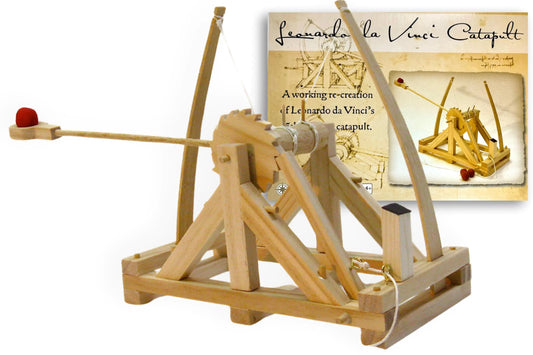
Wooden Leonardo Da Vinci Catapult STEM Trebuchet Kit
Regular price $169.00Regular priceUnit price per$169.00Sale price $169.00 -
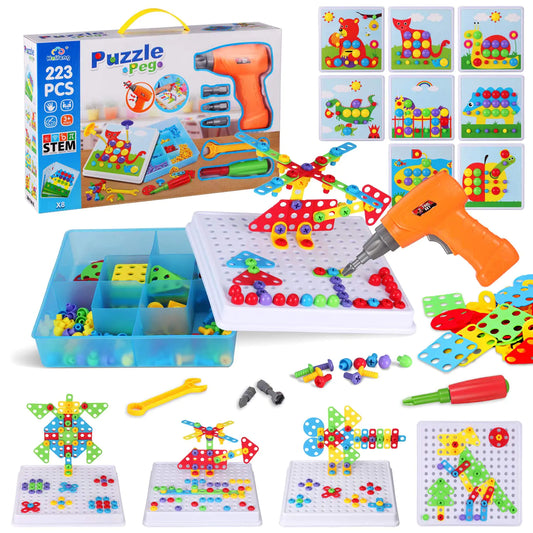
Kids Drill Construction Activity Center STEM Kit, 223 Pieces
Regular price $138.00Regular priceUnit price per$208.00Sale price $138.00SAVE 34% -


5-in-1 Programmable Mechanical Coding Robot Kit for Kids – Screen-Free STEM Engineering Toy Ages 8+
Regular price $208.00Regular priceUnit price per$319.00Sale price $208.00SAVE 35%





Best Engineering Toys for Kids – Build, Test, Design, and Solve Real Problems
Engineering toys for kids teach children how things work through hands-on building, testing, and design. Instead of passive learning, children become makers—planning structures, building systems, testing ideas, troubleshooting when something doesn't work, and improving their designs. This hands-on engineering experience builds spatial reasoning, mechanical thinking, problem-solving confidence, and genuine understanding of how the physical world works.
Our collection of engineering kits for kids, STEM building toys, design thinking toys, and construction engineering toys includes bridge building kits, mechanical puzzles, catapult kits, structural engineering challenges, and hands-on STEM activities that encourage children to plan, build, test, adjust, and improve through real engineering thinking.
Whether your child is curious about how structures hold up, how machines work, how to design solutions to real challenges, or simply loves building, this collection supports hands-on engineering learning. Explore related collections like STEM toys, building and construction toys, robotics kits, problem-solving toys, and coding and robotics toys.
Today's Kids Need Hands-On Engineering Experience, Not Just Theory
Many children learn about science and engineering only through books, videos, or classroom lectures. But real engineering understanding comes from building, testing, failing, adjusting, and succeeding. Kids need to experience how structures hold up, what makes machines work, and how to solve problems through design.
Without hands-on engineering experience, children miss the confidence that comes from successfully building real systems. They may understand concepts abstractly but never develop the mechanical intuition and design thinking that engineers rely on.
Without Early Engineering Play, Kids Miss Opportunities to Develop Critical Problem-Solving Skills
Engineering thinking is a discipline. It involves planning, building, testing, observing results, identifying problems, and trying different approaches. When children don't regularly engage in hands-on engineering challenges, they don't develop these problem-solving patterns that engineers use.
Research shows that children who engage with engineering toys and hands-on building challenges develop stronger spatial reasoning, better design thinking, more creative problem-solving approaches, and greater confidence with technical challenges. These skills matter for academics, future careers, and everyday problem-solving.
Engineering Toys Turn Design Thinking Into Real Building Experience
Our collection of engineering toys for kids does one thing brilliantly: it keeps children engaged in real design and building challenges that develop authentic engineering thinking. Kids aren't studying engineering. They're building bridges, designing structures, launching catapults, solving mechanical puzzles, and discovering how systems work through hands-on experimentation.
From STEM building toys to engineering kits, design thinking challenges, and construction engineering toys, these options support hands-on learning of planning, building, testing, troubleshooting, spatial reasoning, and the kind of mechanical thinking that builds genuine engineering confidence.
Help Your Child Think Like an Engineer
Shop engineering toys that make building, designing, and hands-on STEM learning tangible and genuinely fun.
Explore Engineering ToysWhy Engineering Toys Build Real Problem-Solving Skills
Engineering toys for kids aren't just educational. They're confidence builders. When a child successfully designs and builds a structure that holds, they experience direct proof that their planning and design thinking works. That's foundational.
Kids practice planning, building, testing, observing results, and improving designs through iterative engineering thinking.
Hands-on building develops understanding of how shapes, structures, and systems relate in physical space.
Real engineering involves building, testing, troubleshooting, and improving. Kids learn this process through hands-on challenges.
Building activities strengthen hand-eye coordination, dexterity, and fine motor control through repeated hands-on work.
Through engineering play, children develop intuitive understanding of levers, pulleys, balance, force, and structural principles.
Early hands-on engineering experience often builds genuine interest in engineering, architecture, and related STEM careers.
The most valuable thing engineering toys teach kids is that they can plan, build, test, and improve—and that problems are designed to be solved.
Types of Engineering Toys
Different engineering toys teach different aspects of engineering thinking. The best approach includes multiple types so children practice diverse engineering challenges.
Structure and Bridge Building Toys
Toys that challenge kids to design and build structures that hold weight and meet specific requirements.
Mechanical and Machine Building Toys
Engineering kits that teach how machines work through building gears, pulleys, levers, and moving systems.
Catapult and Launch Engineering Toys
Kits that teach engineering principles through designing and building launching systems.
Puzzle and Mechanical Challenge Toys
Toys that combine problem-solving with mechanical thinking and engineering principles.
STEM Challenge and Engineering Kits
Comprehensive STEM building toys with multiple challenges that teach integrated engineering and science thinking.
Open-Ended Building and Construction Toys
Materials and systems that let children design and build their own engineering challenges and solutions.
Shop Engineering Toys by Skill Development
Find engineering toys for kids based on the skills you want to develop. These mobile-friendly cards help parents choose the right challenges.
Bridge & Building Toys
Design and build structures that hold weight, teaching how bridges and buildings work.
Best for: Ages 5-12, structural thinking, load-bearing design, physics concepts
Explore Building Toys →Machine & Gear Toys
Build working machines with gears, pulleys, and levers that demonstrate mechanical principles.
Best for: Ages 6-12, mechanical thinking, gear systems, motion transfer
Explore Machine Toys →Catapult & Launch Kits
Design and build launching systems that teach force, angle, energy, and trajectory through hands-on experimentation.
Best for: Ages 6-12, physics concepts, force and motion, design optimization
Explore Catapult Toys →Engineering Challenge Kits
STEM engineering toys with specific challenges that require design thinking and problem-solving.
Best for: Ages 7-14, design thinking, challenge-based learning, real engineering problems
Explore Challenge Kits →Mechanical Puzzle Toys
Puzzles and challenges that combine mechanical thinking with spatial problem-solving.
Best for: Ages 5-12, spatial reasoning, mechanical understanding, puzzle-solving
Explore Mechanical Puzzles →Construction Systems Toys
Open-ended materials that let kids design and build their own engineering challenges and solutions.
Best for: All ages, unlimited creativity, self-directed learning, design thinking
Explore Construction Toys →Engineering Toys for Every Age
The best engineering toys for kids match your child's current building skill level while offering challenges that help them grow into more sophisticated engineering thinking.
Engineering Toys for Preschoolers (3 - 5 years)
Simple building toys with large pieces that introduce basic building, stacking, and cause-and-effect.
Engineering Toys for Early Elementary (5 - 8 years)
Beginner engineering toys that introduce structure building, simple machines, and hands-on engineering challenges.
Engineering Kits for School-Age Kids (8 - 12 years)
More complex STEM engineering toys with real design challenges, mechanical systems, and integrated engineering thinking.
Advanced Engineering for Teenagers (12+ years)
Sophisticated engineering kits that support serious projects, competitions, and college-prep engineering experience.
How Engineering Toys Support Child Development
When children engage with engineering toys regularly, something powerful happens. They develop not just technical skills, but confidence that they can understand and solve complex problems through systematic thinking.
Research shows that children who work with engineering toys develop stronger spatial reasoning, better problem-solving approaches, more persistence with complex challenges, and greater interest in STEM fields. These skills transfer across academics and support critical thinking in every domain.
Teaching the Engineering Design Process Through Play
Real engineers follow a design process: plan, build, test, observe, identify problems, improve, and try again. Engineering toys for kids naturally teach this process through hands-on challenges.
When children build, fail, adjust, and succeed repeatedly, they internalize the engineering mindset. Failure becomes feedback, not defeat. Challenges become opportunities to learn and improve. This is how real engineers think, and it's a powerful life skill.
Why Hands-On Engineering Beats Watching Videos
Videos can explain engineering concepts. But engineering toys teach something videos can't: the physical intuition that comes from actually building, testing, and adjusting. When a child builds a structure and watches it hold (or collapse), that's direct experiential learning that shapes thinking differently than any explanation.
Hands-on engineering activates multiple learning modes—visual, kinesthetic, spatial. Kids who build and test develop mechanical intuition that becomes part of their thinking toolkit for life.
How to Choose the Right Engineering Toy for Your Child
When selecting engineering kits for kids, ask: What types of building and engineering challenges interest my child? Do they prefer structured projects or open-ended building? Are they ready for complex challenges or just starting?
The best engineering toys match your child's current level while offering clear growth paths. Look for toys that encourage experimentation and don't have just one "right" way to use them. The best engineering toys teach that multiple approaches might work.
Consider the support available. Good engineering kits have clear instructions and online communities where builders share solutions and ideas. Resources matter when kids get stuck.
Engineering Toys Build Interest in Technical Careers
One of the most valuable outcomes of early engineering play is genuine interest in technical fields. Kids who've designed bridges, built machines, and solved engineering challenges often develop lasting interest in engineering, architecture, mechanical design, or related fields.
This early experience matters. It's the difference between knowing engineering exists and actually believing "I could do that" because they've already done simplified versions of real engineering work.
Engineering Toys Make Meaningful Gifts
If you're shopping for birthdays, holidays, or special occasions, engineering toys for kids are gifts that support long-term skill development. These toys get used repeatedly, build genuine understanding, and grow with your child as their engineering interests evolve.
Unlike toys that entertain briefly, quality engineering toys invite extended, evolving engagement. Kids discover new features, tackle new challenges, and develop deeper skills through repeated, increasingly sophisticated play.
Why Parents Choose WonderKidsToy for Engineering Toys
At WonderKidsToy, we believe hands-on engineering matters. That's why this collection includes curated engineering toys for kids that teach design thinking, spatial reasoning, mechanical understanding, and problem-solving through tangible, visible building. From bridge building toys to machine and gear kits, catapult engineering toys, and open-ended construction systems, these options support the kind of hands-on engineering learning that builds genuine confidence and technical thinking.
- Curated collection of quality engineering toys
- Options for every age and engineering interest
- Toys that teach the engineering design process
- Both structured challenges and open-ended building
- Toys proven to build technical confidence and engineering thinking
Explore More Building and STEM Collections
Kids who love engineering often enjoy these related collections:
- STEM Toys
- Building & Construction Toys
- Robotics Kits for Kids
- Coding & Robotics Toys
- Problem Solving Toys
- Educational Toys
Help Your Child Think Like an Engineer
Shop engineering toys that make building, designing, testing, and hands-on STEM learning tangible and genuinely fun.
Shop Engineering ToysFrequently Asked Questions About Engineering Toys
1. What are engineering toys?
Toys designed to teach engineering thinking through hands-on building, testing, design challenges, and mechanical problem-solving.
2. At what age can kids start with engineering toys?
As early as 3-4 years with simple building toys. More structured engineering kits typically work best from 5-6 years and up.
3. Do engineering toys help with school?
Yes. The spatial reasoning, problem-solving, and design thinking from engineering toys directly support math, science, and critical thinking in school.
4. What's design thinking?
A problem-solving approach used by engineers: plan, build, test, observe results, identify problems, improve, and try again.
5. Are engineering toys better than construction toys?
Both are valuable. Construction toys build open-ended creativity. Engineering toys teach specific design challenges. Ideally, kids experience both.
6. What happens when an engineering challenge fails?
That's valuable learning. Kids troubleshoot, identify what went wrong, adjust designs, and try again. This teaches persistence and debugging.
7. Can engineering toys help kids interested in architecture?
Absolutely. Building and design challenges directly support architectural thinking and interest in building design.
8. Do bridge building toys really teach engineering?
Yes. Bridge building challenges teach structural thinking, load-bearing design, materials science, and engineering principles through hands-on experience.
9. What are the best engineering toys for beginners?
Look for kits with clear instructions, large pieces, achievable challenges, and good support. Start with what interests your child most.
10. How long do kids stay interested in engineering toys?
Quality engineering toys sustain interest for months or years, especially as kids tackle new challenges and more complex projects.
11. Can younger kids use advanced engineering kits?
Typically not without adult support. Age-appropriate kits work better—they feel achievable and don't create frustration.
12. Do engineering toys help with fine motor skills?
Yes. Building and construction activities strengthen hand-eye coordination and fine motor control through hands-on work.
13. What's the difference between a catapult kit and other engineering toys?
Catapult kits specifically teach force, angle, and trajectory through launching challenges. Other toys focus on structure, machines, or broader design.
14. Can girls and boys both enjoy engineering toys?
Absolutely. Engineering appeals to diverse interests and learning styles, regardless of gender.
15. Do kids need materials beyond the kit?
Depends on the kit. Most include all needed materials. Some creative kids like adding their own found materials.
16. Are engineering toys worth the cost?
Quality engineering toys offer excellent value through extended, evolving play and long-term learning over months or years.
17. Can parents help without engineering knowledge?
Yes. Most kits have good instructions. Your role is encouragement, asking questions, and helping with problem-solving—not knowing all answers.
18. Do engineering toys reduce screen time?
Yes. Engaging engineering challenges naturally keep kids interested enough that they choose building over screens.
19. Are engineering competitions valuable?
Yes. Competitions give purpose to engineering projects and push kids to solve genuine challenges under constraints.
20. What's the biggest benefit of engineering toys?
Kids learn that they can understand how systems work, design solutions to problems, and build things that actually function. That confidence shapes thinking for life.
21. Do mechanical puzzle toys teach engineering?
Yes. They combine spatial reasoning, mechanical thinking, and problem-solving—core engineering skills.
22. Can engineering toys help kids who struggle with confidence?
Yes. Successfully solving engineering challenges builds genuine confidence that transfers to other areas.
23. How much time do kids spend on engineering challenges?
Quality engineering projects can sustain engagement for 1-3+ hours, depending on complexity and interest.
24. Are open-ended building toys or structured challenges better?
Both are valuable. Open-ended toys develop creativity; structured challenges teach systematic problem-solving. Ideally, experience includes both.
25. What if my child isn't interested in engineering?
That's fine. Try different types of engineering toys or other STEM approaches. Interests vary, and that's completely normal.
26. Do engineering kits come with good instructions?
Quality kits have excellent instructions and online support. This matters—good documentation makes learning much better.
27. Can siblings of different ages use the same engineering kits?
Sometimes. Younger kids might need help; older kids might find it too simple. Age-matched kits usually work better.
28. Do kids learn about STEM careers through engineering toys?
Yes. Early hands-on engineering often builds genuine interest in engineering, architecture, mechanical design, and related careers.
29. Are expensive engineering kits worth it?
Quality matters. Better kits have clearer instructions, better communities, more features, and longer learning paths. Worth investing in good options.
30. What's the connection between engineering toys and future success?
Kids who develop engineering thinking early build problem-solving approaches, design confidence, and technical understanding that supports success across academics and careers.
Help Your Child Build, Design, and Think Like an Engineer
Engineering skills matter. Kids who develop hands-on engineering thinking learn to solve problems, design solutions, and understand how systems work. The right engineering toys make technical learning tangible, visible, and genuinely fun.
Shop engineering toys that teach design thinking, spatial reasoning, mechanical understanding, and hands-on problem-solving through building and testing.
More Collections
- Best Arts and Crafts for Kids
- Best Board Games for Kids
- Best Building and Construction Toys for Kids
- Best Developmental Toys for Babies and Toddlers
- Best Educational Toys for 3 Year Olds
- Best Geography Toys for Kids
- Best Global Learning Toys for Kids
- Best Language Learning Toys for Kids and Toddlers
- Best Learning Toys for Kids
FREE: Get $99 worth Creative Digital Vault
Order now and get instant access to 130+ Digital Learning Books. While your item ships, your child can start learning immediately!
Explore Screen Free Toys
Looking for more fun and educational toys for kids? Explore our most popular collections designed to support STEM learning, creativity, language development, problem-solving, and hands-on play.