
-
48-Piece Natural Wood Montessori Math Counting Board – Early Number Learning Toy Ages 3-6
Regular price $28.00Regular priceUnit price per$41.00Sale price $28.00SAVE 32% -
72-Piece Rainbow Counting Stones Montessori STEM Toy – Hands-On Math Learning Ages 3-7
Regular price $208.00Regular priceUnit price per$320.00Sale price $208.00SAVE 35% -
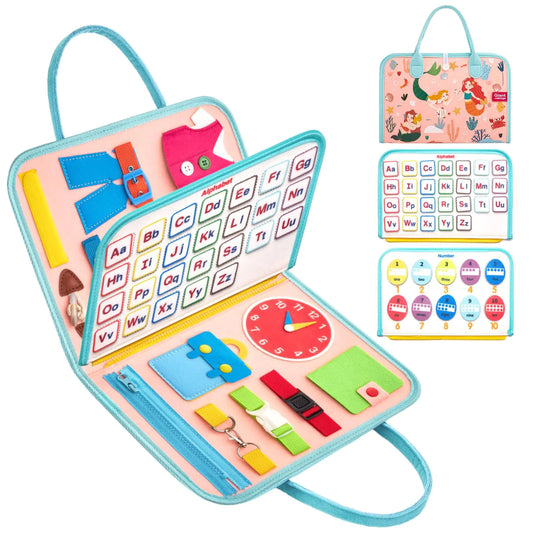
Little Mermaid Montessori Busy Board – 17-Activity Toddler Sensory Learning Toy Ages 1-4
Regular price $138.00Regular priceUnit price per$236.00Sale price $138.00SAVE 42% -
Bilingual English Spanish ABC Interactive Learning Poster for Toddlers Ages 2-4
Regular price $166.00Regular priceUnit price per$278.00Sale price $166.00SAVE 40% -
Montessori Wooden Bead Maze Toy – Fine Motor Activity Ages 1-4
Regular price $173.00Regular priceUnit price per$278.00Sale price $173.00SAVE 38%




Brain-Boosting Play for Ages 0 to 5 Years
The earliest years are the most important years. From birth through five, children's brains are building connections at a pace they will never match again. That is why the right developmental toys for babies, developmental toys for toddlers, and early learning toys make such a meaningful difference — not just for now, but for everything that comes after.
This collection covers the full span of early childhood development. Whether you need the best toys for a 1 year old, developmental toys for a 2 year old, brain boosting toys for toddlers, Montessori baby toys, preschool developmental toys, or educational toys for babies 0 to 12 months — you will find purposeful, age-appropriate options here that support real growth through hands-on play.
Parents building a full early learning environment often pair this collection with Montessori educational toys, sensory learning toys, educational toys for 3 year olds, language learning toys, and problem-solving play sets.
What You Will Find on This Page
Most Baby and Toddler Toys Entertain — But They Don't Actually Build Skills
Walk through any toy aisle and you will find hundreds of toys designed to flash lights, play music, and keep a child quiet for a few minutes. These toys have their place. But they are not the same as developmental toys — toys designed with a specific growth goal in mind, matched to the child's stage, and built to invite real participation rather than passive watching.
Parents searching for the best toys for a 1 year old, the best developmental toys for a 2 year old, or quality brain-boosting toys for toddlers are not just shopping for entertainment. They want toys that matter — toys that leave children a little stronger, a little more capable, and a little more confident after every play session.
The Early Years Are a Window — Not a Waiting Room. The Right Toys Open Doors That Close Later
Between birth and age five, a child's brain forms more than a million new neural connections per second. This is the window when motor skills, language, emotional regulation, spatial reasoning, and early problem-solving are built from scratch. Toys that encourage active engagement — grasping, stacking, matching, repeating, listening, discovering — help wire those connections more strongly.
Toys that only flash or beep don't do that work. They give the brain input but not challenge. The difference between a passive toy and a purposeful developmental toy is the difference between watching someone swim and learning how to swim yourself. The best early development toys invite children to do, try, repeat, and succeed.
Purposeful Early Development Toys Build the Skills Children Need for Preschool, School, and Life
The best early development toys for babies and toddlers make the most of this growth window. They are designed to match each developmental stage — supporting sensory exploration in infancy, motor development in early toddlerhood, language and problem-solving in the preschool years. Each toy type plays a different role, and together they build a genuinely strong foundation.
From baby development toys for 0 to 12 months to brain-boosting toys for toddlers ages 1 to 3 and preschool development toys for ages 3 to 5, this collection supports every stage of the early years with purposeful, hands-on play that children genuinely love.
Find the Right Developmental Toy for Your Child's Age
Shop purposeful, age-matched toys that support brain growth, motor skills, language, and early learning confidence.
Shop Early Development ToysBest Developmental Toys by Age — From Newborn to Preschool
Different ages need different toys. Here is what research and child development experts recommend at each stage — and what to look for when shopping.
Developmental Toys for Babies (0–6 Months)
In the first six months, babies are exploring the world through sight, sound, touch, and movement. Their nervous systems are building rapidly. The best developmental toys for this age support sensory stimulation, visual tracking, tummy time, and early grasping.
Best choices: high-contrast black and white toys, soft rattles, tummy-time mats with hanging objects, textured sensory toys, crinkle books, and simple cause-and-effect toys.
Developmental Toys for Babies (6–12 Months)
Babies at this stage are learning to sit, reach, transfer objects, and understand simple cause-and-effect. They also begin developing early language through listening and imitation. They need toys that reward exploration and movement.
Best choices: stacking rings, shape-sorting beginners, push-and-pull toys, soft block sets, bath toys with sensory features, and simple musical instruments.
Best Developmental Toys for 1 Year Olds
Age 1 is one of the most important developmental windows of childhood. Children are walking, babbling, beginning to talk, and learning how objects work. The best toys for a 1 year old support fine motor development, cause-and-effect discovery, early language, and independent exploration.
Best choices: stacking cups and nesting toys, shape sorters, simple wooden puzzles, push walkers, soft ball sets, touch-and-feel books, and beginner Montessori-style wooden toys that invite open-ended play. Montessori educational toys are especially well-suited to this age.
Best Developmental Toys for 2 Year Olds
Two-year-olds are testing independence, building vocabulary rapidly, and beginning to develop early logic through sorting and matching. The best developmental toys for 2 year olds should offer achievable challenges that build confidence while stretching skills.
Best choices: colour and shape sorting sets, simple peg puzzles, building blocks, basic pretend play sets, large-piece matching games, and early sensory bins. Sensory learning toys work especially well at this age.
Best Developmental Toys for 3 Year Olds
Three-year-olds are entering the preschool stage. Language is expanding fast, imaginative play is beginning, and early problem-solving through trial and error is a core learning method. This is the age where developmental toys become noticeably more educational.
Best choices: simple puzzles (10–25 pieces), building sets, early counting and sorting toys, dramatic play sets, art materials, and beginner STEM kits. Explore educational toys for 3 year olds for age-specific options.
Preschool Developmental Toys (4–5 Years)
At four and five, children are preparing for school. They need toys that build focus, counting, letters, problem-solving, and the ability to follow instructions and complete multi-step tasks — all while keeping play joyful.
Best choices: counting and number sets, letter recognition toys, logic games, building challenges, early reading materials, and skill-building kits. Problem-solving play sets and mathematics and counting toys are strong choices here.
Why Montessori-Inspired Toys Are Among the Best Early Development Toys
One of the most searched and highly recommended types of early development toys follows the Montessori philosophy. Montessori baby toys and Montessori toddler toys are designed around the same principle as all good developmental toys — that children learn best by doing, not watching.
Montessori-inspired developmental toys tend to be simple in design, open-ended in use, and matched carefully to the child's current skill level. They invite repetition, self-correction, and growing independence. Wooden stacking toys, shape sorters, simple puzzles, and sorting materials all fit within both the Montessori framework and the broader category of high-quality developmental toys.
Parents looking specifically for this style will find strong options in the Montessori educational toys collection, which pairs especially well with the early development range.
6 Brain-Boosting Benefits of High-Quality Developmental Toys
Quality early development toys don't just keep children busy. They actively support the growth happening inside a young child's brain and body every single day.
Hands-on play during the early years strengthens brain pathways that support learning for life.
Grasping, stacking, pushing, sorting, and fitting build the coordination children need for writing, drawing, and play.
Interactive toys encourage naming, listening, imitation, and the back-and-forth that builds early vocabulary.
Textures, sounds, colours, and movement give babies and toddlers the sensory input their developing brains need.
Purposeful play with achievable challenges teaches children to stay engaged and try again when something is difficult.
Small successes through self-directed play help babies and toddlers feel capable and willing to tackle bigger challenges.
Shop by Developmental Stage and Learning Goal
Use these cards to find the right type of developmental toy for your child's current age and growth focus.
Baby Development Toys
Sensory toys, rattles, tummy-time mats, and grasping toys for the earliest stages of growth.
Builds: sensory awareness, motor exploration, cause and effect
Explore Sensory Learning Toys →Best Toys for 1 Year Olds
Stacking, sorting, and simple wooden toys that support motor control, language, and independence.
Builds: fine motor, early logic, language, independence
Explore Montessori Toys →Developmental Toys for 2 Year Olds
Matching, building, and sensory play that supports growing vocabulary and early reasoning.
Builds: vocabulary, coordination, logic, confidence
Explore Development Toys →Preschool Development Toys
Puzzles, early STEM, building, and imaginative play sets that prepare children for school.
Builds: problem-solving, creativity, early academics
Explore Toys for 3 Year Olds →Language Development Toys
Toys that encourage listening, naming, babbling, and early communication from year one.
Builds: vocabulary, imitation, listening, speech
Explore Language Toys →Brain-Boosting Thinking Toys
Simple logic and challenge toys that introduce early problem-solving and focused thinking.
Builds: patience, reasoning, concentration
Explore Problem-Solving Sets →How to Choose the Right Developmental Toy for Your Child
Choosing the right toy starts with the child's age and current ability — not just the toy's stated age range on the box. A great developmental toy should feel achievable on the first try, interesting enough to repeat, and slightly challenging to master. That sweet spot is where real learning happens.
Ask yourself: Does this toy invite the child to do something, or just watch something? Does it allow for open-ended exploration or only one way to play? Can it be used across multiple stages and in multiple ways? The best developmental toys for babies and toddlers grow with the child.
Also consider the skills you most want to support right now. Fine motor development, language, sensory exploration, early math, or independence? Each skill set has a category of toys best suited to it — and mixing types is always a strong strategy.
Developmental Toys Make the Most Meaningful Gifts for Babies and Toddlers
If you are shopping for a baby shower gift, a first birthday present, a second birthday toy, or a thoughtful holiday gift for a toddler, developmental toys offer something that most other gifts cannot: real, lasting value that compounds over time.
Parents notice and appreciate purposeful gifts. A high-quality stacking set, a well-made shape sorter, a Montessori-style wooden toy, or a sensory kit that supports a child's stage — these gifts get used, talked about, and remembered. They are also among the few gifts that get more valuable as the child grows into them.
Give Your Child the Best Start Through Purposeful, Brain-Boosting Play
The early years pass quickly. The connections built through purposeful play in the first five years shape how a child thinks, moves, communicates, and learns for the rest of their life. Developmental toys don't replace parenting or caregiving — they support it. They give children more ways to learn, more opportunities to succeed, and more confidence to keep exploring.
Shop developmental toys for babies, developmental toys for toddlers, brain-boosting toys for ages 1 to 3, and preschool development toys for ages 3 to 5 — all in one carefully curated collection.
Frequently Asked Questions About Developmental Toys for Babies and Toddlers
1. What are developmental toys for babies?
Developmental toys for babies are toys designed to support brain, motor, sensory, and language growth during the first years of life — inviting active play rather than passive entertainment.
2. What are the best developmental toys for 1 year olds?
Stacking cups, shape sorters, simple wooden puzzles, push walkers, and Montessori-style open-ended toys are consistently recommended as best developmental toys for 1 year olds.
3. What are the best developmental toys for 2 year olds?
Colour and shape sorters, simple peg puzzles, building blocks, beginner matching games, and sensory materials are excellent developmental toys for 2 year olds.
4. What are the best toys for 1 year olds overall?
The best toys for 1 year olds support motor development, early language, and cause-and-effect discovery. Look for stacking rings, shape sorters, simple wooden toys, and sensory exploration materials.
5. What are brain-boosting toys for toddlers?
Brain-boosting toys for toddlers are toys that actively challenge young minds — through matching, sorting, problem-solving, language interaction, and hands-on exploration — rather than just entertaining passively.
6. Are Montessori toys the same as developmental toys?
Montessori toys are a type of developmental toy. They share the same core principle — child-led, hands-on, purposeful learning — and are often the best developmental toys for babies and toddlers.
7. How early should I start using developmental toys?
From birth. Newborns benefit from high-contrast visual toys, soft textures, and gentle sounds. Every stage from birth through age five has appropriate developmental toys.
8. What is the difference between a developmental toy and a regular toy?
A developmental toy is intentionally designed to support a specific growth goal at a specific stage. A regular toy may entertain without meaningfully challenging the child's developing brain and body.
9. Do developmental toys help with speech and language?
Yes. Toys that encourage naming, imitation, listening, and communication — like interactive books, matching games, and cause-and-effect toys — actively support speech and language development.
10. What developmental toys support fine motor skills?
Stacking toys, shape sorters, peg puzzles, threading toys, and building sets all support fine motor development in babies and toddlers.
11. Can developmental toys reduce screen time?
Yes. Quality developmental toys give children hands-on ways to play, explore, and learn that are more engaging than passive screen time.
12. What are the best developmental toys for 3 year olds?
Puzzles with 10–25 pieces, building sets, counting and sorting toys, beginner pretend play, and early STEM activities are well suited to 3 year olds.
13. How many developmental toys does a toddler need?
A few high-quality toys used regularly are more beneficial than many mediocre ones. Rotate 4–6 toys every few weeks to keep play fresh and engaging.
14. Do developmental toys help with preschool readiness?
Absolutely. Preschool development toys that build focus, fine motor control, early counting, listening, and independence directly prepare children for the preschool and school environment.
15. Are developmental toys good for sensory processing?
Yes. Sensory-rich developmental toys — with varied textures, sounds, weights, and colours — support healthy sensory processing and integration in early childhood.
16. What are the best baby development toys for 0 to 6 months?
High-contrast visual toys, soft rattles, tummy-time mats with hanging objects, crinkle books, and textured sensory toys are among the best choices for newborns to 6 months.
17. What are the best baby development toys for 6 to 12 months?
Stacking rings, shape-sorting beginners, soft block sets, push-and-pull toys, and simple cause-and-effect toys are ideal for babies at 6 to 12 months.
18. Should developmental toys be wooden or plastic?
Both can be excellent. Wooden toys tend to be durable, open-ended, and Montessori-aligned. Plastic toys can offer useful sensory and interactive features. Focus on how the toy invites play, not just the material.
19. What are child development toys?
Child development toys is a broader term covering all toys designed to support cognitive, motor, language, sensory, and emotional growth in children of any age from birth through early childhood.
20. Can siblings share developmental toys?
Yes. Many developmental toys are safe and useful across multiple ages, though younger children should always be supervised with toys containing smaller pieces.
21. Are developmental toys good for daycare and preschool?
Yes. Developmental toys are widely used in daycare and preschool settings because they support hands-on, independent, and group learning effectively.
22. What is the best first birthday gift for development?
Stacking cups, a shape sorter, a simple wooden puzzle, or a quality Montessori-style exploration set are all excellent first birthday developmental gifts.
23. Do developmental toys need to be expensive?
No. Some of the most effective developmental toys are simple and affordable. A set of stacking cups, a shape sorter, or a soft sensory ball can deliver excellent developmental value.
24. How do developmental toys support emotional development?
Predictable play routines, achievable challenges, and small successes all help babies and toddlers build emotional regulation, confidence, and a sense of control over their environment.
25. Can developmental toys help with early maths?
Yes. Sorting, counting, matching, and patterning toys all introduce early mathematical concepts through hands-on, concrete play.
26. What makes a toy truly developmental?
A truly developmental toy invites the child to actively participate, challenges them appropriately, allows for repetition and mastery, and supports a specific skill that matters at their developmental stage.
27. Are Montessori baby toys good for development?
Yes. Montessori baby toys are specifically designed to support development by matching the child's current abilities and encouraging independence, fine motor skill, and hands-on discovery.
28. How often should I rotate my toddler's developmental toys?
Rotating toys every two to three weeks helps maintain interest, makes familiar toys feel new again, and allows you to reintroduce toys at a higher skill level as your child develops.
29. Are early development toys useful for children with developmental delays?
Many developmental toys are used by therapists and specialists because they support skill-building in a gentle, child-led way. Always consult with a professional for tailored recommendations.
30. Where is the best place to buy developmental toys for babies and toddlers?
WonderKidsToy's Early Development Toys collection is curated specifically to support babies and toddlers from birth through age five, with options for every developmental stage and goal.
More Collections
- Best Arts and Crafts for Kids
- Best Board Games for Kids
- Best Building and Construction Toys for Kids
- Best Educational Toys for 3 Year Olds
- Best Geography Toys for Kids
- Best Global Learning Toys for Kids
- Best Language Learning Toys for Kids and Toddlers
- Best Learning Toys for Kids
- Best Math and Counting Toys for Kids
FREE: Get $99 worth Creative Digital Vault
Order now and get instant access to 130+ Digital Learning Books. While your item ships, your child can start learning immediately!
Explore Screen Free Toys
Looking for more fun and educational toys for kids? Explore our most popular collections designed to support STEM learning, creativity, language development, problem-solving, and hands-on play.