

Watching your child grow is incredibly rewarding. It is amazing to see them master new milestones and discover the world around them. While many toys aim to entertain, hands-on play is the true driver of meaningful development.
The Montessori method uses simple, purposeful tools to help kids learn on their own and solve problems. A Montessori concentration game based on these principles can significantly improve a child's ability to focus, transforming restless energy into deep engagement. These toys aren't just playthings; they are foundational educational toys designed for long-term success.
In this guide, you will learn the core principles of Montessori education, the specific benefits of concentration games, and how to choose the right Montessori educational toys to foster a lifetime of curiosity and confidence.
Table of Contents
Keeping Kids Focused in a Distracted World
Many parents today worry about their child's attention span. With screens, flashing lights, and noisy gadgets everywhere, it’s harder than ever for young minds to practice "deep work." We often see children bounce from one toy to another, never truly engaging or learning how to stick with a challenge until it’s solved.
This lack of focus isn't just about playtime; it affects school readiness and emotional regulation. Without the opportunity to practice concentration, kids miss out on the pride that comes from independent accomplishment.
Why Passive Entertainment Stalls Growth
When a toy does all the work—singing, moving, and flashing at the push of a button—the child becomes a passive observer. This overstimulation can actually decrease a child's ability to focus on quieter, more meaningful tasks. Early childhood is a critical window for cognitive skill development, and passive toys simply don't provide the resistance needed to build mental muscle.
Without the foundation of independence and problem-solving, children may struggle to develop self-confidence. They become reliant on external stimulation rather than their own internal curiosity. This is why many parents are pivoting toward problem-solving play sets that require active participation.
The Montessori Solution: Purposeful Concentration Games
A Montessori concentration game is designed to capture a child's attention naturally. By using simple, high-quality materials, these games isolate a specific skill—like sorting, matching, or balancing. This lack of "noise" allows the child to enter a state of "flow," where they are entirely focused on the task at hand.
These tools turn play into an active learning session. Whether they are working with mathematics and counting toys or a memory board, they are learning to think critically and persist through difficulty. This is the hallmark of a premium early learning environment.
Ready to unlock your child's focus?
Discover our hand-picked concentration games and Montessori sets designed to build confidence through play.
Shop Montessori Games Now
Focusing on a single task allows children to develop the patience and persistence needed for future academic success.
Understanding Montessori Principles
Dr. Maria Montessori believed that children are naturally curious and capable. Her method focuses on a "prepared environment" that supports independent exploration. When choosing educational toys for kids, we look for three key pillars:
- Hands-On Learning: Using physical materials to master abstract concepts.
- Independence: Tools designed for the child to use alone, building confidence.
- Self-Correction: Toys that provide immediate feedback, letting the child learn from their own mistakes.
By encouraging these habits early, you support lifelong learning habits and emotional intelligence. For example, Montessori toys build real-life skills that transfer directly to the classroom and beyond.
The Developmental Benefits of Montessori Play
Enhanced Concentration
These toys keep kids on task, helping them practice the "mental muscle" of staying focused until a task is finished.
Fine Motor Mastery
Tapping, sorting, and placing small wooden pieces builds the hand-eye coordination needed for writing and drawing.
Social Cooperation
Many Montessori games are designed for shared play, teaching kids how to take turns, share, and communicate.
Self-Confidence
Successfully completing a "hard" game without adult help makes a child feel proud, capable, and ready for more.
Quick Guide: Choosing Focus-Building Toys
Sorting Games
Best for: Logical thinking & math readiness
Main Benefit: Pattern recognition
Typical Age: 18 months to 4 years
Memory Boards
Best for: Cognitive recall & strategy
Main Benefit: Improved focus time
Typical Age: 3 to 7 years
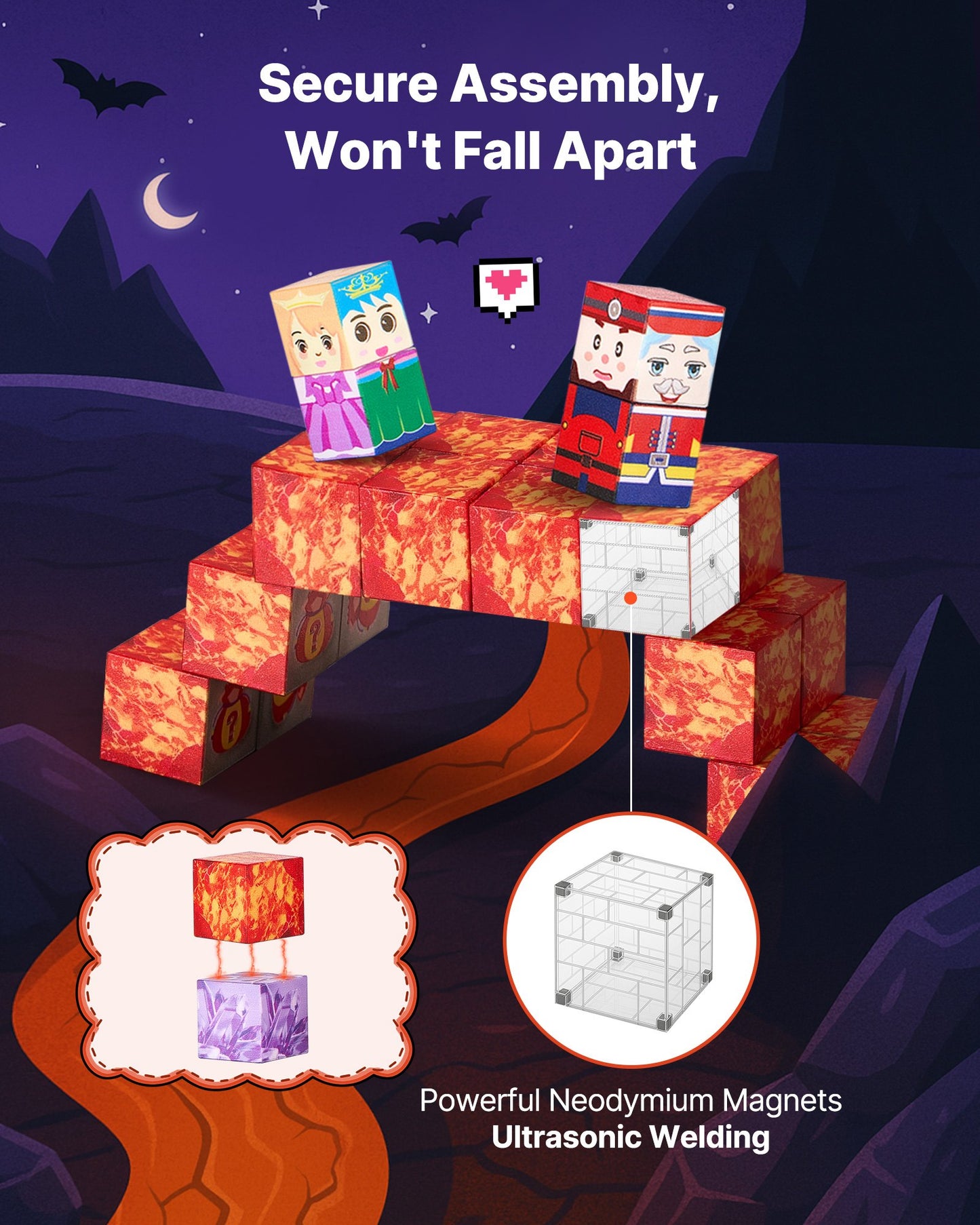
Building Bricks
Best for: Engineering & creative logic
Main Benefit: Fine motor coordination
Typical Age: 2 to 10 years
Incorporating Montessori into Daily Life
The Montessori concentration game toy is most effective when it’s part of a routine. Setting up a dedicated quiet area for play helps signal to the child that it is time for "focus work." Avoid having too many toys out at once—this prevents overwhelm and encourages deeper engagement with one specific tool.
Shared playtime is also key. While these toys promote independence, playing together allows you to guide them through tricky moments without "fixing" the problem for them. This creates a safe space for growth and builds a stronger emotional bond. Explore our range of early development toys to find the perfect addition to your home learning environment.
Final Thoughts: A Lasting Impact
Montessori toys deliver more than just a few minutes of quiet; they offer a lasting impact on your child's development. By choosing toys that challenge the mind and respect the child’s natural pace, you are supporting lifelong learning habits, emotional intelligence, and self-confidence.
The journey of discovery starts with a single toy. Whether it is a concentration game or a wooden puzzle, the right choice helps your child see the wonder in the world—and in themselves. Start your Montessori journey today and watch your child flourish.
Ready to make learning exciting?
Explore our premium collections of educational toys, STEM kits, and Montessori tools today.
Shop WonderKidsToy TodayFrequently Asked Questions About Montessori Focus Toys
1. What is a Montessori concentration game toy?
It is a purposeful play tool designed to capture a child's interest and isolate a specific skill, helping them build long-term focus and patience.
2. How do Montessori toys support development?
They encourage hands-on exploration, independence, and logical thinking, which are core pillars of healthy cognitive and emotional growth.
3. At what age can children start using concentration games?
Simple sorting or sensory games can begin as early as 18 months, with more complex memory games introduced around ages 3 to 4.
4. Do Montessori toys really help with ADHD or short attention spans?
Yes, by eliminating the overstimulation of loud, flashy toys, Montessori tools help children practice "quiet focus," which can strengthen attention spans over time.
5. Why are Montessori toys often made of wood?
Natural materials like wood provide a better tactile experience, are more durable, and offer a calming aesthetic compared to bright plastic.
6. How do I choose the right Montessori toy for my child?
Match the toy to your child's current developmental stage and interests. If they love counting, choose a math-focused toy; if they like building, choose bricks.
7. What is self-correction in toys?
It’s a design feature where the toy only works "right" when the child solves it correctly (e.g., a puzzle piece only fitting in one hole), allowing them to learn without adult help.
8. Can these toys help with school readiness?
Absolutely. They build the pre-requisite skills for school, such as following instructions, staying on task, and fine motor mastery.
9. How many toys should I have out at once?
Montessori experts recommend "toy rotation"—keeping only 4-6 toys available to prevent overwhelm and encourage deeper play.
10. Are concentration games good for group play?
Yes, many games like memory boards or matching sets are excellent for teaching turn-taking and social cooperation.
11. What is hands-on learning?
It’s the process of learning through physical action—touching, moving, and manipulating objects to understand how they work.
12. Do Montessori toys help with emotional intelligence?
Yes, by encouraging perseverance and empathy through shared play, children develop better emotional awareness.
13. How do these toys build self-confidence?
When a child finishes a challenge entirely on their own, they internalize the belief that they are capable and smart.
14. Are Montessori toys expensive?
While some premium sets have a higher upfront cost, their durability and long-term educational value often make them more cost-effective than disposable plastic toys.
15. What is the "prepared environment"?
A space specifically organized to allow children to reach, explore, and play with their tools independently.
16. Can I use these for home schooling?
Yes, they are core components of many early childhood homeschool curricula worldwide.
17. How do concentration games improve memory?
They require children to visualize patterns and remember locations of objects, strengthening the brain's recall ability.
18. Do these toys help with fine motor skills?
Yes, sorting small items or placing pieces precisely helps build the small muscles needed for writing and self-care tasks.
19. What makes a toy "premium"?
High-quality, non-toxic materials, expert-vetted design, and a focus on developmental milestones rather than just distraction.
20. How do I clean wooden Montessori toys?
Wipe them with a damp cloth and mild soap. Avoid soaking them in water to prevent the wood from warping.
21. Are these toys gender-neutral?
Most are, as they focus on universal human milestones like logic, movement, and focus.
22. Why are subtle colors preferred in Montessori?
Natural and subtle colors reduce overstimulation, allowing the child to focus on the function of the toy rather than just the visual flash.
23. What is the benefit of "open-ended" play?
Open-ended toys can be used in multiple ways, allowing a child to use their imagination and think outside the box.
24. Do Montessori toys follow a curriculum?
They are designed to follow the natural development of a child, which often aligns with preschool and kindergarten standards.
25. How do I prevent my child from getting frustrated?
Ensure the toy is not too advanced for their current skills. A good Montessori toy should be challenging but achievable.
26. Can concentration games help with math?
Yes, sorting by size or number and identifying patterns are foundational skills for mathematics.
27. What is "active recall"?
It is the process of retrieving information from the brain, which is practiced extensively in concentration and memory games.
28. Is it better to buy a kit or individual toys?
Kits often provide a well-rounded variety of challenges, but individual toys can be great for targeting a specific interest.
29. Where can I find top-rated Montessori toys?
WonderKidsToy offers a curated selection of high-quality, educator-vetted Montessori tools for all ages.
30. Can I earn money by promoting educational toys?
Yes, influencers and bloggers can join the WonderKidsToy affiliate program to earn commission on educational products.
Earn Commission Promoting Educational Toys
If you are a blogger, parenting influencer, teacher, or homeschool creator, you can earn commission by promoting educational toys from WonderKidsToy.
Our affiliate program allows creators to share Montessori toys, STEM toys, and learning toys for kids while earning income from their content. Joining takes less than a minute.
👉 Apply here: https://wonderkidstoy.com/pages/join-our-affiliate-program
Continue Shopping by Learning Goal
Start with Educational Toys, then explore Educational Toys and STEM Toys.
Secure checkout • Free worldwide shipping • Review current product details before purchase