
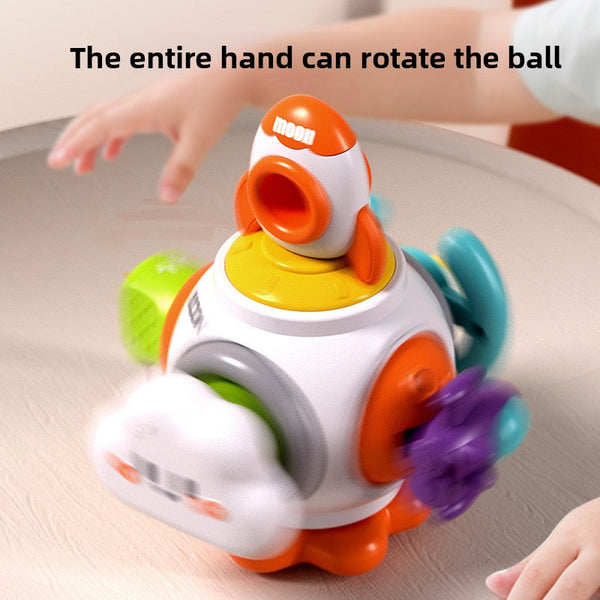

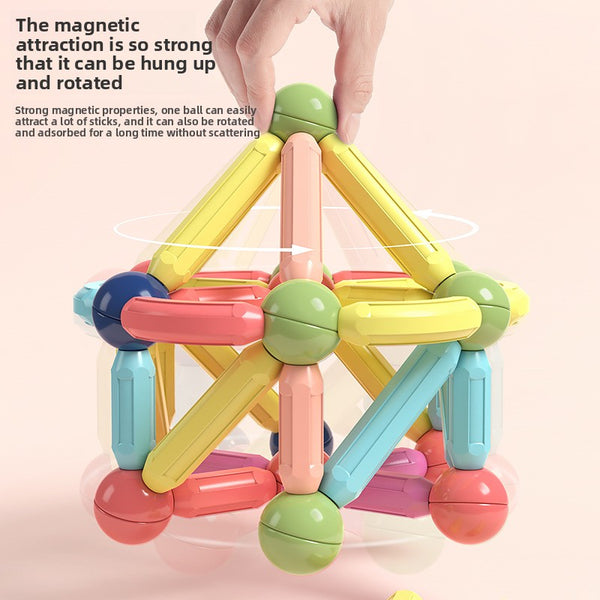
Every parent wants the best opportunities for their child to grow and succeed. One of the simplest and most powerful ways to support learning during early childhood is through play. Children naturally learn by exploring the world around them—they touch, test, and experiment. This is where finding the best educational toy becomes essential.
While many toys on the market offer only brief entertainment with flashing lights and loud sounds, true educational toys are designed to stimulate different parts of the brain. They help children develop lasting skills such as memory, reasoning, and logical thinking. By selecting high-quality educational toys, you turn playtime into a meaningful developmental journey.
In this guide, we explore the qualities of effective learning tools, the benefits of STEM toys and Montessori educational toys, and how to choose the right tools to build your child's confidence and curiosity.
Table of Contents
Flashy Marketing vs. Real Value
Walk into any toy store and you will see thousands of products designed to attract children with bright colors and loud noises. While these toys look appealing, many provide very little educational value. Children may play with them for a few minutes, but these toys rarely challenge them to think or explore new ideas.
Passive toys often train children to be spectators rather than creators. When a toy does all the work, the child loses interest quickly because there is no problem to solve or experiment to run.
Why Early Childhood Development Cannot Wait
Early childhood is a period of rapid neurological growth. Research indicates that toys encouraging interaction and exploration have a far greater impact on brain development than passive toys. If a child's playroom is filled with "one-button" gadgets, they miss critical windows for developing problem-solving skills and resilience.
Without opportunities to test ideas and discover solutions independently, children may struggle with cognitive flexibility later in life. Parents today need tools that actively engage their children's curiosity and build the mental architecture for future success.
Toys That Grow with the Child
The best educational toys share a common trait: they encourage active participation. Whether it is through puzzle brain teasers that strengthen logic or construction sets that teach balance, these toys stimulate multiple areas of development simultaneously.
Educational toys turn learning into a natural, enjoyable experience. They allow children to test hypotheses, fail safely, and try again—building the patience and persistence needed for academic achievement. By choosing toys designed for meaningful development, you are giving your child a head start in school and beyond.
Ready to spark your child's innovation?
Explore our curated selection of toys designed to build creativity, logic, and lifelong confidence.
Shop Educational Toys NowCreativity and Problem Solving Through Building
Building and construction toys are among the most versatile learning tools. They help children understand spatial relationships, geometry, and engineering through hands-on stacking and design.
When a structure collapses, it isn't a failure—it's a lesson in physics. Children learn to rethink their designs, strengthening their analytical skills and resilience. This process turns confident creators into future problem solvers.
Quick Guide: Which Toy is Best for Your Goal?
Puzzles
Goal: Logic & Memory
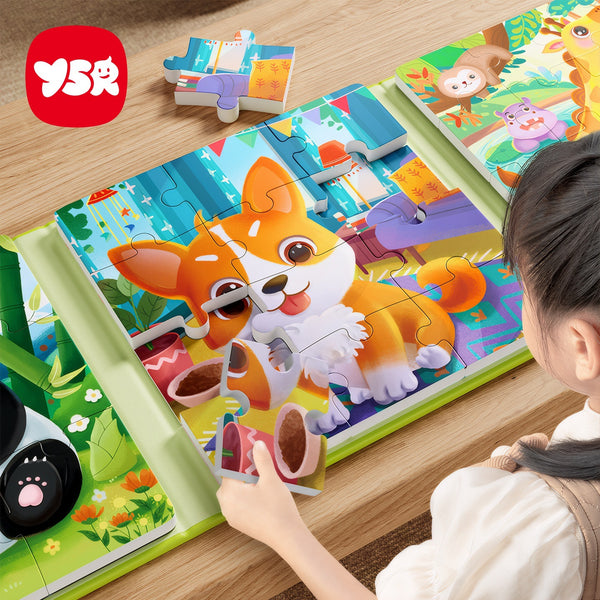
Best for: Concentration and pattern recognition.
Typical age: 3 to 10 years
Montessori
Goal: Independence
Best for: Real-world motor skills and focus.
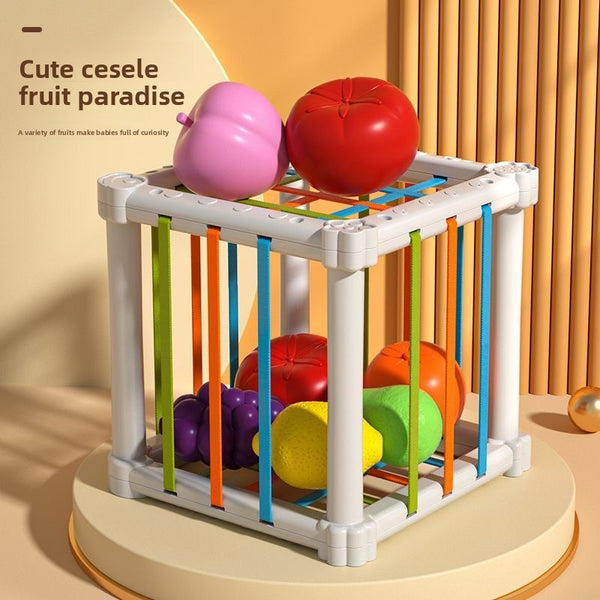
Typical age: 1 to 6 years
STEM Kits
Goal: Innovation
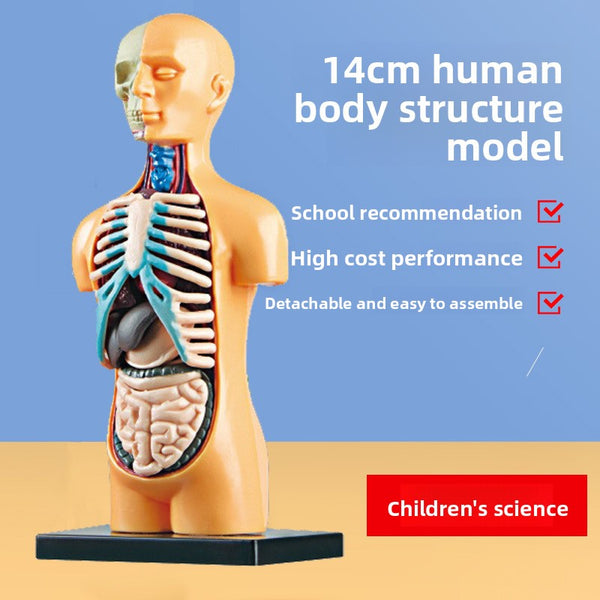
Best for: Science, coding, and engineering.
Typical age: 5 to 12 years
Choosing the Best Toy for Your Child's Stage
Selecting the right toy depends on your child's developmental stage. Young toddlers benefit most from sensory exploration and motor skill builders. Preschoolers are ready for pattern matching and early mathematics and counting. School-aged kids thrive on complex strategy and engineering.
Always look for toys that offer a challenge without causing frustration. High-quality materials and thoughtful designs provide the greatest long-term benefits, turning every play session into a laboratory of learning.
Final Thoughts: A Smart Investment in Innovation
Educational toys are more than objects; they are catalysts for brain development. By moving away from passive entertainment and toward active exploration, you help your child build a foundation of intelligence and curiosity. Turn your home into a space where discovery is a part of everyday life.
Explore our site for more tips on getting kids off screens and into real learning.
Invest in their potential today.
Shop our vetted collection of high-quality educational toys and watch your child flourish.
Explore Learning Toys NowFrequently Asked Questions About Educational Toys
1. What are educational toys?
They are toys specifically designed to stimulate learning and skill development (like logic, motor skills, or literacy) through active play.
2. Why are educational toys important?
They foster critical brain development during the peak formative years, improving problem-solving, coordination, and confidence.
3. At what age should children start using educational toys?
Children can begin using sensory-based educational toys from infancy, moving to more complex kits as they reach toddlerhood.
4. Do educational toys improve brain development?
Yes, they strengthen neural connections by encouraging pattern recognition, trial-and-error, and spatial reasoning.
5. Are Montessori toys considered educational?
Absolutely. Montessori toys focus on independent discovery and mastery of real-world skills through simple, focused tasks.
6. What are STEM toys for kids?
STEM toys focus on Science, Technology, Engineering, and Math, often involving building, coding logic, or scientific experiments.
7. How do I choose a safe educational toy?
Look for non-toxic materials (like solid wood) and ensure there are no small parts for children under 3. Always check for age certifications.
8. Can puzzles improve memory?
Yes, puzzles require active recall of shapes and positions, which builds both focus and long-term memory centers.
9. Are musical toys educational?
Yes, they improve auditory discrimination, rhythm awareness, and coordination between the ears and hands.
10. How do toys improve attention span?
By providing an engaging task that requires sequential steps, toys train the brain to stay on task for longer durations.
11. What is the benefit of wooden over plastic toys?
Wood is more durable, sustainable, and provides a varied tactile experience that stimulates the brain differently than plastic.
12. Do educational toys reduce screen time?
Yes, by being more physically engaging and interactive, they satisfy a child's urge for discovery without digital side effects.
13. Can toys prepare my child for preschool?
Yes, they develop foundational skills like sitting still, following patterns, and fine motor control needed for early writing.
14. Are STEM toys suitable for toddlers?
Yes, simple stacking gears and large building blocks are introductory STEM tools for younger children.
15. Do educational toys improve confidence?
Successfully completing a physical challenge independently gives children a massive boost in self-esteem and agency.
16. What is the benefit of "open-ended" toys?
Open-ended toys (like blocks) have no single "right" way to play, which forces kids to invent their own rules and creative logic.
17. Why is independent play important?
It teaches children that they can solve problems without constant adult intervention, a key skill for lifelong learning.
18. Do educational toys help with social skills?
Many games and building sets encourage turn-taking, cooperation, and collaborative problem-solving between peers.
19. Are these toys expensive?
High-quality educational toys are an investment; their durability and long-term value often make them more cost-effective than disposable plastic toys.
20. How do I clean wooden educational toys?
Wipe them with a damp cloth and mild soap. Avoid soaking them in water to prevent the wood from warping.
21. Can toys teach physics?
Yes! Building sets and magnetic tiles teach about gravity, force, and structural stability in a physical, tangible way.
22. What is "active learning" in toys?
It's the process where the child is the "source of energy" and logic for the play, rather than just watching the toy perform.
23. Do educational toys help with ADHD?
Many parents find that focused, physical tasks like complex building or sorting help calm the mind and build concentration habits.
24. Are these toys gender-neutral?
Most educational toys are based on universal human milestones like logic and movement, making them perfect for all children.
25. Do they follow a specific curriculum?
Many are designed to follow standard preschool benchmarks for math, literacy, and motor skills.
26. What is a "busy board"?
A Montessori tool featuring real-world objects like latches and zippers that toddlers can master to learn manual dexterity.
27. Can toys help with math skills?
Yes, sorting toys and building blocks provide a physical representation of volume and numbers, which is essential for math logic.
28. Why should I buy from WonderKidsToy?
We curate only the highest-quality, educator-vetted toys that focus on real developmental growth over marketing trends.
29. Can I find bilingual educational toys?
Yes, we offer several products specifically designed to aid early multi-language acquisition and phonetic awareness.
30. How do I start today?
Pick one developmental skill your child is currently working on—like sorting or stacking—and find a toy that challenges them to master it!
Earn Commission Promoting Educational Toys
If you are a blogger, parenting influencer, teacher, or homeschool creator, you can earn commission by promoting educational toys from WonderKidsToy.
Our affiliate program allows creators to share Montessori toys, STEM toys, and learning toys for kids while earning income from their content. Joining takes less than a minute.
👉 Apply here: https://wonderkidstoy.com/pages/join-our-affiliate-program