Best STEM Toys for 5-Year-Olds in 2026 (Complete Developmental Guide)

Five-year-olds are on the cusp of formal schooling, and the STEM foundations laid through play in this final preschool year have outsized influence on the academic trajectory that follows. Spatial reasoning is still developing at peak rate. Mathematical pattern intuition is consolidating. Scientific curiosity is at its most voracious. And the cognitive readiness for structured problem-solving — the ability to plan, attempt, observe failure, and revise — is arriving for the first time at genuine sophistication. The best STEM toys for 5-year-olds are those that capitalise on this exact developmental moment: toys that challenge the 5-year-old’s rapidly expanding cognitive capability without outpacing it, and that build the specific STEM foundations that Year 1 and Grade 1 schooling will formalise.

Explore our complete STEM toys, engineering toys, and mathematics and counting toys collections. For the companion guides in this series see STEM toys for 4-year-olds and STEM toys for 6-year-olds.

What Makes Age 5 a Critical STEM Development Year

Five-year-olds bring new cognitive capabilities to STEM toy engagement that weren’t fully present at 4:

Conservation Emerging

Beginning to understand that quantity doesn’t change with rearrangement (Piaget’s conservation). A huge mathematical leap — five objects spread wide are still five objects. This arrives at age 5–6.

Counting to 20+

Reliable counting past 10, beginning two-digit number awareness, first subtraction concepts emerging. School maths foundations are forming rapidly at 5.

Purposeful Construction

Can plan a multi-session building project and return to it the next day. LEGO Classic ships without instructions and this is the age it becomes truly valuable — the child has the spatial planning to execute original ambitious designs.

Hypothesis Forming

“I think…” sentences arrive reliably at 5. Children can predict outcomes before testing, compare prediction to result, and express surprise when they differ. The scientific method in its earliest form.

Best STEM Toys for 5-Year-Olds in 2026

1. LEGO Classic — Best Engineering STEM Toy for 5-Year-Olds

STEM domain: Engineering, spatial reasoning, creative design  |  Price: ~$30–$60  |  Why at 5: Fine motor and spatial planning both ready

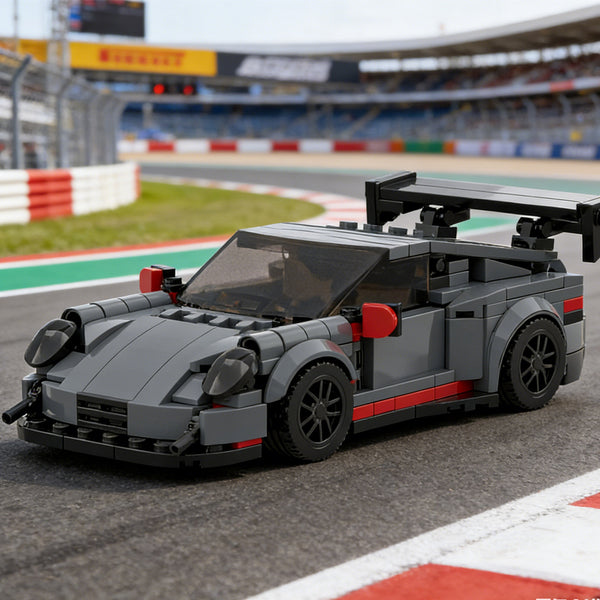
If there is one single STEM toy to prioritise at age 5, it is LEGO Classic. The pincer grip and hand-eye coordination required for standard LEGO brick connection are typically fully developed by 5. The spatial planning capability for intentional multi-element original builds has arrived. And the 5-year-old’s expanding construction ambition — building cities, spaceships, houses with rooms, vehicles with working doors — is perfectly matched to what LEGO Classic enables. Open-ended building without instruction guides is the high-priority activity: it develops spatial intelligence through creative design decisions that instruction-following cannot. The spatial reasoning built here is the strongest predictor of later maths performance, making LEGO at 5 one of the highest-leverage educational investments available.

2. Magnetic Tiles (Connetix / Magna-Tiles) — Best Geometry STEM Toy

STEM domain: Mathematics, geometric reasoning, spatial intelligence  |  Price: ~$50–$120  |  Why at 5: Geometric discovery at peak rate

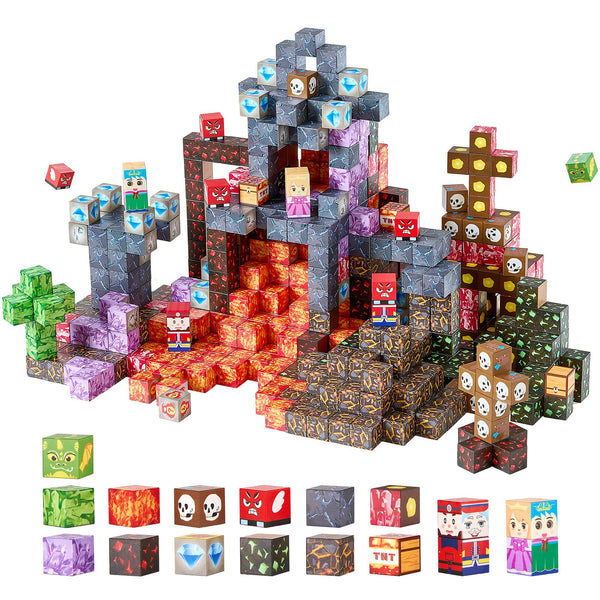
At 5, magnetic tile builders discover their most sophisticated geometric insights: that triangles added to rectangular structures create rigidity (structural engineering), that specific tile combinations produce specific three-dimensional forms (geometric topology), and that symmetrical designs require precise spatial planning (mathematical symmetry). These are genuine mathematical discoveries that primary school geometry will formalise years later. A 5-year-old who has built with quality magnetic tiles for a year arrives at geometry lessons with intuitions that make abstract shapes feel physically familiar rather than abstractly foreign.

3. Cuisenaire Rods — Best Maths STEM Toy for 5-Year-Olds

STEM domain: Mathematics, arithmetic, number relationships  |  Price: ~$15–$30  |  Why at 5: Arithmetic foundations forming for school entry

At 5, as school maths instruction approaches, Cuisenaire rod discoveries become directly arithmetic: that the white rod (1) fits exactly 10 times into the orange rod (10) is the embodied experience of place value; that two red rods plus one light green rod equal one yellow rod is physical addition; that removing a red rod from a yellow rod leaves a light green rod is physical subtraction. Children who have developed Cuisenaire rod fluency before formal arithmetic instruction consistently find school maths concepts faster to grasp because the abstract symbols formalise discoveries they already made physically. This is the pedagogical approach of Singapore Maths and Maths Mastery curricula — concrete first, abstract symbol second.

4. GraviTrax Starter — Best Physics-Engineering STEM Toy

STEM domain: Physics, engineering, systematic problem-solving  |  Price: ~$50–$70  |  Why at 5: Hypothesis-test approach now cognitively available

Five-year-olds are cognitively ready for GraviTrax’s core loop: form a hypothesis about why the marble isn’t reaching the target, test the hypothesis by modifying the track, observe the result, revise. This is the scientific method in physical play form. The physics concepts being encountered — that speed depends on height, that curves bleed momentum, that the marble needs enough energy to complete the circuit — are being discovered experimentally at age 5, years before formal physics introduces energy and momentum. GraviTrax beginner challenge cards are fully accessible independently at 5.

5. Pattern Blocks — Best Mathematical Pattern STEM Toy

STEM domain: Mathematics, geometry, algebraic pattern thinking  |  Price: ~$15–$30  |  Why at 5: Pattern extension and geometric decomposition becoming sophisticated

At 5, pattern block play advances to its most mathematically rich form: the deliberate exploration of how complex shapes decompose into simpler ones (the hexagon = two trapezoids = three rhombuses = six triangles), and the creation of original tessellating designs that cover a surface without gaps. Both of these are genuine mathematical activities — shape decomposition is foundational for fractions; tessellation is foundational for geometric proof. The algebraic pattern thinking developed through ABABAB and AABBAABB sequences directly prefigures the pattern recognition that algebra requires.

6. Botley 2.0 Coding Robot — Best Technology STEM Toy for 5-Year-Olds

STEM domain: Technology, computational thinking, sequencing logic  |  Price: ~$80–$100  |  Why at 5: Screen-free coding perfectly matched to cognitive stage

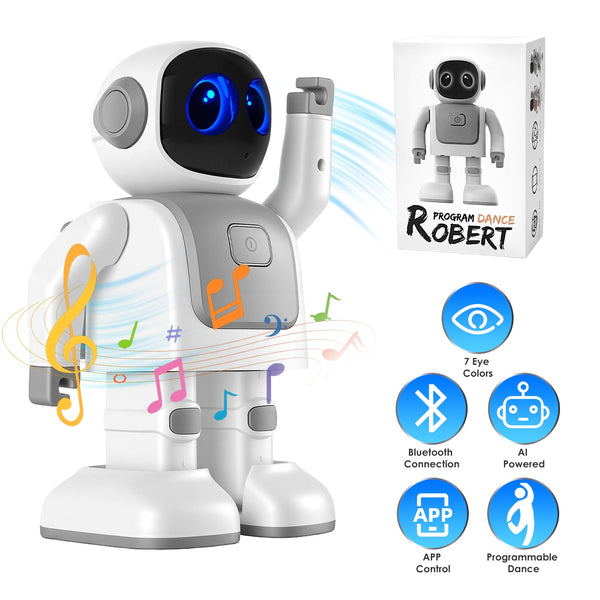
Botley 2.0 is screen-free and app-free: children program movement sequences using a physical remote, press “go”, and watch Botley execute the full sequence. The computational concepts introduced — sequence (instructions execute in order), loops (repeat a sequence), conditional reactions (if Botley detects an object, do this) — are the same concepts that Python, Java, and every professional programming language use. Learning them at 5 through physical robot feedback, without any screen, establishes computational thinking foundations that formal coding education at age 8–10 builds on. Five is the ideal Botley age because the sequence planning required is cognitively accessible without being trivial.

7. KAPLA Planks — Best Structural Engineering STEM Toy

STEM domain: Engineering, structural mechanics, spatial reasoning  |  Price: ~$20–$50  |  Why at 5: Multi-session building projects now viable

KAPLA planks at age 5 become the setting for genuinely ambitious engineering: tall towers with carefully balanced cantilevers, bridges spanning significant gaps, archways requiring precise incremental placement. The engineering problem-solving demanded — why did this section collapse? which plank placement will restore balance? — develops the hypothesis-test-revise engineering design cycle at its most accessible physical scale. Research on KAPLA play identifies it as producing the most significant spatial reasoning gains of any construction toy, with the effects strongest when children have access to sufficient planks (100+) for ambitious multi-session builds.

8. Simple Chemistry Experiment Kit — Best Science STEM Toy for 5-Year-Olds

STEM domain: Science, chemistry, observation, hypothesis  |  Price: ~$15–$30  |  Why at 5: Hypothesis-forming capability now present

Five is when science experiments become most developmentally productive because the 5-year-old can now say “I think…” before and “I was right / I was wrong” after. The scientific thinking loop — observe, predict, test, compare prediction to result, explain — is cognitively accessible for the first time at 5. Simple age-appropriate chemistry experiments (colour mixing, acid-base reactions with baking soda and vinegar, crystal growing, density layers with oil and water) develop genuine scientific observation alongside the vocabulary for change, reaction, and cause-and-effect that school science builds on.

9. KiwiCo Kiwi Crate — Best Monthly STEM Discovery Subscription

STEM domain: Science, engineering, creative making  |  Price: ~$20–$30/month  |  Why at 5: Independent project completion now achievable

KiwiCo Kiwi Crate (ages 5–8) is perfectly calibrated for the 5-year-old’s independent capability: most 5-year-olds can complete Kiwi Crate projects with minimal adult support after reading the instructions together once. The monthly variety — a physics project one month, a biology project the next, an engineering challenge the next — ensures exposure to the full breadth of STEM before interests narrow, which is critical for developing the broad STEM curiosity that sustains long-term STEM engagement. Each finished project provides the sense of scientific-creative achievement that builds the “I am someone who makes things” STEM identity.

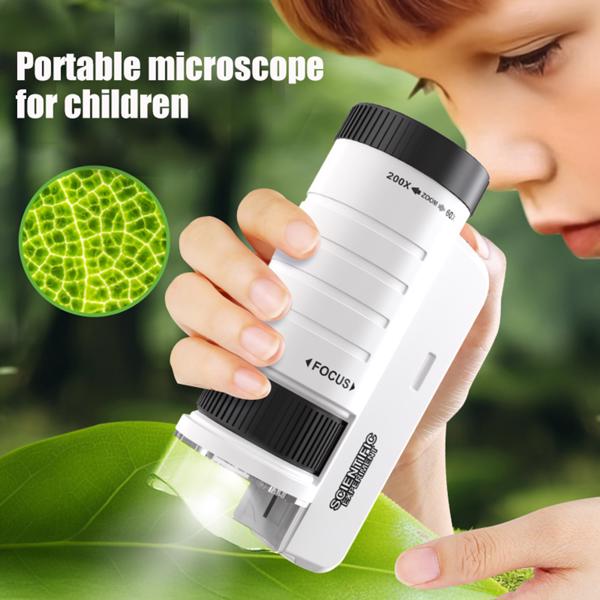
10. Magnet Exploration Kit — Best Physics Discovery STEM Toy

STEM domain: Science, physics, material classification  |  Price: ~$10–$20  |  Why at 5: Classification by multiple attributes now possible

At 5, magnet exploration moves beyond “some things stick” to deliberate classification: systematically testing every object in the house to determine magnetic vs non-magnetic, noticing that the strength of attraction varies, discovering that magnets repel as well as attract, and — with the right guidance — understanding that magnets have poles. This systematic classification by physical property is genuine scientific methodology being practised through physical play. The ability to classify by multiple attributes (colour AND magnetism; size AND material) that 5-year-olds have just developed makes this exploration more cognitively rich than it was at 4.

How Age 5 Fits in the STEM Toy Development Arc

Age 3–4

Sensory-motor STEM: magnetic tiles, counting bears, DUPLO, first science experiments

Age 5 ← Now

Transition year: LEGO Classic arrives, hypothesis-forming begins, arithmetic foundations consolidate, coding concepts emerge

Age 6–8

Analytical STEM: Rush Hour, chess, Snap Circuits, coding robots, GraviTrax advanced challenges

Age 8—12

Systems STEM: mBot2 robotics, LEGO SPIKE, electronics kits, complex engineering challenges

Find the Best STEM Toys for Your 5-Year-Old

Shop STEM Toys

Also explore our engineering toys, maths and counting toys, and educational toys.

Frequently Asked Questions: Best STEM Toys for 5-Year-Olds

1. What are the best STEM toys for 5-year-olds?

Best STEM toys for 5-year-olds: Engineering: LEGO Classic, KAPLA planks, GraviTrax starter. Mathematics: Cuisenaire rods, pattern blocks, magnetic tiles. Science: chemistry experiment kits, magnet exploration set, nature investigation tools. Technology: Botley 2.0 coding robot, Ozobot Evo. The highest single-investment choice is LEGO Classic because spatial reasoning is the most developmentally leveraged STEM investment at this age and LEGO provides the most engaging, research-backed spatial development through open-ended construction play. A LEGO Classic set combined with Cuisenaire rods and a magnet kit covers three STEM domains at modest total cost.

2. Why is age 5 a critical window for STEM toy development?

Age 5 is critical for STEM toy development because it is the final preschool year — the last opportunity to build the cognitive foundations that formal school STEM will build on, through the most developmentally appropriate medium available at this age: play. The spatial reasoning that is developing most rapidly at 5 is the strongest predictor of later mathematical and scientific performance. The arithmetic intuitions forming at 5 through physical manipulatives make school maths introduction significantly more accessible. The hypothesis-forming capability that arrives at 5 makes science experiments genuinely developmental. Everything developed through quality STEM toys at 5 creates a head start that compounds across years of schooling.

3. Is a 5-year-old ready for standard LEGO Classic bricks?

Most 5-year-olds are fully ready for standard LEGO Classic. LEGO’s own age guidance for Classic creative sets begins at age 4, and by 5, most children have the fine motor precision for confident standard brick manipulation. Some 5-year-olds with DUPLO experience transition seamlessly; those without prior LEGO experience may need a brief initial period of building with larger elements before moving to the full range. The clearest indicator: can the child press two small bricks together with controlled, aligned force without frustration? If yes, LEGO Classic is appropriate. Having a combined DUPLO and Classic collection available lets the child naturally gravitate to whichever brick size suits each project.

4. What maths concepts does a 5-year-old develop through STEM toys?

Through STEM toys at age 5: Counting to 20+ reliably with one-to-one correspondence, subitising 1–5 (instantly recognising without counting), basic addition and subtraction with quantities 1–10 (Cuisenaire rods), beginning place value (tens and ones — Cuisenaire orange rod = 10 whites), shape names and properties including 3D shapes (magnetic tiles, LEGO), measurement comparison (longer/shorter, heavier/lighter), pattern creation and continuation (pattern blocks), simple fractions (half, quarter — Cuisenaire rod equivalences), and ordinal sequence (first through tenth). All through physical play, not worksheets. Children who arrive at Year 1/Grade 1 with this mathematical foundation through toy play are measurably better prepared than those without it.

5. What is Botley 2.0 and why is it the right coding toy for 5-year-olds?

Botley 2.0 is a screen-free, app-free coding robot for ages 4–7. Children program movement sequences using a physical remote — pressing directional and functional buttons — then press “go” to watch Botley execute the full sequence. No tablet required, no app download, no screen time. The coding concepts taught (sequence, loops, conditional obstacle reactions) are identical to those professional programming languages use. Five is the ideal age because the sequence planning required is cognitively accessible, the screen-free format is age-appropriate, and the physical robot feedback provides immediate, concrete results for every programming decision. After Botley, the natural progression is Ozobot or Wonder Workshop Dash at age 6–7 for more complex app-based coding.

6. How do STEM toys at age 5 prepare children for school?

STEM toys at 5 prepare children for school through specific cognitive mechanisms: Spatial toys (LEGO, KAPLA, magnetic tiles) develop the spatial reasoning that geometry and science require. Maths manipulatives (Cuisenaire rods, counting bears) develop the number intuition that arithmetic builds on. Science experiments develop the observation and hypothesis skills that school science requires. Coding robots develop the computational thinking that UK Key Stage 1 computing curriculum targets. Logic and pattern toys develop the systematic reasoning that maths problem-solving demands. Children with rich STEM toy experience at 5 consistently arrive at school with stronger mathematical confidence, better science curiosity, and more developed problem-solving persistence than peers without this foundation.

7. Are STEM toys for 5-year-olds gender-appropriate for all children?

Yes — all STEM toys are developmentally equally appropriate for all children regardless of gender. Age 5 is a particularly important year to ensure equal STEM toy access for girls because this is the final year before the gender-typed peer socialisation that can narrow girls’ STEM interests begins to strengthen at ages 6–7. Research on the STEM gender gap consistently identifies differential toy access in early childhood as a significant contributing factor. Girls at 5 who have equal access to LEGO, construction toys, science kits, and coding robots develop identical spatial reasoning and STEM capability to boys with the same access. Magnetic tiles and KiwiCo’s creative-making format have been found to have particularly broad gender appeal for this age group.

8. What is GraviTrax and can a 5-year-old use it independently?

GraviTrax is a marble run engineering system where children design tracks to route a marble from start to target. The beginner challenge cards are accessible for most 5-year-olds independently after 1–2 adult-guided introductory sessions. Five is when GraviTrax becomes most developmentally valuable because the hypothesis-forming capability has arrived: the 5-year-old can now predict “I think the marble won’t make it around that curve” before testing, rather than only observing what happens. This prediction-test-observe loop is the scientific method through physical play. Most 5-year-olds achieve full independent GraviTrax use on beginner cards within 2–3 weeks of first introduction.

9. What is the difference between STEM toys for age 5 versus age 4?

Key differences between 4-year-old and 5-year-old STEM toys: LEGO Classic becomes the primary construction toy at 5 (standard bricks accessible); at 4, DUPLO is the primary construction system. GraviTrax beginner challenges become independently solvable at 5; at 4, adult guidance is needed throughout. Science experiments develop the prediction-test loop at 5 (“I think…” becomes possible); at 4, experiments are primarily observation-based. Coding robots advance from Cubetto/simple sequence robots at 4 to Botley 2.0 with loops and conditionals at 5. Maths manipulatives advance from basic counting and sorting at 4 to arithmetic discovery and fraction intuition at 5. For the 4-year-old guide see best STEM toys for 4-year-olds.

10. What STEM toys are best for an academically advanced 5-year-old?

For a cognitively advanced 5-year-old ready for above-age challenges: LEGO Classic with creative challenges (build a bridge that holds 20 LEGO vehicles, build the tallest free-standing tower possible), GraviTrax intermediate challenge cards, Rush Hour beginner cards (the logical analysis may be accessible for advanced 5-year-olds), Cuisenaire rod arithmetic discoveries through 10 (early multiplication), and KiwiCo Kiwi Crate (ages 5–8) rather than Koala Crate. The principle is maintaining the appropriate challenge level — approximately 50% success rate on first attempt — rather than ensuring all activities are easy. An advanced 5-year-old who is never challenged is not developing; an advanced 5-year-old who is always challenged is building the productive persistence that academic achievement requires.

11. What is the best STEM toy gift for a 5-year-old birthday?

Best STEM toy gifts for a 5-year-old: If no LEGO Classic yet: LEGO Classic Creative Brick Box ($30–50) — highest developmental value, longest lifespan. If LEGO present: Botley 2.0 coding robot ($80–$100) for the technology/coding gap, or GraviTrax Starter ($50–70) for physics engineering. If coding already covered: Cuisenaire rod set ($15–25) — directly supports school maths readiness. Budget gifts: pattern blocks ($15–25), magnet exploration kit ($10–20), simple chemistry experiment kit ($15–25). Premium gift: KiwiCo Kiwi Crate 6-month subscription ($120–$150) — six months of monthly science-making projects covering the full STEM breadth.

12. How many STEM toys does a 5-year-old need?

A well-curated collection of 4–6 STEM toys covering different domains provides more developmental value than many overlapping options. A recommended 5-year-old STEM collection: LEGO Classic (engineering + spatial), Cuisenaire rods (mathematics), GraviTrax starter or KAPLA (physics engineering), magnet kit or science experiment kit (science), and Botley 2.0 (technology/coding). This five-item collection covers all four STEM domains with quality, scalable tools that together provide a comprehensive STEM learning environment for the year before school. Rotation rather than accumulation: retire toys that have been thoroughly explored and introduce new ones to maintain developmental challenge.

13. Can a 5-year-old do science experiments at home safely?

Yes — with appropriate age-appropriate experiment selection and adult presence. Safe 5-year-old home science experiments: baking soda + vinegar reactions (no heat, non-toxic), colour mixing with food colouring (non-toxic, washable), density layers with water, oil and coloured liquids (visual physics), magnet investigations (no electrical hazards), plant growth observations (biology), ice melting comparisons (physics of heat), and simple cooking chemistry (mixing ingredients and observing changes). All are genuinely scientific (the child is investigating cause-and-effect relationships) and all are completely safe with basic adult supervision. Commercial experiment kits for this age group are specifically designed with safety as the primary design constraint alongside educational value.

14. Do STEM toys reduce the need for early academic tutoring?

Rich STEM toy experience at 5 significantly reduces the likelihood that early academic tutoring will be needed, specifically in mathematics and spatial subjects, because the foundational cognitive capabilities tutoring attempts to develop are more effectively built through extended, motivated STEM play than through direct instruction. A child with extensive Cuisenaire rod experience doesn’t need tutoring for basic arithmetic because they already have arithmetic intuitions; the formal symbols formalise what they already know physically. A child with extensive LEGO and construction experience doesn’t need geometry tutoring because spatial relationships are already intuitive. STEM toys are preventive cognitive development; tutoring is remedial cognitive development. The former is more effective, more enjoyable, and dramatically less expensive.

15. What outdoor STEM activities complement indoor STEM toys for 5-year-olds?

Best outdoor STEM activities for 5-year-olds to complement indoor toys: Nature observation (matching outdoor objects to field guide images — scientific classification), water engineering with gutters and containers (physics of fluid dynamics), mud construction (structural engineering with natural materials), seed growing in transparent containers (biology of plant development), measuring shadow lengths at different times of day (maths + astronomy), collecting and sorting rocks or leaves (classification science), and simple weather recording (data collection science). Research on outdoor learning finds significant wellbeing and attention-regulation benefits that directly enhance the quality of subsequent indoor STEM toy engagement — outdoor play and indoor STEM toys are mutually reinforcing rather than competing activities.

16. Where can I find the best STEM toys for 5-year-olds?

Explore our complete STEM toys collection at WonderKidsToy, every product selected for genuine developmental alignment with 5-year-old cognitive readiness and the evidence-backed STEM development effectiveness that creates lasting mathematical, scientific, and engineering foundations for the formal school years ahead.

Browse our complete STEM toys collection. Continue the age series: STEM toys for 4-year-olds  •  STEM toys for 6-year-olds. For the full educational toy guide at this age see best educational toys for 6-year-olds.

Back to blog

Related Posts

Best Educational Toys for 11-Year-Olds: Coding, STEM & Smart Gifts
Parent Guide • Age 11 • STEM & Smart Gifts...
Parent Guide • STEM • Creativity STEM Toys That Make...
Fourteen is a uniquely powerful age for robotics. It is...
Best Montessori Toys for Babies: Safe Early Learning Guide
Parent Guide • Montessori Babies • Simple Learning Montessori Toys...
Age 8 STEM Guide • Robot Kits • Coding Robot...
Best Educational Toys for 6-Year-Olds in 2026 (Complete Guide Across All Domains)
Six is the year the world gets serious. Formal school...