Best Musical Toys for Babies in 2026 (Complete Guide for 0–12 Months)

The musical window in infancy is extraordinary. Babies arrive pre-wired for music — able to detect rhythm, respond to melody, and distinguish musical from non-musical sound from the first weeks of life. The neural pathways developed through musical engagement in the first 12 months of life are laid on an unprecedentedly plastic neural substrate, making early musical exposure among the most leveraged developmental investments available to parents. The best musical toys for babies are those that deliver rich, high-quality musical engagement in forms safe and accessible for infants from birth through 12 months.

This guide focuses specifically on musical toys for babies aged 0–12 months — distinct from toddler musical toys in their safety requirements, physical accessibility, and developmental goals. For our complete musical toy guide for all ages, see what are musical toys. Explore our musical instrument toys and early development toys.

Best Musical Toys for Babies in 2026 (Ranked)

1. Baby Einstein Take Along Tunes — Best Musical Toy for Newborns

Age: 3–18 months  |  Price: ~$10–$15

Take Along Tunes provides seven classical music melodies in a lightweight, easy-to-grasp toy that babies can activate independently from around 4 months. The classical arrangements develop the auditory memory and melodic expectation that underlie musical intelligence. The portability — suitable for car seat, pushchair, and cot — maximises musical exposure across the day. This is the single most recommended musical toy for babies under 6 months by paediatric occupational therapists.

2. Hape Shake and Match Shape Sorter — Best Musical Shape Sorter

Age: 6–18 months  |  Price: ~$20–$30

Hape’s musical shape sorter combines the developmental richness of shape sorting (spatial reasoning, fine motor, problem-solving) with musical cause-and-effect: each shape dropped through its hole produces a distinct musical note. The combination develops musical pattern awareness alongside the spatial cognition of shape matching. The musical feedback makes shape sorting intrinsically rewarding in a way that non-musical shape sorters cannot match.

3. Infantino Spiral Activity Toy with Mirror and Music — Best Developmental Musical Gym

Age: 0–6 months  |  Price: ~$15–$25

For the youngest babies, musical play gyms that combine visual (high contrast images, mirror), tactile (different textures), and auditory (music) stimulation provide the most comprehensive multi-sensory developmental experience. Babies who activate musical elements of their play gym through batting, kicking, or grasping develop the cause-and-effect understanding that is the foundation of all later learning. Choosing gyms with gentle, melodic music rather than jarring electronic sounds supports calm engagement.

4. Rattle Collections (Wooden and Fabric) — Best First Musical Toys

Age: 0–9 months  |  Price: ~$8–$20

Rattles are the original baby musical toy — and for good developmental reason. The baby’s action (shaking) produces a specific sound response, establishing the foundational cause-and-effect understanding that underlies all later musical development. Quality wooden rattles produce warmer, more complex tones than plastic ones. Fabric rattles are safe for mouthing. A collection of rattles with different sound qualities (wooden clatter, soft jingle, metallic shimmer) develops the earliest auditory discrimination.

5. Fisher-Price Laugh and Learn Piano — Best Interactive Musical Keyboard for Babies

Age: 6–24 months  |  Price: ~$25–$35

Fisher-Price’s Laugh and Learn Piano provides a large-keyed keyboard that babies aged 6 months and above can press to produce musical notes, songs, and learning content. The key size and low resistance are calibrated for infant hand size and strength. The multiple modes (melodies, learning content, classical music) provide developmental variety. The piano’s physical size and stable base make it ideal for floor play from the sitting stage onwards.

6. Hape Happy Grand Piano — Best Developmental Piano for Babies and Early Toddlers

Age: 12–36 months  |  Price: ~$40–$60

Hape’s wooden grand piano design for babies and young toddlers produces genuine piano notes from real wooden keys — not electronic approximations. The 25-key range covers two octaves, providing a wider melodic exploration range than electronic baby keyboards. The wooden key construction provides authentic tactile feedback. The included music booklet with colour-coded simple songs provides the first structured melody learning experience. This is the bridge between baby musical exploration and early childhood music education.

7. Musical Cot Mobile — Best Musical Toy for Newborn Sleep and Development

Age: 0–6 months  |  Price: ~$25–$50

Musical cot mobiles deliver the combination of visual tracking (developing visual processing) and musical exposure (developing auditory processing) that makes them among the most developmentally rich toys for the 0–6 month window. The high-contrast visual elements attract and hold infant attention while the music develops auditory memory and supports emotional regulation. Choose mobiles with gentle classical or lullaby music rather than jarring electronic sounds for the newborn stage.

8. Egg Shakers Set — Best Group Musical Toy for Baby and Parent

Age: 6–18 months  |  Price: ~$10–$15

Egg shakers — smooth, palm-sized oval shakers filled with gentle-sounding beads — are the most universally appropriate baby percussion instrument. Safe for babies aged 6 months and above who can grasp and shake, they produce a soft, musical sound that develops rhythm awareness and the cause-and-effect of shake-sound. Playing matching egg shakers together with a parent develops the social-musical engagement of shared rhythm that forms the earliest foundation of musical communication.

Baby Musical Toy Safety Standards

Musical toys for babies have the strictest safety requirements of any toy category because of mouthing, limited motor control, and the vulnerability of the developing auditory system. Always verify:

  • No small parts: Any component that fits in a standard small-parts tester cylinder is a choking hazard for babies under 12 months.
  • Non-toxic finishes: All surface finishes must be explicitly rated safe for mouthing, including paints, stains, and lacquers.
  • Safe sound levels: Electronic musical toys should produce maximum volumes below 85 dB to protect developing hearing. Many quality brands include volume limiting.
  • Secure assembly: No components should be accessible by a determined infant. Test any toy for resistance to pulling, twisting, and biting before giving to a baby.
  • Age-appropriate design: Weight, size, and texture must be appropriate for the infant’s current motor development stage.

Shop the Best Musical Toys for Babies

Shop Early Development Toys

Also explore our musical instrument toys and sensory learning toys.

Frequently Asked Questions: Best Musical Toys for Babies

1. What are the best musical toys for babies?

Best musical toys by age: 0–4 months: cot mobile with classical music, Baby Einstein Take Along Tunes. 4–8 months: play gym with musical elements, rattles, soft egg shakers. 8–12 months: baby keyboard (Fisher-Price Laugh and Learn), wooden percussion instruments, shape sorter with musical feedback. The key criteria at all baby stages: safety for mouthing, appropriate sound levels, high-quality musical tones, and cause-and-effect engagement where the baby’s action produces the musical response.

2. Do babies benefit from musical toys from birth?

Yes — babies are born with fully functional auditory systems (hearing begins in the womb from around 25 weeks gestation) and immediate musical responsiveness. Research shows newborns recognise melodies they heard in the womb, respond differently to consonant versus dissonant intervals, and show measurable preference for music over non-musical sound. Musical engagement from birth capitalises on this existing musical sensitivity and the extraordinary neural plasticity of the first weeks and months to develop auditory processing capabilities that benefit language, mathematics, and musical development throughout life.

3. Is classical music better than other genres for baby musical toys?

Classical music’s developmental advantages for babies are real but have been overstated in popular culture (the “Mozart effect”). What is genuinely true: classical music’s structural complexity, dynamic range, and tonal variety provide richer auditory development input than simple, repetitive electronic sound patterns. Nursery songs, folk music, and lullabies from diverse cultural traditions also provide excellent auditory development. The most important quality is musical richness — real tonal complexity and musical structure — rather than a specific genre.

4. When can babies start actively playing with musical instruments?

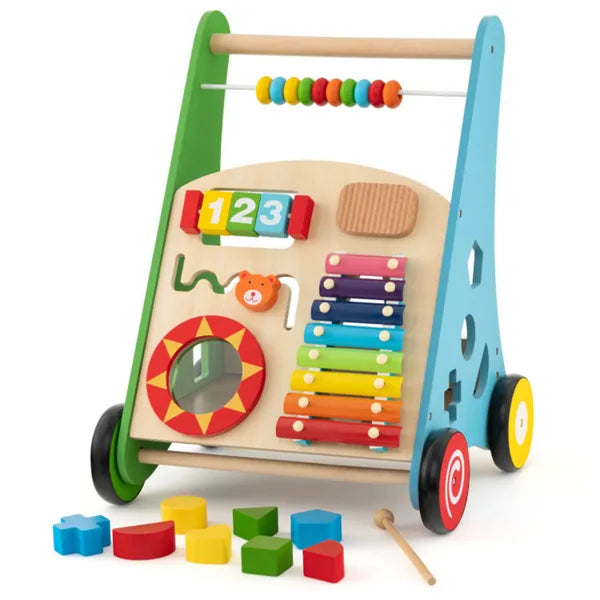
Active instrument play begins at different points for different instruments. Rattles: from 3–4 months (when the grasp reflex gives way to voluntary grasping). Soft egg shakers: from 6 months (palmar grasp sufficient). Baby keyboard: from 6–8 months (sitting with support, batting at keys). Xylophone with mallet: from 12–18 months (standing at floor level, sufficient bilateral arm coordination). Musical drumming: from 12 months (sitting, both hands available for alternating strikes). Introduce instruments slightly before motor readiness and allow exploration at the child’s pace.

5. Are musical cot mobiles worth it?

Yes — musical cot mobiles provide the most continuous musical exposure available for the 0–6 month window. The combination of visual tracking (mobile movement) and auditory processing (music) creates dual developmental engagement in the natural pre-sleep and post-waking alert states when babies are most receptive to sensory input. Choose mobiles with removable toy elements that can transition to hanging play gym toys after the cot mobile phase (typically 4–6 months when the baby becomes able to grab mobile elements).

6. How does musical play help baby brain development?

Musical engagement activates and develops multiple brain regions simultaneously: auditory cortex (processing musical sound), motor cortex (planning and executing rhythmic movement), prefrontal cortex (attention and anticipation), and limbic system (emotional response to music). This multi-region activation makes musical play unusually rich in its neural development impact. Research from the University of Washington found that music-focused play sessions in infancy produced measurably stronger auditory and prefrontal neural responses in babies compared to play sessions without music — evidence of direct neural development through musical engagement.

7. What is the best musical toy for a 3-month-old?

At 3 months: the best musical toys are those that provide high-quality musical sound without requiring any motor control from the baby — musical cot mobiles, Take Along Tunes (which caregivers activate), and soft fabric rattles that are easy to contact by waving arms. From 3–4 months, as voluntary grasping develops, small handheld rattles become the ideal baby-activated musical instrument. Listening to the parent sing is the most powerful musical experience at this age.

8. Can musical toys help with baby sleep?

Gentle musical toys and sound machines can support infant sleep by providing consistent, predictable auditory stimulation that masks startling environmental sounds and activates the auditory processing that occupies light-sleeping infants before they fully wake. White noise and consistent lullaby repetition both support infant sleep architecture. Always check sound levels — sound machines near a baby should produce no more than 50 dB at the baby’s position, and should not be placed directly in the cot.

9. What is the difference between baby musical toys and toddler musical toys?

Baby musical toys (0–12 months) prioritise: maximum safety for mouthing (all surfaces safe, no small parts), appropriate size for infant hands (smaller, rounder, lighter), passive engagement options (musical activation without requiring motor control), and stimulation calibrated for developing but still limited auditory processing. Toddler musical toys (18 months–4 years) can include: instruments requiring controlled striking (xylophone), multi-piece collections (tambourine + castanets), more complex mechanisms, and higher physical durability standards for energetic use. See our guide to best musical toys for toddlers for the toddler stage.

10. Do singing and talking replace musical toys for babies?

Singing and talking to babies is irreplaceable and no toy substitutes for it. Parent singing provides musical exposure embedded in the most developmental context possible: social interaction with an attached caregiver. Infant-directed speech (“mothertalk” or “babytalk”) is naturally musical — exaggerated pitch contours, slower tempo, and repetitive melodic patterns specifically calibrated for infant auditory processing. Musical toys complement and extend this musical exposure, providing continuous access to musical stimulation when parent singing is not occurring. Both are essential; neither is sufficient alone.

11. What baby musical toys are safe to leave in the cot?

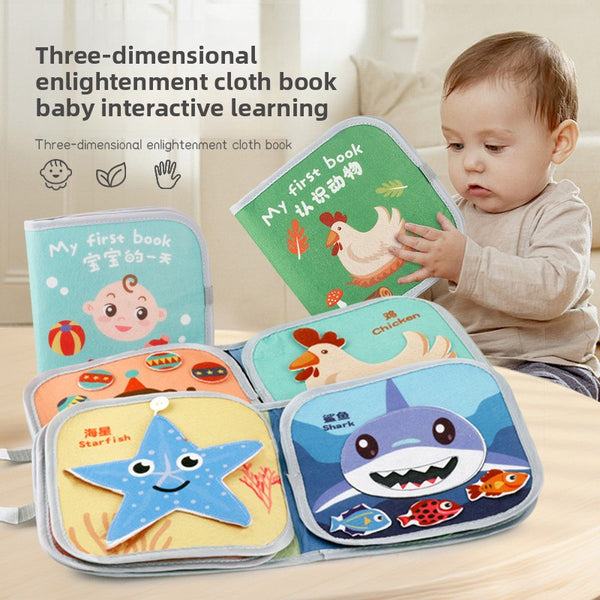
Toys safe to leave in the cot for babies over 6 months (when the safest sleep period passes): firm fabric activity books with crinkle and musical pages, small solid wooden rattles without detachable parts, and firm fabric soft toys with attached musical elements (squeakers, crinkle). Cot mobiles should be removed when the baby can push up on hands and knees (around 4–5 months) to prevent grabbing hazards. Never leave small-part-containing toys in the cot unsupervised. Soft plush musical toys with well-secured internal music boxes are generally safe from 6 months.

12. Do musical toys help babies learn faster?

Musical engagement in infancy is associated with accelerated auditory processing development, faster language acquisition, and stronger phonological awareness — all of which support learning across domains. The evidence is strongest for auditory development and language: babies with richer musical engagement consistently show faster language milestones. The mechanism is through shared brain circuitry: music and language processing overlap significantly in the developing brain, so musical development directly supports language development in a way that other sensory experiences do not.

13. How loud should baby musical toys be?

The World Health Organization recommends that toys held near a child’s ear produce no more than 65 dB; toys held at arm’s length produce no more than 85 dB. Many cheap electronic baby toys exceed these levels. The European standard EN 71-1 tests toy sound levels, and EN 71-1 compliant toys are tested for safe noise levels. When purchasing electronic musical toys for babies, look for products that explicitly state compliance with EN 71-1 or equivalent standards and where the maximum volume is stated. In practice: if the toy sounds loud to an adult’s hand, it is too loud for a baby’s ear.

14. What makes a rattle a good musical toy?

A good rattle produces a clear, pleasant tone — wooden rattles with seed beads or small wooden pellets produce warmer, more musical tones than plastic rattles with plastic pellets. The sound should be consistent (the same action always produces the same sound), appropriately loud (audible but not startling), and pleasant in tone quality (musical rather than harsh). The physical form should be graspable for the baby’s current grip development: round disc rattles for early palmar grasp, cylindrical rattles for developing pincer, textured surfaces for sensory interest alongside the musical element.

15. When should I start music classes for my baby?

Parent-and-baby music classes (like Music Together, Kindermusik, or Mommy and Me music sessions) are appropriate and beneficial from birth. These classes structure the kind of music-making, singing, and movement that are naturally developmental for babies and toddlers, and provide the social musical engagement that home musical toys cannot. For instrument instruction specifically: violin and cello through Suzuki method from age 3; piano from age 4–5; most instruments from age 5–6. The earlier the musical environment, the greater the long-term musical development.

16. Where can I find the best musical toys for babies?

Explore a carefully curated selection of early development toys for babies at WonderKidsToy, including musical instruments, sensory development toys, and activity centres selected for genuine developmental value and the strictest safety standards for the 0–12 month age range.

Browse our early development toys and musical instrument toys. For the toddler stage, see our guide to best musical toys for toddlers.

Related Posts

Best Screen-Free Toys for Kids (2026): Smart Alternatives to Reduce Screen Time
If you’re searching for the best screen-free toys for kids, chances...
Montessori Bead Bars: Enhance Your Child's Learning
As a parent, you want the best for your child....
Best STEM Toys for 2-Year-Olds in 2026: 12 Picks That Develop Real Skills
STEM — Science, Technology, Engineering, and Mathematics — is not...
Best Building Toys for Kids With Tech Features in 2026 (Ranked by Age and Depth)
A child who builds something with their hands learns spatial...
Back to blog

Top Picks (Quick Answer)

If you want the best options quickly, these are our top recommended toys based on learning value, fun, and long-term use.

BEST OVERALL

Creative Building Kits Educational Blocks Sets

A powerful all-in-one toy that helps kids build creativity, problem-solving skills, and focus through hands-on play.

Best for: creativity, building skills, and long-term engagement

Shop Now
BEST FOR YOUNGER KIDS

Jigsaw Puzzle Large 12 Piece Rainbow Blocks

Perfect for toddlers and preschoolers to build coordination, shape recognition, and early problem-solving skills.

Best for: ages 2–5, early learning, and hands-on play

Shop Now
Exclusive Bundle

FREE: Get $99 worth Creative Digital Vault

Order now and get instant access to 130+ Digital Learning Books. While your item ships, your child can start learning immediately!

✓ Link Sent Instantly to Your Email Post-Purchase