 Skip to content


What the listing highlights
Counting manipulatives, letter sets and activity tub choices this selector groups counting objects, letter pieces, shapes and other small learning materials in separate packages. the gall...

Counting Manipulatives, Letter Sets and Activity Tub Choices This selector groups counting objects, letter pieces, shapes and other small learning materials in separate packages. The gallery shows tubs of magnetic-style letters and colorful dinosaur counters. Twenty-nine choices include an accessory tray, so one order should not…
Choose any products across the store. Your savings increase automatically as you build your learning bundle.
Order processing: Most in-stock orders are processed within 1–3 business days before shipment. The 3–7-business-day USA Fast Shipping estimate is separate from processing time.
USA Fast Shipping: Free for US orders. Shipping terms for Canada and the UK are shown at checkout.
Tracking: Tracking information is emailed when available. Please allow time after shipment confirmation for carrier tracking to begin updating.
Delivery estimates: Delivery times are estimates, not guaranteed arrival dates. Customs clearance, carrier delays, severe weather, public holidays, high seasonal volumes, remote-area delivery, local postal delays, transportation disruptions or warehouse availability can extend delivery.
If local or regional warehouse inventory is available, we may fulfill from that location. If local inventory is unavailable, delivery may take longer.
Customs & duties: Customers may be responsible for customs duties, import taxes, VAT/GST, brokerage fees or other government charges unless otherwise stated at checkout.
Multiple packages: Items in the same order may ship from different fulfillment locations and arrive separately. You are not charged extra standard shipping solely because an order is split.
Address changes: Please ensure your shipping address is complete and accurate. We will try to update errors reported quickly, but changes cannot be guaranteed once processing or shipment has begun.
Delayed or lost shipments: If tracking has not updated for an unusually long time or the order appears significantly delayed, contact our support team with your order number. If tracking shows delivered but the package cannot be located, first check your delivery area, mailbox or parcel locker, household members, neighbours where appropriate, building reception and the local carrier.
Refused or unclaimed shipments: If a shipment is refused, left unclaimed, or returned because customs requirements or delivery arrangements were not completed, applicable return or reshipping costs may be deducted where permitted.
Availability: Shipping availability may vary by product because of carrier restrictions, customs regulations, local laws, supplier limitations, product restrictions or warehouse availability.
Couldn't load pickup availability
This selector groups counting objects, letter pieces, shapes and other small learning materials in separate packages. The gallery shows tubs of magnetic-style letters and colorful dinosaur counters. Twenty-nine choices include an accessory tray, so one order should not be read as the full classroom assortment.
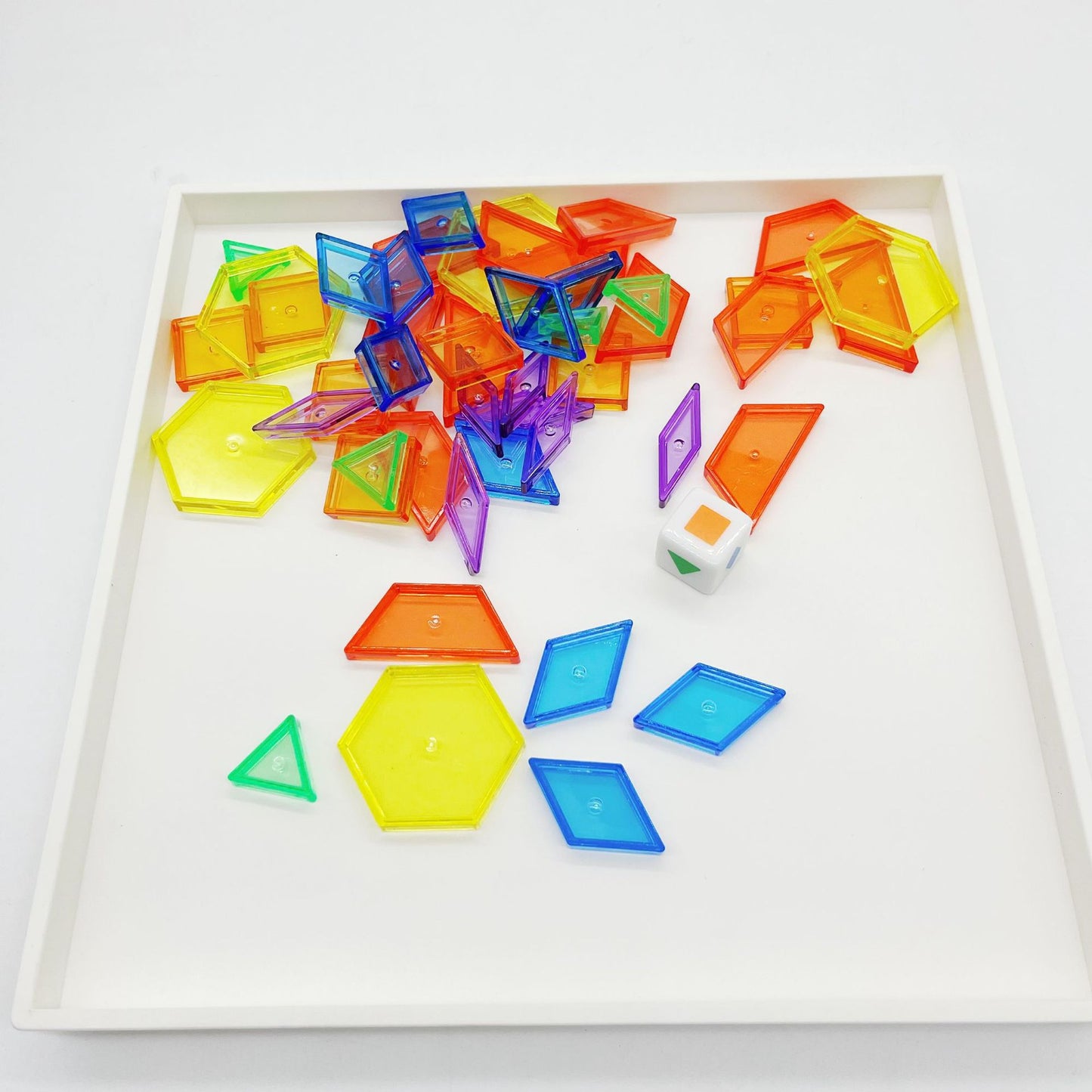
For counters, make two small groups and compare their sizes before combining them. For letters, match one visible shape to a model word. A shape tub can begin with sorting by outline. The chosen package determines the activity; a tray alone does not supply counters, letters or dice.
The selection menu supports a specific classroom or home activity rather than requiring a large mixed collection. Comparing object type before piece count helps avoid ordering the wrong resource.
Choices include magnetic letters/numbers, 3D shapes, popsicle-stick matching, dinosaur or farm counters, vehicles, bears, cubes, links, circles, pebbles, straws/connectors, dice, stacking figures, clips and the tray. Examples of explicit labels include 72-piece dinosaur counters and 48-piece vehicle counters. Counts belong only to their named packages.
Keep small learning pieces contained and follow the selected material’s age guidance. An adult should inspect any magnetic pieces and remove a damaged part from play.
Explore related Counting & Math Toys for Kids: Numbers & Early Learning.

Add one more and save 10% on this companion pick.
Included with your order: a digital library of printable learning and creative activities for use at home.
Your access link is sent automatically by email after purchase.
Match the selected option to its product image, price and details before adding it to your cart.


These are editorial product insights based on the listing details—not customer reviews.
Counting manipulatives, letter sets and activity tub choices this selector groups counting objects, letter pieces, shapes and other small learning materials in separate packages. the gall...
The listing suggests opportunities to explore numbers, counting, sorting, or other early math ideas.
The puzzle, building, block, or shape-based format may encourage planning, matching, and experimentation.
The art or music focus gives children a way to explore ideas and express themselves through play.
Use the description and images to decide whether Counting Manipulatives, Letter Sets and Activity Tub Choices suits your child's interests and current abilities.
Confirm the age guidance, dimensions, included pieces, materials, and supervision needs shown in the product details.
The exact product, model, colour, size, quantity and included accessories depend on the option selected above. Please review the selected variant and product description before ordering.
If your product arrives damaged, defective, incorrect, or with important parts missing, contact us within 30 days of delivery.
Please include your order number, a clear description of the issue, clear photos, a video when the issue cannot be shown clearly in photos, and packaging photos when relevant.
After review, an appropriate resolution may include a replacement, resend, partial refund, or full refund, depending on the circumstances.
For eligible products without a quality issue, change-of-mind return requests must be made within 7 days of receiving the product. Please contact us before returning any item. Returns sent without prior authorization may not be accepted.
For an eligible change-of-mind return, the customer is responsible for return shipping costs. The item must be unused and in its original condition, with original packaging, tags, accessories, manuals and included parts where applicable.
Returned products may be inspected. Items showing misuse, post-delivery damage, missing accessories or other conditions that make them unsuitable for return may not qualify for a refund.
Original shipping charges, customs duties, taxes, brokerage charges and other third-party fees are generally non-refundable unless required by applicable law or specifically approved as part of an order issue.
Order cancellations: Cancellation may be possible if an order has not entered processing or fulfillment. Once processed, customized, prepared for shipment or shipped, cancellation may no longer be possible. Customized, personalized, made-to-order, pre-order or specially prepared products may have additional restrictions.
Package not received: If a package appears significantly delayed, contact us with your order number and tracking information. If tracking shows delivered but you cannot locate it, first check your delivery location, household members, mailbox or parcel locker, neighbours where appropriate, building reception and the local carrier.
Refunds or replacements may not be available when delivery fails because of an incorrect or incomplete address, unknown recipient, refusal of delivery, failure to collect a package, failure to complete required customs clearance, or other circumstances outside our reasonable control.
Minor cosmetic damage to outer packaging may not qualify for a refund or replacement when the product itself is unaffected and fully usable.
Once a refund is approved, it is normally issued to the original payment method. Your bank, credit card company or payment provider may require additional time to display it.
Certain customized, personalized, made-to-order or other products that cannot reasonably be resold may not be eligible for change-of-mind returns.
Helpful ways to discover closely related toys, learning categories and parent guides.
🎯 Parent-Friendly Play Highlights
A closer look
Explore 6 highlighted product images. Tap an image for a larger view. The main gallery above contains all 33 images.
WONDERKIDSTOY · LEARNING THROUGH PLAY
As a parent, you want the excitement that comes with a new toy — but you also want the time your child spends with it to feel worthwhile. At WonderKidsToy, we focus on educational, STEM, Montessori-inspired and hands-on play that gives children something meaningful to do, discover and figure out for themselves.
We believe some of the best learning happens when children are busy building, testing, sorting, creating, imagining and asking “what happens if I try this?” Our goal is to make it easier for you to find engaging toys that encourage curiosity, creativity, problem-solving and independent exploration — without making playtime feel like homework.
Hands-on experiences that let children learn through doing, not just watching.
Explore STEM, science, puzzles, building, creative play and Montessori-inspired learning.
Toys that invite children to build, explore, imagine, experiment and solve.
Your purchase also includes our digital learning library with 130+ educational books and activities.
We’re here to help you find toys that feel worth bringing home — engaging enough for children to enjoy and purposeful enough for you to feel good about choosing them.


